INTELLIGENCE ARCHIVE

Untraditional Security

69 published analyses, newest first.

Statement condemning the PRC’s unwarranted comments against India’s PM visit to Arunachal Pradesh
UNTRADITIONAL SECURITYMARCH 11, 2024
25

Statement condemning the PRC’s unwarranted comments against India’s PM visit to Arunachal Pradesh

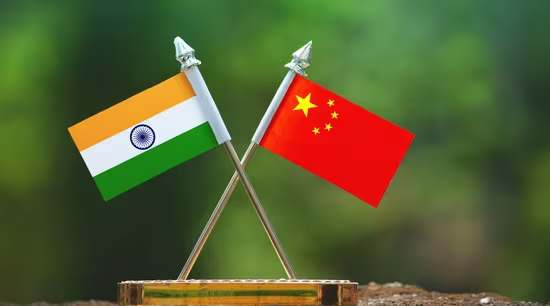
We strongly denounce the People’s Republic of China’s unjustified and gratuitous remarks against Indian Prime Minister Narendra Modi’s visit to Arunachal Pradesh. The PRC protest is an act of interference in India’s domestic affairs and a clear violation of India’s sovereignty. It is an attempt to undermine its democratic process and we strongly condemn such actions and demand that PRC refrain from any further interference in India’s internal matters. Arunachal Pradesh is an innate and inseparable part of India. The visits of Indian leaders to any region of the country are a matter of India’s sovereign authority that cannot be questioned. It is unacceptable for any nation to meddle in India’s internal affairs or impede the movement of its leaders. The PRC’s efforts to sabotage such visits are inappropriate and reveal its sanctimonious behaviour. India staunchly upholds its people’s freedom with unwavering democratic beliefs, in stark contrast to the autocratic communist dictatorship of the People’s Republic of China, notorious for trampling on the rights of its citizens and suppressing them. The people of Arunachal Pradesh don’t need any advice from any third unrelated country on their affairs. It has the unassailable right to determine its own destiny, free from any external pressure or interference from the People’s Republic of China. We urge the People’s Republic of China to uphold India’s sovereignty and territorial integrity and avoid engaging in similar provocative activities in the future. This behaviour simply aggravates tensions in the Indian Subcontinent. Such visits are a sovereign matter and should not be a cause for contention with any other nation. China’s response reflects a disregard for our sovereignty and an attempt to meddle in our internal affairs, which is unacceptable. India firmly reiterates its commitment to peaceful coexistence and cooperation with all its neighbouring countries, including Tibet, which is currently under the illegal military occupation of the PRC. We will take every necessary measure to safeguard our sovereignty and territorial integrity against any external aggression or interference from Beijing. We call on the international community to back India’s stance on this issue and demand that the People’s Republic of China comply with international law principles and acknowledge India’s sovereignty.

TR
Team Red Lantern AnalyticaAnalyst
arrow_outward
Troika Diplomacy and Fragile Hope: Can Indonesia, Laos, and Malaysia Break the Deadlock in Myanmar?
UNTRADITIONAL SECURITYMARCH 7, 2024
26

Troika Diplomacy and Fragile Hope: Can Indonesia, Laos, and Malaysia Break the Deadlock in Myanmar?

Laos is leading the ASEAN bloc for the third time in 2024, having previously chaired in 2004 and 2016. The theme for its chairmanship is “Enhancing Connectivity and Resilience,” underlining Laos’ dedication to promoting a more interconnected and robust ASEAN. However, one of the main challenges for Laos to address under its chairmanship is the ongoing conflict and instability in Myanmar. Laos appointed Alounkeo Kittikhoun as its special envoy to Myanmar, aiming to push forward the implementation of ASEAN’s Five-Point Consensus peace plan in Myanmar. Alounkeo, with extensive diplomatic experience, faces the challenging task of facilitating a negotiated solution to Myanmar’s conflict, which has escalated since the military coup in February 2021. The consensus, calling for an end to violence and inclusive dialogue, seems increasingly out of touch with the ground reality of a deepening conflict. ASEAN’s divided stance on the issue, with some members advocating for active involvement and others adhering to the principle of non-interference, limits the potential impact of Alounkeo’s role. Following the appointment, on January 11, 2024, Min Aung Hlaing, Myanmar’s military leader, had a meeting with Alounkeo Kittikhoun, ASEAN’s special envoy handling the Myanmar crisis. This meeting coincided with Laos beginning its tenure as the chair of ASEAN. ASEAN has consistently pressed the military in Myanmar to comply with the “five-point consensus” aimed at restoring peace, but the military regime has been hesitant to follow through. According to state media, the discussions centred on the government’s initiatives towards achieving peace, stability, and national reconciliation. Min Aung Hlaing asserted that his government is aligning the implementation of the ASEAN five-point consensus with the State Administration Council’s own roadmap. However, the spokesperson for Myanmar’s National Unity Government (NUG) emphasised that the special envoy should engage with all involved parties, not only the military. As of now, Laos has not publicly commented on the envoy’s visit or the meeting in its state-run media, nor has it made any official statements as the ASEAN chair regarding the meeting. In the latest round of ASEAN’s Foreign Ministers Retreat in Laos, escalating violence in Myanmar and China’s assertive activities in the South China Sea were major points of discussion. For the first time since the military coup in February 2021, Myanmar sent a high-level representative, ASEAN Permanent Secretary Marlar Than Htike, to an ASEAN foreign ministers meeting, which is viewed as a positive development. Laos, holding the ASEAN chairmanship and sharing a border with Myanmar, has sent a special envoy to Myanmar to promote the ASEAN “five-point consensus” for peace, though the military has so far ignored the plan. Lao Foreign Minister Saleumxay Kommasith expressed cautious optimism about progress on these issues. Singapore’s Foreign Minister Vivian Balakrishnan remained cautious about Myanmar’s commitment to the plan. ASEAN aims to increase humanitarian support while pushing for the consensus’s full implementation. Thailand is also advancing its efforts to provide humanitarian assistance to Myanmar, where over 2.6 million people have been displaced by civil conflict. The meeting between Min Aung Hlaing and ASEAN’s special envoy Alounkeo Kittikhoun and Foreign Ministers Retreat presents several significant points for analysis. To begin with, the visit by ASEAN Secretary-General Kao Kim Hourn to Laos indicates proactive measures by Laos to prepare for its leadership role within ASEAN. Engaging in discussions with high-level officials about key areas such as political security, economic, and socio-cultural aspects demonstrates Laos’ commitment to playing a constructive role in the regional bloc. In addition, ASEAN has been actively involved in addressing the crisis in Myanmar, and the meeting between Min Aung Hlaing and ASEAN envoy and his claim of aligning the ASEAN five-point consensus with the State Administration Council’s roadmap suggest a nominal acknowledgment of ASEAN’s efforts. However, the lack of substantial progress and the military regime’s reluctance to fully comply with the consensus indicate ongoing challenges in resolving the crisis. Furthermore, the National Unity Government’s call for the ASEAN envoy to engage with all stakeholders, not just the junta, highlights the complexities of the Myanmar situation. An inclusive approach involving all parties is critical for meaningful dialogue and long-term peace. Lastly, this situation underscores the delicate balance that ASEAN must maintain in addressing regional conflicts. While ASEAN aims to play a mediating role, its influence is limited by its principle of non-interference and the need to respect the sovereignty of member states. Laos’ preparations for ASEAN leadership, coupled with ongoing efforts to address the Myanmar crisis, reflect the regional bloc’s commitment to stability and peace. ASEAN’s credibility is at stake as the failure to make any significant progress in Myanmar, has damaged ASEAN’s reputation as a regional power broker and mediator. The military’s continued defiance of ASEAN’s consensus principles could force the bloc to consider more difficult steps like suspension from membership, further isolating Myanmar but risking regional instability. The situation in Myanmar is also influenced by external factors like China’s interests and the global geopolitical landscape. Laos, known for its quiet diplomacy, might prioritise small, achievable goals like facilitating prisoner releases or humanitarian access improvements. Even counternarcotics, due to its impact on Laos, may find a place on the ASEAN agenda. The troika mechanism, involving Indonesia, Laos, and Malaysia, could ease the burden but Laos’ proximity to Myanmar and Thailand may influence its stance. Myanmar-Laos trade is minor, and Laos’ support for Thailand’s engagements likely stems from convenience. The Myanmar crisis, affecting Laos more than Thailand, has led to a drug epidemic. Counternarcotics and policing may be raised during Laos’ chairmanship, aligning with its national interest. However, China’s influence poses challenges. Laos’ stranglehold with Chinese debt limits its capacity to balance relations. Despite challenges, Laos aims to enhance connectivity and resilience during its chairmanship. Its success depends on navigating complex issues, including the Myanmar crisis, counternarcotics, and balancing international relations. Laos’ approach may involve maintaining a delicate balance, prioritising national interests, and leveraging regional cooperation to address pressing concerns. This could lead to some easing of tensions but wouldn’t address core issues like political dialogue or power-sharing. The military might offer some

TR
Team Red Lantern AnalyticaAnalyst
arrow_outward
Press Release of Book discussion Session on ‘China Betrays Again’
UNTRADITIONAL SECURITYFEBRUARY 7, 2024
27

Press Release of Book discussion Session on ‘China Betrays Again’

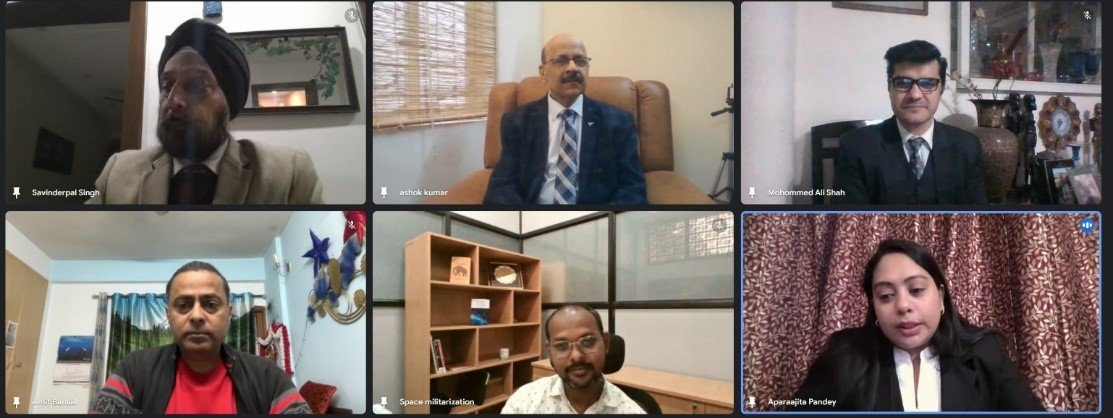
On January 28, 2024, Red Lantern Analytica hosted a Book discussion on ‘China Betrays Again’. Maj. Gen. Ashok Kumar VSM, Author of the Book, Kargil War Veteran & Military Expert; Air Commodore S.P. Singh VSM, Strategic Analyst & Senior Fellow at Centre For Air Power Studies (CAPS); Major Amit Bansal, Defence Strategist and War Veteran; Major Aparajita Pandey, Army Officer (Retd.) and Cyber Expert and Dr Vinay Kumar, Assistant Professor at National Law University, Aurangabad were the expert speakers of the webinar. Air Commodore S.P. Singh hailed the Book ‘China Betrays Again’ as the best on the India-China subject highlighting its comprehensive analysis of every issue in great detail. He elaborated on how the book offers in-depth insight into various aspects of India and China relations ranging from Buddhism to how the countries became victims of imperialism and all the conflicts after 1947. Air Commodore Singh stressed on various issues which are the bone of contention between India and China in modern times. He mentioned that, in 1987, Arunachal Pradesh attained statehood, the problems between India and China surged and after that relations didn’t turn back to normal. He further added that after Pokhran, tensions grew even further. The other issues which impact India and China relations adversely include China opposing the proposal by India to blacklist the Pak-based Jaish-e Mohammed terrorist Mashoor Azhar case in the UN, China’s tilt towards Pakistan since 1962, China-Pakistan Economic Corridor (CPEC), string of pearls, border dispute, standoff along the border, etc. “India joining various multilateral forums I2U2, QUAD, Joint military exercise with Japan and France, etc. is helping the £Indoa to deter China,” asserted Mr Singh. He also added that India’s self-reliance in defence manufacturing has given India little edge in dealing with India. “There is a need to increase our diplomatic, multilateral forums and economic reach to keep a check on China and have a peaceful border,” he expressed. Mr Singh concluded by stating that the book is a great asset for all those who want to learn more about China and an absolute must-read. It will be of great help to academicians and MEA officials as well. Maj. Gen. Ashok Kumar rejoiced, “The book is very close to his heart as it is his very first book.” He then mentioned instances when the Indian Army countered China successfully along the border after the 1962 debacle. He said that China faced humiliation at the hands of the Indian Army in the Nathu La in 1967 and the Sumdorong Chu standoff in 1986-87. Maj. Gen. Kumar said, “Our knowledge about China is very weak, be it among youth or defence officials. We can correct this only by adopting a whole of nation approach. In dealing with China, we need a 1971 war-like approach where we liberated East Pakistan in just 14 days and a new country was made.” He further added, “It is the character of China to backstab friends. An example of this is how China made Sri Lanka a victim of its debt-trap policy.” Maj. Gen. Kumar while shedding light on China’s expansionist agenda noted that China has been troubling all its neighbours since 1947. It has captured Tibet, Xinjiang, Inner Mongolia, and islands in the South China Sea. “China’s map used to be small in 1947 but now it has grown larger by occupying other nations and regions forcefully”, he articulated. On India and China, he said that it is not a territorial issue but a sovereignty issue. “The buffer zone policy is disadvantageous to India.” Maj. Gen. Kumar briefly elaborated on the various topics including Line of Actual Control (LAC), the Siachen dispute, the Kargil war, the Land Boundary Law which came into act in China in October 2021, CPEC, the South China issue, etc in the book. Major Amit Bansal stated, “Every article in the book is a small book in itself. It is a comprehensive book and a must read for everyone.” He added, “China has border disputes with all its neighbours – like disputes with Russia over an island and Amur-Argun Rivers, Border dispute with Mongolia, North Korea over Tumen River and the list goes on because this is China’s nature. It is the Chinese Communist Party (CCP) strategy to keep disputes open to backstab its friends as and when the right times come.” He then mentioned that China’s dispute with India is not just a territorial dispute, it is an economic dispute and a quest to become Asia’s sole superpower. “Each and every article of the book is a must-read to understand China’s ambitions and how its strategy with respect to India is working out,” he concluded. Major Aparajita Pandey said, “The book will help policymakers, defence officials and academicians to better understand the India-China issue and deal with China more efficiently going forward.”“There is a long-standing struggle between China’s neighbours. China has territorial disputes with all its neighbours, along with maritime disputes with almost all countries – Japan, South Korea, Taiwan, Vietnam, the Philippines, etc,” affirmed Dr Vinay Kumar. He mentioned how China has reacted aggressively on almost every issue with India even when India has always shown a hand of cooperation and peace, for instance Panchsheel agreement and many more. He added that this book has covered a comprehensive Chinese foreign policy towards India and how to counter China’s territorial ambitions in the future. Following the guest speaker’s address, there was an in-depth Q&A session. Maj. Mohd. Ali Shah, Former Army Officer and Motivational Speaker moderated the session. Ms Kritika Rajput, Research Associate at Red Lantern Analytica delivered the vote of Thanks. The session closed after the vote of thanks was given.

TR
Team Red Lantern AnalyticaAnalyst
arrow_outward
India’s Evolving Role in the Global South
UNTRADITIONAL SECURITYNOVEMBER 9, 2023
28

India’s Evolving Role in the Global South

For centuries, Indian philosophy emphasized ‘Partnerships’ and ‘Solidarity’ with the developing nations, and India’s presidency at G20 also reiterated ‘Vasudhaiva Kutumbakam.’ These ideologies were practiced even before India became independent, and they strengthened to a greater extent after independence. Indian policymakers understood the subjugation due to the colonization in many developing or underdeveloped countries and provided assistance according to the needs and potentiality. India promoted the values of ‘coexistence’ and ‘sharing’ in the South-South Cooperation from time to time. In the post-Cold War era, many Asian and African countries (the Global South) were still grappled with economic and social independence from the colonizers. India assisted developing nations at various levels like education, training, and initiatives, including economic development and cooperation. India also showed non-aligned foreign policy when alliance structure perplexed the world. Development through bilateral trade, humanitarian assistance, or peace-building assistance programs was complementary to Indian external affairs and always showed ‘solidarity’ and mutual growth towards developing countries. In 2008, India also committed to the ‘Neighborhood First Policy’ where light was on creating ‘mutually beneficial, people-oriented and non-reciprocal.’ It strengthened cooperation, connectivity, and development in various sectors. Unfolding the latest progress, unfortunately, COVID-19 has devastated almost every sector in every country of varied intensities. India has a 1.3 billion population with diverse socio-economic backgrounds, and still, through the initiative ‘Vaccine Maitri,’ offered support to over 150 nations in the form of ‘Made in India’ vaccines, medical equipment, and medicines during the pandemic and gained a reputation as ‘Pharmacy of the World’. This aid had no divide between the Global North and the Global South. In general, humanitarian assistance was prioritised over partnerships of geopolitical interests. This reflects that the policy of the whole society – one family approach is not new to Indian foreign policy. It is both ‘equal’ and ‘equitable’ values of the Indian policies. India’s latest example of its dynamic leadership goes without saying. India hosted a virtual summit in 2023 as ‘Voice of the Global South’ with more than 120 countries from the Global South. The theme reiterates the core values of Indian philosophy, i.e., “Unity of Voice, Unity of Purpose.” Moreover, Prime Minister Narendra Modi said at the summit, “We have turned the page on another difficult year that saw war, conflict, terrorism and geopolitical tensions; rising food, fertiliser and fuel prices; climate change-driven natural disasters; and, lasting economic impact of the COVID-19 pandemic.” Further, he says, “Your voice is India’s voice” and “Your priorities are India’s priorities”. Certainly, this was taken up as an initiative by India at the same time G20 was hosted and the intriguing part is India invited around 120 nations who are not part of the G20 forum to discuss and prioritise on a platform where nations can feel levelled to share the perspectives of the challenges. It is an achievement for an emerging nation like India to host as a country from the Global South and also lead an effective summit that was never thought of before. To empower a region, there should be representation from the same region for a change to occur. This way of strategic leadership would result in better solutions and liberation from perpetual problems. In this stance, India’s presidency of G20 concluded with G21. The inclusion of a new permanent member, the African Union (AU), which consists of 55 member states from the African continent, is an added feather to the cap of G20 history. This signifies how truly India has championed the Global South and illuminates the African continent’s strategic significance. Coming to the G20 Summit, the troika of Indonesia, India, and Brazil is itself a leadership of countries from the Global South, and India has achieved a bright response during its tenure. The historic moment was when all 83 paras of the G20 New Delhi Declaration were passed unanimously with a 100 per cent consensus. The theme revolves around ‘Vasudhaiva Kutumbakam’ or “One Earth, One Family, One Future.” The final meeting of India’s leadership was delivered on the 9th and 10th of September to all the G20 members and invitees. The speech was divided into three segments, One Earth, One Family, and One Future respectively, which cover all the policies and initiatives that took place around the year. India and India’s G20 demonstrated credibility and trust on the global stage. ‘Human-centric development’ was given importance over ‘GDP-centric’ growth. It shows how policies should transcend borders and focus on human development. Furthermore, ‘women-led development’ was concentrated over ‘development for women’ not just in the speech but also as one of the six priorities of the G20. Indeed, this change in terminology is also a sign for shift from old perspectives to the newer ones to put forth better solutions. The emphasis was on increasing investments and access to education, skilling in STEM (Science, Technology, Engineering, and Mathematics) women. For holistic development, India fostered women-led MSMEs and governance from grassroots. A proposal for G20 Talent Visa’ for the betterment of pooling talent and all economies was a critical and appreciated thought by policymakers. India also restated the need for reforms in global institutions like the United Nations Security Council (UNSC) with the evolving problems and presented the growing need for multilateral institutions in this multilateral world. In addition, the struggles related to debt especially plague developing countries, and this was also underlined under India’s G20. Debt- restructuring and reforms for Multilateral Development Banks (MDB) was also a vital part of the agenda. “Our view was that the Global South, developing countries and emerging markets, which has been a key component of India’s (G20) presidency, must be able to get long-term financing and must be able to use new instruments for financing to drive both SDGs (sustainable development goals) and climate finance ,” India’s G20 Sherpa Amitabh Kant said. Besides, on the technological and futuristic front, India’s proposal on Digital Public Infrastructure (DPI) to connect people across the globe who lack digital identities was primarily commended. PM of India said, “The

TR
Team Red Lantern AnalyticaAnalyst
arrow_outward
Indo-Chinese relationship and the third Trans Himalayan Forum
UNTRADITIONAL SECURITYOCTOBER 21, 2023
29

Indo-Chinese relationship and the third Trans Himalayan Forum

Introduction The idea of a Trans Himalayan Forum first emerged in 2014 when then Chinese Ambassador to India, Wei Wei, proposed the concept to boost cooperation with India and promote a Trans Himalayan economic growth region. It received praise from prominent analysts like C Raja Mohan but wasn’t materialised as it kept India outside, reflecting growing differences in Indo-Chinese ties. As the third Trans Himalayan Forum was organised between 4-5 October, under the theme ‘Promoting the Harmony of Humans and Nature, Sharing the Fruits of Cooperation and Development,’ its location has become an issue in the Indo-China relationship. Indo-China relationship: Overview India and China have enjoyed a healthy relationship since 1988 when India’s PM Rajiv Gandhi visited China, which began a new era for the two Asian giants in their bilateral ties. Such a visit was viewed as a major event in the history of Asian relations, as it allowed them to take the path of economic growth and development in a healthy environment. The road to success of the India-China bilateral ties faced its first jolt following the Doklam incident in 2017. Later, a clash in the Galwan Valley in June 2020 formed a great wall which was earlier broken down following the 1988 visit with the intent to improve the India-China relationship. Considering the wide gap in military and economic strength and size between India and China, the Galwan Valley episode has become a watershed moment which has worsened the Indo-Chinese bilateral relationship. Considering the Chinese developments in the Aksai Chin region and Southern Tibet – close to Arunachal Pradesh – India is promoting civil and military infrastructure to reduce and counter Chinese move along the Line of Actual Control (LAC). As such, moves have started to become visible, a concerning issue that is being watched closely globally. Meanwhile, India’s PM Narendra Modi and China’s President Xi Jinping have barely spoken in person since 2020. Chinese President Xi Jinping’s absence from the 2023 G20 Summit held in Delhi without giving any reason for his absence has raised eyebrows. On the other hand, India’s reservation about Chinese dominance in any multilateral group or bloc like the BRICS reflects a stalemate-like situation in the Indo-China relationship, and China is enjoying the upper hand. Thus, the scope of normalisation of the Indo-Chinese relationship remains low. China, Arunachal Pradesh, the Trans Himalayan Forum, and its impact China organised the first edition of the Trans Himalayan Forum, which was held in 2018 and saw Nepal, Afghanistan, Pakistan, and Mongolia as attendees, on the other hand, India was never invited for the 2018 and 2019 editions. The Trans Himalayan forum was established with the objective of bolstering practical cooperation between countries in the region across multiple facets. It aimed to fortify cultural bonds encompassing ecological conservation, geographical connectivity, and environmental preservation. The third Trans Himalayan Forum took place in Nyingchi, a city in South Tibet, China, 160 km from Arunachal Pradesh, India, close to the disputed border, and has become a source of tension in the Indo-China relationship. To understand the complexity around the location of the third Trans Himalayan Forum, there is a need to understand the issue of Arunachal Pradesh first. As China referred the Indian province as part of its territory and renamed it Xizang, and viewed it as a part of Tibet – call it Zagnan – and Arunachal Pradesh/ Xizang continues to be a bone of contention between India and China. As labelling and renaming are part of China’s strategy, and in 2021, it renamed 15 places in Arunachal Pradesh, issued a 2023 standard map showcasing the province as its part and also denied a visa to athletes from the province to attend the Hangzhou Asian Games 2023. Such moves pushed India to lodge a strong complaint with China; however, such developments have only complicated the Indo-Chinese relationship. In such a situation, the location of the third Trans Himalayan Forum and a special invite to Pakistan along with Mongolia and Afghanistan has made the Indo-China convoluted. India continues to be missing from the forum despite its geographical location, reflecting China’s intent to keep India outside the forum. It ensures China’s reach and control in the Himalayan region are maintained to address its vested interest in the region. As the forum witnessed a tour to Tibet to counter the West’s narrative about the province, Chinese Foreign Minister Wang Yi argued that nations must respect each other’s territorial sovereignty, and such a statement and development was directed towards India’s objection to the forum’s location. As Indo-Chinese ties are going through a strained phase, the conclusion of the forum supports India’s Foreign Minister Jaishankar’s’ view that the situation between India and China has been abnormal since the Galwan Valley incident. Conclusion As the world is facing challenges like clash of civilisation and on environmental fronts, China views the forum as a platform which embodies and promotes respect and cooperation among its members, which fits with China’s commitment towards development agenda. However, the nations it invited, the absence of India, highlights China wants to promote Chinese control and rule with like-minded nations. With the Qinghai-Xizang Plateau is essential for China to thrive and survive, China has used the forum to promote its objective and implement its geo-strategic policies to keep the humanitarian issue of Tibet hidden and secure the Chinese Communist Party’s rules in the country. As West argues, China is working hard to establish a rule-based international order that fits with its interests, and the Trans Himalayan Forum can be viewed as a piece of such a grand plan. About the Author: Kashif Anwar, is a Research Analyst at Global Strategic & Defence Analyses (GSDN), New Delhi, has an M.Phil in International Studies. His area of research interests is China, the US, India, geo-strategy, geo-economic, military technology, and geopolitical developments in the Indo-Pacific region. He has presented research papers at Jamia Millia Islamia and the Christ (Deemed to be University) Delhi NCR and published his papers

TR
Team Red Lantern AnalyticaAnalyst
arrow_outward
Statement on the People’s Republic of China (PRC) Joining Hands with the Terrorist Taliban
UNTRADITIONAL SECURITYOCTOBER 17, 2023
30

Statement on the People’s Republic of China (PRC) Joining Hands with the Terrorist Taliban

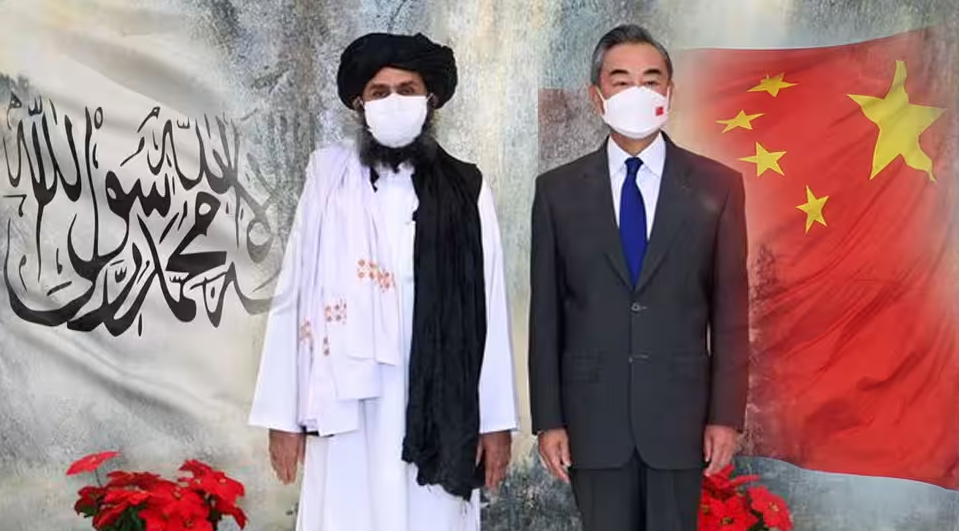
People’s Republic of China’s (PRC) Belt and Road Initiative (BRI) completes one decade this October 2023. But, of PRC right now, the spotlight is on the Taliban, the pernicious force destroying Afghanistan, as it is set to join BRI soon. Taliban will be attending the Belt and Road Forum in China on October 17th and 18th, making it one of the highest multilateral summits the Taliban has ever been invited to. This reveals the evil mindset of the Chinese Communist Party (CCP), which is now shaking hands with one of the most destructive Terrorist Taliban and plans to join with it under its already contentious and often accused of Debt Trap enforcing program, the China-Pakistan Economic Corridor (CPEC). BRI had been introduced as a tool used by the CCP to engross into malevolent activities like debt trap diplomacy, state-sponsored terrorism, infringement of territorial sovereignty and integrity of nations, and damaging ecology of strategic areas – hidden under the garb of what Beijing casually refers to as “building infrastructure and increasing global trade and connectivity.” The PRC is looking at the Taliban to make Afghanistan a part of CPEC, which is the sly protagonist of BRI used to toy with India’s sovereignty by passing the corridor through PoK (Pakistan Occupied Kashmir) territory of Gilgit Baltistan. Any country is yet to recognize the so-called Taliban authority formally. Still, under an equally repressive rule of the CCP, the PRC became the first country to appoint an ambassador to Kabul and has ever since tried to engage with the Taliban actively. The major focus of the PRC is not only to create a wedge with India but also to exploit the natural resources of Afghanistan. The war-torn, impoverished country has untapped copper, gold, and lithium deposits worth trillions of dollars. It is absolutely clear that the CCP can use any situation and exploit it for its benefit. Hence, it is now going to pour its money made from the “Uyghur forced labour” manufacturing activities into mining projects in Afghanistan heavily. Red Lantern Analytica strongly condemns such acts of the People’s Republic of China to join hands with the evil Taliban. We remind the world that the Taliban is a dangerous outfit that has been continuously creating havoc in Afghanistan for decades, and should be criticised and not be partnered with like the CCP-led PRC is doing. We would also like to appeal to the Free world to take notice of this unfortunate albeit deliberate act from the CCP and condemn it in every possible way.

TR
Team Red Lantern AnalyticaAnalyst
arrow_outward
Taliban-China increasing ties: Implications for India
UNTRADITIONAL SECURITYOCTOBER 16, 2023
31

Taliban-China increasing ties: Implications for India

Taliban has shown interest in joining the 3rd Belt and Road Initiative (BRI) Forum to be held on 17-18 October in Beijing. This forum is to mark the 10th anniversary of ambitious global infrastructure and connectivity initiative BRI. Taliban spokesman Akhundzada Abdul Salam Jawad told the media that Taliban’s acting minister for commerce and industry, Haji Nooruddin Azizi will attend the forum. Azizi is supposed to have discussion on construction of road through Wakhan corridor wo provide direct access to China. Wakhan corridor is about 350 km long and 16 to 64 km wide and provides the only border connection of Afghanistan with Xinjiang of China. On 4-5 October 2023, on the sidelines of 3rd Trans-Himalaya Forum for International Cooperation in Tibet, Chinese and Afghanistan Acting foreign minister had discussed opening of Wakhan corridor to strengthen trade ties. If this corridor plan is implemented then there are chances that Pakistan may also use this to further connect to Central Asian Republics (CAR). Since August 2021, China’s approach to the Taliban has been governed by security concerns and aversion to violent extremism. China’s main objective in Afghanistan is to stop violent extremism and terrorism from destabilizing the area. It doesn’t want any kind of spillover into China. In addition to keeping terrorism from spreading to Xinjiang, China considers Afghanistan as a means of protecting its investments in Pakistan and Central Asia. Earlier, China and Pakistan in May had discussed extending the China-Pakistan Economic Corridor (CPEC) to Afghanistan. Taliban spokesman has said that through this BRI Forum Afghanistan is looking to attract more investments. But the primary question is will the Afghans gain any profit from these BRI projects if implemented. The answer is that the common people of Afghanistan won’t gain anything, only the Taliban will gain profits which will be used in their operations to further suppress the rights of Afghans. China is the first country to appoint an ambassador to Afghanistan even though China has not formally recognized the Taliban led government. China’s approach to Afghanistan has evolved since 2001, moving from a non-engagement “observer” policy (2002–2010) to an agenda based on economics (2011–2017), and finally to an agenda dominated by security (post–2018). China’s foremost security concern is possible challenges from the East Turkistan Islamic Movement, an organization that aims to free Xinjiang Province and the Uyghur people from Chinese government authority and install an Islamic order. In 2001, during the Global war on Terror, China did not show particular interest in Afghanistan as the US and its allies were present there but it was interested in stabilising the internal conflicts in the fear of spillover to Xinjiang. However, this approach changed when the US announced its complete withdrawal from Afghanistan which could have led to resurgence of terrorism and instability near its borders. The US withdrawal has led to a vacuum that China is exploiting. China is concerned that a destabilized Afghanistan will be a favourable environment for the ETIM or other organizations looking to utilize Afghanistan as a base. These increasing ties of China and Afghanistan, considering that China has already ‘all weather friendship’ with Pakistan, can have security implications on India. Recently China has added Afghanistan in the China- Pakistan Economic Corridor (CPEC) projects. CPEC is built on Indian territory illegally occupied by Pakistan and now involving another actor into this will have repercussions in the region. Afghanistan is an important neighbour for India. India’s regional economic ambitions, which include stronger links with Iran and Central Asia, depend on Afghanistan. Already the Taliban is posing a threat to India, and its connections to Pakistan and Islamist organizations like Lashkar-e-Tayyiba and Jaish-e-Mohammed raise further concerns and now its increasing ties with China can have implications to India. China’s need to use the Indian Ocean (IO) routes for its trade and energy needs may increase if the CPEC and BRI routes from Central Asia to South Asia via Afghanistan become more connected and integrated. This can have impact on the geopolitical environment in the region and raise India’s threat perception of China’s prospective naval presence in the IO Region, which would only lead to naval competition. India’s passivity will allow the Taliban and China to claim that the China-led CPEC does not infringe upon Indian sovereignty, since the project passes through Indian territory that is occupied by Pakistan. Given China’s expanding economic and strategic interests in Afghanistan, it is likely that China’s intervention in Afghanistan will have significant implications for India’s geopolitical, security, and economic interests in the South Asian region. The economic, political, and security concerns of India in the area are expected to be affected by China’s investments, infrastructural development, and influence in Afghanistan. Additionally, India’s national security may be directly or indirectly threatened by the changing security circumstances in Afghanistan, particularly in the wake of the American withdrawal. Author: Kritika Rajput

TR
Team Red Lantern AnalyticaAnalyst
arrow_outward
Geopolitical Shifts and Trade Routes
UNTRADITIONAL SECURITYOCTOBER 9, 2023
32

Geopolitical Shifts and Trade Routes

China, India, and other economies in Asia have an opportunity to diversify their overland trade routes to Europe by establishing an alternative and more cost-effective route through Armenia. At the same time, Armenia has an opportunity to be reintegrated into the historic trade routes between Asia and Europe as an independent sovereign state. Such coincidence of economic and geopolitical interests is rare. The opportunity should not be missed. A useful way of looking at the world at any given period is to identify what is the main geopolitical game at play, and what are the side-shows that inevitably get affected by it. In advising client governments in the Middle East, Europe, Asia, and North America, some of which liked to see themselves as actors of consequence, this approach was helpful in both bringing them back to reality and guiding them into a more realistic and advantageous geo-strategic direction, as they positioned themselves in the crosscurrents of the ever changing “main game.” The “main game” has changed considerably in the past few decades. During the cold war, it was primarily between the Soviet Union and the USA. After the collapse of the USSR, it turned into a Russia-USA axis. Today, it is shifting increasingly into a USA-China competitive tension. What is interesting about this last shift is that the China-US global competition is materially different from those preceding it, in the sense that it does not involve geopolitical or ideological dominance, as was the case during the cold war and even in the case of the Russia-US relations. China has two strategic objectives — 1) safeguarding its security perimeter and territorial integrity and 2) spreading its economic and commercial “dominance” globally. In Central Asia and Caucuses the two come together, because China considers these regions its near abroad. The competition for global economic dominance involves control over strategic trade routes. The US navy still pretty much dominates global sea routes. So China’s focus has been to have a major influence on global land routes. That is basically the main objective of its “Belt and Road” initiative, in which it has been investing substantial resources. Land trade routes have attracted the attention of other players as well. —Erdogan’s main opponent at the last elections in Turkey, Kilicdaroglu, was promoting a map describing a route from China to Europe, via Turkey and Iran, totally bypassing not only the south Caucasus but also Azerbaijan. Official Azerbaijan’s reaction to that was apoplectic. It criticized plan strongly and claimed that Azerbaijan would be at the center of any Asia-Europe trade route. —More recently, around the G20 Summit, the plan for a India-Middle East-Europe Economic Corridor (IMEC) was announced. This was quite elaborate, with various segments having sea transportation and other segments land. What is interesting about this is that it links India to Europe, bypassing Turkey altogether. This time, Turkey went apoplectic, with Erdogan announcing that an Asia-Europe trade corridor cannot exist without Turkey. China has reason to be concerned about IMEC as well, as it is seen as a potential rival to China’s new silk road. Turning back the to the “main game” of US-Chinese competition, China is faced with the need to diversify its land route options. Aside from competitive initiatives such as IMEC, all existing land trade routes available to China are subject to geopolitical risks, making multiple alternative options attractive, even if the new options are also subject to the same geopolitical risks. The need for such alternatives became more apparent after the Ukraine war, when the Russian transport routes into Europe were disrupted because of the sanctions. The region poses other risks as well: Georgia, which also underwent a war with Russia, and Iran, against which formidable forces are at work, including Israel and the US, are risky transportation hubs. There is no non-risky land route, especially when one thinks as long-term as the Chinese do. So diversification of options makes sense. The one option that gives China an economically more efficient alternative is a straight line through the southern Caucasus, which puts Armenia back on the trade route map. The most efficient land trade route from China to Europe passes through the southern Caucasus. Here is where the control of the famous “Zangezur Corridor” attains global significance and becomes relevant to the “main game.” Furthermore, it presents a unique geopolitical opportunity for Armenia because the interests of China, the US, India, Iran are aligned on this issue. Here is why: The control of a land trade route linking Asia with Europe through the southern Caucasus and Armenia can take one of three forms: —It can be through a free “Corridor” through Armenia, linking Azerbaijan to Nakhijevan and thus Turkey. This is what Azerbaijan and Turkey call the “Zangezur Corridor” and which they have been actively campaigning for since the end of the 2020 44-day Nagorno Karabakh war, and, most recently during Turkish President Erdogan’s speech at the UN. Obviously, this will give Turkey enormous new leverage and have it realize its long-standing dream of a pan-Turkic zone of influence extending all the way to China. China would be opposed to that level of Turkish dominance in its near abroad. India would be opposed to it for the same reasons. The US would also be opposed to this because it will turn Turkey into an even more “difficult ally” than it is now. Iran is opposed to it for the obvious reason that it eliminates the only border linking it to the west outside of Turkish control. Finally, Armenia would be opposed to this because it would constitute a direct infringement of its sovereignty. —The second option is to have the Zangezur corridor under Russian supervision. This is what Russia wants, and that is why it is opposed to the first option above. But this option is unacceptable to all other players. —Finally, the 3rd option is to have the route cross Armenia under full Armenian sovereignty. Armenia being the least threatening and smallest country in this entire link, this would be the preferred option of most

TR
Team Red Lantern AnalyticaAnalyst
arrow_outward
UNTRADITIONAL SECURITYOCTOBER 3, 2023
33

Armenia’s strategic corridor is a key to unlocking Eurasian trade

In the intricate dance of global geopolitics and economics, the G20 Summit’s recent unveiling of the Partnership for Global Infrastructure Investment has set the stage for a new era of trade. While this initiative, backed by the US and the EU, promises to reshape trade dynamics between Europe, the Middle East and India, there’s another project that demands equal attention: the Trans-Asian Railway. Within this vast network, Armenia’s corridor emerges as a linchpin, holding the key to unlocking unparalleled trade opportunities for countries like China, India, Iran and Georgia. The Trans-Asian Railway (TAR) Network is an ambitious project that aims to create an integrated freight railway network across Europe and Asia. The Intergovernmental Agreement on the Trans-Asian Railway Network opened for signature on 10 November 2006 in Busan, Republic of Korea. The Intergovernmental Agreement on the Trans-Asian Railway Network entered into force on 11 June 2009. Spearheaded by the United Nations Economic and Social Commission for Asia and the Pacific (UNESCAP), the project has garnered significant attention and participation from numerous countries, including Armenia. And why should Armenia actively push for this project? Let’s delve into the reasons. With the continued surge of containerized freight through the ports of the Asia-Pacific region, there’s a pressing need for efficient transport networks. The TAR Network offers a solution, providing a seamless connection between major trading hubs. For Armenia, this means easier access to both European and Asian markets, potentially boosting exports and strengthening its position in global trade. By participating in the TAR Network, Armenia can foster stronger ties with neighboring countries. This not only promotes economic cooperation but also strengthens diplomatic relations, ensuring a more stable and prosperous region. The TAR project offers countries an opportunity to upgrade existing railway infrastructure or construct new ones. For Armenia, this could translate to improved domestic transport systems, fostering internal trade and connectivity. The project emphasizes the importance of finding synergies between national infrastructure projects and international corridors. By being a part of this initiative, Armenia can collaborate with other nations, sharing knowledge, technology and best practices. This cooperative approach can accelerate infrastructure development and ensure that the railway systems are of international standards. The Intergovernmental Agreement on the Trans-Asian Railway Network provides a framework for countries to discuss and plan the future expansion, upgrading and operation of the TAR Network. Participation in such a significant international project elevates Armenia’s status on the global stage. It showcases the country’s commitment to global development, cooperation and its vision for a connected future. The Trans-Asian Railway Network is more than just a transport project. It’s a vision for a connected, integrated and prosperous Asia and Europe. For Armenia, it presents a golden opportunity to boost trade, improve infrastructure, foster regional ties and elevate its status on the global stage. It’s an opportunity that Armenia should actively pursue and champion. The Trans-Asian Railway, passing through Armenia, promises to bring significant foreign investment, a boost to the domestic economy as well as international trade. For neighboring countries, this means faster, more efficient trade routes, reducing costs and time. Armenia’s participation can foster enhanced diplomatic relations with neighboring nations. This is especially crucial given the historical tensions in the region. Infrastructure projects of this magnitude have the potential to bring stability to regions. By promoting economic interdependence, the Trans-Asian Railway can play a role in ensuring the security of its member countries. For Armenia, this means a step towards a more stable, secure future. For India, the Armenian corridor of the Trans-Asian Railway provides a direct, fastest and the most efficient route to Europe. This not only reduces transit times but also offers a cost-effective solution, making trade more lucrative for Indian businesses. Georgia, with its aspirations to be a significant player in Eurasian trade, stands to benefit immensely. The Armenian corridor offers Georgia a streamlined route to both Asia and Europe, bolstering its position as a key transit nation. For Iran, the corridor through Armenia can serve as a bridge to European markets. Given the sanctions and trade restrictions Iran has faced, this railway offers a fresh avenue for trade, fostering economic growth and stability. China’s expansive Belt and Road Initiative seeks to dominate trade routes across Asia, Africa and Europe. The Trans-Asian Railway, especially the Armenian corridor, can complement this vision, providing China with a shorter and more efficient route to key markets. The Armenian corridor’s strategic importance goes beyond just trade. It’s a symbol of regional cooperation, diplomatic ties and a shared vision for a prosperous future. By facilitating trade, it can usher in an era of economic interdependence, fostering peace and stability in a historically volatile region. The Trans-Asian network is not just a testament to international cooperation, it is a civilizational corridor that binds the tapestry of human history. The network connects nations that are heirs to some of the world’s most ancient and influential civilizations. The project serves as a reminder that while civilizations have their distinct identities, they have always been interconnected, influencing and learning from each other. The project, by connecting these ancient civilizations, not only promotes economic growth and cooperation but also fosters a deeper understanding and appreciation of our shared human heritage. With this perspective, the emphasis on the Armenian corridor becomes even more significant. Armenia, with its rich history, served as a bridge between the East and West, making it a pivotal link in this civilizational journey. The G20-backed corridor is a monumental step towards redefining global trade routes. By connecting powerhouses like India with Europe and the Middle East, it aims to expedite trade and foster economic cooperation. However, the Trans-Asian Railway, with Armenia at its heart, offers a complementary and strategic route that can further enhance this vision. While the G20’s Partnership for Global Infrastructure Investment is undoubtedly a game-changer, the Trans-Asian Railway’s Armenian corridor is the key to unlocking the true potential of Eurasian trade. For nations like India, Georgia, Iran and China, this corridor offers unparalleled opportunities. As the world stands at the

TR
Team Red Lantern AnalyticaAnalyst
arrow_outward
A Brief Report on China’s Economy
UNTRADITIONAL SECURITYSEPTEMBER 7, 2023
34

A Brief Report on China’s Economy

The $18 trillion Chinese economy has been spiralling down for quite some time now and owing to China’s global trade and investment connections, it becomes more than important to dive deep into the causes and effects of such a decline. According to data from the National Bureau of Statistics (People’s Republic Of China), China slipped into deflation for the first time in more than two years as the Consumer Price Index (CPI) declined by 0.3 percent in July,2023. The Chinese exports fell by 14.5% in July which was the steepest drop in last three years. Such deflationary trends in the country are a result of structural problems prompted by political and market factors : After a 3.0% increase in growth in 2022; IMF data expects Chinese economy to expand by 5.2% this year, although the quarter-on-quarter growth from Q1 to Q2 in 2023 was merely 0.8 percent. (Share of China in world GDP) Factors for the current slowdown Over time, structural issues have arisen as a result of over centralisation of power at centre leading to political decisions in matter of investments and exports-driven growth model coupled with a turbulent external environment employing large-scale stimulus to boost demand. An unintelligent Zero-Covid policy, geo-political disputes with almost all its neighbours, trade wars, strict regulations & lack of ease of doing business, and harrassment of private entrepreneurs, entertainment industry icons, technology industry leaders, and foreign executives have led to the fall of China in global multilateral trade and simultaneously discouraged new foreign companies from setting up bases in China. State finances are strained due to a excessive oversupply of industry and property, rising debt levels among local governments, sluggish consumption, falling exports, skyrocketing unemployment and a rapidly declining young population. Recovering from the zero covid policy meant a slow GDP growth due to low level of consumption and increased saving habits among the masses. A major chunk of the Chinese GDP (25%) comes from the real estate sector, which is in doldrums for the last two years. Its connection to more subsidiary and dependent industries (e.g. construction, finance, marketing, etc.) makes it more prone to risk and losses which is proven by the fact that real estate accounts for 76.4% of the debtor assets of listed banks with mortgages exceeding 10 trillion yuan. In 2022, the investments in real estate sector fell by more than 10% on an year-over-year basis. Investments are already down by 8.5% halfway through 2023. More than 60% of the sector’s businesses that have released performance reports for the first half of 2023 anticipate losing money this year. (Change in real estate/property prices in China) The fall of China’s real estate sector had a domino effect on China’s shadow banking system as it invested heavily in real estate. The fluctuations in demand and property prices led to shadow banks defaulting on payments. This banking system, equivalent to $3 trillion, also raised money directly from rich investors and corporate treasuries, and went on to lend to local government vehicles, property developers and other borrowers that couldn’t otherwise obtain traditional credit. The doom of China’s real estate sector started when Evergrande Group, the benchmark of China’s real estate industry and formerly a “trillion-dollar empire” faced financial troubles in 2021. It filed for bankruptcy protection in the United States on August 17, 2023, with liabilities roughly equivalent to nearly 2% of China’s GDP. On 12th August, another ‘model’ real estate giant, Country Garden, declared the suspension of 11 domestic corporate bonds and skipped the coupon payment for two US dollar bonds due on August 7th. Construction of around 10% of the homes sold in 2021 has paused in 24 major cities as sales continue to decline and new finance remains scarce. Due to widespread protests by the homeowners, banks holding $6 trillion in mortgage loans are now at risk of defaulting on bonds issued by offshore developers. Zhongrong Trust, a division of Zhongzhi Group, is China’s biggest private asset management business/ shadow bank which also incurred losses since 2021. Major debts in infrastructure have forced the local governments to take serious actions compared to the opaque central government. On August 3rd, the municipal administration of Zhengzhou unveiled “15 articles” in an effort to save the regional real estate companies by lowering taxes, removing sales limitations, and enacting laws like “recognizing houses but not mortgages.” The crackdown on private business establishments have furthered the prevailing unemployment for many fresh graduates which is very serious because according to a 2019 study by the Chinese Academy of Social Sciences, the major pension fund of China will run out of money by 2035 due to the declining labor force. What statistics say The China’s Foreign Exchange Trade System’s Yuan basket has fallen every week since late April. China’s Consumer Price Index (CPI) fell by 0.3 in July and Producer Price Index (PPI) fell for a 10th consecutive month. A mixed picture emerged when China’s private Caixin/S&P Global manufacturing purchasing managers’ index (PMI) increased to 51.0 in August from 49.2 in July. However, an official survey revealed that manufacturing activity declined for a fifth consecutive month in August. In the first seven months of 2023, China’s imports and exports totaled $3.4 trillion USD which is a decrease of 6.1%. China’s exports, which make up one-third of its GDP, decreased by 4.7% in comparison to last year. Due to inflation, exports to the US and EU, two of China’s largest markets have also declined drastically. (Share of China in world exports) China’s household debt is now at 63.5% of its GDP, which is nearing to the 65% red line previously used by the IMF as a marker warning of financial risks. In August, due to the government’s 25% increase in railroad spending and businesses stockpiling iron ore in anticipation of a “possible” post-summer construction boom helped to keep iron ore prices above $100 per ton for the majority of 2023 and hence, the real estate sector displayed a slight resilience. However, demand for vehicles, shipping supplies,

TR
Team Red Lantern AnalyticaAnalyst
arrow_outward
A Devil in Every Detail: The Impossibility of the Integration Of Nagorno Karabakh (Artsakh) into Azerbaijan
UNTRADITIONAL SECURITYAUGUST 23, 2023
35

A Devil in Every Detail: The Impossibility of the Integration Of Nagorno Karabakh (Artsakh) into Azerbaijan

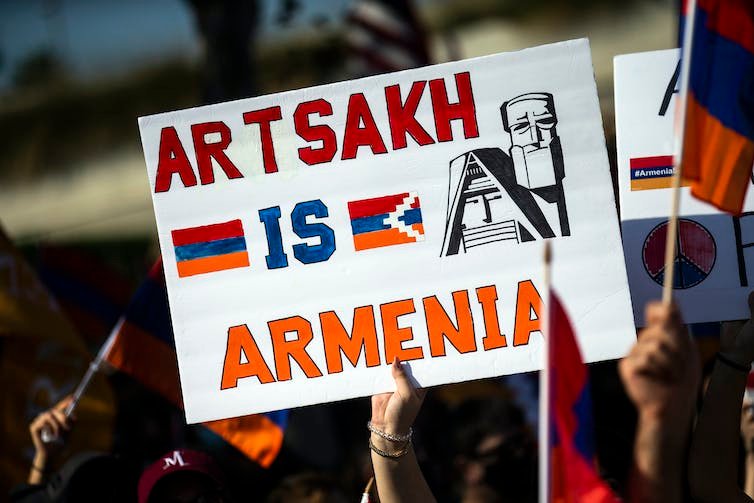
International and pan-Armenian attention is currently understandably focused on opening the Lachin Corridor, since that constitutes the immediate and most visible mitigation of an unsustainable situation for the population of Nagorno Karabakh. Nevertheless, it would be a dangerous mistake to view the current crisis in Nagorno Karabakh merely as a humanitarian crisis. The damage done by the blocking of the Lachin Corridor by Azerbaijan goes beyond the shortages of food and medicine and other necessities. An equally dangerous consequence of the blockade has been a shift in the focus of international attention from the right for self-determination, autonomy, and independence of the ethnic population of Nagorno Karabakh, to humanitarian assistance. This, and the concurrent shift of emphasis in the international narrative around Nagorno Karabakh, has created the risk that international mediators, once they “solve” the humanitarian problem, will consider the conflict resolved and their job done. What makes this risk real and present is the fact that the international mediators have not yet shown the political will to tackle the difficult challenge and root cause of the blockade, namely, Azerbaijan’s clearly demonstrated intent for ethnic cleansing and Genocide. There seems to be a rush, perhaps even a competition, among international mediators to achieve (and then claim credit for) peace between Armenia and Azerbaijan, at any cost, including turning the fate of the Armenians of Nagorno Karabakh collateral damage in the process. Charles Michele, the President of the EU, in his briefing after the trilateral meetings in Brussels in mid-July, was deliberate in his exaggerated optimism about the prospects for peace between Armenia and Azerbaijan; two points in his briefing were telling: First, that the two sides had accepted each other’s territorial integrity with specific square kilometers cited as the area of each country, in effect confirming Armenia’s recognition of Nagorno Karabakh, as well as 8 Soviet era Azerbaijani enclaves in Armenia proper, as part of Azerbaijan; and second, his praise of Azerbaijan’s willingness to provide humanitarian supplies to Nagorno Karabakh through Aghdam. These two points are significant because they show total disregard for the basic rights of the population of Nagorno Karabakh. In early July, the US Ambassador to Armenia, Kristina Kvien, was unambiguous in her statement to the effect that Armenians of Nagorno Karabakh can live in peace as citizens of Azerbaijan. Of course, the Government of Armenia itself has formally and publicly accepted that Nagorno Karabakh is part of the territorial integrity of Azerbaijan. And Russia is not far behind, supporting the notion that the Armenians of Nagorno Karabakh have to accept Azerbaijani rule. Accepting that Nagorno Karabakh is part of Azerbaijan and that the Armenian population there can be integrated in and live comfortably as citizens of Azerbaijan, has many unimaginable consequences that make the premise simply impossible. Those who advocate this as a way forward have not thought through these consequences. This paper will not dwell on the “territorial integrity” versus “self-determination” debate, nor will it delve into the complicated history of the Nagorno Karabakh conflict, nor on the lack of any legal basis for Nagorno Karabakh to be part of Azerbaijan. Instead, it will highlight some of the practical obstacles of integrating Nagorno Karabakh in the Republic of Azerbaijan, a subject generally absent from the international discourse on the region. At the risk of repeating a tired but true cliché, let me say that in this case for sure the devil is in the details. Some of those details include, but are not limited to, the following obvious facts: —Every able-bodied male above 18 years of age has probably served in the Nagorno Karabakh Defense Army. According to the regime in Baku, these are terrorists. Thousands of soldiers who defended their homeland during past Karabakh wars will be accused of terrorism and arrested, like the recent case of Vagif Khachatryan, who was abducted from a Red Cross vehicle transporting him for medical treatment, because the Azerbaijan government mistook him for his namesake, a former soldier in the Nagorno Karabakh Defense Army. Aliyev’s recent promise of amnesty to Nagorno Karabakh government officials if they resigned and dissolved the government, aside from being an utterly degrading offer for the indigenous population of Nagorno Karabakh, does not inspire much hope that thousands of soldiers in the Nagorno Karabakh Defense Army will be spared. Even if the Azerbaijan government formulates some kind of nominal umbrella “pardon,” it will find enough loopholes for especially “grievous” cases to arrest and try thousands of military personnel. —As citizens of Azerbaijan, the Armenian men who somehow do not get imprisoned or executed, and the new generation coming of age, will be required to serve in Azerbaijan’s army. These will be the young men whose older brothers and fathers fought in the Nagorno Karabakh Defense Army, who now would be forced to join the very army their elders fought against. Let that sink in for a minute. And even if we imagine that some of them somehow manage to overcome this impregnable psychological barrier and do join the Azerbaijani army, what will be waiting for them in their military units? If the treatment by Azerbaijan of Armenian POWs is any indication, neither the safety nor the life of Armenian conscripts in the Azerbaijani army can be guaranteed. Granted, conscripts are not POWs; however, given that they or their family members have fought against the Azerbaijani army in the past, and given the widespread and deep-rooted xenophobia against Armenians in the Azerbaijani army, they might as well be. —The military pantheon in Stepanakert, where the soldiers who died defending Nagorno Karabakh against Azerbaijan are buried and revered as national heroes, will be desecrated and eventually erased entirely. The Armenian population, after acquiring Azerbaijani citizenship, is thus expected to simply forget their heroes and accept the erasure of their graves. This is bound to happen, as destroying graves and entire cemeteries is a well-established Azerbaijani practice. The ethnic cleansing of Nakhijevan did not stop until every trace of past Armenian life and heritage was systematically

TR
Team Red Lantern AnalyticaAnalyst
arrow_outward
Astana International Forum demonstrates Kazakhstan’s Commitment to Global Conflict Resolution
UNTRADITIONAL SECURITYJUNE 26, 2023
36

Astana International Forum demonstrates Kazakhstan’s Commitment to Global Conflict Resolution

The world has recently been experiencing considerable turmoil. The COVID-19 pandemic, which has had an enormous impact on the world, is still present, along with various other geopolitical challenges. Multilateralism has also been blurred, and the global order has nearly collapsed. In terms of supply chain disruptions, food shortages, economic slowdown, and fractured globalisation, these issues have significantly impacted low- and middle-income economies worldwide. It should be noted that conflicts between big powers throughout the world are currently causing greater problems for several different countries than they do for the ones directly engaged. Given their involvement in the global geopolitical conflict, the great nations cannot be trusted to address these challenges successfully since their geopolitical interests overshadow the progress of mankind and the global community. Therefore, it becomes crucial to consider how nations dealing with the consequences of these problems play a role. It is important to acknowledge Kazakhstan’s contribution in this regard. Kazakhstan has played an essential role in regional and international conflict settlement efforts. One of the most notable examples of Kazakhstan’s commitment to conflict resolution is its participation in the 1990s negotiations to end Tajikistan’s civil war. Kazakhstan sponsored a series of discussions between the warring parties, and its efforts were critical in ending the conflict. Kazakhstan has a multi-religious, multi-ethnic, and multi-cultural society living peacefully. It organizes the Congress of the Leaders of the World and Traditional Religions, which is held regularly on an interval of three years. As a culturally diverse state, Kazakhstan has become a focal point for inter-religious, inter-cultural, and inter-civilizational discussion and interaction. It has provided a critical forum for conflict avoidance through the Congress of the Leaders of World and Traditional Religions. Kazakhstan has also actively promoted peace and stability through its membership in regional organisations like the Shanghai Cooperation Organisation (SCO) and the Conference on Interaction and Confidence-Building Measures in Asia (CICA). Noting the importance of CICA, Kazakh President Tokayev at a high-level CICA summit in Astana in 2022 said that CICA has the appropriate potential to consolidate the collective will and wisdom of Asian states in the interests of peace, cooperation, and development. Kazakhstan has also sent its forces to the peacekeeping mission in Lebanon as part of the United Nations (UN) Interim Force in Lebanon. Overall, Kazakhstan’s attempts to resolve disputes show its dedication to fostering peace and stability regionally and globally. As a commitment to promote security and peace in the region via dialogue and discussion, the Government of Kazakhstan organized the Astana International on June 8-9, 2023. The Astana International Forum brought participants from different regions and sectors together to address the challenges the world is facing now. These issues include regional cooperation, global economy, energy, climate change, and growth. A number of meetings were held at various levels in this forum. These meeting addressed some critical global concerns, including climate change, energy security, and food shortages. The need for investment and cooperation to develop new infrastructure and expand current infrastructure, as well as changes in global and regional trade, trade regulations and agreements along the route, were all discussed in this event. It was stated that because of shifting trade flows and the global geopolitical environment, countries are being forced to diversify their existing trade routes and chase new markets. In this context, the Middle Corridor, which connects Asia and Europe and passes through Kazakhstan, has become essential for boosting the connectivity of the Eurasian continent. In return, Kazakhstan might provide its own infrastructure and the capacity of the Astana International Financial Centre to facilitate agreements, attract investors, and facilitate cross-border trade. Significant contributions have been made by Kazakhstan to regional and global discussions for conflict resolution and development of the region. This Central Asian state has once more endeavoured to bridge the deficiencies in international relations through the Astana International Forum, which is crucial for the holistic development of the world. AUTHOR: Dr. Pravesh Kumar Gupta

TR
Team Red Lantern AnalyticaAnalyst
arrow_outward
Threat to India from Chat and Wallet applications from People’s Republic of China (PRC)
UNTRADITIONAL SECURITYJUNE 18, 2023
37

Threat to India from Chat and Wallet applications from People’s Republic of China (PRC)

Executive Summary There is an eminent threat to India’s sovereignty through Chat and wallet applications originally from Peoples’ Republic of China (PRC). PRC is known to use these mediums in for not just misinformation and disinformation campaigns, but can also use the inbuilt wallet facility to remit money to agents working on behalf of the CCP, to destabilize democracies like India. Such applications, which is not limited to but includes WeChat and Alipay can serve as a tool for extending Beijing agenda in a country perceived “not friendly” by the Chinese Communist party (CCP). The wallets are specially problematic as it can be used to transfer huge sums of money without the knowledge of concerned authorities like RBI or SEBI. This report delves into the details of such possible nefarious activities from the CCP in India. INTRODUCTION Peoples’ Republic of China’s dramatic rise has now become a more serious concern for the world. PRC has long posed a threat to world peace, and with ample economic and technological resources, its challenge has grown more serious. The world has seen how PRC’s Debt Trap Diplomacy has brought numerous countries to the brink of collapse, and also how it has taken an expansionist stance towards its neighbours. Moreover, we have recently seen PRC actively engage in Digital Warfare, under which a hostile country (PRC in this case) uses its technologies to damage the economic, political and social status of the other country using techniques like Data theft, disinformation and misinformation campaigns & ransomware attacks. In recent times, these are being used by the Chinese Communist Party (CCP) for money laundering and illegal fund transfer. Therefore, this report is an attempt to understand the PRC’s WeChat wallet and its potential threat to India. PRC’s Digital War There’s no doubt that PRC has made a significant technological advancement but with these, the advancement of its digital threat has also been lingering all over the world. There are multiple incidents of PRC based digital apps or websites stealing data or spreading misinformation. Moreover, with the arrival of PRC promoted digital wallets; the financial threats and attacks have also become part of their strategy. Below are some vivid evidences of such PRC induced digital threat. Disinformation in Taiwan, aided by WeChat: https://www.npr.org/2019/12/06/784191852/taiwan-gets-tough-on-disinformation-suspected-from-PRC-ahead-of-elections Misinformation activities in Canada, aided by WeChat: https://www.voanews.com/a/PRC-accused-of-meddling-in-canada-s-elections/7026562.html Money laundering in USA, supported by WeChat: https://home.treasury.gov/system/files/136/2022-National-Money-Laundering-Risk-Assessment.pdf [The U.S. Department of the Treasury in 2022 National Risk Assessments (NRAs) on Money Laundering (NMLRA) named WeChat as a Money Laundering Aid. (on Page 24)] Role of WeChat, in aiding movement of black money for illicit Fentanyl trade in the US: https://www.theepochtimes.com/PRCs-role-in-illicit-fentanyl-running-rampant-on-us-streets_4967062.html WeChat Threat When the PRC state-owned business, Tencent, first published WeChat in 2011, it was just a simple texting app. WeChat, however, rapidly expanded into a “mega-platform,” offering a tonne of helpful features in addition to its popularity. The list of services it provides includes public social media, food delivery services, Uber/Lyft-like functions, money transfers to friends, appointment scheduling for medical appointments, bill payment, conducting business conversations, and even using government services. As the app’s monopoly expanded, it has come to play a critical role in Chinese people’s lives. Aside from missing out on the convenience of all of its other features, “leaving WeChat means leaving social life in PRC,” even though it may sound exaggerated to someone who has never used the app. But beneath its apparent simplicity and openness lies a darker side, one that the CCP closely monitors and controls: i.e. censorship. Beijing exerts significant pressure on Tencent to implement real-time censorship that is effective for both text and images posted to users’ shared moments on WeChat as well as in group and one-on-one chats. WeChat’s social features in particular have made it possible for technology to be used as a potent tool for tightening censorship and state control in PRC. Nevertheless, these are domestic concerns for PRC. But if we look at the other aspects of WeChat and its wide user base along with its shadowy activities coupled with unnecessary and often widespread personal data stolen from the users, we can easily ascertain that WeChat has become a tool for Misinformation campaigns, Data Theft and Ransomware attacks. [Check the evidence provided in section 1] Moreover, with the inclusion of a wallet system without much of KYC verification this can also be used for money laundering and to fund unrest in other countries. WeChat Threat to India No doubt the Indian government has been strict on PRC promoted apps and has taken steps to check them including banning few of the apps but still, many of these apps continue to operate in India because of some technical loopholes. WeChat does not permit new users from India to create accounts, however if one has a sim card from another nation, including Nepal, one can simply create a WeChat account. On the other hand, there are tens of thousands of Indians who do business with PRC (both large and small), study Chinese, or interact with PRC for other reasons. All of them currently have active WeChat accounts that are used through a VPN because they created them before the app was outlawed. So what if one has a WeChat account? What can they do? Here’s the answer: Through WeChat and Alipay, thousands of dollars can be sent online without any KYC on the part of the Indian side. Once someone has a WeChat account, one does not need to link any bank accounts to it in order to receive payments (only sending funds from a bank account to another user’s WeChat wallet requires linking). WeChat features a built-in wallet that may be used to send money. No matter what country the account is from, you can receive these funds in PRC’s currency Renminbi (RMB) from any other WeChat account. There are certain limitations on the amount that may be received: WeChat permits transactions up to 50,000 RMB (6 lakh rupees approx.) per day and 2,00000 RMB (about 24 lakh

TR
Team Red Lantern AnalyticaAnalyst
arrow_outward
Report on China’s Human Rights Violation
UNTRADITIONAL SECURITYJUNE 17, 2023
38

Report on China’s Human Rights Violation

After over a decade of relative neglect on the part of the international community, a renewed focus on China’s human rights has resurfaced as a prominent aspect of bilateral relations between China and many other nations of the world. The threatening rise of China has put it under various scrutiny not only for its illegal claims in the South China Sea and the wider Indo-Pacific but also for its gross human rights violations. The human rights issue in China had initially gathered attention with the arbitrary imprisonment and arrest of thousands of participants in the 1989 Tiananmen protest and has been then the main source of concern for the entire international human rights machinery. A state-wide manhunt for protestors was conducted in June and July of 1989, along with a “most wanted” list of the principal organisers of the demonstrations in Tiananmen Square. Moreover, the Chinese government’s official response to the incident was to downplay its importance, branding the demonstrators as “counter-revolutionaries” and downplaying the magnitude of Chinese PLA’s military operations on June 3–4 of 1989. The Chinese government reported nearly 241 fatalities (including military) and 7,000 injuries; however, the majority of other estimates place the death toll substantially higher. In 2017, newly released UK documents revealed that a diplomatic cable from then-British Ambassador to China, Sir Alan Donald, had said that 10,000 had died. The government has generally tried to censor mentions of the occurrence throughout the years and to make the matter worse, Chinese defence minister, Wei Fenghe in 2019 had even told a regional forum that “stopping the turbulence was the correct policy” and that the way in which China had reacted to quell the mounting protests had brought peace and stability in the region. Hereafter, instead of any progress in its human rights policies, China deteriorated to an abysmal record in recent years with its suppression of Uyghur minorities, who are majorly concentrated in the Occupied East-Turkistan region (Xinjiang province) of China and where majorly muslims reside with their lineage tracing to Turkish roots. Throughout 2020, China’s human rights situation kept becoming worse with respect to these ethnic minorities. Evidence of pervasive and significant violations against the Uyghur Muslims and restrictions on the freedom of press, the right to free speech, and the right to practise any religion or belief continued. Along with these, what persisted was the Chinese limitations on the functioning of civil society as well as the incarceration and poor treatment of human rights defenders (HRDs). Over a million Uyghurs and people from other ethnic minorities were detained in “political re-education camps,” according to leaked and publicly available Chinese government documents, satellite imagery analysis, and eyewitness’ accounts. These revelations also provided more proof of the region’s expanding prison network. The recent “Xinjiang Police files” released by the Victims of Communism Memorial Foundation, with cooperation from 13 media outlets from a total of 10 countries, revealed that China has been suppressing its Muslim minority, the Uyghur people, for years and has been committing an act of genocide in the process. Many Uyghurs groups and individuals have been branded as terrorists and extremists and the state has planned their secret elimination. It adds to the growing body of proof regarding Beijing’s violent, protracted campaign against Uyghurs and other ethnic minorities. Particularly disturbing is the look at the detainees and the conditions they endure in the facilities provided by the thousands of images that scream their story through mug shots. Since 2018, several international organizations too have reported widespread detention of Uyghurs in China, a fact that China has consistently denied over the years. According to its own state report which rather paints an optimistic picture, “Uyghurs are receiving vocational training to improve their skills along with measures for “de-radicalization” and “counter-terrorism” facilities”. Addressing the plight of Uyghurs, the United Nations too has stated that it had “identified habits of unlawful detention, coercive work conditions, forced labour, forced sterilisation and a deterioration of social and cultural rights” for these ethnic minorities, along with the fact that the UN, until recently, could not gain “unrestricted access” to the region of Xingjiang where these people are tortured and kept in detention camps. When Michelle Bachelet visited China, as U.N. high commissioner for human rights, and published her office’s assessment of the rights situation in the Xinjiang Uyghur Autonomous Region, or XUAR, she asserted that China “may have committed crimes against humanity” against Uyghurs and other predominantly Muslim ethnic groups under the pretext of counterterrorism and counter-extremism measures. However, any prominent attempt by international organisations and other nations, to monitor and address the situation has always been obstructed by the incumbent authorities in China which eventually speaks volumes about the illegitimate stance of China on human rights issues. Thus, undoubtedly, the Chinese Communist Party (CCP) is one of the worst violators of human rights in the world and because of this, the world faces a unique problem in developing effective responses to human rights abuses in China. According to Andrew Nathan and Andrew Scobell, who in their book “China’s Search for Security”, have pointed out, the maintenance of China’s domestic stability and the protection of China’s sovereignty as the two main concerns of CCP in terms of foreign policy, the violations of human rights are absolutely justified by the Chinese authorities as a response to obstacles that stand in the way of these two objectives. Thus, given the severity of the atrocities and abuses that Uyghurs as a minority are subjected to in China, it becomes all the more essential for the entire international community to take a hard stance against China by penalising it and using a “Name and Shame” strategy to delegitimise its activities so that the lives of millions of Uyghurs can be saved from rigorous persecution. References Bachelet, M. (2022, May 27). Statement by UN High Commissioner for Human Rights Michelle Bachelet after official visit to Ukraine. United Nations Human Rights Office of the High Commissioner. https://www.ohchr.org/en/statements/2022/05/statement-un-high-commissioner-human-rights-michelle-bachelet-after-official Foreign Policy. (2022, May 25). China’s Xinjiang

TR
Team Red Lantern AnalyticaAnalyst
arrow_outward
Statement on China’s Increasing Nuclear Arsenals
UNTRADITIONAL SECURITYJUNE 15, 2023
39

Statement on China’s Increasing Nuclear Arsenals

In the Yearbook for 2023 released by Sweden based think tank, Stockholm International Peace Research Institute (SIPRI), it is estimated that the Chinese Communist Party (CCP) led China is increasing its stockpile of nuclear warheads at an alarming rate of 17%, by possessing 350 in January 2022 to 410 in January 2023. This pace of China’s increasing nuclear arsenals is “expected to keep growing” and China could potentially have at least as many as Intercontinental Ballistic Missiles (ICBMs) as either the United States (US) or Russia by 2030. The nuclear arms control and disarmament diplomacy had a major setback following the Russia-Ukraine war, with the US and Russia using petty tit-for-tat tactics to further this stance – US suspended its “bilateral strategic stability dialogue” with Russia and the latter suspended its participation in the 2010 Treaty on Measures for the Further Reduction and Limitation of Strategic Offensive Arms (New START). At such times, China hides under the garb of ‘modernising its military equipment and weaponry’ to invest heavily in all parts of its military and is actively engaging in what may be called the ‘Thucydides Trap’ – leading towards a war-like situation in order to displace an existing great power, just to fulfil its hegemonic desires. China, by proactively increasing its number of nuclear warheads, is trying to unleash ‘MADness’ – what nuclear strategists call as “Mutual Assured Destruction”. While the CCP is hell bent on developing its own robust nuclear ecosystem, it must not forget the ‘Nuclear Paradox’, i.e., neither nation engaging in a nuclear war can win it. So, from confrontations in the South China Sea, to intimidating military threats in the Taiwan Strait, to the gathering storm over the Korean Peninsula, CCP led China must recognise that outcomes of such authoritative actions would be suicidal.

TR
Team Red Lantern AnalyticaAnalyst
arrow_outward
Red Fear: The China Threat (Book Review )
UNTRADITIONAL SECURITYMAY 16, 2023
40

Red Fear: The China Threat (Book Review )

In tracing the tumultuous relationship between two emerging Asian giants, India and China, the book, Red Fear: The China Threat, derives its premises from the historical relations between the two nations which have been filled with extreme political upheavals and infinite military confrontations. Starting from the 15th CE and leading up to the 21st CE, the book has tried to elucidate every significant dimension of their relations which has eventually shaped where the two neighbours stand today. To understand the persistent Chinese position towards India, the book makes a U-turn and looks back at the Chinese worldview based on the concept of the “Great United Empire” which was established around 700 BC during the Eastern Zhou period. Being highly ambitious, China had propounded the concept which guided it to respond to several challenges emerging on its way. Even today, in what China describes as an era of Pax-Sinica, Chinese authorities vow to embrace the uniqueness of their perceived “cultural superiority” and thus try every possible way for achieving the feat of regional hegemon, and in the process may violate the sovereignty of other countries and irking them in the process. Having faced to accept the hegemony of foreign powers for decades starting from 1840 to 1940 (what the Chinese call-century of humiliation), Chinese people were well-versed in history. They do not leave any attempt to humiliate any country; and the recent tensions with India might also be a similar attempt. The book also exposes how the Chinese leadership was plagued with angst due to the UK’s collaboration with its Indian colony; and playing a role in destroying and subjugating the Qing Empire and afterwards enslaving almost a quarter of China’s male population to opium addiction which later led to opium wars having a profound impact on Chinese society and politics. The book is also unique as it has highlighted some extraordinary sequences of events, for instance, it talks about the first Chinese incursion in India in 1420 when Naval Admiral, Hou Xian sailed up to the Ganges to face the king of Jaunpur, Raja Ganesh. It talks about Mao and his strategy to protect the then-existing nuclear mandate of China by attacking and occupying the valuable resource-rich area of Aksai Chin. It has also raised several crucial questions having relevance in contemporary times such as the ones related to the Chinese defeat in the 1900’s Boxer rebellion by the Indian troops and whether it created any animosity in the minds and hearts of first-generation Chinese leadership towards India which was later manifested after 1949, i.e., once Communist Party of China taking control of the mainland; Russia’s role in sanctioning China’s attack against India in the year 1962; the after-effects of the opium wars, the ongoing border conflict between India and China; and finally some over India’s role in keeping the Tibetan cause alive, to counter Chinese aggression in India’s eastern border areas along the LAC. Tibet, even today acts as a bone of contention between India and China because the former hosting the Dalai Lama, the spiritual head of Tibetans, and also supporting its autonomy and sovereign rights. In contrast, China claims Tibet as a part of its larger territory and sees Dalai Lama as having separatist influence over the Tibetans. The author, Iqbal Chand Malhotra having served as AIM Television Private Ltd.’s chairman and producer is a member of the International Academy of Television Arts and Sciences. He has served on the Emmys jury and has directed three feature documentaries that have won multiple awards. He has a strong interest in China and has worked tremendously to contribute to the existing scholarly works on Chinese history and its current relationship with its neighbours. His other contribution includes “Kashmir’s untold story: Declassified” which was a bestseller and showcased his potential as a prominent sinologist and academician. The main peculiarity of this book which intrigued me is the way the author has emphasised on both the traditional (conventional military oriented) and the non-traditional security aspect simultaneously with respect to China. The non-traditional security aspect is discussed in the context of the Covid-19 virus which the author suspects and therefore provides enough evidence to prove that it must have originated from some lab in Wuhan and also in the motivation behind China’s need for water and the subsequent web of deceit and lies behind its land grabbing and water theft in the Himalayan and Karakoram Mountain ranges since the 1950s. There also seems to be high suspicion in the author’s mind that China might have used Covid-19 as a means of unrestricted warfare to disrupt the activities of its adversaries. The book apart from being highly detailed about the various aspects it has covered is also smooth and balanced in its approach to exposing the details in a justified manner. The author has dwelled on a historical and analytical approach but with a sharp focus on all the recent ongoings whether it be the recent skirmishes in Pangong Tso and Galwan valley or the Chinese intentions about resolving the dispute related to Jammu and Kashmir by taking both China and Pakistan into consideration. Even the recent changes in India’s FDI policy to contain opportunistic investments by China can be mentioned in this regard. Lastly, even though the book tries to comprehend the growing proximity between India and China as a fallacy, it is now for time to tell us whether this duo will let go of their historical baggage and converge their interest in those domains which is highly essential in today’s global order such as combating several non-traditional security threats such as Pandemics, climate change and terrorism or continue to withstand the age-old animosity and disrupt the peace and stability in the newly active and volatile Asian theatre Book Details: Title – Red Fear, The China Threat Author – Iqbal Chand Malhotra, 427 pages Publisher – Bloomsbury India, Publication Year – 2020 Book Review By: Sakshi Sinha

TR
Team Red Lantern AnalyticaAnalyst
arrow_outward
Dragon in Central Asia: The Security Dimension
UNTRADITIONAL SECURITYMAY 14, 2023
41

Dragon in Central Asia: The Security Dimension

With abundant natural resources, critical transportation corridors, and a shared border that is critical to China’s security, Central Asia is a strategically important region for Beijing. Central Asia is also a key region for China’s Belt and Road Initiative (BRI) that intends to build a huge network of infrastructure and trade linkages between China and nations across the world. Following the fall of the Soviet Union, China’s relationship with Central Asia is based on economic cooperation. Beijing has made significant investments in the region’s infrastructure, including the construction of highways, railroads, and pipelines, as well as the investing in energy and mining projects. As the region’s major trading partner, China has attempted to strengthen economic ties by establishing free trade zones and offering loans and grants to aid regional growth. In a bid to protect its investments, economic interests, and security risks China is now using its growing economic engagement in Central Asia to expand its security presence. The possibility of unrest in Xinjiang, China’s westernmost region with a border with Central Asia, has long worried China. The Uyghur ethnic minority has been charged by the Chinese government as being separatists and religious fanatics responsible for terrorist incidents in Xinjiang and other regions of China. Uyghurs and other Muslim minorities in the Xinjiang have come under harsh repression from Chinese authorities. China viewed Central Asia as a possible source of support and a haven for anti-Chinese operations carried out by Uyghur separatists and radicals since the region has ethnocultural commonalities with Uyghurs. Consequently, it has worked to forge stronger security relationships with the central Asian regimes to curb this threat. China has provided military equipment and training, shared intelligence, and joint exercises to Central Asian nations as a vital component of its security cooperation. The Shanghai Cooperation Organisation (SCO), which was founded by China, Russia, and the four Central Asian nations, has also been formed by China as a new regional security forum. The SCO has hosted joint military drills and counterterrorism exercises and has been regarded as a platform for regional security cooperation. In addition, China has signed bilateral security agreements with a number of Central Asian nations, including a strategic partnership with Kazakhstan and a security cooperation arrangement with Tajikistan. Focusing on border security and counterterrorism is one of the main aspects of China’s security engagement in Central Asia. Beijing has offered military weapons and training to Central Asian countries to assist them in patrolling their borders and preventing terrorists and extremists from infiltrating. Also, several Central Asian nations have received intelligence assistance from China. Impact on Moscow China’s growing security presence in Central Asia has raised concerns that it would eventually replace Russia as the region’s main security provider. Moscow has long controlled the Central Asian security environment, but its clout in post-Soviet Central Asian countries is dwindling as China’s economic and political might increases. Moreover, China is advancing in Central Asia’s security domain. It provided 18% of the region’s arms over the past five years, a significant increase over the 1.5% of Central Asian arms imports it contributed between 2010 and 2014. In the Pamir Mountains of Tajikistan, China established its first military installations in 2016, and stationed its paramilitary soldiers there. With regard to their influence in Central Asia, the strategic gap between Moscow and Beijing is closing, and if present trends continue, Moscow’s supremacy may be threatened in the future. It is also important to highlight that whereas Russia has a long history of military and security cooperation with Central Asian nations, China’s security involvement with the region is still relatively young and mostly focused on border protection and counterterrorism. Although, China’s security presence will probably increase as its economic clout in the region rises but it will probably not be able to fully replace Russia as a major actor in regional security matters in Central Asia. India as a Counterbalance to China India’s relations with Central Asia have also gained momentum recently. New Delhi views Central Asia as its “Extended Neighbours,” and is concerned about China’s growing influence in the region. Nevertheless, it also offers New Delhi opportunities. India is seen by Central Asian nations as a strategic counterbalance to China. The Chinese BRI has several problems in addition to the debt trap. These include a lack of coordination between the involved local governments, private enterprises, and state-owned firms in China, poor risk management, and a disdain for details. Instead, India’s connectivity initiatives, including the International North-South Transport Corridor and the Chabahar Port project in Iran, are unmotivated by politics and fully support regional connectivity. To counteract China’s expanding regional influence, India has recently expanded its engagement with Central Asian countries. New Delhi has also attempted to increase its security cooperation with Central Asian countries by giving military equipment and training to their soldiers. The First India-Central Asia Summit in January 2022 resulted in the formation of an India-Central Asia Joint Working Group (JWG) on Afghanistan, a JWG on the Chabahar port, and regular meetings of India’s and Central Asian states’ high level security officials. These three steps are in line with India’s revised Central Asia policy, which intends to increase partnership on regional security, Afghanistan, and connectivity. Based on the findings, it is possible to conclude that a proactive Indian presence in Central Asia is critical for balancing Chinese interests. Author: Dr. Pravesh Kumar Gupta, Associate Fellow VIF

TR
Team Red Lantern AnalyticaAnalyst
arrow_outward
CCP spokesman’s unfortunate comments over India’s population
UNTRADITIONAL SECURITYAPRIL 21, 2023
42

CCP spokesman’s unfortunate comments over India’s population

According to the latest United Nations Population Fund data, India surpassed China to become the world’s most populous nation with 142.86 crore people. China with a population of 142.57 million, has now become the second-most populous country. In this latest development, China’s reaction displayed slivers of its racist mindset. When asked for his reaction to the report, Chinese Foreign Ministry spokesman Wang Wenbin told a media briefing that “when assessing a country’s demographic dividend, we need to look at not just the size but also the quality of its population. Size matters, but what matters more is talent resource. Nearly 900 million out of the 1.4 billion Chinese are of working age and on average have received 10.9 years of education,” he said. The statement reflects China’s insecurities as even after being the second most populated country, China’s working age population is drastically declining. It is an established fact that the major reason Chinese economy thrived in the past decades was due to the abundance of cheap and forced labour and not the ‘quality’ and high skill of their demographic dividend. I’m comparison, many top Indian brains are currently leading Fortune 500 companies. As far as the quality of the work force is concerned, ‘Made in China’ products are infamous for their poor and cheap quality across the world. While CCP might claim otherwise, there are evidences that bad business ethics, corruption, disrespect for the well being of citizens and an autocratic powerful elite class in China has become the root cause of such declining quality of their products and services. A report published in the New York Times documented how corruption and lying have become endemic among the Chinese professional class. It says there are “dishonest practices that permeate society, including students who cheat on college entrance exams, scholars who promote fake or unoriginal research, and dairy companies that sell poisoned milk to infants.” It has become a part of their culture. During the COVID-19 pandemic, China faced criticism for supplying poor PPE kits to COVID-affected countries across the world. It is totally hypocritical of the CCP to talk about India’s demographic dividend and aspects of ‘quality’ when domestically China is facing much serious issues related to the condition of its labour population. The seventh national population census of the People’s Republic of China suggests a potential Chinese labour force gap for the next decade and beyond. The projected annual labour force gap is around 11.8 million. Structural unemployment is rampant in China’s high-skilled sector. According to a World Economic Forum report, China has 170 million skilled workers, but among the total employed population, only 7% are high-skilled personnel deemed capable of performing complicated tasks and able to adapt quickly to technological changes. So, China’s quality of workforce is not as superior as it tries to project. It has size and scale but not enough quality. We will like to remind Chinese officials that uncalculated comments like this show them in bad light and might also adversely affect the reputation of Chinese people living abroad.

TR
Team Red Lantern AnalyticaAnalyst
arrow_outward
China’s Debt trap in Africa
UNTRADITIONAL SECURITYAPRIL 18, 2023
43

China’s Debt trap in Africa

Driven by its hegemonic ambitions, the People’s Republic of China (PRC) has started expanding its sphere of influence beyond the traditional boundaries of its immediate neighbors. To facilitate the drive towards becoming a global power, the PRC has built vast sea lines of communication, extending from the Chinese mainland to Port Sudan in the Horn of Africa, commonly known as the String of Pearls, as coined by American political researchers in 2004. The PRC’s geopolitical influence in Africa is driven by efforts to increase diplomatic relations with the African nations, expanding and modernizing military bases and increasing access to ports and airfields. With poor infrastructure, logistical challenges and political instability hampering the PRC’s efforts to secure oil from Central Asia, it has signed a number of contracts with Iran to develop its oil fields while also building a refinery, pipeline and port in Sudan for oil export. Under the trillion dollar Belt and Road Initiative (BRI), which has been signed by almost 40 African states, the PRC has developed major infrastructure projects across the continent which include major ports, roads, highways, railways and power dams, which has resulted in the expansion of Chinese military presence to protect its investments in the region. These include the 4 billion dollar Djibouti-Ethiopia railway, Nairobi-Naivasha railway line and the Nairobi-Mombasa railway line. To address the PRC’s predatory lending practices, Brahma Chellaney, a geostrategist, coined the term debt diplomacy in 2017, saying that the PRC “overwhelms poor countries with unsustainable loans and forces them to cede strategic leverage to China”. The African nations fell for the Chinese debt trap largely because they were secured by high revenue projects even though the IMF and World Bank loans were cheaper and financed by limited government income. Also, unlike the IMF loans, in return for the disbursement of loans, the PRC loans are not tied to strict adoption of economic liberalization norms or democratic principles. Under the ‘Going Global’ strategy formulated by the PRC in 2001, the state owned enterprises were encouraged to go global, to capture market share and gain experience, while providing the enterprises with credit lines, at market rate, on commercial terms, to facilitate their business development. In the case of targeting African nations, the support was provided by state owned policy bank China Export-Import Bank (Exim) and the China Development Bank. Such credit lines were extended to Angola, Ghana and the Democratic Republic of Congo (DRC) and were linked either to the revenues from the debtor country’s natural resource exports or to the profits from the commercial venture. The PRC’s growing strategic interest in the African nations can be gauged from the fact that between 2000 and 2017, the PRC loaned more than 143 billion dollars to the African nations with Angola, Ethiopia, Sudan, Zambia and DRC being the largest borrowers. Also, between 2007 and 2017, PRC’s leader Xi Jinping and the foreign minister collectively made 79 visits to the continent. Combined with its anti-piracy activities in the Gulf of Aden, through which passes nearly 10 percent of seaborne traded petroleum, and the growing presence in the Gulf of Guinea, the PRC has also built its first foreign military base in Djibouti in 2017, a nation which owes 77 percent of its debt to the PRC, and also donates patrol boats to the Ghanaian military. 21 percent of Kenya’s foreign debt is accounted for by Chinese debt and owing to the default of Chinese loans to develop its largest port, Port of Mombasa, there were reports speculating Kenya relinquishing control of the port to the PRC while many in the media argued whether the loans were worth the risk and that they could jeopardize Kenya’s sovereignty. Similar controversies arose in South Africa which owes an estimated 4 percent of its GDP to the PRC when a 2.5 billion dollar loan was granted to state electrical utility firm Eskom while another 2.5 billion dollar loan to the same firm by Huarong Energy, a Chinese state owned enterprise was found improper by the Zondo Commission of Inquiry after irregularities and corruption were found during the loan process. Despite the PRC’s claims that the loans and infrastructural programmes in African nations are granted to suit the local interests, the fact remains that the projects are beneficial to Chinese companies who are suffering from overcapacity while also providing them access to key natural resources. For example, an industrial park in Ethiopia near the Addis Ababa-Adama highway, connecting the Addis-Djibouti railway line provides access to the maritime route for transport of goods such as coal, lithium, steel and marble back to the Chinese mainland. Moreover, the loan process is usually opaque and lacks transparency due to which some protests have also flared up, such as in 2017 when local traders from Uganda accused the PRC of starting small businesses. Similarly, the Kenya railways launched an investigation into claims of mistreatment of workers and of “creating a small kingdom in which the Kenyan workers were discriminated against”. Fearing the debt trap, many African nations have backed out of such projects initiated by the PRC. Owing to poor safety and environmental compliance, the Zambia government revoked a Chinese company’s license to operate coal mines while the Ugandan government has stalled the construction of the Kampala-Entebbe expressway owing to concerns over the rising debt trap. Such concerns should only make developing nations in Africa more cautious and vigilant in depending upon the PRC’s investments and the motive behind it all.

TR
Team Red Lantern AnalyticaAnalyst
arrow_outward
Book Review: “In the Camps: China’s High-Tech Penal Colony” Authored by Dareen Byler
COMMENTARIESAPRIL 15, 2023
44

Book Review: “In the Camps: China’s High-Tech Penal Colony” Authored by Dareen Byler

Describing the maximum-security “re-education” facilities that the Chinese Communist Party has built-in Xinjiang since 2017, it is difficult to avoid comparisons to concentration camps. Tragedies such as the Boer War, Nazi Germany, and the Soviet gulags provide illustrative context but are only partial analogies. While some forms of repression from the 20th century still exist, the modern world of high-tech surveillance has produced new types of control. In his book, In the Camps, University of Washington anthropologist Darren Byler refers to these “continuities and ruptures” when describing Xinjiang’s mass internment system. In this intimate, sombre, and damning account of the forces that led China to intern and “re-educate” more than one million Uyghurs, Kazakhs, and other predominantly Muslim people in Xinjiang, Byler argues that the camp system is, at the very least, on a scale and in a degree of cruelty that surpasses all obvious contemporary parallels. “The surveillance system itself generated presumptions of guilt and criminal behaviour,” Byler composes. China maintains that the facilities’ Chinese lessons and courses on Chinese Communist party ideology were provided as a form of “vocational training” to prevent the spread of “extremist” ideas. The Xinjiang government announced in September 2020 that these programs would end, a claim contested by Uyghur activists abroad. Byler’s conclusion serves as a reminder that China’s internment program, which he identifies as the largest internment of a religious minority since World War II, has global implications for surveillance and modern policing that should be considered separately. As one of the few anthropologists who took advantage of a period of relative openness to conduct fieldwork in Xinjiang before the Chinese government severely restricted access to the region, Byler’s compelling case is testimony from a, broad cross-section of Xinjiang society. Former Uyghur detainees, a contact law enforcement officer, a camp instructor, and a Kazakh farmer are among his interviewees. In 2017, a previously small-scale “re-education” programme morphed into a vast system of internment camps where anyone suspected of “extremist thoughts” or “pre-crimes” was sent without trial. These various personal accounts describe widespread confusion and fear. There, they were subjected to cruel and sometimes bizarre rituals, ostensibly to rid them of erroneous ideas, such as singing renditions of “patriotic” songs before being fed. “When you are hungry, it is extremely difficult to sing as they requested. Sometimes they would yell, “Sing again! Sing again!” a former detainee explained to Byler as if it were a game. These vivid accounts are interspersed with succinct descriptions that situate the current situation in Xinjiang within a long history of colonial power, dehumanising technologies, and state-sponsored forced labour. “Over the past three decades, Xinjiang has become a classic peripheral colony, serving the needs of Shanghai and Shenzhen,” the author writes. Byler argues that those implicated in Xinjiang’s “penal colony” are party officials, the white-collar workers of China’s artificial intelligence start-ups, and the Hong Kong boutiques that purchase gloves sewn by Uyghur workers. Moreover, by extension, western consumers, as Xinjiang currently produces “around a quarter” of the world’s cotton. Despite the global implications of China’s camps, Byler avoids discussing the diplomatic spats sparked by the crackdown and the Western debate over whether or not to label the crackdown “genocide.” Byler does not need the term genocide to convey a sense of tragedy, even if mass internment, birth control, and forced separation of children from their parents meet the definitions of genocide in United Nations conventions. In contrast, the variety and consistency of testimonies constitute a powerful rebuttal to the Chinese government’s claim that its critics rely on a handful of unreliable accounts from a few individuals. The individual accounts of suffering demonstrate the dehumanising effect of the Xinjiang-initiated surveillance and internment system. Byler summarizes the process of being identified as “untrustworthy” and that “the surveillance system itself produced presumptions of guilt, of pre-criminality.” Some could avoid punishment through displays of loyalty, but “those who lacked these masks were dehumanised in front of the camp’s lights and cameras.” As a result of this procedure, “[detainees] stopped noticing bright lights during the middle of the night. They ceased to experience constant hunger. They ceased contemplating the distant future and the past.” China in the Occupied East Turkistan Region, also known as Xinjiang, has inflicted severe psychological damage on the region’s inhabitants.

TR
Team Red Lantern AnalyticaAnalyst
arrow_outward
India-Cyprus relations
UNTRADITIONAL SECURITYFEBRUARY 16, 2023
45

India-Cyprus relations

India and Cyprus bilateral ties date back to more than half a century, when India, under the leadership of Pandit Jawaharlal Nehru, supported Archbishop Makarios against the bane of British colonialism. On 10 February 1962, two years after Cyprus became independent, diplomatic ties were established between the two nations. Since then, both the nations have supported each other in their bid to realize the dreams and aspirations of their people for nationhood and self-determination. At the international arena, Cyprus has supported India’s candidature as a permanent member of the UN Security Council. Within the Nuclear Supplier Group (NSG) and the International Atomic Energy Agency (IAEA), Cyprus has also extended support to the India-US Civil Nuclear Agreement, thereby benefiting India in its quest for expanding its energy requirements and propelling its economic growth initiatives. In the EU also, Cyprus supports India by further strengthening the India-EU relationship under the foundation of their strategic partnership. Since its inception, three Indian Generals served as the Commanders of the UN forces in Cyprus, leading it to recognize the prominent and stabilizing role India played in contributing to the global affairs, particularly for its participation in UN peacekeeping missions throughout the world, and ensuring peace and security in South Asia. A number of diplomatic measures and visits have taken place between the two nations during the years. For example, the decision to constitute a high-level ministerial dialogue was taken during the visit of former President Papadopoulos to India in April 2006. To solidify and strengthen the relationship, then Minister of External Affairs of India, P. Mukherjee, visited Cyprus in May 2007. Another mechanism for addressing regular exchanges was established under the Protocol of Political Consultations signed in Nicosia, in March 2001. More recently, in February 2021, External Affairs Minister, Dr. S. Jaishankar had a virtual meeting with the then Minister of Foreign Affairs, RoC, Mr. Nikos Christodoulides, under which both sides appreciated the upward trajectory witnessed in the bilateral ties and resolved to further expand people to people ties, economic cooperation and continue with the high level exchanges. Similarly, External Affairs Minister, Dr. S. Jaishankar had a bilateral meeting with the present Minister of Foreign Affairs, RoC, Mr. Ioannis Kasoulides at the sidelines of CHOGM 2022 in Kigali, Rwanda on 23 June 2022 and at the sidelines of 77th UNGA in New York on 24 September 2022. During the same year, in his visit to Cyprus, Dr S Jaishankar signed an agreement on Defense and military cooperation, another Letter of Intent on immigration and mobility, as well as the agreement on Cyprus joining the International Solar Alliance (ISA). During 18-19 November 2022, Mr. Nicos Nouris, Interior Minister of RoC visited India to attend the 3rd Ministerial Conference on Counter Terrorism, “No Money for Terror ”, during which he had a bilateral meeting with Mr. Nitya Nand Rai, Minister of State for Home Affairs of India while discussing the migration issue. As far as economic arena is concerned, the Cyprus-India Joint Committee on Economic, Scientific, Technical and Industrial Cooperation, established within the framework of the Indo-Cyprus Agreement for Economic, Scientific, Technical and Industrial Cooperation (signed on 13 April 1989 and modified on 6 October 2006) governs the bilateral economic exchanges. According to the Ministry of Indian Foreign Affairs, the economic and commercial relations can be further bolstered in that Cyprus is a major business destination which can provide highly developed infrastructure, favorable FDI and taxation regimes combined with a communication and investment framework that holds one of the world’s most efficient legal, financial and insurance services to Indian businesses in fields such as information technology, biotechnology and pharmaceuticals. In most sectors of the Cyprus economy, there are no limitations as to the overseas participation percentage and the minimum level of investment, making it ideal for establishing Indian businesses as there are simplified administrative procedures and virtually no bureaucratic intervention. On May 1 2008, the agreement on Abolition of Visa Requirement for Holders of Diplomatic, Official or Service Passport came into effect, making it easy for the two nations to encourage people-to-people contacts and business as well as cultural and tourism development. In 1990, the Agreement on Cultural Cooperation was signed between the two nations to strengthen the educational, scientific and cultural cooperation between the two nations. For example, Cyprus has been able to showcase its cultural heritage in India through the showcasing of various cultural events such as the European Cultural Weeks in India, European Film Festivals in India and Europe Day celebrations, along with separate film festivals, photographic exhibitions etc. On the Centenary Birth Anniversary of Mahatma Gandhi, a bust of Mahatma Gandhi was installed in the garden of the Parliament of RoC in July 1972 and the avenue in front of the bust was named as “Jawaharlal Nehru Avenue” in 1983. In light of the political and economic developments that have taken place between the two nations over the years, there is much to be celebrated about; in the common historical and democratic values we share and the opportunities that both the nations can provide in strengthening each other’s economic and political growth and development.

TR
Team Red Lantern AnalyticaAnalyst
arrow_outward
Let the “Aryan” Debate become a Debate again
UNTRADITIONAL SECURITYFEBRUARY 15, 2023
46

Let the “Aryan” Debate become a Debate again

The last thirty years, there have been plenty of lectures, papers and now online videos promising to “debunk the Aryan Invasion Theory” (AIT). Their impact has been very poor, essentially limited to Hindu students, not even Hindu politicians. But outsiders, particularly the champions of that same AIT, have barely noticed this wave of attempted refutations, and certainly haven’t felt moved by them to rethink their assumptions. Let us first get our terminology straight. Squeamish AIT scholars are making everyone toe their line that instead of an “invasion” there was an “immigration”. They have to, for unlike in Europe, where the “Aryan” (meaning Indo-European-speaking, IE) invasion from the steppes ca. 2800 BCE was a dramatic and sometimes genocidal event, India presents no evidence at all of such foreign conquest in the period considered. So they shifted to the thesis of a subtle infiltration under the archaeological radar, yet revolutionary in its impact: unlike the Scythians, Greeks, Huns or Kushanas, these intruders succeeded in not just conserving their language and religion, but imposing both on the far more numerous natives. Well, the word “invasion” is not about the means used, but the resulting power equation: it’s an “immigration” if the foreigners adapt, but an “invasion” if they take power. And this is clearly what the supposed Aryan invaders did. So it was definitely an invasion, but we won’t insist: even with an “immigration”, it remains the “AIT”. The IE language family was discovered by a French Jesuit living in South India, Gaston-Laurent Coeurdoux. In 1767, he sent a paper to the Academy in Paris in which he showed the close kinship of Sanskrit with Latin and Greek. The French freethinker Voltaire soon publicized it and concluded that European culture and its treasures had originated on the banks of the Ganga. This was taken over by other leading intellectuals like Immanuel Kant, and note that they spontaneously assumed India as the land of origin of the IE family. The Out-of-India Theory (OIT) is not a recent “concoction” by Hindu Nationalists, as widely alleged, but was thought up by 18th-century Europeans. In India, the new insight was given currency by justice William Jones speaking in Kolkata 1786. Note about his speech what admiration he expresses for the Sanskrit language, deemed superior to Latin and Greek. Indomania was widespread at the time, best represented by Friedrich Schlegel’s 1808 book Language and Wisdom of the Indians. This goes completely against the widespread Hindu rumour that IE linguistics stemmed from “racist colonialism”. Most of India was not a colony yet, and the heyday of racial thought contaminating “Aryan” studies had yet to arrive. However, another consideration started to undermine the dominant position of the OIT. Linguists realized that Sanskrit was not the mother but merely an elder sister of the other branches. There was a distance between the putative language of origin (Proto-Indo-European, PIE) and Vedic Sanskrit, and this translated into a possible distance between the Homeland and India. Not really compelling logic, for languages can evolve while staying in the same place; but this change of opinion won through. What made the scales tip was probably August Schlegel’s proposal in 1834 that the Homeland lay in or near the Caucasus mountains. Bible-thumpers had already thought of Armenia, where Noah’s Ark had landed: the Aryans were deemed the descendants of Noah’s son Jafeth. Successive Homeland theories after this would rarely move away sharply from the Caucasus area. Since Gordon Childe’s choice in 1926 for the Don-Volga region, this area has mostly remained the favourite, today known as the Yamnaya (“pit-grave”) culture. But the OIT school did not give up. The defence was taken up again by Europeans living in India. The most prominent and surprising figure here is Mountstuart Elphinstone, a proverbial colonialist. After his retirement as governor of Bombay, he wrote a History of India. Among his arguments, the most compelling is that no Hindu scripture gives any indication of a foreign origin: “There is no reason whatever for thinking that the Hindus ever inhabited any country but their present.” (1841) Yet this could not save the OIT. In the mid-19th century, two developments served as nails in its coffin. One was the start of Linguistic Paleontology, the “science” of discovering a language’s habitat from its vocabulary. Thus, it was realized that PIE flourished in a society familiar with wheeled transport: six words for the cart and its parts exist throughout the daughter languages and must have existed in PIE. Now for the Homeland question, it was deemed significant that there were words for cold-climate species like birch tree, wolf and bear. This doesn’t really refute the idea of an Indian Homeland, for these species also occur in India, which has islands of cold climate. Recently, OIT mastermind Shrikant Talageri has shown that hot-climate species like ape, lion and elephant are equally present in the PIE lexicon, and they are hard to reconcile with a northern climate zone. But back then, the exclusion of India as a Homeland candidate won the day. The other factor was the appearance of Veda translations which followed the then-emerging racial paradigm. Thus, in the Rg-Vedic description of the Battle of the Ten Kings, it was commonly pretended that the enemies were “black aboriginals”. In reality, the names of the kings and of their tribes (most notably Dâsa, Dasyu) are recognizably Iranian, and their characterization as “the black tribe” is a mistranslation. The word Asiknī does not refer to a skin colour, but to the area they come from, the basin of “the Black River”, the Vedic name of the Chenab. This way, several racialist distortions, perhaps made in good faith because of the racialist Zeitgeist, created the impression that an Aryan invasion into India had been described by the Vedic composers themselves. It thus became futile to deny the AIT. The ensuing political abuse of the AIT by the British colonialists and even by the National-Socialists could not inspire the Indo-Europeanists to a rethink. After 1945, the “Aryan” political

TR
Team Red Lantern AnalyticaAnalyst
arrow_outward
Almaty Digital Forum 2023: Exploring the scope for Digital partnership in Changing World
UNTRADITIONAL SECURITYFEBRUARY 7, 2023
47

Almaty Digital Forum 2023: Exploring the scope for Digital partnership in Changing World

Digitalization is a force for change and a major driver of globalisation. The usage of digital technology in everyday life, such as the internet and smartphones, has made information access and processing more efficient, timely, and accurate. It has now become a worldwide phenomenon. Since 2005, developing nations’ global internet user base has increased exponentially. It would be surprising to note that more people now have access to digital technology than to secondary education or clean water. On the business front, digital business growth has become a worldwide trend. Businesses employ internet-based digital technology for research and development, manufacturing, and delivery of goods and services. This not only increases the possibility for commercial growth but also creates jobs. However, digitalization has permeated numerous activities, and practically all of them might be classified as part of a larger definition of the digital economy. Global finance is likewise being transformed by digitalization. Digital fundraising platforms generate new financial market platforms and enable more direct funding, including cross-border financing, without the need for traditional intermediaries. These digital global finance drivers are beginning to undermine the monopoly of traditional intermediaries, such as banks, in providing international money. Kazakhstan has been a pioneer in the post-Soviet era’s digital development. International organizations have taken note of Kazakhstan’s progress in the digitalization sector. Considering the importance of the digitalization process in a globalized world, Kazakhstan, the largest Central Asian nation with the highest economic growth in the region, has initiated to hold an annual Almaty Digital Forum. On 2-3 February 2023, the fifth edition of this annual forum was held in Almaty. The forum’s agenda included 20-panel discussions attended by almost 150 speakers from the international and Kazakh IT communities. Over 15,000 participants from 30 nations participated in the event. This forum offers a valuable platform for the country’s youngsters to demonstrate understanding. As we all know, the youth are the World’s future. Thus, technological and digital advancement in all sectors of society is essential. Almaty digital forum has a lot of promise in this sense. The discussions centered on the rapid shift of industries from automation to digitalization, opportunities for digital mining, robotization applications, and the growth of the Eurasian IT sector. The heads of governments of Eurasian Economic Union (EAEU) member nations have also attended the Digital Almaty forum’s plenary meeting. The forum focused on developing long-term digital infrastructure and innovative telecommunications technologies. In his speech at the forum, the Prime minister of the republic of Kazakhstan Mr. Alikhan Smailov, emphasized that digitalization is a key component in providing equal opportunity and fairness for all people of the country. In other words, digital development aids in overcoming the societal challenges present in practically all EAEU nations. His views on the subject are fully reinforced by the country’s continuing reforms, which seek a just and fair Kazakhstan. His counterparts from the other member countries of the EAEU also highlighted the importance of digitalization and innovation in today’s rapidly changing environment. The forum also looked at how digitalization could strengthen the socio-economic condition of women in society. Most businesswomen own and operate small and medium-sized enterprises. Lyazzat Ramazanova, vice chair of the National Commission for Women, Family, and Demographic Policy, observed this remarkable growth of female business in Kazakhstan. According to Aset Turyssov, vice minister of digital development, innovation, and aerospace industry, Kazakhstan encourages women by making it easier for them to use socialized public services. He mentioned how the service is doing more to assist women. The Almaty Digital Forum offers a distinctive platform for entrepreneurs from like-minded nations to present their work. It also creates opportunities for more cooperation to advance this industry. The Almaty Digital Forum might offer some real solutions to digitalization issues, such as cyber security, etc. In this sense, the forum has a lot of potentials. Author: Dr Pravesh Kumar Gupta Associate fellow VIF

TR
Team Red Lantern AnalyticaAnalyst
arrow_outward
Pak Peace Offer: Theatre of the absurd
UNTRADITIONAL SECURITYJANUARY 29, 2023
48

Pak Peace Offer: Theatre of the absurd

Pakistan has been meticulously and systematically regular at its dramatic peace overtures to India, more so since May 2014 when India saw a new and essentially nationalistic leadership in the centre. Pakistan’s latest edition of peace rhetoric came from no less than its Prime Minister Shehbaz Sharif who in an interview (during his recent visit to the UAE) to a local media outlet, not only underscored the significance of normalized relations between India and Pakistan but a bit shockingly, even cited the need for Pakistan to learn lessons from its past three wars with India. This peace overture which might have been an outcome of the UAE leadership’s pro-regional stability counsel (to Pakistan) anchored in geopolitical pragmatism, fell through in no time as was evident from soon-released ‘correction’ statement from Pakistan’s PMO, reiterating conditionalities for bilateral talks to resume, i.e, restoration of article 370 in J&K and cessation of alleged human rights violations in Kashmir. This quick crumbling of the so-called peace gesture however lays bare following three elements for strategic analysts to examine: First, the gesture was more of an on the spur of the moment idea than one rooted in deep consideration of the ground realities. Even Sharif’s alliance partner, the PPP, often credited for being a permanent player of the establishment, didn’t seem to be on the same page. Not long before the latest overture, had we heard Pakistan’s own Foreign Minister Bilawal Bhutto making uncivilised remarks against the Indian PM during his visit to the U.S. that New Delhi went on to describe as a “new low, even for Pakistan.” Calling the Indian PM a butcher (in the context of 2002 Gujarat riots), Bilawal had defied all diplomatic finesse and granularities. And days after Shehbaz Sharif talking peace in the UAE, Pak Deputy FM Hina Rabbani in Davos (Switzerland) displayed bluntness that’s kind of rare for a seasoned diplomat, she openly argued against peace talks with India, claiming she did not see a peace partner in Indian PM Narendra Modi. Now, how could Pakistan PM bat openly in favor of peace when his own allies in the government are not on board or when Pakistan’s own political environment is as volatile as it could get. Was Sharif not at his worst in terms of political maturity? Making his statement just another gimmick aimed at the international audience. Secondly, the episode has made intent of the country’s powerful military establishment clear. Unlike his predecessor Qamar Bajwa, the current Pak Army Chief Asim Munir does not seem to be very enthusiastic about peace. A hurriedly-issued statement from PMO correcting PM Shehbaz Sharif’s blooper, has an obvious stamp of the establishment which had been left embarrassed with Sharif acknowledging Pakistan’s multiple military defeats to India. There is no denying that Shehbaz Sharif’s urge to learn lessons from the past three wars with India has not gone down well with the deep state. Asim Munir, considered more radical than most of Pakistan’s recent army chiefs, was the one during whose tenure, a gruesome terror strike had taken place in Pulwama in early 2019. As DGMI, he had shown a more aggressive approach against India vis-a-vis Kashmir and his open threat to India during his recent visit to PoJK also says a lot about his approach. This stance of the establishment under Munir contrasts with that of his predecessor Bajwa who had tactically taken a pro-peace stance from 2021 onwards. Bajwa’s peace rhetoric at two editions of Islamabad Dialogue (March 2021 and April 2022) had struck a new note in the bilateral matrix. Ironically, Imran Khan-led regime had stopped in tracks due to a politically-constrained environment. Now, with a hardliner Asim Munir in the saddle, the path to peace is not a purple patch anymore. Munir has additionally been burdened with re-establishing military’s predominance as the final arbiter of the country’s destiny, by reuniting an army which now has pro- and anti-Imran factions, pro- Taliban and anti-Taliban groups and is also said to be divided on Pakistan’s India policy, keeping him too busy in domestic turmoil too. Thirdly, we need to understand how peace overtures from Pakistan are always timed. One, they usually come when Pakistan is in a tight spot. Currently, Pakistan needs strategic breathing space. Terror attacks from home-grown terror outfits are on the rise alarmingly and the interplay with the Afghan Taliban hasn’t gone down the anticipated way. Issues with Iran are also on the boil. Two, as for Pak’s economic imbroglio, there is no respite around the corner. CPEC is another fiasco that has led to enormous debt for a forex-starved country. Bailouts from global donors are attached with stringent conditionalities. Inflation numbers are at an all time high. Amidst all of this, Pakistan can ill afford to stoke conflict with India. And this is understandably why the ceasefire is more or less holding out from early 2021. Three, more and more countries are now realising the importance of maintaining a good relationship with India both in economic and strategic terms. Middle Eastern countries like the UAE and Saudi Arabia are looking to diversify their economies and rightly want to tap Indian potential for the same. Kashmir or for that matter, Islamic ideals, take a back seat when realistic considerations acquire preeminence. Hence, we have seen the role of the UAE in the recent past behind pushing back-channel talks between India and Pakistan. Even the renewal of the ceasefire agreement in Feb 2021 is understood to be an outcome of the UAE mediation. And last, one may ask how should India respond to such a gesture of peace from Pakistan? The best response will be to leave Pakistan to Pakistan and not offer it any breathing space. Let Pakistan’s economy collapse, crisis worsen because a resilient Pakistan has always been a bigger nuisance. India has shown this intent by sending a notice to Pakistan seeking modification of the Indus Water Treaty. This will work as another pressure tool to corner a rogue country in strategic terms.

TR
Team Red Lantern AnalyticaAnalyst
arrow_outward