INTELLIGENCE ARCHIVE

Untraditional Security

69 published analyses, newest first.

UNTRADITIONAL SECURITYOCTOBER 13, 2026
01

Why Calls to Revive SAARC Are About More Than Regional Cooperation

Why Calls to Revive SAARC Are About More Than Regional Cooperation Geopolitical positioning, institutional paralysis and the case for practical South Asian cooperation Rationale Founded in Dhaka in December 1985, SAARC brings together Afghanistan, Bangladesh, Bhutan, India, Maldives, Nepal, Pakistan and Sri Lanka. Its charter seeks to improve living standards, accelerate economic and social development, and strengthen collective self-reliance. Yet the organisation’s last summit was held in Kathmandu in November 2014. The 2016 Islamabad summit did not take place amid deteriorating India–Pakistan relations and the withdrawal of several participating states from the process. The result has been a prolonged institutional freeze, even as cross-border problems have become harder to manage in isolation. [1][2] The article notes call from Bangladesh and Maldives for SAARC to return to the negotiating table, alongside support for renewed regional engagement from Nepal and Bhutan. Bangladesh has also argued that SAARC and the Bay of Bengal Initiative for Multi-Sectoral Technical and Economic Cooperation (BIMSTEC) should work alongside one another rather than be treated as alternatives. Such statements matter, but a call for revival is not the same as an agreed roadmap, and neither necessarily indicates a willingness to resolve the political disputes that have paralysed the organisation. 1. The central obstacle is political, not merely administrative SAARC’s institutional design makes political goodwill indispensable. Article X of its charter requires decisions at every level to be unanimous and excludes bilateral and contentious issues from deliberations. The exclusion was intended to protect regional cooperation from being overwhelmed by disputes between neighbours. In practice, however, the combination of unanimity and deep bilateral mistrust has made it difficult to move forward when even one member is unwilling to participate. [1] This is the organisation’s central paradox: SAARC is designed to keep contentious disputes outside the room, but those disputes can determine whether the room is convened at all. India–Pakistan tensions have repeatedly obstructed summit-level engagement, while the deterioration of Pakistan–Afghanistan relations adds another layer of friction. The consequences are not confined to diplomacy. When leaders cannot meet, it becomes harder to secure political direction, approve ambitious initiatives and reassure officials that cross-border projects will survive the next crisis. Still, it would be too simple to attribute SAARC’s paralysis exclusively to one bilateral relationship. The consensus rule gives every member a veto, and weak implementation, limited institutional resources, uneven political commitment and low levels of regional economic interdependence have also constrained the organisation. A serious revival therefore requires more than a summit announcement. It requires a minimum political understanding that technical cooperation should continue even when high-level relations are strained. 2. Regionalism is also a tool of geopolitical balancing Smaller South Asian states do not make foreign-policy choices in a vacuum. They seek investment, infrastructure, security partnerships, market access and diplomatic support from multiple partners. China’s economic presence, the continuing importance of the United States, ties with Gulf countries and links with Southeast Asia all shape the choices available to governments across the region. Building such relationships is not, by itself, evidence of disloyalty to South Asian cooperation. It is a normal form of strategic diversification. The geopolitical question is how governments use these relationships. A renewed appeal to SAARC can help a state demonstrate that it wants a voice in regional affairs, avoid being seen as dependent on a single partner, or signal dissatisfaction with the limits of existing bilateral arrangements. It may also be a way of reminding India, the region’s largest economy and most geographically central state, that neighbouring countries value multilateral forums in which they can participate on a more formally equal footing. Bangladesh’s and Maldives’ efforts to deepen relationships beyond India illustrate the wider strategic setting described in the original draft. Chinese-backed infrastructure, potential security partnerships and engagement with Gulf states can expand policy options for these governments. But the inference must be handled carefully: external partnerships do not prove that calls for SAARC are insincere. A more defensible conclusion is that regional cooperation and geopolitical hedging can occur simultaneously. The real test is whether governments are prepared to translate their rhetoric into funded programmes, negotiated rules and sustained participation. For India, this creates a strategic dilemma. It may be reluctant to invest political capital in a forum where progress can be blocked and bilateral disputes may dominate the agenda. At the same time, prolonged disengagement can leave neighbouring states with fewer region-wide channels and make alternative groupings or external partners more attractive. A regional institution that is unable to deliver results can weaken India’s influence; an institution that works predictably could instead reinforce India’s role as a provider of regional public goods. 3. The economic case for cooperation remains compelling The weakness of SAARC is particularly striking when measured against the economic opportunities available to South Asia. The World Bank reports that intra-regional trade accounts for only about 5 per cent of South Asia’s total trade, compared with roughly 25 per cent in ASEAN. It estimates current trade among South Asian economies at around US$23 billion, well below an estimated potential of at least US$67 billion. High tariffs, non-tariff barriers, restrictions on investment, poor transport links and a persistent trust deficit all contribute to this gap. [3] These figures suggest that the region’s problem is not a lack of economic logic. It is the failure to convert geographical proximity into lower costs and dependable connections. Businesses can face more expensive and complicated trade with nearby countries than with distant markets. For landlocked Nepal and Bhutan, access to ports and efficient transit routes is especially important. For Bangladesh, improved links with India, Nepal and Bhutan can widen markets and make ports and transport corridors more productive. For India’s border states, regional commerce can support local firms, jobs and supply chains. The South Asian Free Trade Area (SAFTA), which came into force in 2006, has not delivered the depth of integration originally anticipated. A tariff agreement alone cannot overcome closed or inefficient border crossings, inconsistent standards, weak logistics, payment constraints and political restrictions. Nor can regional
A
AdminAnalyst
arrow_outward
Myanmar at a Crossroad: Mapping Political Evolution & Future Pathways
UNTRADITIONAL SECURITYAUGUST 14, 2026
02

Myanmar at a Crossroad: Mapping Political Evolution & Future Pathways

Myanmar at a Crossroad: Mapping Political Evolution & Future Pathways Red Lantern Analytica presents a new research report, “Myanmar at a Crossroad: Mapping Political Evolution & Future Pathways,” authored by Lt Col Ujjwal Abhishek Jha, Retd. The report traces Myanmar’s political evolution from independence in 1948, examining the country’s transition from an early parliamentary democracy to prolonged military rule and the recurring cycles of political upheaval and resistance. It explores the historical foundations of Myanmar’s political fragility, the legacy of colonial rule, the country’s post-independence trajectory, and the major turning points that have shaped its contemporary political landscape. The analysis seeks to map Myanmar’s present political crossroads and examine the possible pathways shaping its future, offering a structured perspective on the forces influencing the country’s political evolution. To Download PDF of this report click here

A
AdminAnalyst
arrow_outward
Europe Without Russian Energy
UNTRADITIONAL SECURITYAUGUST 12, 2026
03

Europe Without Russian Energy

How far has Europe actually moved away from Russian energy? In this report, Aadvik Chauhan examines the EU’s transition from political commitments to legally binding restrictions on Russian gas imports, while assessing the continuing role of Russian energy in Europe’s supply structure. The analysis explores energy security, divergent positions among EU member states, infrastructure constraints, renewable energy growth, and the strategic implications of Europe’s attempt to reduce dependence on Russia. The report also examines the paradox of rising Russian gas imports during the early stages of the 2026 phase-out and considers why 2027 could prove decisive for assessing the depth of Europe’s energy transition. To Download PDF of this report click here

A
AdminAnalyst
arrow_outward
Importance of India and East Asia Cooperation in Higher Education, Research and Development, and the Skilling of Labour
ASIAAUGUST 8, 2026
04

Importance of India and East Asia Cooperation in Higher Education, Research and Development, and the Skilling of Labour

Importance of India and East Asia Cooperation in Higher Education, Research and Development, and the Skilling of Labour Prof. Tridivesh Singh Maini Assistant Professor of Diplomatic Practice & Assistant Dean (International Collaborations) Introduction In the past thirty years, India and the countries in East and South East Asia have strengthened their economic ties. Within the current geopolitical and economic context, a number of ASEAN member states, as well as countries in East Asia, have started channeling their investments in a limited number of priority areas, with a particular focus on the semiconductors and related domains. In recent years, India’s semiconductor industry has seen an influx of investment from Japanese, South Korean and Taiwanese companies. As a result, the industrial landscape in a number of Indian states is undergoing transformation, and Indian state governments are proactively engaging in efforts to secure foreign technological investment. However, financial investments alone will not strengthen these bonds. The depth of the partnership will depend on the collaboration across multiple research and development initiatives and the increase of joint ventures and academic partnerships between Indian and East and South East Asian universities. Demographic Changes and the Need for Skilled Labor East Asian countries are experiencing population decline and have an ageing population. One of the outcomes of this trend is the lack of skilled professionals, which is especially evident in the semiconductor and advanced manufacturing industries. As a response to this, universities in Japan, South Korea, Taiwan and other ASEAN countries, including Thailand, have started providing scholarships to foreign students in semiconductor manufacturing related programs. Both Indian students and educational institutions have the potential to take advantage of these offerings. The same demographic pressures have caused some of these governments to loosen their work visa requirements. Of these countries, India, due to its younger workforce and larger technical education system, has the potential to fill the gap the most. Why State Level Partnerships are Important India’s state governments must engage more with Japan, South Korea, Taiwan, and the ASEAN economies, rather than allowing the central government to take the lead. It is at these regional and industrial levels where the most opportunity and benefit is derived. Japan has begun to set these frameworks with Meghalaya and Assam by offering training and skill development programs in preparation for employment in the healthcare sector. This more adaptable and flexible approach can be developed for other states and industries. This is more important and necessary in regions which have primarily sought education and employment in the Anglosphere. A prime example of this is Punjab. Many of Punjab’s students have been denied Post Graduation Work Permit applications by Canada. Many state politicians, including Sukhbir Singh Badal, president of the Shiromani Akali Dal and former Deputy Chief Minister, and senior Bharatiya Janata Party leader Sunil Jakhar, have asked the central government to take this issue to Canada. With increasing restrictions and regulations on student and work visas in the Anglosphere, Punjab should consider looking towards the East and pursuing their training and skill development programs with Japan and South Korea. Andhra Pradesh as a Case Study Andhra Pradesh illustrates a particularly developed model of what this type of engagement can entail. During a recent trip to the state, a Taiwanese delegation had a meeting with Chief Minister Chandrababu Naidu, and expressed their desire to grow their presence in the state. The delegation included Delta Electronics, BenQ, CTBC Bank, DIMERCO, Sheng Huei Tech, Tech Top Engineering, K.S. Terminals, and Sandsun. The Chief Minister stated the priorities of the state in electronics, semiconductors, and IT, and cited the state’s connectivity, logistics, and adaptive policies as options for an investor’s assurance to commit. The delegation also had a separate meeting with the state’s Minister of IT and HR Development, Nara Lokesh, and stressed the importance of equipping the youth of Andhra Pradesh with job prospects in Taiwan. They discussed training programs incorporated with industry, educational collaborations, exchanges of students and faculty, industry certifications, as well as Mandarin training. One month prior, Lokesh made a similar proposition to Seong Dong Lee, Chief Executive Officer of the Korean company APACT, which specializes in equipment for the testing and packaging of semiconductors, during

A
AdminAnalyst
arrow_outward
𝐓𝐡𝐞 É𝐯𝐢𝐚𝐧 𝐓𝐢𝐠𝐡𝐭𝐫𝐨𝐩𝐞: 𝐅𝐫𝐢𝐜𝐭𝐢𝐨𝐧 𝐏𝐨𝐢𝐧𝐭𝐬 𝐢𝐧 𝐈𝐧𝐝𝐢𝐚’𝐬 𝐂𝐨𝐧𝐭𝐢𝐧𝐞𝐧𝐭𝐚𝐥 𝐄𝐮𝐫𝐚𝐬𝐢𝐚𝐧 𝐂𝐨𝐦𝐦𝐢𝐭𝐦𝐞𝐧𝐭𝐬 𝐚𝐧𝐝 𝐖𝐞𝐬𝐭𝐞𝐫𝐧 𝐆𝟕 𝐄𝐧𝐠𝐚𝐠𝐞𝐦𝐞𝐧𝐭𝐬.
UNTRADITIONAL SECURITYJULY 28, 2026
05

𝐓𝐡𝐞 É𝐯𝐢𝐚𝐧 𝐓𝐢𝐠𝐡𝐭𝐫𝐨𝐩𝐞: 𝐅𝐫𝐢𝐜𝐭𝐢𝐨𝐧 𝐏𝐨𝐢𝐧𝐭𝐬 𝐢𝐧 𝐈𝐧𝐝𝐢𝐚’𝐬 𝐂𝐨𝐧𝐭𝐢𝐧𝐞𝐧𝐭𝐚𝐥 𝐄𝐮𝐫𝐚𝐬𝐢𝐚𝐧 𝐂𝐨𝐦𝐦𝐢𝐭𝐦𝐞𝐧𝐭𝐬 𝐚𝐧𝐝 𝐖𝐞𝐬𝐭𝐞𝐫𝐧 𝐆𝟕 𝐄𝐧𝐠𝐚𝐠𝐞𝐦𝐞𝐧𝐭𝐬.

Red Lantern Analytica presents a new strategic analysis: “𝐓𝐡𝐞 É𝐯𝐢𝐚𝐧 𝐓𝐢𝐠𝐡𝐭𝐫𝐨𝐩𝐞: 𝐅𝐫𝐢𝐜𝐭𝐢𝐨𝐧 𝐏𝐨𝐢𝐧𝐭𝐬 𝐢𝐧 𝐈𝐧𝐝𝐢𝐚’𝐬 𝐂𝐨𝐧𝐭𝐢𝐧𝐞𝐧𝐭𝐚𝐥 𝐄𝐮𝐫𝐚𝐬𝐢𝐚𝐧 𝐂𝐨𝐦𝐦𝐢𝐭𝐦𝐞𝐧𝐭𝐬 𝐚𝐧𝐝 𝐖𝐞𝐬𝐭𝐞𝐫𝐧 𝐆𝟕 𝐄𝐧𝐠𝐚𝐠𝐞𝐦𝐞𝐧𝐭𝐬.” Authored by: Ashu Mehlawat This publication examines India’s evolving multi-alignment strategy at the Évian G7 Summit, analysing how New Delhi balances its Western technology and security partnerships with its continental Eurasian energy, trade, and strategic commitments while preserving its doctrine of strategic autonomy. To Download PDF of this report click here

A
AdminAnalyst
arrow_outward
The Neighbour in the Shadows – Inside the New Realities of Myanmar’s Governance
UNTRADITIONAL SECURITYJULY 14, 2026
06

The Neighbour in the Shadows – Inside the New Realities of Myanmar’s Governance

Authored by: Lt. Col. Ujjual Abishek Jha (Retd.), DCCP Myanmar stands at the intersection of regional geopolitics, internal conflict, and strategic competition. Its evolving governance landscape carries significant implications for India’s security, connectivity, and neighbourhood diplomacy. In this latest publication, Lt. Col. Ujjwal Abishek Jha (Retd.), DCCP, Strategic Advisor & Geopolitical Analyst, Red Lantern Analytica, provides an in-depth assessment of the country’s emerging political realities and their regional consequences. To Download PDF of this report click here

A
AdminAnalyst
arrow_outward
NAVIGATING NEW ORDER IN BANGLADESH: THE NEIGHBOURHOOD DILEMMA
UNTRADITIONAL SECURITYJUNE 15, 2026
07

NAVIGATING NEW ORDER IN BANGLADESH: THE NEIGHBOURHOOD DILEMMA

The geopolitical landscape of South Asia experienced a structural change post the “Monsoon Revolution” of August 2024, which ended the fifteen-year rule of Prime Minister Sheikh Hasina. An interim government, led by Nobel laureate Muhammad Yunus, was formed, for transition. The elections of February 2026 concluded the rule of interim government and established a new political power in Bangladesh. This transition was characterised by a multi-vector foreign policy that tilts significantly toward China and Pakistan while navigating intense western counterbalancing. The newly elected government led by Prime Minister Tarique Rahman of the Bangladesh Nationalist Party (BNP) is actively revisiting Bangladesh’s external alignments. This realignment efforts are likely to have critical impact on the security framework of the Indian subcontinent and implications for India’s “Neighbourhood First” policy & strategic Bay of Bengal. Political Transition and Constitutional Reforms: Post-August 2024 The student protest led to regime change and fall of Sheikh Hasina on 05 August 2024. The ibid development led to deterioration of Indo-Bangladesh ties and one of the primary reasons was India’s long reliance on Awami League. The interim government (August 2024 to February 2026) pursued to systematically reduce Bangladesh’s economic and political dependence on India. During this transition, public sentiment in Bangladesh grew increasingly sceptical of Indian influence. This transitional paved the way for the thirteenth general elections held on 12 February 2026. On 17 February 2026, a new elected government led by Prime Minister Tarique Rahman of the Bangladesh Nationalist Party (BNP) assumed the office. This transition occurred alongside a successful national referendum “July Charter”, aimed for constitutional and administrative reforms. The restructuring introduced systemic changes to the state, transitioning from a first-past-the-post electoral model to proportional representation, establishing term limits for the prime ministe and introducing a bicameral legislature. The representation of religious minorities was decreased leaving them vulnerable to communal hostility and political vengeance, which is a key concern for India. To manage the Sino-Indian optical sensitivities, Rahman scheduled his first official foreign visit to Malaysia from 21-22 June 2026. However, under this overt diplomatic balance, the covert strategy of Bangladesh is to realign its core strategic dependencies. The transition, July Charter and impacts can be as tabulated below: – Reform Vector Specifics Implications Outcome of General Election BNP – 209 seats, Jamaat-e-Islami Bangladesh (JeIB) – 68 seats, NCP – 06 seats (total 300 seats) Re-establishes Islamist coalition July Charter Referendum More than 70% votes required for constitutional, administrative and electoral reforms Reduces power concentration and state restructuring Constitutional Restructuring Proportional representation, term limitation for the prime ministerial and bicameral legislature Institutionalizes coalition politics. Religious Minority Status Down to 8% & only 4 minority MPs elected Escalates internal communal pressure China: Multi-Vector Activities in Bangladesh: China responded to the transition in Bangladesh with quick diplomatic and economic outreach to consolidate its influence, while western powers and India adopted cautious postures. The ibid outreach spans in the domains of diplomacy, economy, hydrology and military. Diplomatic Measures – China greeted the formation of interim government in August 2024, reiterating its policy of non-interference in internal affairs but steadily built parallel diplomatic channels. This was demonstrated by September 2024 meeting between Yao Wen, Chinese Ambassador and Shafiqur Rahman, Ameer of JeIB. Notably, this was first visit of any foreign diplomat to JeIB headquarters, since 2010. The 50th anniversary (2025) of diplomatic ties between China and Bangladesh, provided as a major platform for public diplomacy. The same was celebrated by designating as the “Year of People-to-People Exchange”. In March 2025, the visit of Muhammad Yunus to China and meeting with President Xi Jinping resulted in signing of nine economic and technical agreements. These diplomatic ties were strengthened with May 2026 visit of Khalilur Rahman, Foreign Minister of Bangladesh. During the visit, China reaffirmed its commitment to align the Belt and Road Initiative (BRI) with national development strategies of Bangladesh and Bangladesh in turn reiterated its adherence to the One-China principle and opposition to independence of Taiwan. Economic Cooperation: China is primary import partner of Bangladesh, with bilateral trade favourable to China. It extended its duty-free, quota-free market access for 99 percent of goods from Bangladesh,till 2028, a gesture to support economic turmoil during transition. Remarkably for China, since 1975, Bangladesh is the fourth-largest lender(loan of approximately $7.5 bllion),which helped China to leverage over Bangladesh’s infrastructure. During the march 2025, multiple economic initiatives were formalized which including the launch of the Chinese Industrial Economic Zone in Chattogram. The major economic initiatives are tabulated below:- Agreement / Initiative Agenda Geopolitical Implication Economic & Technical Cooperation agreements and eight MoUs Change in traditional India-centric development models Chattogram Industrial Zone $1 billion committed by 30 Chinese firms, $350 million direct investment in the zone Strengthened Chinese Economic footprints in southeastern Bangladesh Mongla Port Modernization Commercial agreement – $400 million loan by China Counter Indian access Healthcare Aid Initiated $150 million technical assistance, robot physiotherapy centre cardiac vehicle Reduces dependence on Indian medical tourism Least Developed Country (LDC) Tariff Extension Zero-tariff market access extended until 2028 Support economic impact of scheduled upgradation Defence Arrangements: China has been largest arms supplier for Bangladesh, accounting for approximately 72% of Bangladesh military imports (between 2019 and 2023). During the transition and new regime, the Sino-Bangladesh defence cooperation has expanded to institutional integration, joint production and technology transfer. Notable defence agreements are as given below: – Agreement for Drone Manufacturing Plant – On 27 January 2026, the Bangladesh Air Force signed a Government to Government (G2G) agreement with China Electronics Technology Group Corporation International (CETC) to establish a advanced Unmanned Aerial Vehicle (UAV) manufacturing and assembly plant in Bangladesh. The deal includes comprehensive technology transfer, allowing Bangladesh to initially assemble Medium Altitude Low Endurance (MALE) and Vertical Take-Off and Landing (VTOL) UAVs, with the long-term goal of designing and manufacturing indigenous drones. Renaming Submarine Base Bangladesh Naval Ship (BNS) Sheikh Hasina to BNS Pekua – The construction of submarine base at Pekua was result of $1.21 billion contract with Chinese company Poly Technologies Inc, with work

A
AdminAnalyst
arrow_outward
China’s Attempts to Dictate terms over the Reincarnation of the Dalai Lama
UNTRADITIONAL SECURITYMAY 25, 2026
08

China’s Attempts to Dictate terms over the Reincarnation of the Dalai Lama

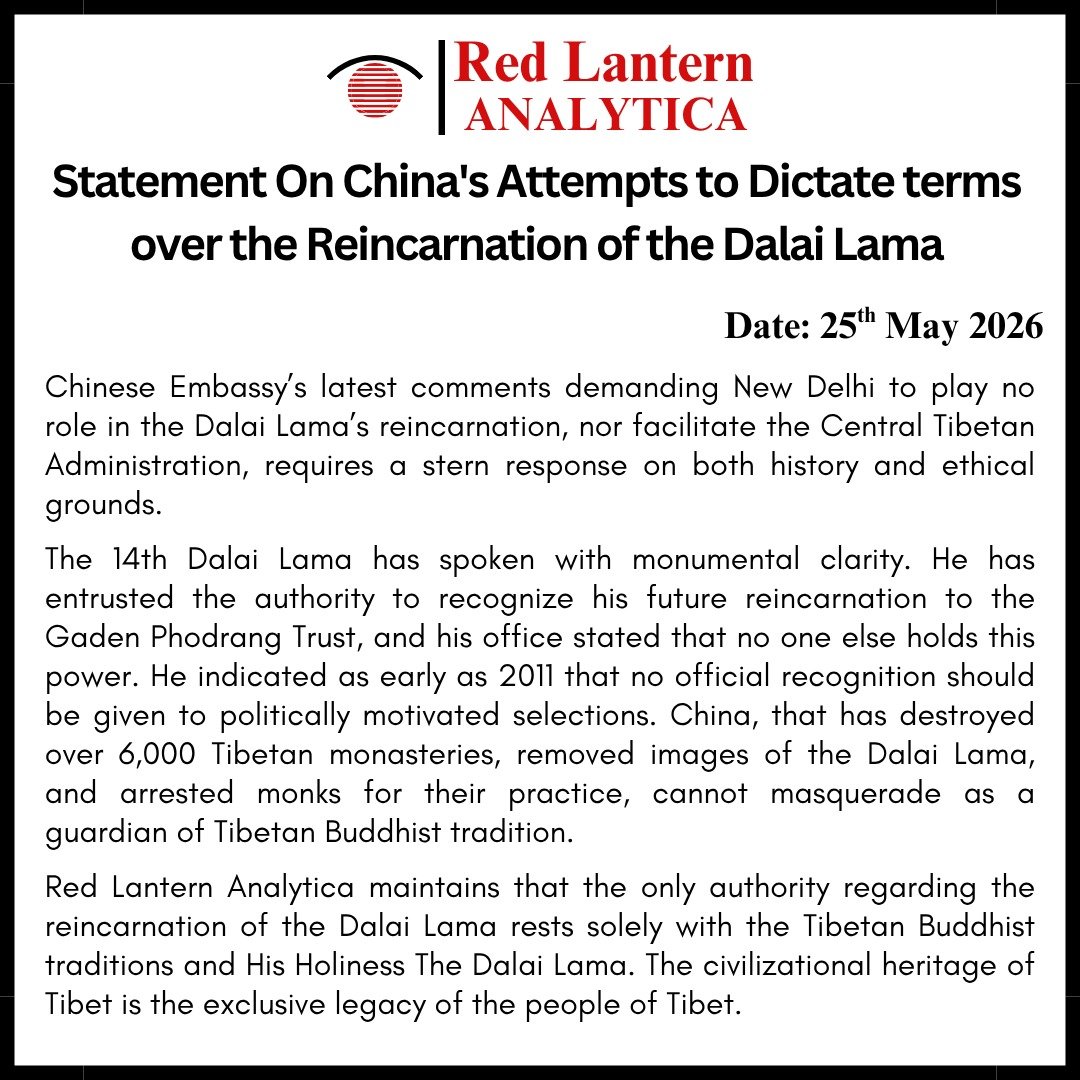
Date: May 25, 2026 Chinese Embassy’s latest comments demanding New Delhi to play no role in the Dalai Lama’s reincarnation, nor facilitate the Central Tibetan Administration, requires a stern response on both history and ethical grounds. The position of the Dalai Lama is not a political position to be appointed by the state. It is a lineage of a living tradition of over six centuries that is entirely a Tibetan Buddhist tradition. Such traditions include Tibetan Buddhism’s prophetic and spiritual traditions. These traditions predate the existence of the People’s Republic of China by almost 12 centuries. China’s claim that the reincarnation of the Dalai Lamas has historically been in the hands of the central government of China is a gross misinterpretation of history. The Qing Dynasty’s 1793 “Golden Urn” system was not only unilateral in its inception, but was also honorarily ignored in practice. The 13th Dalai Lama was recognized without the intervention of the Urn, and the 14th, Tenzin Gyatso, was recognized in traditional Tibetan religious practice in 1939 with no evidence of Chinese practice. To justify a 21st century control over a living religion by citing a poorly defined tool of Administration from the age of Imperialism is not legal justification, but rather a revision of history to promote political control. The 14th Dalai Lama has spoken with monumental clarity. He has entrusted the authority to recognize his future reincarnation to the Gaden Phodrang Trust, and his office stated that no one else holds this power. He indicated as early as 2011 that no official recognition should be given to politically motivated selections. China, that destroyed over 6,000 Tibetan monasteries, removed images of the Dalai Lama, and arrested monks for their practice, cannot masquerade as a guardian of Tibetan Buddhist tradition. Beijing’s quest for the authority to decide is not spiritual guardianship; it is a politically strategic act to replace a politically compliant authority and to cut a people from their spiritual and civilizational roots. By providing continued space to the Central Tibetan Administration, India is upholding its constitutional commitment to provide the right to freedom of religion and expression, its long standing tradition of providing refuge to persecuted people, and its own commitments under international human rights law. Red Lantern Analytica maintains that the only authority regarding the reincarnation of the Dalai Lama rests solely with the Tibetan Buddhist traditions and His Holiness The Dalai Lama. The civilizational heritage of Tibet is the exclusive legacy of the people of Tibet.

A
AdminAnalyst
arrow_outward
Siang Dialogue 2.0: Charting a Secure and Resilient Future in a Transforming Global Order (Both Days Brief)
UNTRADITIONAL SECURITYFEBRUARY 12, 2025
09

Siang Dialogue 2.0: Charting a Secure and Resilient Future in a Transforming Global Order (Both Days Brief)

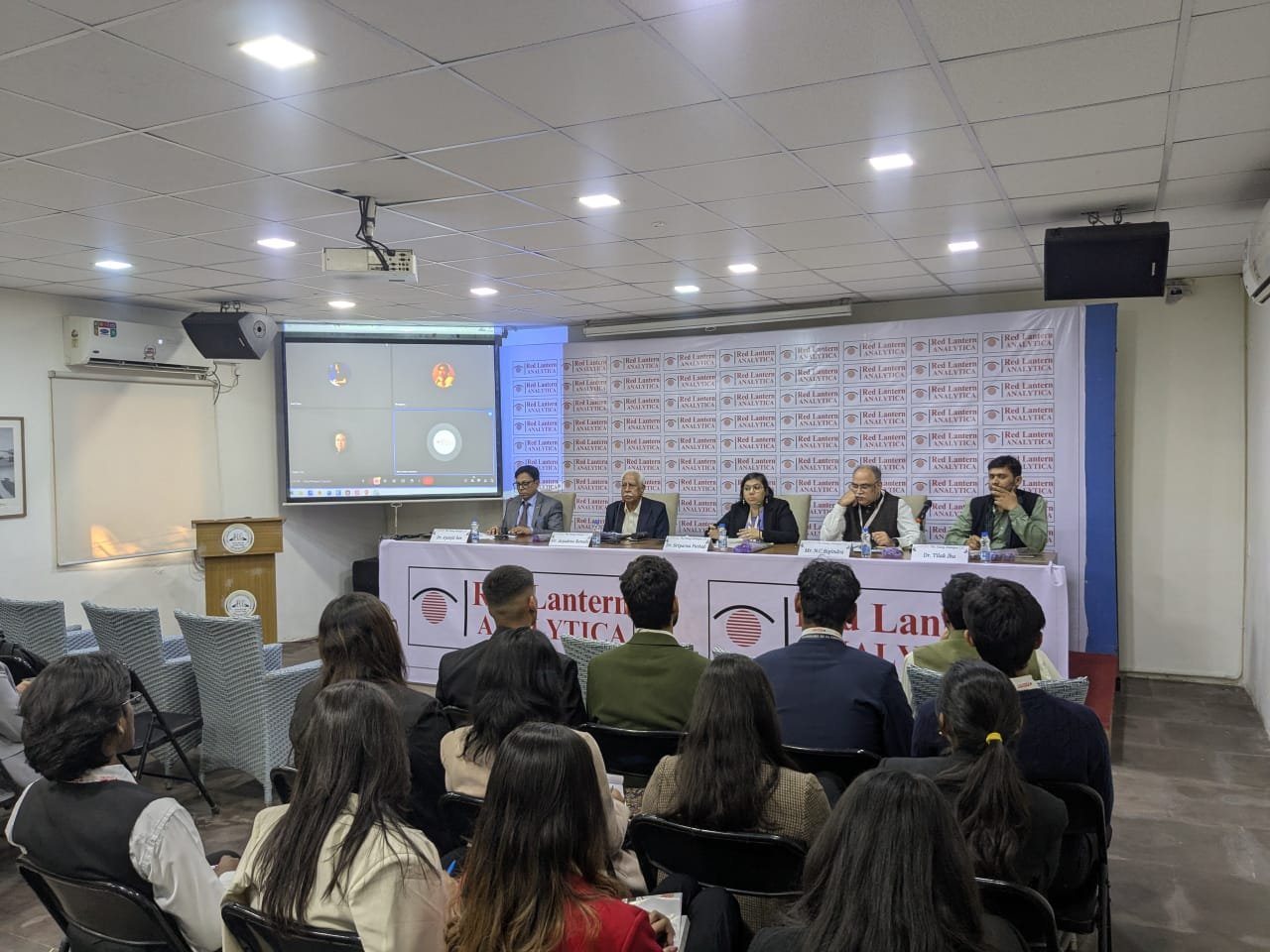
New Delhi, February 8-9, 2025 Red Lantern Analytica successfully inaugurated its flagship event, Siang Dialogue 2.0, at the Foreign Correspondents’ Club – South Asia, bringing together policymakers, thought leaders, academics, and practitioners to discuss pressing geopolitical challenges shaping the global order. Inaugural Session: Global Horizons – Addressing Current Concerns in an Evolving World The event commenced with a ceremonial lamp lighting, followed by the inaugural session moderated by Dr. Ayanjit Sen. Mr. Sujeet Kumar, Member of Parliament (Rajya Sabha), emphasized India’s expanding soft power and its increasing diplomatic engagements on the global stage. He highlighted how India’s strategic partnerships and international outreach are shaping its position in global affairs. Mr. Vahan Zanoyan, an Armenian expert, provided a comprehensive analysis of the Nagorno-Karabakh conflict and its implications for India-Armenia relations. He elaborated on the geopolitical significance of the region and how India’s growing ties with Armenia could play a role in the broader Eurasian landscape. Mr. Abdulhakim Idris, Executive Director at the Centre for Uyghur Studies, addressed the ongoing human rights violations in Xinjiang. He critically analyzed China’s engagement with the Uyghur community, shedding light on the challenges faced by Uyghurs and the broader international response to these concerns. Dr. Rajiv Nayan, Senior Research Fellow at MP-IDSA, examined global arms control and disarmament efforts in the context of shifting power dynamics. He discussed the impact of emerging security challenges, the role of multilateral agreements, and how global realignments are influencing arms control policies. Mr. K.P. Fabian, Former Indian diplomat, underscored the urgent need for inclusive climate initiatives. He stressed the importance of implementing the Common but Differentiated Responsibilities (CBDR) principle, which advocates for a fair distribution of climate responsibilities among nations based on their historical emissions and capabilities. Aadil Brar, a journalist based in Taiwan, provided a detailed assessment of India’s border security challenges, with a particular focus on China’s military build-up along the Line of Actual Control (LAC). He highlighted the evolving nature of border tensions and their implications for India’s strategic defense policies. Mayank Singh, a senior journalist, expressed deep concerns regarding the credibility crisis in modern journalism. He examined the shift from print to digital media, analyzing its impact on journalistic integrity. Additionally, he explored the growing role of artificial intelligence in information warfare, highlighting both the opportunities and risks it presents in shaping public narratives. Dr. Sen concluded the session by thanking the esteemed panelists for their valuable contributions. Plenary Session 1: Navigating the Indo-Pacific – Strategic Maritime Security Dynamics Moderated by Dr. Sriparna Pathak (Associate Professor, O.P. Jindal Global University), the first plenary session featured key discussions on regional security and strategic maritime developments. Dr. Roger Chi Liu, Assistant Professor at Sun Yat-sen University, highlighted the significance of India-Taiwan collaboration in marine research, data sharing, and disaster management. He elaborated on Taiwan’s triple security framework, emphasizing its role in enhancing regional stability and fostering cooperative scientific research between the two nations. Mr. Jaydev Ranade, President of the Centre for China Analysis and Strategy (CCAS), provided an in-depth analysis of President Xi Jinping’s foreign policy strategies, particularly the concept of the ‘China Dream.’ He examined its implications for Taiwan and broader regional geopolitics, detailing how China’s strategic ambitions influence power dynamics in the Indo-Pacific. Mr. N.C. Bipindra, Editor of Defence Capital, discussed India’s cyber defense measures in countering China’s expansionist policies and cyber threats. He highlighted India’s ongoing efforts to strengthen its cybersecurity infrastructure, focusing on policy frameworks, defense collaborations, and emerging threats in cyberspace. Ms. Aarti Tikoo Singh, Editor-in-Chief of The New Indian, critically examined media biases influenced by foreign funding, particularly within the Indo-Pacific context. She discussed how external influences shape media narratives, the implications for national security, and the challenges of ensuring journalistic integrity in an era of information warfare. Mr. Ayanjit Sen, Chief Advisor at Red Lantern Analytica, elaborated on Pakistan’s role in information warfare, emphasizing its strategic use of pre-emptive information tactics. He analyzed the methods employed to manipulate narratives, influence public opinion, and challenge India’s position in the regional and global information ecosystem. Dr. Aparna, Assistant Professor at Central University of Jharkhand (CUJ), explored India’s position in the global AI race, contrasting it with China’s academic investments and technological advancements. She examined India’s growing AI sector, the need for enhanced research and development, and the challenges posed by China’s rapid technological progress. Dr. Tilak Jha, Associate Professor at Bennett University, emphasized the importance of narrative-building as a critical tool for shaping public opinion and power dynamics. He discussed how narratives influence policymaking, global perceptions, and geopolitical strategies, highlighting the role of media, diplomacy, and soft power in crafting influential narratives. The session provided valuable perspectives on regional security, technological advancements, and strategic communication. Plenary Session 2: Shaping the Future – India’s Role in a Transforming Global Order Moderated by Siddhartha Ghosh (Director, RLA), the second plenary session focused on India’s evolving role in global governance and strategic partnerships. Dr. Sriparna Pathak analyzed India’s economic ties with Southeast Asia, with a special focus on the technology sector. She highlighted India’s expanding trade partnerships, digital connectivity, and collaborative ventures in fintech and artificial intelligence, positioning India as akey player in regional economic growth. Major Amit Bansal, a defense strategist, examined India’s territorial disputes with China, assessing the strategic implications of growing military tensions. He also discussed the evolving China-Pakistan-Bangladesh nexus, highlighting how regional alliances impact India’s security landscape and necessitate a proactive defense strategy. Mr. Tenzin Tsundue, a Tibetan activist and poet, provided deep insights into Tibet’s ongoing struggle for independence. He discussed the political and cultural significance of the Dalai Lama’s reincarnation process, explaining its role in shaping Tibetan resistance against Chinese control and maintaining Tibetan identity. Mr. Vahram Ayvazyan, Founder & Chairman of The Network State, shed light on India-Armenia civilizational ties, tracing historical connections and their relevance in contemporary diplomacy. He also underscored the role of the Armenian diaspora in strengthening economic and cultural relations between the two nations. Dr. Devender Kumar, Assistant Professor at Reva University,

TR
Team Red Lantern AnalyticaAnalyst
arrow_outward
Statement welcoming the UK’s Accession to CPTPP
UNTRADITIONAL SECURITYDECEMBER 15, 2024
10

Statement welcoming the UK’s Accession to CPTPP

Red Lantern Analytica warmly welcomes the United Kingdom’s accession to the Comprehensive and Progressive Agreement for Trans-Pacific Partnership (CPTPP), marking a historic milestone as the first European nation to join this significant Indo-Pacific trading bloc. This development represents a substantial step toward enhancing multilateral trade cooperation and underscores the UK’s commitment to strengthening economic ties in the Indo-Pacific region. The inclusion of a prominent European economy like the UK will bolster the CPTPP’s global significance and create new opportunities for trade diversification. By granting access to a market of over 500 million people and representing approximately 15% of global GDP, this partnership is poised to drive innovation, foster competitive markets, and spur economic growth. This development also emphasizes the need for the global community to collectively address the challenge of Chinese trade dominance. The CPTPP has long been regarded as a strategic bulwark against such influence in the region. Red Lantern Analytica urges all other nations to consider joining the CPTPP which remains focused on safeguarding fair trade practices, economic sovereignty, and overall trade stability in the world. As geopolitical dynamics evolve, protecting democratic values and ensuring equitable access to global markets must remain central priorities. We believe that this development is a significant stride toward a balanced global trade architecture, and we encourage further collective actions that promote sustainable and inclusive economic growth.

TR
Team Red Lantern AnalyticaAnalyst
arrow_outward
Trump’s Second Term and US-China Relations: A Comprehensive Analysis
UNTRADITIONAL SECURITYDECEMBER 13, 2024
11

Trump’s Second Term and US-China Relations: A Comprehensive Analysis

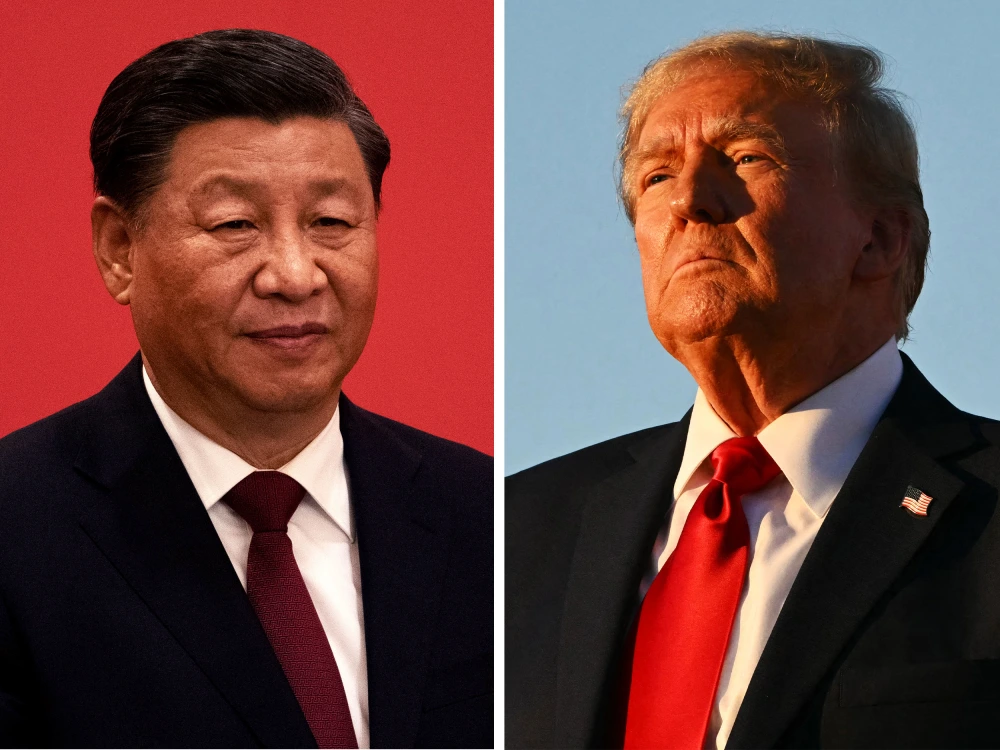
Donald Trump’s victory in the 2024 U.S. presidential election marks a pivotal moment for U.S.-China relations. Building on the foundations of his first administration’s policies, Trump’s approach to China is expected to be even more confrontational and unpredictable. The implications of his leadership, combined with his policy proposals and the appointment of Senator David Perdue as the Special Envoy to China, signal a turbulent path ahead for one of the most consequential bilateral relationships in the world. Perdue’s Role as Special Envoy to China David Perdue’s nomination as Special Envoy to China underscores Trump’s commitment to a hardline stance against Beijing. Known for his “anti-China” rhetoric during his Senate tenure, Perdue has advocated for strengthening U.S. naval capabilities to counter threats from China. His background in business leadership, coupled with his staunch opposition to Chinese influence, positions him as a key figure in shaping US’ policy toward Beijing. Perdue’s role will extend beyond trade negotiations, encompassing complex issues such as Human rights violations, Taiwan independence, Technological Warfare, and China’s support for Russia in the Ukraine conflict. China’s initial response to Perdue’s appointment has been cautious but conciliatory. Chinese Embassy spokesperson Liu Pengyu expressed willingness to engage in dialogue and cooperation while managing differences. However, the history of strained interactions between the two nations suggests that Perdue’s tenure will be fraught with challenges. Economic Tensions: Tariffs and Trade Wars Trade will remain the central issue in U.S.-China relations under Trump’s second term. The president-elect has already threatened sweeping tariffs: a 25% tax on goods from Mexico and Canada, and an additional 10% tariff on Chinese imports. These measures are designed to address illegal immigration and drug trafficking but carry significant economic implications for U.S.-China trade. The proposed tariffs risk exacerbating tensions and could lead to a full-fledged trade war, reminiscent of Trump’s first term when tariffs were imposed on over $360 billion worth of Chinese products. While these measures brought Beijing to the negotiating table, the promised benefits, such as increased Chinese purchases of American goods, were largely unrealized. Instead, American consumers faced higher prices on essential goods, and businesses were compelled to diversify supply chains away from China. Trump’s plans to revoke China’s most-favored-nation (MFN) status and impose blanket tariffs as high as 60% on Chinese goods could further strain relations. The administration’s proposed four-year plan to phase out imports of critical goods from China—including electronics, steel, and pharmaceuticals—aims to reduce U.S. dependence on Chinese manufacturing. However, these policies may provoke retaliatory measures from Beijing, disrupting global supply chains and creating uncertainty for American businesses. Technology, Espionage, and National Security Scientific and technological rivalry also contribute to U.S.-China tensions. Trump’s administration has previously accused China of unfair practices such as forced technology transfer and corporate espionage. The president-elect has pledged to expand counter-espionage efforts, potentially reviving the controversial “China Initiative,” which targeted Chinese researchers and academics in the U.S. Moreover, Trump plans to tighten regulations on Chinese investments in critical infrastructure, including energy, technology, and telecommunications. His administration’s blacklist of Chinese companies, such as Huawei and ZTE, is likely to grow, further limiting China’s access to American technology. Visa restrictions on Chinese students and researchers could also be expanded, heightening academic and technological collaboration barriers. These measures reflect broader bipartisan concerns about China’s military advancements and the risks posed by U.S. reliance on Chinese imports for critical technologies. While these policies aim to protect national security, they could stifle innovation and escalate tensions between the two nations. Diplomatic Relations: Taiwan and the Indo-Pacific Taiwan will remain a critical flashpoint in U.S.-China relations. Trump’s ambiguous stance on Taiwan’s security and his suggestion that Taiwan should pay for its defense introduce uncertainty into U.S. commitments. While Trump has threatened steep tariffs in response to a potential Chinese invasion of Taiwan, his reluctance to articulate a clear military strategy complicates Beijing’s ability to predict U.S. actions. During his first term, Trump deepened security ties with Taiwan, challenging Beijing’s claims over the self-ruled democracy. His second term is likely to see continued U.S. naval presence in the South China Sea, a key area of strategic competition. However, Trump’s isolationist tendencies, including criticism of NATO and scepticism toward foreign military aid, could weaken multilateral organizations. China’s Perspective and Countermeasures China has reacted to Trump’s election with measured caution. President Xi Jinping emphasized the importance of stable U.S.-China relations, calling for cooperation to benefit both nations. However, Beijing has prepared for potential conflicts by bolstering its toolkit of countermeasures, including anti-dumping probes, export controls on key technologies, and retaliatory tariffs. Recent Chinese regulations, such as the Anti-Foreign Sanctions Law and new export control measures, reflect Beijing’s efforts to safeguard national security and counter U.S. policies. These actions underscore the fragility of the bilateral relationship and the potential for further deterioration. The Five Nations Railway Corridor is another ambitious project of China that would connect China with Afghanistan, Kyrgyzstan, Tajikistan, and Iran, thereby creating a Western-proof connectivity. Another instance of China retaliating to the new President’s hardline anti-China stance by stopping the export of critical minerals to the US. The day after Washington’s new restriction on China’s chip industry, China stepped up trade hostilities by banning exports to the United States of vital minerals with extensive military uses, such as gallium, germanium, and antimony. In the most recent escalation of trade tensions between the world’s two largest economies ahead of President-elect Donald Trump taking office next month, the curbs reinforce enforcement of existing limits on critical minerals exports that Beijing started implementing last year but only apply to the U.S. market. While germanium is also utilised in solar cells, fibre optic cables, and infrared technology, gallium, and germanium are utilised in semiconductors. Bullets and other weapons include antimony, and the greatest component by volume in EV batteries is graphite. These retaliations unveil the lowest points in US-China relations. Business Implications: Supply Chains and Market Volatility Trump’s policies will likely increase supply chain disruptions and market volatility, impacting businesses reliant on U.S.-China trade. Many American companies have

TR
Team Red Lantern AnalyticaAnalyst
arrow_outward
Statement Welcoming the opening of the Taipei Economic and Cultural Centre (TECC) in Mumbai
MEDIA COVERAGEOCTOBER 21, 2024
12

Statement Welcoming the opening of the Taipei Economic and Cultural Centre (TECC) in Mumbai

Red Lantern Analytica extends a warm welcome and sincere gratitude to Taiwan for opening their third office of the Taipei Economic and Cultural Centre (TECC) in Mumbai, India. It is a step to further bolster India-Taiwan relations and improve bilateral trade, technological, and cultural ties which began in 1995. Trade between India and Taiwan amounted to $10.1 billion as of the fiscal year ending in March 2024, with both ways of trade amounting to more than $ 8 billion in 2023, thereby making India its 12th largest export market. This opening occurs amidst a joint venture of Taiwan’s Power Chip Semiconductor Manufacturing Corporation and India’s Tata Electronics to manufacture semiconductors in Gujarat. This is a way of reinforcing Taiwan’s “New Southbound Policy” and India’s “Act East Policy”. India and Taiwan’s collaboration in trade, investment, education, technology, and tourism shows their unfailing ties. The opening of the new office of TECC in Mumbai further boosts investment opportunities and deepens bilateral ties. The recent lodging of Chinese diplomatic protest with India over the newly established office of the Taipei Economic and Cultural Centre (TECC) of Taiwan in Mumbai is uncalled for since the deepening of ties between any two countries includes the establishment of such representative offices for each other. It’s high time for a stronger India-Taiwan Relationship as this also reflects India’s unwavering support for Taiwanese cause. RLA is in solidarity with the people of Taiwan and condemns any provocative Chinese comments involving India-Taiwan relations. Also, we would urge the world to engage more with TECC as they are the diplomatic voice of the free people of Taiwan.

TR
Team Red Lantern AnalyticaAnalyst
arrow_outward
The Need for UNSC Reforms
UNTRADITIONAL SECURITYOCTOBER 17, 2024
13

The Need for UNSC Reforms

Amidst the growing global conflict, particularly between Ukraine-Russia and the Middle East crisis involving the Arab nations and Israel, calls for more equaitable representation of the UNSC have increased even though it has been on the agenda of the UN General Assembly since 1979 in order to increase the Council’s legitimacy and effectiveness in shaping the global world order. At the G4 Summit, which took place in Septemeber 2024, the ministers of the four nations underlined the same need for expansion of the UN Security Council. The ministers of the Group of Four (G4) nations, during the “Summit of Future” reiterated their stance for urgent reforms of the UN to “better reflect contemporary geopolitical realities” and thus become fit for the present and the future. An year before, in November 2023, Dennis Francis, the President of the UNGA also highlighted the need for structural reforms in the Security Council at the Assembly’s annual debate assessing the UN forum for peace and security. The UN Premier was unambiguous in stating that the UNSC was “dangerously falling short” of its mandate as the primary custodian for the maintenance of international peace and security. He also emphasized the need for reforms to make the UNSC more relevant as follows: “Violence and war continue to spread in regions across the world, while the United Nations seems paralyzed due largely to the divisions in the Security Council. Absent structural reform, its performance and legitimacy will inevitably continue to suffer – and so too, the credibility and relevance of the UN itself.” Similarly, grasping the vein of the failure of UNSC in bringing about a stalemate in the Israel-Palestine crisis because of the failure of passing effective resolutions since the crisis heightened, other UN Member States also underscored the need for reform as “urgent than ever”. Jamal Fares Alrowaiei, Ambassador and Permanent Representative of Bahrain (speaking on behalf of the Arab nations), stated in no uncertain terms that the credibility of the UNSC was in danger because of the use of the veto power in an arbitrary manner. He also urged member states to ensure conflict prevention efforts were more “representative, transparent, neutral and credible”. Antje Leendertse, Ambassador and Permanent Representative of Germany (speaking on behalf of the Group of Four) said that the Council was not as “effective as needs be” in addressing contemporary challenges because of its current composition. She underpinned the skewed composition of the Council as the major reason why it had been “unable to live up to expectations in addressing some of the most serious threats to international peace and security in a timely and effective manner”. On the other hand, India has also consistently held the same position over the Council’s reforms and called for a “reformed multilateralism” especially during times of crisis such as in the present day. For example, during the fallout of the US invasion of Iraq in 2003, the then Indian Prime Minister Atal Bihari Vajpayee asserted that “until the UN Security Council is reformed and restructured, its decisions cannot reflect truly the collective will of the community of nations.” Add the latest statements made by PM and FM History of the UNSC The UNSC is one of the six principal organs of the United Nations with the mantle of ensuring international peace and security, approving changes to the UN Charter and also admission of new members to the General Assembly. It was created after World War 2 to address the failings of the League of Nations in maintaining world peace. When it was established in 1945, the five victorious parties, China, US, UK, France and Russia were considered to be “better placed” to ensure international peace and security. However, considering the increase in membership from 51 to 193 states in the UN, many people judge the Security Council to be unrepresentative of the global order, especially in the light of the geopolitical changes that have taken place since decolonization and the end of the Cold War. The UN Charter was formulated by the victors of the World War in their own national interests while assigning the permanent seats and the veto power amongst themselves. Moreover, any reform to the Security Council would require an amendment to the Charter which itself can only be brought about when adopted by two-thirds of the members of the General Assembly and ratified by two-thirds of the members of the UN, including all the permanent members of the Security Council. The only significant reform that took place in the Security Council occurred in 1965 when the non-permanent membership was increased from 6 to 10 nations. In his “Agenda for Peace” published in 1992 the then Secretary General Boutros Boutros-Ghali underlined his motivation to restructure the composition and arguably “anachronistic procedures” of the UN organ to recognize the changed world. Since then, the discrepancy between the strcuture of the UNSC and the global reality have become even more pronounced with politicians, scholars and diplomats arguing for a more representative and egalitarian playing field in the Council. Since 1992, Japan, Germany, India and Brazil (also known as the G4 nations) have mutually suppoted each other’s bid in the Security Council, the former two being the second and third largest contributor to the UN respectively while the latter two are the most powerful nations within their regional groups and major players within their regions. On the other hand, their rivals, also known as the United for Consensus (Italy, Mexico, Pakistan, Argentina, Colombia, South Korea, Turkey and others) group have opposed their candidature as they are the economic competitors and regional rivals of the G4. They have instead prompted for semi-permanent seats or the expansion of the number of temporary seats. India’s bid consolidated by economic and diplomatic rise India’s bid to the UNSC is largely driven by its rise as and economic and military power. It is a founding member of the United Nations. Two years before independence in 1947 (under the British Raj) India joined the UN as one

TR
Team Red Lantern AnalyticaAnalyst
arrow_outward
The Interwoven Histories and Cultures of Tibet and India
UNTRADITIONAL SECURITYJULY 6, 2024
14

The Interwoven Histories and Cultures of Tibet and India

Tibet and India share a tapestry of cultural, religious, and linguistic connections that span centuries. This intricate relationship has been shaped by the spread of Buddhism, historical exchanges, and the enduring bonds formed through pilgrimage and exile. Buddhism, originating in India, has profoundly influenced Tibet, where it evolved into a distinctive form known as Tibetan Buddhism. While Tibetan Buddhism developed its unique characteristics, it still retains significant similarities with its Indian roots. The history of Tibet extends beyond its recorded beginnings with Nyatri Tsenpo in 127 B.C., revealing a rich cultural heritage rooted in the pre-Buddhist civilization of the Kingdom of Shangshung. Located in Western Tibet, near Mount Kailash (known as Mt Tise), Shangshung flourished with a sophisticated culture linked to the indigenous Bon tradition. The cultural and spiritual ties between India and Tibet, especially through Buddhism, are profound and enduring. Despite political changes and challenges, these connections have shaped the religious and cultural landscapes of both regions, highlighting the Himalayas as a bridge rather than a barrier between them. The ongoing cultural relations between Tibet and India exemplify a unique historical and spiritual bond that continues to thrive. The historical relations between India and Tibet are deeply intertwined with legends and significant events that shaped Tibetan culture and identity. From early times, Tibetans revered India as the ‘Land of the Gods’, highlighting the profound cultural and spiritual connections between the two regions. The recorded history of Tibet begins with the Yarlung Dynasty, ruling from the 5th to the 9th century CE. A notable legend dates back to 127 B.C. when Nyatri Tsenpo was enthroned as the first king of Tibet in the Yarlung Valley. According to myth, Nyatri Tsenpo descended from the sky using a ‘sky-rope’ and was believed to have originated from India, hailing from a royal family connected to the Buddha’s lineage. This mythic narrative underscores the mythological ties and divine origins attributed to early Tibetan rulers. Buddhism formally arrived in Tibet during the reign of Thori Nyatsen in the 5th century A.D. Legend has it that a casket containing the Mantra of Avalokiteshvara fell from the sky onto Yubulakhang, the royal palace, marking the auspicious introduction of Buddhism. Although the king couldn’t decipher the scripts within, he preserved them as sacred relics for future generations, symbolizing the divine transmission of Buddhist teachings to Tibet. Moreover, the Tibetan Empire, succeeding the Yarlung Dynasty from the 7th to mid-9th century, solidified Buddhism’s role. Indian Buddhist masters like Bhiksu Santaraksita, Kamalasila and Padmasambhava were pivotal, bringing Indian practices such as Sanskrit usage and the creation of intricate mandalas to Tibet. This period saw the fusion of Tibetan Buddhism with indigenous traditions like Bon and shamanism, forming a distinctive spiritual path emphasizing compassion and wisdom. Furthermore, known as the ‘Bodhisattva Kings’, the Yarlung rulers, notably Songtsen Gampo (618-650 CE), the 33rd king of the Yarlung Dynasty unified Tibet and expanded its borders. He strategically married princesses from China and Nepal. These alliances were instrumental in the adoption and spread of Buddhism within Tibet. Despite initial reservations by the Chinese and Nepalese rulers about Songtsen Gampo’s status, these marriages facilitated cultural exchanges that profoundly influenced Tibetan politics and religion. Under Songtsen Gampo’s leadership, Tibet expanded into a formidable empire, stretching from Chang’an (modern Xian) in the East to the Pamirs and Samarkand in the West, with the Himalayas marking its southern border. This period marked Tibet’s zenith as a military and cultural power in Central Asia. Moreover, under his reign, Tibet embraced Indian cultural elements like Buddhism, Sanskrit and literature. Songtsen Gampo sponsored the translation of Buddhist scriptures into Tibetan and built iconic temples such as the Jokhang Temple in Lhasa. Also, King Songtsen Gampo’s legacy includes a pivotal contribution to Tibetan culture through the introduction of a script and the translation of Buddhist scriptures. His minister, Thonmi Sambhota, journeyed to India with sixteen students to study Buddhism and Sanskrit. Upon their return, they devised the Tibetan script, still in use today, drawing from North Indian Nagari and Central Indian Sharda scripts. His Holiness the 14th Dalai Lama mentioned during his 1956 visit to India that Thonmi Sambhota developed the script based on Nagari and Sharda scripts. Beyond the script, Thonmi Sambhota imported Sanskrit grammar used in Indian viharas, facilitating precise translations of Buddhist scriptures into Tibetan. This adaptation ensured the accurate rendering of the sacred sutras, including the Kanjur, a collection of Buddha’s teachings spanning 108 volumes. Moreover, under King Songtsen Gampo’s rule, significant Buddhist texts were translated, with the king himself actively engaging in scholarship. For the first time, Buddhist precepts became part of Tibetan law, underscoring the integration of Buddhism into Tibetan governance and culture. Additionally, the adoption of Buddhism as the state religion during Songtsen Gampo’s reign was a watershed moment in Tibetan history, cementing cultural ties with India and laying the foundation for centuries of religious and philosophical exchange. The shift of the capital from Yarlung to Lhasa and the construction of structures like the Potala Palace symbolized Tibet’s evolving identity and its deepening spiritual ties with Indian Buddhist traditions. The historical interactions between India and Tibet, spanning from mythological origins to religious transformations, underscore the enduring cultural and spiritual bond that has shaped the histories of both. Thus, King Songtsen Gampo’s reign marked a crucial era in Tibetan history, characterized by cultural exchange with India and the foundational development of Tibetan Buddhism. Himalayas as a connecting point, not a barrier The great Himalayan range has always been a cultural continuum, porous not only to trade but also to religious, political, and cultural exchanges. India has always regarded these mountains as profoundly special. The earliest reference to the Himalayas is in the Rig Veda, written around 1500 B.C., which states that the Himalayas symbolize all mountains. The Kena Upanishad, written around 1000 B.C., speaks of Uma, the daughter of the Himalayas – Umam haimavatim. According to mythology, Uma revealed the mystic idealism of the Upanishads to the gods, an imaginative expression of the historical fact

TR
Team Red Lantern AnalyticaAnalyst
arrow_outward
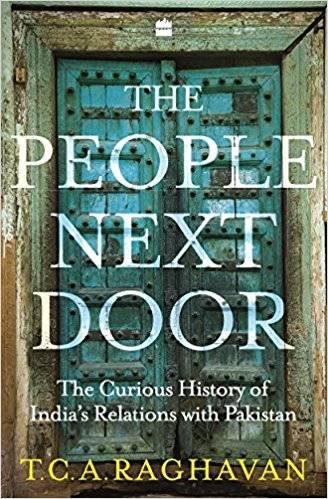
Book Review of “The People Next Door: The Curious History of India’s Relations with Pakistan”
UNTRADITIONAL SECURITYJUNE 25, 2024
15

Book Review of “The People Next Door: The Curious History of India’s Relations with Pakistan”

Title: The People Next Door: The Curious History of India’s Relations with Pakistan Author: T.C.A. Raghavan Publication Place: Noida, India Publisher: HarperCollins India Date of Publication: 2018-07-02 Edition: First Edition Pages: 360 ISBN: 9789353022914 T. C. A. Raghavan’s “The People Next Door: The Curious History of India’s Relations with Pakistan” is a detailed analysis of the bitter-sweet history of relations between two South Asian neighbours: India and Pakistan. Raghavan, by profession, is a diplomat who once served as the Indian High Commissioner to Pakistan, and thus, his analysis in this regard informs his entire approach to the book. In this case, Raghavan has an extensive background and practical experience in Pakistan, which enables Raghavan to inform his readers and provide a more measured hypervisibility to the subject. The book delves into the historical background of the relationship between India and Pakistan beginning with the traumatic partition of 1947. Raghavan explains the events that characterised earlier contacts between the two countries, such as territorial disputes of the Kashmir region, water distribution issues, and defining religious affiliation. In depicting historical realities and incorporating his own experiences, as well as the quotes of key leaders of the two States, he paints the complex picture of these problems noted at both the border and on an international level. The complex rivalry between India and Pakistan has been the subject of numerous books over the years, but few are as nuanced and intricate as T.C.A. Raghavan’s The People Next Door: The Curious History of India’s Relations with Pakistan, which was released in 2018. However, the book is not all about the politicians and their arguments. Raghavan investigates the interlinkages between people from India and Pakistan as friends or families, history and culture. Thus, combining these threads, Raghavan paints a picture with a broad and detailed insight into the relations between India and Pakistan. He did not attempt to tell a favourable story about India or an unfavourable story about Pakistan. However, he states that there are mistakes on both sides and the stories from history and internal politics are one of several factors that keep the temperature rising high. Concisely, the author’s fair presentation of facts offers readers more than just a meagre piece of information about the conflict and helps them understand the complexities of the situation. In a nutshell, the first chapter of the book can be seen to provide the necessary backdrop for Raghavan to embark on. Alone he asserts the dynamics and complexities of this relationship to the readers. He turns back to the past, reflects on their situation and issues that still exist and studies the linkages that remain with them. The approach that the authors take ensures that readers are equipped with a clear and balanced picture of this rather intricate and often misunderstood subject. Chapter 2 is devoted to the disputable topic of Kashmir. It goes beyond the “who owns it” question, diving into the deep historical roots and emotional attachment each country feels, Chapter 3 explores another flashpoint: providing water from shared rivers. We all know water is essential, but here Raghavan explains why it is a matter of development and security for both nations. But here’s the surprising twist: it is not all conflict. Chapter 4 examines the engrossing cultural and social links found in these “People Next Door.” Picture two families who are related and engaged in a fight, yet they still reach out. It was heartbreaking to read when Raghavan spoke about families that were affected by partition and continue to visit each other across the border. Such relationships illustrate the fact that historical connections should not be overshadowed by political conflict. Don’t we all love a good game? Chapter 5 examines cricket, the love for which is motivating the people of the subcontinent. Cricket prevails as an instrument that unites diverse societies since almost everyone in the subcontinent loves the game. Likewise, Chapter 6 examines cultural references that are entrenched in Bollywood films and literature. Chapter 7 addresses this issue of economic cooperation between these neighbours which has a bright future but is burdened by the lack of trust and political rivalry. The last chapter in the book – Chapter 8 – seems to be the light at the end of the tunnel. The author offers a more refined perspective of this intricate relationship. It is not a rosy picture but there is a positive chance to see a peaceful world and maybe India and Pakistan could come out of the racial rivalry and can live together. The key lies in acknowledging the difficulties and at the same time, seeking possibilities of a better tomorrow. An excellent feature of the book is that the author is able to present the information impartially. Raghavan does not depict India as a helpless nation and Pakistan as the evil oppressing the harmless India. He admits mistakes committed by both governments and focuses on the effects of historical prejudices and internal political agendas on the escalation of the conflict. Such an approach can help the readers better grasp the dynamics at work in the conflict. Moreover, Raghavan wrote personal experiences and anecdotes very effectively. In sharing his own personal and professional stories from his years as a diplomat stationed in Pakistan, he writes about the hospitality that always existed beyond the veil of hostility. Such human interest incidents also assist in effectively fighting off the prevailing stereotypical notion of hatred and send out positive messages on the prospects of forgiveness. Nevertheless, “The People Next Door” has a handful of shortcomings. Even though Raghavan does a commendable job of analysis, the book is lacking in providing a solution-oriented outlook to the future. Those readers who came with the expectation of finding a way to enhance political relations may be disappointed. Another crucial aspect that should be highlighted is the fact that Raghavan is an author who has the background of a former Indian diplomat. Perhaps, it could have been helpful to incorporate more Pakistani opinions and perspectives

TR
Team Red Lantern AnalyticaAnalyst
arrow_outward
Statement condemning PRC’s stand over Indian PM’s reply to Taiwanese President’s greetings
MEDIA COVERAGEJUNE 9, 2024
16

Statement condemning PRC’s stand over Indian PM’s reply to Taiwanese President’s greetings

We strongly condemn People’s Republic of China’s (PRC) irrational behaviour in protesting a cordial exchange between the leaders of two democracies, namely India and Taiwan. The recent protest lodged by the PRC over Prime Minister Narendra Modi’s social media interaction with Taiwan President Lai Ching te is unjustified and unwarranted. It is disappointing that the PRC wants to assert control over India’s diplomatic engagements and attempts to dictate terms on whom India can communicate with. It is important to clarify that India’s relationship with Taiwan is based on mutual respect and shared interests, and does not necessitate PRC’s permission or approval. India upholds the principles of sovereignty and independent foreign policy decisions and will continue to engage with nations worldwide, including Taiwan, in the pursuit of national interests. The exchange of congratulatory messages between Prime Minister Modi and President Lai was simply ceremonial and reflects the spirit of mutual respect and goodwill between the two democracies. There is no justification for PRC’s exaggerated reaction and interference in India’s diplomatic affairs. PRC’s insistence on protesting such harmless exchanges only underscores its inability to tolerate the diplomatic freedom of other nations and its refusal to acknowledge Taiwan’s rightful place as a democratic entity on the global stage. India believes in fostering friendships based on mutual respect, shared values, and mutual benefit. Coercion and intimidation have no place in diplomatic relations, and India remains committed to building partnerships with Taiwan and other nations based on these principles. India reiterates its commitment to maintaining independent and sovereign relations with all nations, including Taiwan. It is well within India’s rights to engage with Taiwan on matters of mutual interest without seeking China’s permission. The One China principle, while respected by many nations, does not impede India’s right to engage with Taiwan on non-official, ceremonial matters. We call upon the PRC to respect India’s and Taiwan’s sovereignty and independence and to refrain from interfering in their diplomatic affairs. We stand firm in our commitment to upholding the principles of democracy, freedom and sovereignty in the face of unjustified opposition.

TR
Team Red Lantern AnalyticaAnalyst
arrow_outward
India’s Diplomatic Outreach Digest Feb-May 2024
UNTRADITIONAL SECURITYJUNE 7, 2024
17

India’s Diplomatic Outreach Digest Feb-May 2024

The Republic of India for the past few months has been under the hustle and bustle of the General Election that would decide who will form the government by winning the majority in the Lower house, Lok Shabha. All the political institutions, including the incumbent ruling Party, are engaged in this biggest democratic event in the world. But this political campaigning has not slackened India’s diplomatic outreach in the neighbourhood and the rest of the world. Prime Minister Narendra Modi delivered a keynote address on “Government Acceleration and Transformations” at the World Government Summit in February 2024, where India was a ‘guest of honour’ along with Turkey and Qatar. This was Modi’s second keynote address at the summit. He addressed the 21st century challenges, emphasizing the need for inclusive, technologically advanced, clean and corruption-free governance to tackle issues like terrorism and climate change. Drawing from his 23 years in governance, Modi advocated for “minimum government, maximum governance” and grassroots participation in projects. Modi also underscored India’s commitment to environmental sustainability and called for global cooperation on climate issues. He emphasized the importance of cohesive collaboration among nations, especially in addressing the concerns of developing countries, the Global South, and tackling global challenges like cybercrime and terrorism. Reflecting on his G20 presidency, Modi urged collective action and mutual learning, reiterating the slogan “Sab ka Sath, Sab ka Vikas”. The World Government Summit 2024, with the theme ‘Shaping Future Governments,’ featured discussions involving top governments, international organizations, thought leaders, and private sector leaders. The summit aimed to inspire and empower the next generation of governments through international cooperation and innovative solutions for future challenges.[i] In early May, at the 14th Counter-Terrorism Dialogue, representatives of the European Union (EU) and India discussed measures to strengthen their cooperation with European law enforcement agencies. They both acknowledged that collaboration remains essential in international forums like the Global Counterterrorism Forum (GCTF) and the United Nations. The signing of the cooperation agreement between Europol and the Central Bureau of Investigation (CBI) was noted by both parties. They underlined the significance of bolstering law enforcement and judicial partnerships, information sharing, and capacity building as means of enhancing counterterrorism cooperation. This would help India in strengthening the countermeasures regarding state-sponsored and cross-border terrorism, Terrorism financing, preventing online radicalisation and also the impact of new and disruptive technologies.[ii] India is not only working with the EU to counter terrorism but also with the individual countries of the EU like France for a better exchange of views and expertise and interoperability. On 15 April, India hosted the 16th Meeting of the India-France Joint Working Group on Counter Terrorism to discuss cross-border terrorism. The Indian delegation, led by Joint Secretary (Counter Terrorism) of the Ministry of External Affairs, K.D. Dewal, and the French delegation, led by Ambassador Olivier Caron, Special Envoy for Counter-Terrorism and Organized Crime, held discussions on a range of counter-terrorism issues. Both sides exchanged views on the terrorist threats in their respective regions, including state-sponsored and cross-border terrorism in South Asia, Africa, and the Middle East, as well as terror activities in the Afghanistan-Pakistan region. The two sides also assessed counter-terrorism challenges, including the use of new and emerging technologies by terrorists, misuse of the internet for terrorist purposes, radicalisation and terror financing. The need to enhance counterterrorism cooperation through intelligence sharing, capacity development, training programmes and exercises, and collaboration at international forums including the UN, FATF, and NMFT was also highlighted by both countries.[iii] Counterterrorism coordination improves regional security in volatile regions including the Middle East, Africa, and South Asia. A stable region is beneficial for global trade, security, and political relations. The emphasis on Afghanistan and Pakistan is especially important in light of the recent escalation in terrorist activity following the Taliban takeover. Threats coming from this area can be mitigated with the use of cooperative techniques and shared knowledge. Considering terrorism is constantly evolving, improvements must be addressed all the time. Regular communication helps countries stay ahead of emerging threats and formulate adaptive counterterrorism strategies. Furthermore, India and France held the India-France Strategic Space Dialogue in March to discuss enhancing bilateral cooperation in the space sector and implementation of the recently signed Letter of Intent on Defence Space Cooperation, capacity building, training, and defence space industrial cooperation. The meeting underscored the robust engagement between India and France in the space domain. Additionally, both countries engaged in bilateral talks on disarmament and non-proliferation, addressing issues related to nuclear, chemical and biological weapons. Discussions also focused on space security, conventional weapons, artificial intelligence (AI) in the military, lethal autonomous weapon systems and multilateral export control regimes.[iv] India is also engaging with the Central Asian countries which are facing terrorism as the primary threat to the State. During the 5th meeting of the India-Kazakhstan Joint Working Group on Counter-Terrorism, held on 8 April in Astana, both countries assessed counter-terrorism challenges and discussed cross-border terrorism in South Asia. The Indian delegation, led by J KD Dewal, and the Kazakh delegation, headed by Ambassador-at-Large Talgat Kaliyev, exchanged views on terrorist threats in their respective regions, including state-sponsored and cross-border terrorism in South Asia and terror activities in the Afghanistan-Pakistan region. They emphasized the importance of strengthening counter-terrorism cooperation through information exchange, capacity building, training programs and collaboration at multilateral forums such as the UN, EAG, and SCO.[v] Even though in the past few months there were tensions between the Maldives and India over some issues, that has not stopped India from reaching out to its neighbour, Maldives. Tensions between the two countries escalated when President Mohamed Muizzu took office, following his party’s overwhelming victory in the Maldives Parliament. Muizzu has criticised India during and after the presidential polls and his government also formally requested India to withdraw its troops from Male. Despite these strained relations, India has consistently maintained a soft diplomatic approach towards the Maldives. At their fourth High-Level Core Group meeting in early May, India and the Maldives discussed defence cooperation, trade and investment opportunities, and other bilateral cooperation-related

TR
Team Red Lantern AnalyticaAnalyst
arrow_outward
Press Release of Webinar on “Need For Taiwan’s Inclusion as an Observer in the World Health Organization”
UNTRADITIONAL SECURITYMAY 25, 2024
18

Press Release of Webinar on “Need For Taiwan’s Inclusion as an Observer in the World Health Organization”

On May 23rd, 2024, Red Lantern Analytica conducted a webinar titled ‘Need for Taiwan’s Inclusion as an Observer in the World Health Organisation.’ The speakers for the session were Li- Chien Chien MD, PhD who is a Director, International Medical Centre, National Cheng Kung University Hospital, I-Lin Hsu, MD PhD who is an Associate Professor, National Cheng Kung University from Taiwan, and our very own author Dr Devender Kumar who is also a South Asian and West Asian Studies Expert. The session started off with the remarks of India’s Taipei Economic and Cultural Centre (TECC), Deputy Representative Bor-Huei Hsieh. He mentioned how this webinar and more widespread call for inclusion for Taiwan is crucial because the World Health Organisation scheduled the 77th session of the World Health Assembly under the banner of “All for Health, Health for All” from 27 May to 1 June of 2024. It includes the participation of many significant high-level country representatives but the distressing part is Taiwan is not included in these sessions. Huy Robert shared the history of Taiwan and the relationship between India & Taiwan elaborately. He said, “Although the island is 36,000 sq.km in size and has approximately 24 million population but Taiwan is a crucial to the world as it is 1st semiconductor producer in the world with 60% world market share and 90% of advanced chips share in manufacturing and secures 2nd place in the design and products of the same. In regards to medical fields, Taiwan has 14 hospitals with internationalisation with JCI accreditation and secured the 3rd spot in the world only after the US and Germany.” Despite these exceptional contributions by Taiwan to the international community in healthcare system Taiwan is unable to participate at World Health Organisation Meetings. He added, “Taiwan is known for high quality with low cost treatment in organ transplantation, cardiovascular and assisted reproductive therapy, facial cranial reconstruction treatments and so on.” He mentioned how the kidney and heart transplantation survival rates are higher than the world average for Taiwan. However, it is an immediate call to have the inclusive healthcare global community with Taiwan in World Health Asssembly (WHA) meetings. Dr Li Chien Chien shared the relationship between India and Taiwan in the recent times. He also mentioned how Taiwan is not allowed in the participation in international conferences like the United Nations which is an “injustice to Taiwan’s 23 million population.” He further stated, “We are treated like a colony and oppressed by hegemony, Taiwan seeks to collaborate with India to enhance mutual understanding in the medical field.” He recollects the significance of the herbal medicine produced in India which is simply essential for the pharmaceutical industry. He also mentioned, “Though Taiwan is a relatively small market and India is a large country, India can assist Taiwan in its goals. Both countries can collaborate on designing, researching, and aiding people in their respective nations.” He suggested that creation of a communication platform for young people in India and Taiwan would facilitate networking and collaboration through a local distributor in R&D. He concluded by noting that India and Taiwan’s bilateral relation would assist in the global market contributions. The other speaker who also added intriguing data-backed points for the session from Taiwan was Dr.I-Lin Hsu. He presented from the overview of Taiwan’s demographics i.e. total population with a birth rate of 159,063 per year, median age of 44 years, gender ratio is 49% male and 51% female and around 20% of Taiwan’s population is old-aged. Furthermore, he shared the data and leading causes of death separately for males and females with numbers. The infant mortality rate and neonatal mortality rate stand at 44 and 2.8 respectively according to 2019-2022 data. He also mentioned that Taiwan is ranked the 1st in Healthcare Index by Country (2024) by Numbeo database with 86.0 points compared to the 82.7 for South Korea. He also shared the following aspects- Healthcare System: National health expenditure as 6% of GDP as it is covered under the National Health Insurance. Taiwanese government aims for cost stability while maintaining quality for all citizens in the long-run. According to 2022, Taiwan has 480 hospitals (475 hospitals have widely western medicine in practice while the rest follow the Chinese medicine i.e. Needle Puncture) Clinics : 23,000 (11,000 Western, 4,000 Chinese, 7,000 dentistry) 172,000 hospital beds (74 beds per 10,000 population) Competitive Advantages: PIC/S GMP standards since 2013 Reliable clinical trial sites and infrastructure Diverse Culture of Innovation Strong Intellectual Properties Protection Skilled workforce Provision of Government subsidies for foreign partnership: Global Innovation Partnership Initiatives. Amicable towards fundraising and financing Furthermore, he shared that Taiwan’s six main strengths: High quality, affordability, technology/innovation, patient-oriented service, comprehensive specialties, and leading physicians. With their NHI MediCloud System, Taiwanese share the information so as to reduce the multiple and same tests taken by the patients in different hospitals. The connectivity within Taiwan also strengthens the medical assistance. Dr. Devendra Kumar discussed the composition of World Health Organisation and shared the rules and regulations of the Observer Status in WHO. He mentioned precisely on how the non-member State can also become an observer of its meetings i.e based on the expertise of the country which makes Taiwan one of the potential and crucial observer at WHA. He said, “Taiwan is the whistleblower and one of the first few countries who mentioned about COVID-19 to the WHO. Precisely the Disease Controller Department of Taiwan has emailed the WHO and the PRC regatding the rise in cases of Pneumonia. However, the false security notions dealt with this situation put the whole human civilisation at risk.” Thus, this provides a substantial need for inclusion of Taiwan in the meetings. However, the point of contention for the inclusion is only the People’s Republic of China who is suppressing the right of Taiwan. He describes that the revisionist values of Chinese Communist Party led the PRC curbs the right of the sovereign status and also to contain the healthcare system. He said, “Taiwan was

TR
Team Red Lantern AnalyticaAnalyst
arrow_outward
Naval Diplomacy: Significance Of Naval Exercises And Operations
UNTRADITIONAL SECURITYMAY 24, 2024
19

Naval Diplomacy: Significance Of Naval Exercises And Operations

“Whoever rules the wave, rules the world” Alfred Thayer Mahan INTRODUCTION An eminent historian and Naval Officer, Alfred Thayer Mahan presented his vision of the Ocean in his book ‘The Influence of Sea Power Upon History’, outlining the importance of sea power. He gave out the advantages of having a vast coastline and access to seas. Considering this theory, India, having a vast coastline is strategically located, covering the Indian Ocean with a 7517-kilometer coastline. With a huge coastline, protecting the maritime boundaries from external threats is critical. This task of securing the maritime boundaries is undertaken by the Indian Navy. However, over time, the Indian Navy has evolved as an instrument of Indian diplomacy and has positioned itself beyond hard power. It is not only involved in hard security conducts Humanitarian Assistance and Disaster Relief (HADR) Operations, conducts various naval exercises with other nations and maintains good order at Sea. The Indian Navy is seen as a power that can make the seas a safer zone and promote regional stability by following the laws of the seas. The Indian Navy has also been actively engaged in various missions and operations to enhance naval diplomacy. Naval Diplomacy uses the Indian Navy to assist the foreign policy objectives of India by collaborating and building friendly relations with the other states. This is not only limited to conducting bilateral and multilateral exercises but also involves Humanitarian Assistance to friendly nations and Peacekeeping Operations. India has been working closely with its partners in the region of its interest like Indo-Pacific, Red Sea and other important vital points to protect the critical Sea Lines of Communication (SLOCs). Indian Navy has been actively engaging in bilateral and multilateral exercises to enhance its relations with its partners. This article highlights the promotion of naval diplomacy through the naval exercises and operations of the Indian Navy. IMPORTANCE OF NAVAL EXERCISES AND OPERATIONS “Warships have always had more than a fighting function,” said Ken Booth in his book ‘Navies and Diplomacy’. The Indian Navy is actively engaged in various naval exercises and humanitarian assistance missions with its partners by deploying its ships. These maritime exercises allow India to showcase its naval power and high-end technology. These exercises let the Indian Navy learn new tactics and interoperability and know the mindset of its partners. These newly learned strategies can be used to tackle unprecedented challenges in the sea. The former Chief of Naval Staff Admiral Karambir Singh outlined four pillars of Defence Diplomacy including Capacity building, Capacity Enhancement, Constructive engagements and Collaborative efforts, known as the 4Cs of Defence Diplomacy. The Indian Navy follows these 4Cs to engage with its partners. The Indian Navy has conducted various maritime exercises in the Maritime Areas of Interest (MAI) or regions of interest. The Indian Navy has actively worked towards the Security and Growth for All in the Region (SAGAR) vision. Unveiled in 2015, SAGAR focuses on the Indian Ocean Region (IOR) as it has ample resources and vital choke points. India, one of the largest Littoral states of IOR, actively maintains its presence in the region by deploying its naval ships and cooperating with its partners through joint drills and exercises. These exercises are to secure the region and maintain regional stability and a balance of power. The MILAN exercise conducted in March 2024, is a biennial multilateral exercise conducted in the Indian Ocean. MILAN means ‘a meeting of confluence’ with its motto ‘Camaraderie Cohesion Collaboration’ symbolises the enduring spirit of international maritime cooperation. This also shows the Indian Navy as a responsible regional power. The QUAD’s Malabar exercise is also one such exercise conducted in the Indo-Pacific region with a common vision of Free and Open Indo-Pacific (FOIP). The Indo-Pacific region has been a region of increasing militarisation. Hence, the Indian Navy engages with the East Asian Countries to promote regional stability in the Indo-Pacific. Setting another mark in Naval Diplomacy, in 2023, the Indian Navy handed over the missile corvette INS Kirpan to Vietnam. Moreover, India has hosted the Indo-Pacific Regional Dialogue of 2023 in New Delhi, with delegates from over 16 countries participating, which focused on operationalising a Regional Maritime Domain Awareness (MDA) Network in the Indo-Pacific; Cooperative Regional Solutions to Address Disruptions of the Maritime Rules-based Order; Staunching the Proliferation of Maritime Lawfare in the Indo-Pacific; Enhancing Underwater Domain Awareness across the Indo-Pacific; and Building a Consensual Rules-based Maritime Order in Indo-Pacific through Multilateral Engagement of Minilateral Constructs. India also conducts and participates in naval exercises like SIMBEX with Singapore, Varuna with France, BongoSagar with Bangladesh, Ekatha with Maldives, Jimex with Japan, Slinex with Sri Lanka, CUTLASS Express conducted by USA, Samudra Shakti with Indonesia and more to enhance combat readiness, interoperability and strategic cooperation. The Indian Navy has also taken part in overseas operations to provide assistance. The mission SAGAR III was launched under the SAGAR initiative to provide assistance to friendly nations during COVID-19. India also takes part in various anti-piracy and anti-narcotics operations in the sea to curb piracy and illegal drug trafficking across the nations. In 2023, the Indian Navy also took part in the multilateral operation called as the Southern Readiness, which was aimed to enhance cooperation and counter-piracy and also to promote the freedom of navigation. These operations and initiatives make India one of the ‘FIRST RESPONDERS’ during times of crisis. Furthermore, the Indian Navy has deployed its naval vessels and ships at important choke points such as the Gulf of Aden, Malacca Strait, Bab-el-Mandeb Strait and the Horn of Africa to protect our interests along with our friendly nations’. In March 2024, The Indian Navy conducted an anti-piracy operation that rescued around 16 crew members from MV Ruen ship captured by Somali pirates. Additionally, the recent outbreak of the Israel-HAMAS conflict resulted in an attack on merchant ships by Houthi rebels, the Indian Navy provided aid to these ships and secured them from attack as the Red Sea falls under India’s Maritime Area of Interest (MAI). Moreover, the

TR
Team Red Lantern AnalyticaAnalyst
arrow_outward
India’s Transformative Trajectories in Political Economy
UNTRADITIONAL SECURITYMAY 20, 2024
20

India’s Transformative Trajectories in Political Economy

The economic and political landscape immensely contrasts between one nation and another, especially based on their political ideologies. For instance, the structure of the economic framework greatly relies on whether the nation is operating in a capitalist system or a socialist one. The economies of the US, UK, Canada and other capitalist countries are identified by the free market (unregulated system of economic exchange) and private ownership of resources which in turn influences the income, wealth, price and allocation of goods. On the other hand, more intervention by the government to allocate resources and wealth equitably is something that defines a socialist society. A gripping point to take note of is that no nation, as of today, is completely socialist, wherein countries like China and Vietnam, other than India function in a mixed economy. Regardless of where a country is placed on the political spectrum, its political stance will greatly influence its economy. Improving economic performance is one of the government’s primary goals. Popularity power is correlated to the effective management of the economy. This is one of the reasons why the government prefers to adjust its expenditure, using monetary and fiscal policies to perpetuate a healthy economy. For instance, if inflation increases, the government tends to decrease demand and lower inflation by relying on tax payments, interest rates, and savings. Conversely, if the economy is suffering from a recession, initiatives like reducing taxes and interest rates and encouraging investments and exports will be the action plan of the government. Therefore, economic development is greatly benefitted by having political stability as uncertainty and disruption can affect market confidence. Ideological differences shape political parties worldwide. Nevertheless, the fact that political parties in India do not label themselves based on ideologies, especially when it comes to ascertaining economic policies, is widely recognised.[1] It said that parties, like the Bharatiya Janata Party (BJP), Congress or the Third Front, often tend to execute identical strategies, no matter which party or coalition government is in power. Suri (2013),[2] after conducting a rigorous study, states that the border between the parties based on overall economic policies is fading away, with the Left as the only exception, since their opinion contradicts with liberalisation inclined government. The Indian political landscape is an intricate interplay of ideology and practical approach, where parties negotiate their way through a subtle blend of economic policies within changing social trends and voting requirements. This complex design reveals how determining the character of Indian politics is never just black and white because it is made up of so many diverse views, desires and concerns of various people and groups. In the last ten years, the country has witnessed an increase in the popularity of the BJP, which in turn has led to a rise of alternative perspectives regarding the apolitical nature of India. According to Sengupta (2019),[3] the BJP has a slightly different perspective on the welfare state of the country. He added that encouraging private businesses and increasing infrastructure expenditure is preferred by them. In 2014, in a meeting with the business community in Japan, Prime Minister Narendra Modi confidently proclaimed, ‘Being a Gujarati, money is in my blood… commerce is in my blood.’ A Decade of Slow Growth and Reforms (2004-2014) It is believed that the differences between the governments of UPA and NDA are simply due to their political structure and formulation. The current government is navigated by a single party which is leading the policy-making by having a complete and commanding majority. This is important when it comes to the provision of political stability. This, if we compare it to the former government, highlights how policy was usually captive of coalition compulsions since it was held in collaboration with a loose alliance of parties. A single-party government implements their agenda with greater freedom as they are not compelled to rely on the agreement of coalition partners. In this case, more powerful executive authority is enjoyed by them. With no need to make striking concessions to any coalition partners, this type of government is more consistent in policy formulation. This results in the government acting more positively and swiftly. Conversely, competing demands and priorities of different parties within the alliance could lead to delays and compromises in decision-making while accommodating the various interests of various partners. Key policy decisions are made and implemented only after consultation and negotiation with the partners. When there’s no single party that forms the government, accountability is also not concentrated on a single party but rather is spread among the multiple parties. This also creates a hurdle for the voters to hold the government responsible or to assign blame. UPA government faced an economic challenge to formulate new mechanisms and address the distinctive problems that can arise from growth. These problems include unequal distribution of income, economic disparity, social exclusion, unemployment, etc. One of the prominent issues during the UPA time was the issue of land acquisition or the process where land is acquired from individuals or communities by the government or private entities. The increase in growth also led to a shortage of skilled workers, increasing the skill premium and unleashing a high demand for education which acted as a means of social mobility. Fundamental differences couldn’t be made in the public education system, and the government couldn’t address the ongoing problem of low quality. Administrative incompetence, resource hindrances and institutional gridlock were the systematic challenges faced by them. It is not that UPA did not have a vision for altering the institutional framework of the nation. It approved aspiring and enthusiastic legislation to boost transparency and ensure justice for citizens. Banerjee (2014) [4] demonstrated a splendid horizon and desire to increase transparency issues through acts like the Right to Information (2005) which was indeed a turning point in the history of legislation. Under this act, any information can be sought from the government authorities. The citizens are thus empowered to question the confidentiality and misuse of power practised in governance. Not only

TR
Team Red Lantern AnalyticaAnalyst
arrow_outward
Understanding Left Extremist Militancy as a Threat to India’s National Security
UNTRADITIONAL SECURITYMAY 10, 2024
21

Understanding Left Extremist Militancy as a Threat to India’s National Security

Trends and Evolution of Naxalism in India Left-wing extremism is a multilayered internal security problem in the country. Based on the data from the Ministry of Home Affairs, the geographical spread of LWE violence has also been constricted and the districts reporting violence also reduced from 96 (2010) to 45 (2022). The most affected states include Chhattisgarh, Odisha, Jharkhand and Bihar. The Maoist insurgencies have severe security implications for the country. This is not a rimland insurgency such as the separatist movements in Punjab or Kashmir but this is heartland rebellion. The conflict’s socio-economic, strategic and developmental costs are too substantial to be ignored. The elections in the Maoist strongholds of the country are classified as Scheduled Five areas which have been consistently affected by the Maoist violence. The Communist Party of India (Maoist) Party has been primarily responsible for left-wing extremism such as the violent attacks and killing of civilians and security forces. These organisations have been included in the schedule of terrorist organisations under the Unlawful Activities (Prevention) Act, 1967.[1] Their ideology calls for the overthrow of the Indian state which is not acceptable under the Indian Constitution and the founding principles of the Indian State. So, the LWE is a threat to the entire liberal and democratic polity per se. India has been one of the victims of state-sponsored and fundamental terrorism fuelled by fundamentalist ideologies partially operated from foreign land. Over the last eight years, there has been a significant decline in left-wing extremism violence. There has been around 75% reduction in left-wing extremism-related deaths in 2022, from around 397 to 98.[2] The Maoist insurgency has the potential in South Bastar in Chhattisgarh, the Andhra-Odisha border and some districts of Jharkhand. Between 2004 and 2022, 8625 people were killed in the LWE affected areas. [3]Based on the latest ‘comprehensive’ review by the Home Ministry, the number of Left Wing Extremism Hit districts under the special SRE Funding Scheme has decreased from 72 to 58. The eight new districts have been included by the MHA which include Malappuram, Palakkad and Wayanad, West Godavari in Andhra Pradesh, Kabirdham in Chhattisgarh, Mandla in Madhya Pradesh and Angul, Boudh in Odisha. Moreover, there is a substantial role of foreign actors in fuelling and amplifying the LWE movement in India. The common link that can be found between the various Maoist organisations in India is the People’s Republic of China (PRC or China). The arms with PRC-based origin are smuggled via sea routes from Haldia, Kasaba Naraingarh (Midnapur) area to areas like Khantpara, Baripada etc.[4] The involvement of the Chinese was at the level that even then Home Secretary G K Pillai accepted openly in media on 9 November 2009, that China was the biggest supplier of small arms to the Maoists in India.[5] This was further highlighted by the 2012 report of the Intelligence Bureau which mentioned that Chinese intelligence units have been involved in training, arming and funding the Maoist rebellion. The report even stressed that China was organising the Maoist and militant groups from Jammu and Kashmir and the Northeastern region into a single ‘war-fighting machine’ against India.[6] Not just funding, the PRC has also provided safe havens to Maoist political leaders. During an investigation by Delhi Police’s Special Cell in 2011, it was revealed that the chief of the political wing of the People’s Liberation Army of Manipur- Irengbam Chaoren – is hiding in China.[7] The illegal funding to create disruptions in India is not a thing of the past but is constantly happening even today. The case of the NewsClick portal last year, in which one of the shareholders of the portal was suspected to be involved in funding banned Naxal organisations and was having an anti-national nexus with Gulam Nabi Fai. This highlighted that the PRC has started using different channels to inject money to fuel dissent against the Indian government.[8] This involvement of foreign actors has made the security situation even more complex. Security Dimensions of Left Extremist Militancy in India Impact on Human Security and Livelihood: Left-wing insurgency had once been considered the foremost internal security threat. At its peak in 2006, the European Foundation for South Asia Studies estimated Maoists to be a 20,000 strong group. The Naxalite doctrine has an idealistic portrayal of identity based on the concept of ‘suicide terrorism’.[9] The Maoists use the ‘integration strategy’ by empathising with the grievances of the local villagers and attributing their issues to the external forces of perceived enemies of the state. Platforms like People’s March also disseminated information on issues such as socio-economic inequalities and furthered the Maoist Propaganda. These groups mobilise funds through various methods such as extortion from the mining industries and NGOs and the generation of substantial annual funds. According to the Centre for Land Warfare Studies, a rebellion by around 85% of the Indian Tribal population at the heart of central India has very serious security implications.[10] The Maoist ideology has made the tribal insurgency particularly dangerous as these activities pose a threat to the country’s access to mineral resources. The number of deaths of the security forces and civilians in LWE violence has reduced by 90% in 2022 as compared to 2010. There have been 7,649 LWE-related incidents and 2,020 deaths from 2014 to 2023. Strategic Red Corridor The Maoists have referred to the Red Corridor (or Compact Revolutionary Zone) which stretches from Pashupati in Nepal to Tirupati in South India. This indicated the spread between the two temples in South India and Nepal. It is a narrow but continuous strip passing through Odisha, Jharkhand and Chattisgarh. That was also a time of peak Maoist activities in Nepal. The main idea was that the Maoists understood that the interstate boundaries are essentially fissures that can be exploited in the context of poor coordination between state police forces. However the situation has improved over a period of time due to improved coordination between the state police and para military forces. The corridor has shrinked and the year

TR
Team Red Lantern AnalyticaAnalyst
arrow_outward
Statement condemning PRC’s belligerent Maritime actions against the Philippines
UNTRADITIONAL SECURITYAPRIL 30, 2024
22

Statement condemning PRC’s belligerent Maritime actions against the Philippines

Red Lantern Analytica condemns vehemently the People’s Republic of China’s (PRC) recent belligerent actions in the South China Sea (SCS) against the Philippines. On 30th April 2024, risky manoeuvres and obstructions by the four Chinese Coast Guard vessels and six Chinese Maritime Militia vessels were confronted by Philippine vessels. These actions by the PRC endangered the safety of Philippine personnel and vessels and also violated international standards and laws regulating maritime conduct. The Philippine Coast Guard vessels were damaged when the PLA-N Chinese Coast Guard deployed jet stream water weaponry from both sides. The flagrant transgression of international law and infringement upon Philippine sovereignty occurred at the Scarborough Shoal by the Chinese. This overt manifestation of hostility is deemed abhorrent and detrimental to endeavours aimed at preserving tranquillity and steadiness in the area. Moreover, this incident is merely one of numerous occurrences in which the PRC has infringed upon Philippine sovereignty in the South China Sea. A water canon was also recently (March 2024) employed by the PRC against a Philippine vessel engaged in a resupply mission to its troops. All these different forms of attacks by the PRC blatantly demonstrates its intent to intimidate the Philippines. This unjustified aggression clearly contravenes the 1982 United Nations Convention on the Law of the Sea (UNCLOS) and the arbitral tribunal’s decision dated July 12, 2016. It is crucial to underscore for the PRC that the Arbitral Tribunal rendered a resounding decision in favour of the Philippines in the dispute between the two countries over the South China Sea. Significant components of the PRC’s claim, such as its so called ‘nine-dash line,’ land reclamation operations, and other activities in Philippine waters were deemed illicit by the tribunal. It is extremely concerning that the PRC continues to militarise the South China Sea and employ aggressive tactics against its neighbours. These behaviours exacerbate regional tensions and impede endeavours to amicably address maritime conflicts. Repeated provocations by the CCP-led PRC in SCS demonstrates its revisionist goals and desire for other countries to acquiesce its existence. The PRC seeks to establish a ‘Sinocentric World Order’ by assuming and establishing illiberal norms which threaten regional stability and defy the rules-based order. This is absolutely unacceptable and erogenous actions by the PRC in non-adherence to the norms. Thus, the PRC should refrain from unilaterally inflaming tensions in the SCS and uphold the sovereignty and territorial integrity of all nations involved. India reaffirms its solidarity with the Philippines and other countries who strive to safeguard their territorial integrity and sovereignty from the PRC in the SCS. India also urges the PRC to adhere to the principles of freedom of navigation, respect international law, and abstain from any additional unilateral, provocative and aggressive behaviours in the SCS.

TR
Team Red Lantern AnalyticaAnalyst
arrow_outward
UNTRADITIONAL SECURITYAPRIL 19, 2024
23

India’s Strategic Need for Economic De-Risking from the PRC

Introduction The PRC is India’s second-largest trading partner, only falling behind the United States, with Indian imports from the PRC having set a new high of $136.2 Billion and the trade deficit rising by 21% in FY 2023 in comparison with FY 2022. Though the bilateral trade has surged, there are a lot of complications not just in terms of interdependence with the PRC but also in safeguarding the national security of India. In this article, the author has attempted to analyze the People’s Republic of China (PRC) as an indication of India’s need to diversify its trading partners. The article discusses India’s initial efforts in this regard, as well as how other countries can view India as a viable alternative in the global production and supply chain network. Therefore, to reduce the dependence on the PRC, there is often a debate between de-risk and de-couple adoption strategies from the PRC. However, the line of differentiation between decoupling and de-risking is still gray in reality. Let’s debunk the balance between de-risking and decoupling- Decoupling vs De-risking Decoupling refers to a complete economic separation, that is, entirely eliminating trade, investment and migration, between the two or more countries. It is an abrupt act of disentanglement that causes an exponential increase in the economic cost and further severs the diplomatic ties between the disentangled countries. On the other hand, de-risking is based on mitigating risks associated with economic engagement by diversifying the supply chain and production. As pointed out by the Director General of the World Trade Organization, Ngozi Okonjo-Iweala, de-risking can also be viewed through the lens of the ‘re-globalization approach’[i] (deeper, more diversified, and deconcentrated international markets). This follows ‘interdependence without over-dependence’ to attain greater economic security along with safeguarding one’s strategic autonomy from a ‘systemic rival’ like the PRC which challenges the Western ecosystem from time to time. However, full-scale decoupling from the PRC is not possible in reality because the Indian economy and the PRC markets are highly interlinked and it will majorly lead to adverse effects in the global economy as these two Asian giants are pivotal for the global economy. Accordingly, diversification (de-risking) with a strategic preference for mitigating risks is the ideal and exclusive route rather than cutting off economic relations with a country. Steps Taken by Some Companies to De-risk from the PRC Some companies have implemented strategic measures to reduce their reliance on manufacturing in the PRC, including diversifying their supply chains and investing in alternative production facilities in other regions. These steps aim to mitigate geopolitical and economic risks while ensuring continuity in their operations. For instance, Foxconn, the Taiwanese Electronics Company, is a key supplier in Apple’s iPhone manufacturing operations and has significant manufacturing units located in the PRC. The Covid-19 added to the woes of the company with mistrust, miscommunication, lockdowns, large-scale labor unrest, security issues and severe logistical challenges. As the demand for iPhones increases worldwide and manufacturing centres are primarily in one country, the risks of excessive reliance on the PRC become apparent. This gave The company varied reasons to diversify its supply chains. Thus, Apple Inc. strategized to de-risk from the PRC which meant shifting its operations and diversifying its supply chains outside the PRC. One major reason after Covid-19 was ‘Fat tail risk’ i.e. a low-probability, high-impact event that can significantly disrupt the global order or cause widespread instability. These events are difficult to predict due to their rarity and often fall outside traditional risk assessments and this rarity can be often seen in authoritarian regimes. The Russia-Ukraine war was unexpected and uncertain for the global markets and it impacted many critical supply chains that were not even geographically connected. This highlights that authoritarian regimes can be highly dicey with their unanticipated events disrupting the political and business ecosystems. Another reason is the tensions between Taiwan and the PRC that prompted Apple Inc. to speed up its de-risking process. Apple Inc. sources 90% of Wafer production (ultra-specialized chip fabrication processes) from TMSC (Taiwan Manufacturing Semiconductor Company). According to Asia Nikkei (2022), Apple Inc. has asked Taiwan suppliers to label these components which constitute 50% of the global market supply as made in “Chinese Taipei” or “Taiwan, China” which suggests that Taiwan is a part of the PRC. On mentioning “Made in Taiwan” i.e., not complying with the PRC import rules then it can lead to delays, fines and even rejection of entire shipments under the rule. And Apple Inc.’s choice to deny Taiwan’s independent existence brought worldwide criticism. The third reason is that the PRC, in Sep 2023, ordered its government officials to discontinue working with Apple’s iPhones and were directed not to bring these devices into the offices due to cyber security concerns. In the same year, the PRC banned the usage of memory chips made by Micron citing the same reason. This move by the PRC led Micron’s net income of $8.68 billion in 2022 to convert to a net loss of $5.83 billion in FY 2023. Apple Inc. generates $74 billion in revenue from the PRC which is roughly 19% of its total revenue. However, the PRC’s uncertain decisions and the risk of such bans lingered over Apple Inc.’s goals due to which the company started de-risking gradually from the PRC. Thus, all these complexities led Apple Inc. to turn its head towards setting up new manufacturing capacities in Vietnam for the production of MacBooks, iPads, and the Apple Watch. It has been estimated that Vietnam will meet 40% of the United States’ capacity for these three products. Along with that Foxconn is making India a manufacturing hub by setting up units in Tamil Nadu and Karnataka to assemble iPhones and expects to expand its production to 20% – 25% in 2024. Hence, these companies have opted to pursue additional de-risking strategies as their sole pathway forward. Steps Taken by India to De-risk from the PRC Coming to India, India’s economic ties with the PRC in major strategic sectors such as electronics,

TR
Team Red Lantern AnalyticaAnalyst
arrow_outward
UNTRADITIONAL SECURITYAPRIL 17, 2024
24

Interview on “Practical Application of Kautilya’s Principles in India’s Military and Political System”

Answers by: Commodore R S Vasan (Retd), DG, Chennai Centre for China Studies Could you elaborate on how India’s military and political personnel have practically applied Kautilya’s doctrines, such as Rajamandala, Saptanga theory, Saadgunya Niti, and Matsya-Nyaya, in contemporary contexts, especially in the last year? While for a long time, Kautilya’s teachings were overshadowed by the western thoughts and lack of interest and even ignorance in India’s past strategic culture, there seems to be a new awakening in the last few decades to study Kautilya’s Arthashastra and analyse how relevant these teachings are in the present day context. There are no doubts that each of the headings that you have mentioned form the framework of the strategic postulations in the treatise on statecraft which include politics, economy, governance, domestic and international relations, waging of war, managing peace and such like. I will very briefly touch up on the headings mentioned by you in terms of its applicability more specifically in the last few years under the Modi Government. The military on its part has started paying increasing attention to Kautilya and are evaluating the validity of concepts . The study of Kautilya has been institutionalised and there are more discussions and references today . More importantly, it is not that the prescriptions are blindly followed. These are brought up to current standards based on where we stand and that ensures that the responses are commensurate with present day challenges in our neighbourhood and in other parts of the world that impact India’s ascendency. Rajamandala Theory. While there is no Raja as, we have adopted a democratic form of government, the relevance of the elected leader and his actions decide on how India has progressed in the chosen form of self governance. The theory of one’s neighbour mostly being inimical and the neighbour’s neighbour being friendly has by and large stood the test of times as witnessed in history. When we look at the political geography, the smaller neighbours of India viewed India as the big brother meddling in their affairs and not encouraging them to prosper. However, the recent initiatives of SAGAR and neighbourhood first policies have challenged the view that your immediate neighbours are necessarily enemies. The implicit conclusion would be that there are ways in which our neighbours need to be managed knowing fully the challenges in a complex neighbourhood. Except for Pakistan and China with whom we have had adversarial relations, the other smaller neighbours have had to work their way in a competing environment of two big Asian neighbours and that has not been easy. Also in the Mandala, in many cases there are common borders between more than just two neighbours and that would require an analysis of how these shared borders shape the foreign policy of the concerned Government. For example, the tri junction between India, China and Bhutan who are all neighbours posed significant challenges during the Doklam crisis in 2017. This has made it imperative for India to work more closely with its long term ally Bhutan which does not have diplomatic relations with China. The happenings in the last fortnight or so clearly tells us how Bhutan has become very important for our own security. So the increased assistance of 10 crores and holding of hands of the small neighbour would pay rich dividends. Similar approach is adopted in nurturing our neighbourhood countries who are increasingly being wooed by China with investments and inducements. On the seven components of the state as per the saptanga theory, they include Swami( the Emperor), Amataya (the council of ministers), Janapada that defines the physical territory of a state, Durga (a Fort or fortified area for ensuring the sovereignty of our borders) , Kosha (or the treasury or the economic potential of the country), Danda (which is regulations enforced by justice or force) and Mitra (which is to identify friends and nurture such relations). All these would continue to be part of the nation’s governance in the modified form as required by a democratic nation. In simple terms, within the borders there needs to be visionary leadership to manage its borders, its people, and provide for the development by ensuring availability of funds both public and private. The leadership has to work to protect its long term interest by engaging with both big and small powers. The need to secure its interests both in its immediate neighbourhood and extended shores can hardly be reemphasised. Fortification of the borders today is not just deployment of troops but encompasses modern technologies and measures to ensure that there are no surprises. This demands innovative strategy and tactical procedures. The cyber domain is the most important domain when a nation is looking to secure its interests both on the battlefield and off the battlefield. The new disruptive technology would change the equations that can be game changers. The chip wars and the increased use of drones has made it evident that one has to be ahead of the competition and rehearse for contingencies . How do you perceive Kautilya’s Arthashastra influencing India’s military strategy and geopolitical decisions in the modern era? There was a time when there were uncharitable remarks by the west about the lack of strategic culture in India. However, the works of Dr. Shamashastry in the Oriental Research Institute in Mysore led to the discovery of Arthashastra which was printed in 1905 as a sanskrit edition. The English version saw the light in 1919 and researchers and analysts around the world were made aware of the rich work of Kautilya.The actions of the successive governments does indicate that there was progressive adoption of many prescriptions of Rajadharma . One could go to the extent of saying that some of these prescriptions and ethos are ingrained in the genes of Indian rulers and the handling of both domestic and foreign policies more so in the last few decades has stablised our growth and security in a complex global scenario. Can you provide specific examples from the past year

TR
Team Red Lantern AnalyticaAnalyst
arrow_outward