
Understanding Left Extremist Militancy as a Threat to India’s National Security
Trends and Evolution of Naxalism in India
Left-wing extremism is a multilayered internal security problem in the country. Based on the data from the Ministry of Home Affairs, the geographical spread of LWE violence has also been constricted and the districts reporting violence also reduced from 96 (2010) to 45 (2022). The most affected states include Chhattisgarh, Odisha, Jharkhand and Bihar. The Maoist insurgencies have severe security implications for the country. This is not a rimland insurgency such as the separatist movements in Punjab or Kashmir but this is heartland rebellion. The conflict’s socio-economic, strategic and developmental costs are too substantial to be ignored. The elections in the Maoist strongholds of the country are classified as Scheduled Five areas which have been consistently affected by the Maoist violence.
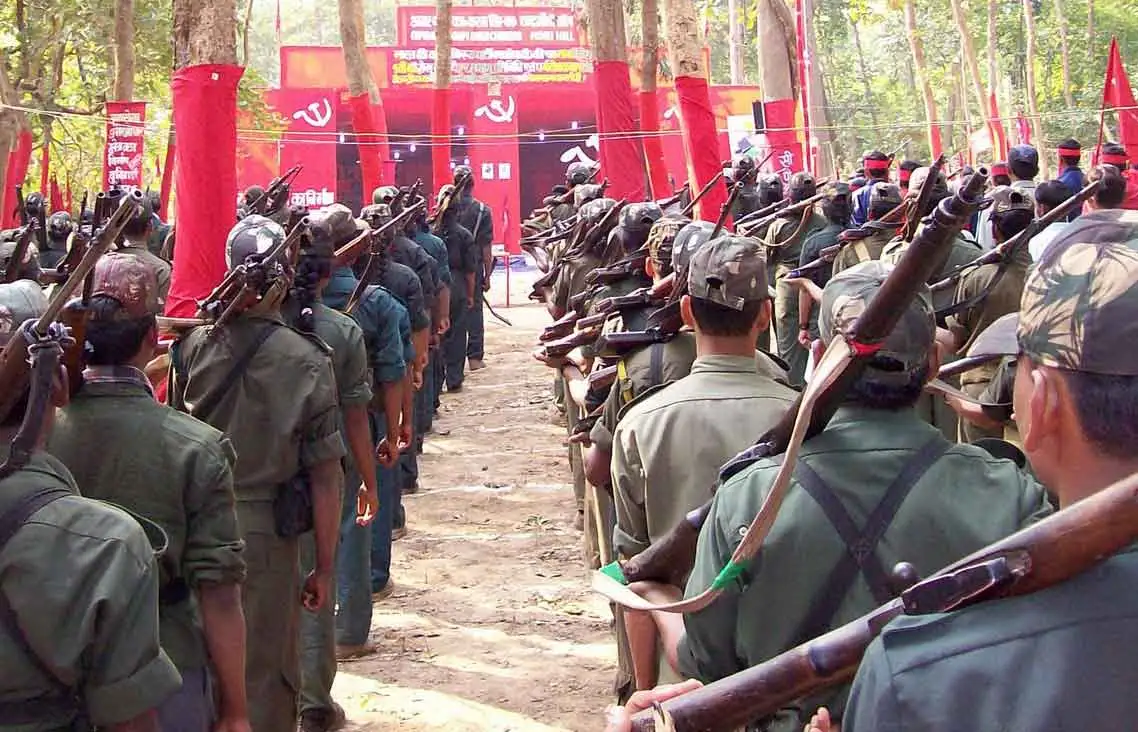
The Communist Party of India (Maoist) Party has been primarily responsible for left-wing extremism such as the violent attacks and killing of civilians and security forces. These organisations have been included in the schedule of terrorist organisations under the Unlawful Activities (Prevention) Act, 1967.[1] Their ideology calls for the overthrow of the Indian state which is not acceptable under the Indian Constitution and the founding principles of the Indian State. So, the LWE is a threat to the entire liberal and democratic polity per se.
India has been one of the victims of state-sponsored and fundamental terrorism fuelled by fundamentalist ideologies partially operated from foreign land. Over the last eight years, there has been a significant decline in left-wing extremism violence. There has been around 75% reduction in left-wing extremism-related deaths in 2022, from around 397 to 98.[2] The Maoist insurgency has the potential in South Bastar in Chhattisgarh, the Andhra-Odisha border and some districts of Jharkhand. Between 2004 and 2022, 8625 people were killed in the LWE affected areas. [3]Based on the latest ‘comprehensive’ review by the Home Ministry, the number of Left Wing Extremism Hit districts under the special SRE Funding Scheme has decreased from 72 to 58. The eight new districts have been included by the MHA which include Malappuram, Palakkad and Wayanad, West Godavari in Andhra Pradesh, Kabirdham in Chhattisgarh, Mandla in Madhya Pradesh and Angul, Boudh in Odisha.
Moreover, there is a substantial role of foreign actors in fuelling and amplifying the LWE movement in India. The common link that can be found between the various Maoist organisations in India is the People’s Republic of China (PRC or China). The arms with PRC-based origin are smuggled via sea routes from Haldia, Kasaba Naraingarh (Midnapur) area to areas like Khantpara, Baripada etc.[4] The involvement of the Chinese was at the level that even then Home Secretary G K Pillai accepted openly in media on 9 November 2009, that China was the biggest supplier of small arms to the Maoists in India.[5] This was further highlighted by the 2012 report of the Intelligence Bureau which mentioned that Chinese intelligence units have been involved in training, arming and funding the Maoist rebellion. The report even stressed that China was organising the Maoist and militant groups from Jammu and Kashmir and the Northeastern region into a single ‘war-fighting machine’ against India.[6]
Not just funding, the PRC has also provided safe havens to Maoist political leaders. During an investigation by Delhi Police’s Special Cell in 2011, it was revealed that the chief of the political wing of the People’s Liberation Army of Manipur- Irengbam Chaoren – is hiding in China.[7]
The illegal funding to create disruptions in India is not a thing of the past but is constantly happening even today. The case of the NewsClick portal last year, in which one of the shareholders of the portal was suspected to be involved in funding banned Naxal organisations and was having an anti-national nexus with Gulam Nabi Fai. This highlighted that the PRC has started using different channels to inject money to fuel dissent against the Indian government.[8] This involvement of foreign actors has made the security situation even more complex.
Security Dimensions of Left Extremist Militancy in India
- Impact on Human Security and Livelihood: Left-wing insurgency had once been considered the foremost internal security threat. At its peak in 2006, the European Foundation for South Asia Studies estimated Maoists to be a 20,000 strong group. The Naxalite doctrine has an idealistic portrayal of identity based on the concept of ‘suicide terrorism’.[9] The Maoists use the ‘integration strategy’ by empathising with the grievances of the local villagers and attributing their issues to the external forces of perceived enemies of the state. Platforms like People’s March also disseminated information on issues such as socio-economic inequalities and furthered the Maoist Propaganda. These groups mobilise funds through various methods such as extortion from the mining industries and NGOs and the generation of substantial annual funds. According to the Centre for Land Warfare Studies, a rebellion by around 85% of the Indian Tribal population at the heart of central India has very serious security implications.[10] The Maoist ideology has made the tribal insurgency particularly dangerous as these activities pose a threat to the country’s access to mineral resources. The number of deaths of the security forces and civilians in LWE violence has reduced by 90% in 2022 as compared to 2010. There have been 7,649 LWE-related incidents and 2,020 deaths from 2014 to 2023.
- Strategic Red Corridor
The Maoists have referred to the Red Corridor (or Compact Revolutionary Zone) which stretches from Pashupati in Nepal to Tirupati in South India. This indicated the spread between the two temples in South India and Nepal. It is a narrow but continuous strip passing through Odisha, Jharkhand and Chattisgarh. That was also a time of peak Maoist activities in Nepal. The main idea was that the Maoists understood that the interstate boundaries are essentially fissures that can be exploited in the context of poor coordination between state police forces. However the situation has improved over a period of time due to improved coordination between the state police and para military forces. The corridor has shrinked and the year 2022 witnessed the lowest number of incidents of violence and deaths in Naxal-hit areas in the last four decades. Moreover, earlier there was little influence of routine administration in these areas which allowed the Marxists to run their camps, collect taxes, extort money and establish a virtual parallel government. However , things have been changing quite rapidly in the recent past. They also exploit the different policing mechanisms of the policies of the state government which include surrenders and talks. The main idea behind the Compact Revolutionary Zone encompassed the tribal areas of Bihar, Uttar Pradesh, Madhya Pradesh, Jharkhand, and Orissa among others which would give them access to the Bay of Bengal and the Indian Ocean which could have potential strategic and geopolitical implications. In April 2023, ten personnel of the Chhattisgarh Police’s District Reserved Guard were reported to have been killed in the state’s Dantewada district. It was the biggest attack since the April 2021 ambush by Maoists in Chattisgarh’s Bijapur District in which 22 CRPF Black Cobra Commandos personnel were killed.[11]
- Funding Sources of the Maoists: The International Dimension of the Issue: Apart from the PRC links discussed above, recent studies also tell that the Maoists groups have well-established linkages with other international and national groups that provide moral support to the people, such as the Jammu and Kashmir terrorist groups and ISI links.[12] The left-wing extremists have also drawn sympathy from the Maoist organisations in Germany, France, Holland, Turkey and Italy. The recovery of arms and ammunition of foreign origin from the left-wing extremists in different encounters is an indication of the nature of foreign funding received by such individuals. The MEA has also taken up the issue with these countries through diplomatic channels. As per a media report in 2011, the Maoist kitty has a fund of more than Rs. 2500 crore (2011 data) which brings us to the issue of scrutiny of the funding mechanism of the ‘nation’s single largest security threat’.[13] According to the NIA (National Investigation Agency), the Maoist outfit in Maharashtra, Madhya Pradesh and Chattisgarh received funding of Rs. 2.5 to Rs. 3 crore. (2020 data) An analysis from the Vivekananda International Foundation reveals that the Mosists have links with the Pakistan Intelligence Agency ISI. There have been similar cases in Jharkhand, Orissa wherein the funds came from national and international sources including South East Asian countries. According to Home Minister P. Chidambaram, the Maoists are buying weapons from the international arms market in Nepal, Bangladesh and Myanmar.[14] These groups have also been investing heavily in technology and modern communications to further their propaganda. One of the most challenging parts of the strategy against Maoists is to break the network of foreign funding and logistics. There has been a huge mismanagement of the development funds allocated as an officer quotes that 70% of the funds allocated under the Mahatma Gandhi National Rural Employment Guarantee Scheme (MGNREGA) in Bastar and Dantewada are controlled by sarpanches backed by Maoists. (2011 data) Another important part of the problem is in March 2010 that 161040 illegal mines were found in Maoist-affected states like Jharkhand, Chhattisgarh and Orissa. These mines controlled by the Maoists are also a source of funding for them. Thus, this entire issue of funding of the Maoists links the issue of left-wing extremism to the smuggling of weapons, cross-border terrorism and illegal foreign funding mechanisms. This is the international dimension of the problem which is also one of the destabilising factors in the internal security of India. Many front organisations facilitate mobilisation in semi-urban and urban areas. Moreover, these front organisations skillfully and effectively use the state structures and the legal establishment to further their doctrine. Many of these outfits are supported by external forces which are inimical to India.
- Impact on the Naxal affected areas and Critical Infrastructure: Naxalism has been an emerging threat to the internal security of India. They negatively impact the economy and development of the naxal-affected region. On the other hand, the economic determinant of the rise of Naxalism is underdevelopment in the tribal regions. So, as a counter move, the government focuses on the development narrative and approach to uplift these sections. As far as the impact on economics is concerned, the Maoist conflict has extensively affected the forest produce market and mining in Chhattisgarh and Jharkhand and agriculture in the states of Andhra Pradesh and Odisha. The economics of Naxalism is the economics of looting, levy and destruction.[15] There is a lack of rule of law and development is absent and standstill due to disruption and violence emanating from the maoist activities. For example the Bastar region of Chhattisgarh, undivided Koraput district of Odisha is the hotbed of Maoist activities. In these areas the rule of law is absent. Therefore economic activities are at a standstill, this would have a detrimental effect on the economy and development of the region. These extremist groups run protection rackets for Ganja cultivation. They extort money from the contractors who are engaged in the road building and irrigation projects, from businessmen and mine owners, and loot banks and local moneyed people. They often use force and threats, burning vehicles and equipment and collecting huge amounts of money from the paper industry in Andhra Pradesh, Odisha and Maharashtra. Between January 2006 to June 2009, the Naxals had hit the transmission lines, steel plants and mines a total of 316 times. These have also created havoc on human security as the fatalities of their extremist activities include 3110 civilians, 1986 members of the security forces and 2781 Maoists activities.[16] Their activities have led to the destruction of national infrastructure in these areas already marked by underdevelopment. The incidents include the blowing off of hundreds of mobile towers of BSNL, Airtel and Reliance in the districts of Bihar, Jharkhand, Chhattisgarh and Odisha in the last ten years. The destruction of electric transmission towers, poles and 11 kV and 33 kV electric lines in Andhra Pradesh, Jharkhand, Odisha, and Chattisgarh. This has hit the local economy quite severely. The education system has been severely affected due to the usage of schools as safe shelters for the Maoists.[17]
- Economic Cost of Left Wing Terrorism in India: The entire economic cost of the damage to the roads, bridges, mobile towers and electric transmission is about 20 billion rupees per annum. (2019 data) The economic development of this region is closely linked to the security dimensions of the region.The loss suffered due to the Naxals in 2016-17 was approximately Rs. 400 million. Moreover, the cost of maintaining such a huge presence of central forces in the region is huge which is a drain of the national resources. Overall about Rs. 200 billion per annum is the economic cost of naxalism in the country. (2019 data) The tactics and strategy of the Naxalites are a big challenge to the internal security policy of the country such as protracted warfare, organisational strength of the extremist groups, building up of bases/ Guerrilla zones and Compact Revolutionary Zones. This has a severe indirect impact on the morale of the affected people in the region. Experts have pointed out that there has been an increased militarization of the insurgency.
- Naxalism as a Threat to India’s Internal Security : Naxalism is a threat to the internal security of the country. One of the reasons is that these groups are armed with guerrilla warfare techniques, better trained militia and sophisticated equipment for intercepting the police communication system quite successfully. They target the government security forces as well as the national infrastructure such as power lines and railways. These huge law and order problems have led to destabilising problems in the country. Moreover, these groups are based in the remote corners of the country which has indeed complicated the task for the paramilitary and police forces. The extremists live by the gun and reap the benefit of extortion tuning to the amount of Rs. 1,000 crore a year.[18] Experts have pointed out that there has been an increased militarization of the insurgency. These insurgent groups have acquired an immense arsenal of weaponry, from crude tools to more sophisticated tools such as rocket launchers and landmines.[19]
Counter Measures for LWE in India
The NDA government’s ‘National Policy and Action Plan’ in 2015 covers the various aspects of security and development. According to the report, Chattisgarh, Jharkhand, Odisha and Bihar are severely affected by the LWE.[20] West Bengal, Maharashtra and Andhra Pradesh (which were earlier a part of the severely affected category) are considered partially affected. Uttar Pradesh and Madhya Pradesh are considered as states which have been slightly affected. The report also states that Maoists are making a foray into Kerala, Karnataka and Tamil Nadu and are planning to link the Western Ghats and Eastern Ghats through these states as they are attempting to carve themselves into a tri-junction. Their success in making inroads into Assam and Arunachal Pradesh can have long-term strategic implications. The approach of the government has been focused on socio-economic development in affected regions. The second major step is the Juvenile Justice(Care and Protection of Children) Act,2015 which aims to make provision for special care to children who have been involved in this conflict. This act also states that any non-state, self-styled militant group which recruits children, will face criminal prosecution. Another strategic solution to the problem is SAMADHAN whose components include Smart Leadership, Aggressive Strategy, Motivation and Training, Actionable Intelligence, Dashboard Based KPIs, Harnessing Technology, Action Plan for each theatre and No access to Financing. Previously, there had been state-wise policies for the same however this has now changed as there is a comprehensive National Policy and Action Plan. Moreover, the Government has taken various initiatives such as the deployment of Central Armed Police Forces (CRPF, Border Security Force, ITBP) to conduct counter-insurgency operations in these affected regions. It also includes the setting up of specialised units for carrying out targeted operations against the Maoists. The Government has brought out the National Policy and Action Plan (2015) for the adoption of a multi-pronged strategy for fighting against the Maoist insurgency. The schemes include the Security Related Expenditure Scheme which is the ‘Modernization of Police Forces, Special Central Assistance (SCA) for filling in the critical infrastructure gaps, Road Connectivity Projects and the Aspirational Districts Programme in the naxal-affected areas of the country.[21]
There is a need to focus on a more-development (social and economic based) oriented approach to root out the economic causes of the rise of LWE. This would ensure that the affected citizens are brought back into the mainstream of social and economic development. The usage of technology should also be an immediate concern as proper measures are put in place in order to trace the online propaganda of these ideals or existence of such terror outfits which aim at mobilisation of the younger generation. Secondly, there should be promotion of dialogue between the two parties in order to resolve the issues which are mainly related to land rights and lack of economic opportunities among the tribals. Attractive monetary packages can be provided to the past Naxalites. Moreover, the system of environmental regulations and setting up of Special Economic Zones (SEZs) should take the interests of the local livelihood to ensure development of the local economy. The businesses especially the paper and mining industries should be encouraged to actively participate in the CSR activities. Developmental activities should be undertaken such as establishment of Polytechnic colleges, diversification of economic opportunities through better skill development, free residential educational facilities for the tribal children. In this regard, the government can collaborate with the NGOs or encourage local NGOs in such affected areas to make provision for these facilities which would also help in community development and engagement of the affected people.
Conclusion
To conclude, LWE is an internal security threat to the country. It must also be noted that these activities also thrive on innovation, so the technological aspect of the problem cannot be undermined. The national doctrine on combating LWE should be updated through better exploration and research on the growing issues. This multi-layered issue has had destabilised the country in ways since Independence, so, it becomes a necessity to deal with the maoist challenge.The government should adopt an approach which is a balance of the attractive (monetary) packages, socio-economic developmental approach and coercive (military measures) to contain LWE.
References
- Ali, A., & Lal, S. (2015). Naxalite Movement in India (Vol. 2, Issue 8). International Journal of Informative and Futuristic Research. Retrieved from https://www.rmlnlu.ac.in/pdf/6-NAXALITE_100620.pdf
- Adhikari, S. (2012). The Resurgence of Naxalism: Implications for India’s Security. Air Power Journal, 7(1). Retrieved from https://capsindia.org/wp-content/uploads/2022/09/S-Adhikari.pdf
- Press Information Bureau, Government of India, Ministry of Home Affairs. (Feb,2019). Naxal Affected Districts. Retrieved from https://www.pib.gov.in/newsite/PrintRelease.aspx?relid=188075
- European Foundation for South Asian Studies (EFSAS). (2019, December). A historical introduction to Naxalism in India. EFSAS. Retrieved from https://www.efsas.org/publications/study-papers/an-introduction-to-naxalism-in-india/
- Dixit, R. (2010, April). Naxalite Movement in India: The State’s Response. Journal of Defence Studies, Manohar Parrikar Institute for Defence Studies and Analyses, 4(2). Retrieved from https://idsa.in/jds/4_2_2010_NaxaliteMovementinIndia_rdixit
- Indresh, C. (2023, November 15). Security Reinforced at Kodagu-Kerala border following Naxal Encounter. Hindustan Times. Retrieved from https://www.hindustantimes.com/india-news/security-reinforced-at-kodagu-kerala-border-following-naxal-encounter-101699990612352.html
- Harnetiaux, K. J. (Year). The Resurgence of Naxalism: How Great a Threat to India? Dudley Knox Library, Calhoun. Retrieved from https://archive.org/details/theresurgenceofn1094510335/theresurgenceofn1094510335/
- Rana, R. (2021, November 18). CPI (M) and the MMC Zone. Manohar Parrikar Institute for Defence Studies and Analyses. Retrieved from https://idsa.in/idsacomments/cpi–maoist-and-the-mmc-zone
- Rana, R. (2021, November 18). CPI (M) and the MMC Zone. Manohar Parrikar Institute for Defence Studies and Analyses. https://idsa.in/idsacomments/cpi–maoist-and-the-mmc-zone
- Wilson Centre. (2010, July 15). The Gravest Threat to Internal Security: India’s Maoist Insurgency. Wilson Centre. https://www.wilsoncenter.org/event/the-gravest-threat-to-internal-security-indias-maoist-insurgency
- Bhattacharya, S. (2022, July). Naxalite an Emerging Threat to Internal Security and Defence Policy for India. Research Gate. https://www.researchgate.net/publication/362124652_NAXALITE_AN_EMERGING_THREAT_TO_INTERNAL_SECURITY_AND_DEFENCE_POLICY_FOR_INDIA
- Singh, A. (2023, November 25). Naxalism: An Internal Threat to the Indian Territory. dhaaramagazine. https://dhaaramagazine.in/2023/11/25/naxalism-an-internal-threat-to-the-indian-territory/
- Hindwan, S. (2014, February 25). Rise of Naxal Violence. Indian Defence Review. https://www.indiandefencereview.com/spotlights/rise-of-naxal-violence/
- Sheetal. (2020, June). Naxalite Violence in India: Threat to the Human Security and Human Rights. ResearchGate, 52(3-4), 273-291. https://www.researchgate.net/publication/341866883_Naxalite_Violence_in_India_Threat_to_the_Human_Security_and_Human_Rights
- Singh, S. (2011, July 8). Naxalism: The Internal Bane of India. Indian Defence Review. https://www.indiandefencereview.com/spotlights/naxalism-the-internal-bane-of-india/
- USI-Amity University Joint Panel Discussion. (n.d.). Problems of Naxalism: Ground Realities and Strategic Challenges Towards Conflict Resolution. USI. https://www.usiofindia.org/publication-journal/problem-of-naxalism-in-india-ground-realities-and-strategic-challenges-towards-conflict-resolution.html
- Magioncalda, W. (2010, April 8). A Modern Insurgency: India’s Evolving Naxalite Problem. South Asia Monitor. https://www.csis.org/analysis/south-asia-monitor-modern-insurgency-indias-evolving-naxalite-problem
- Singh, S. (2020). Naxalism National Security and Indian State. Academia. https://www.academia.edu/44739396/Naxalism_National_Security_and_Indian_State
- Editorial Board. (2021, March 28). The Naxalite Insurgency in India: Addressing the Limitations of Greed and Grievance in Conflict Resolution. The Yale Review of International Studies, Yale’s Global Affairs Journal. https://yris.yira.org/essays/the-naxalite-insurgency-in-india-addressing-the-fundamental-limitations-and-detrimental-effects-of-greed-and-grievance-in-conflict-resolution/
- P.V Ramana, Measures to Deal with Left Wing Terrorism/ Naxalism, IDSA, Occasional Paper No. 20, retrieved from https://idsa.in/system/files/OP_MeasurestodealwithNaxal.pdf
Footnotes
[1]https://www.mha.gov.in/en/divisionofmha/left-wing-extremism-division
[2]https://www.news18.com/india/with-twofold-rise-in-naxal-surrender-since-2014-why-containing-lwe-is-among-modi-govts-top-feats-8564374.html
[3]https://www.mha.gov.in/en/divisionofmha/left-wing-extremism-division#:~:text=Between%202004%20to%202022%2C%208625people%20have%20been%20killed,%E2%80%98Police%20informers%E2%80%99%20before%20being%20brutally%20tortured%20and%20killed.
[4] https://www.indiandefencereview.com/news/maoists-chinas-proxy-soldiers/
[5] https://economictimes.indiatimes.com/news/politics-and-nation/maoists-getting-arms-from-china-home-secretary/articleshow/5209226.cms?from=mdr
[6] https://www.indiatoday.in/india/north/story/chinese-intelligence-training-and-funding-maoists-in-india-100359-2012-04-25
[7] https://timesofindia.indiatimes.com/city/delhi/cops-nail-china-link-with-naxals/articleshow/10273433.cms
[8] https://economictimes.indiatimes.com/news/india/funds-came-from-china-to-disrupt-indias-sovereignty-delhi-police-fir-against-newsclick/articleshow/104211719.cms?from=mdr
[9]https://www.efsas.org/publications/study-papers/an-introduction-to-naxalism-in-india/
[10]https://www.claws.in/static/IB-262_-Indias-Position-in-South-Asia-An-Assessment-of-India%E2%80%99s-Neighbourhood-First-Policy.pdf
[11]https://www.indiatoday.in/india/story/dantewada-naxal-attack-chhattisgarh-security-personnel-killed-ied-blast-2365050-2023-04-26
[12]https://www.efsas.org/publications/study-papers/an-introduction-to-naxalism-in-india/
[13]https://www.vifindia.org/article/2011/january/14/Maoist-Funding-Dimensions-Sources-and-Implications
[14]https://indianexpress.com/article/india/latest-news/maoists-getting-arms-from-bdesh-myanmar-chidambaram/
[15]https://www.vifindia.org/article/2019/july/03/severity-of-economic-impact-of-the-maoist-movement
[16]https://www.researchgate.net/publication/341866883_Naxalite_Violence_in_India_Threat_to_the_Human_Security_and_Human_Rights
[17]https://www.newindianexpress.com/nation/2022/jan/31/number-of-naxal-affected-districts-has-come-down-from-126-to-70-president-ram-nath-kovind-2413484.html
[18]https://capsindia.org/wp-content/uploads/2022/09/S-Adhikari.pdf
[19]https://www.wilsoncenter.org/event/the-gravest-threat-to-internal-security-indias-maoist-insurgency
[20]https://indianexpress.com/article/explained/naxalism-maoist-attacks-home-minstry-modi-govt-national-policy-and-action-plan-5140028/
[21]https://blog.ipleaders.in/laws-for-naxalism-in-india-and-its-reforms/
Author: Sourishree Ghosh
Affiliation: Jadavpur University
(Currently Working as Research Intern at Red Lantern Analytica)