INTELLIGENCE ARCHIVE

Untraditional Security

69 published analyses, newest first.

China’s state sponsored Uyghur Genocide
UNTRADITIONAL SECURITYJANUARY 17, 2023
49

China’s state sponsored Uyghur Genocide

After annexing Tibet and imposing draconian measures aimed at sinicizing the region, the CCP has also threatened the existence and freedom of people living in the north western region of Xinjiang, a mainly Turkic speaking ethnic group, the Uyghurs. Many nations, such as Canada, UK, New Zealand, Lithuania, France, Belgium, Czech Republic and the United States have deemed CCP”s repressive measures in Xinjian as a cultural genocide, saying that they run afoul of the Article 2 of the Genocide Convention. Since the 1950’s, China has sponsored mass migration of Han Chinese into the region, through the use of the Xinjiang Production and Construction Corps, a state run paramilitary organization, fueling tensions between the two ethnic groups. (About 1.2 million people settled in Xinjiang during the 1990’s, pushing the proportion of the ethnic Chinese population to 40 percent of the total of some 18.5 million people at present). By introducing measures aimed at stifling the cultural identity of the region, the CCP has subjugated multilingualism and cultural pluralism and instead promoted a monocultural model. Under the aegis of the 9/11 attack and the fact that some Uyghurs were found fighting in Afghanistan, the CCP tried to sanction its repression of the Uyghurs as part of the “Global War on Terror”, thereby maligning the Uyghurs as a source of Islamic threat in Xinjian. “Osama bin Laden and the Taliban in Afghanistan had provided the ‘Eastern Turkestan’ terrorist organizations with equipment and financial resources and trained their personnel,” and that one particular organization, the “Eastern Turkestan Islamic Movement” (ETIM) was a major component of the terrorist network headed by Osama bin Laden”, the CCP claimed. Such claims were further attempted to be solidified through the issuance of documents such as “East Turkestan Terrorist Forces Cannot Get Away with Impunity” and “East Turkestan terrorist groups and individuals”. Such means to sabotage minorities through the publication of vicious but contentious literature was condemned by the United States when, in 2001, President Bush said that “the war on terrorism could not be used as an excuse to victimize minorities”. Half a decade before, in February 1997, to protest against the migration of Han Chinese in the region and the restriction on religious and cultural activity, a demonstration was held by the residents of Yining. Though the protest was peaceful, aimed at the right of minority populations to set up organs of self government and to exercise control over certain economic resources, a number of unarmed protestors were shot, thousands of Uyghurs were arrested and a number of religious schools and mosques were closed. Then in 2009, the violent Urumqi riots broke out which marked a new turn in CCP’s attitude towards Uyghurs. More recently, to stymie the protests against the migration of Han Chinese in the region, the Strike Hard Campaign Against Violent Terrorism was launched by Xi Jinping in 2014 and the new Secretary of the CCP, Chen Quanguo unleashed a violent campaign against so called “terrorists”. Children were forced to attend state run schools, families were coerced to abide by the family planning rules, wearing of veils and long beards was also banned while a race based monitoring system especially targeting the Uyghurs was introduced. Since 2016, under the leadership of the CCP Secretary Chen Quanguo, more than two million Uyghurs, including Uzbeks and Kazakhs have been detained in what the CCP claims as “educational and vocational camps”. Between 2017 and 2018, the size of some 39 camps tripled, equaling almost 140 soccer fields while security related spending in the region increased by almost 3 billion dollars. More than sixteen thousand mosques have been demolished and many children have been forcefully separated from their parents and sent to “re-education camps” since 2017. Also, while birth rates of the country decreased by close to 10 percent, for the Uyghur regions of Hotan and Kashgar, it fell by a whopping 60 percent, raising allegations of forced sterilizations, forced abortions and forced contraceptives in the region. People have been detained in these internment camps for reasons as silly as traveling to any of the countries that CCP considers sensitive, reading and texting Quranic verses and having more than three children. Between 2017 and 2019, “patterns of torture or other forms of cruel, inhuman, or degrading treatment”, were found by a report based on twenty six people detained during the time. The detainees were monitored, forced to pledge loyalty to the CCP, sing praises of communism while women reported gross incidents of sexual abuse and violence. While the CCP showcases Xinjiang as a hub for textile and apparel manufacturing, deeming that the minorities enjoy a considerable upside of economic development, reports from international organizations such the Center for Strategic and International Studies, Australian Strategic Policy Institute and independent reporters such as Adrian Zenz confirm that what is actually going in the region is a state sponsored labor program in which the citizens are monitored closely and vital but private information such as facial recognition, fingerprints and biometric data is collected and stored for further reporting use. It is clear from the vast amounts of reportage done on Xinjiang that the CCP has its vicious agenda to obliterate the culture of the Uyghur people and reduce them to nothing better than puppets, with no viable means for individual respect and livelihood. The world needs to take actions against the abuse of power propelled by the CCP against the Uyghurs through measures such as the assessment by the UN Human Rights Office and the UN that the CCP policies in Xinjiang amount to crimes against humanity.
TR
Team Red Lantern AnalyticaAnalyst
arrow_outward
Indo-Pacific: The Active Front of the Churning World Order
UNTRADITIONAL SECURITYJANUARY 10, 2023
50

Indo-Pacific: The Active Front of the Churning World Order

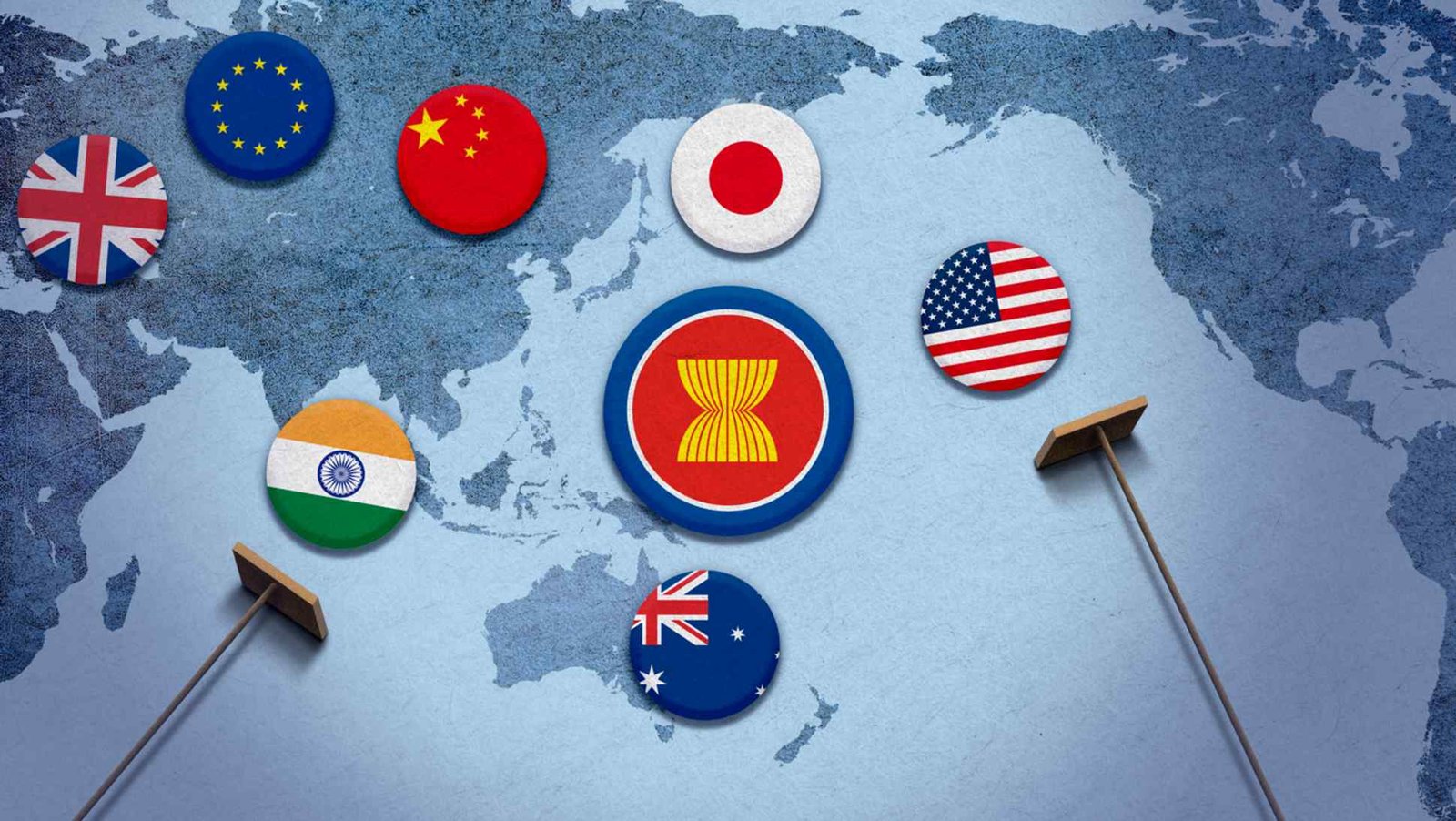
Gone are the days when the world was ruled by a bipolar or unipolar franchise. The postmodern era is characterized by multiple polarities, particularly Asian powerhouses such as China, Japan, India, Thailand, Vietnam, along with other countries such as USA and Australia that have a unique interest in the region that represents more than 40 percent of the world GDP and is home to half of the world population while also constituting seven of the world’s largest militaries. Nations from around the world now recognise the changing strategic landscape and that their own interests can only be advanced by anchoring themselves in the Indo-Pacific region along with other allies and partners. The word “Indo-Pacific” first appeared in the 1920’s when the German geopolitician, Karl Haushofer used the term in multiple works such as the Geopolitics of the Pacific Ocean and Geopolitics of Pan ideas, whereby he underlined the role of anti colonial forces in China and India as supporting Germany against America, Britain and Western Europe domination. In the 21st Century, however, the geopolitical narrative is shaped by People’s Republic of China-PRC’s coercive drive to fuel a sphere of influence in the Indo-Pacific, through transgression of the international law, undermining human rights and threatening of the freedom of navigation of other legitimate countries, along with the possibility of expansion of nuclear missiles by North Korea and the prospect of climate change threatening to deluge the region through melting of glaciers and disproportionate rise in sea levels. The importance of the region was emphasized by former Japanese Prime Minister Shinzo Abe in his 2007 speech to the Indian parliament where he referred to the “confluence of seas as the dynamic coupling of seas and prosperity in broader Asia” while the concept of a “Free and Open Indo-Pacific” was formally mentioned as an aim to be sustained by members of the Quad; USA, Japan, India and Australia by the US Department of State in 2019. The term finds mentions in numerous US strategic documents such as the National Defense Strategy (2018) and the National Security Strategy (2017). With an eye on the complex challenges facing the region, a joint statement was issued by the US President Donald Trump and the Indian Prime Minister Narendra Modi in 2017 as follows, “As responsible stewards in the Indo-Pacific region, President Trump and Prime Minister Modi agreed that a close partnership between the United States and India is central to peace and stability in the region. In marking 70 years of diplomatic relations between India and the United States, the leaders resolved to expand and deepen the strategic partnership between the countries and advance common objectives. Above all, these objectives include combating terrorist threats, promoting stability across the Indo-Pacific region, increasing free and fair trade, and strengthening energy linkages”. Carrying forward the mantle forged by Trump, Joe Biden launched the Indo-Pacific Economic Framework for Prosperity in May 2022, whereby partners including Australia, India, South Korea, Vietnam, Thailand, Brunei, Indonesia and Japan would foster a cooperation with the intended aim to forge a connected economy through AI, privacy, digital economy rules, a resilient economy through better supply chain commitments, a clean economy through de-carbonization, green infrastructure and a fair economy. The Indian Prime Minister Narendra Modi also underlined the importance of the Indo-Pacific when, during his address at the Shangri La dialogue in 2018, when he said that the Indian Armed Forces, especially the Navy, was building partnerships in the Indo-Pacific for peace and security, as well as humanitarian aid and disaster relief: “They train, exercise and conduct goodwill missions across the region. For example, with Singapore, we have the longest uninterrupted naval exercise, which is in its twenty-fifth year now. We will start a new trilateral exercise with Singapore soon and we hope to extend it to other ASEAN countries. We work with partners like Vietnam to build mutual capabilities. India conducts Malabar Exercise with the United States and Japan. A number of regional partners join in India’s Exercise Milan in the Indian Ocean, and participate in RIMPAC in the Pacific”, he said. The close scrutiny received by the Indo-Pacific region is in line with the rise of the Chinese Communist Party-CCP and its ambition of becoming the world leader through the second largest defense expenditure in the world. Countries such as Brunei, Vietnam, Philippines, Taiwan and others have conflicting territorial claims in the South China sea, which does not bode well for the region unless the issues surrounding them are peacefully settled. Numerous military bases and airfields have been created by the CCP in the Parcel and Spratly Islands (despite promises made by Xi Jinping in 2015 to not militarize the region) while it has also tried to wrest control of the Japanese Senkaku Islands. The PRC also revoked its own promise by building an overseas base in Djibouti in 2017. Since formally announcing the “Nine Dashed Line” in 2009, the CCP has not offered any legal basis for its maritime claims. Furthermore, the Arbitral Tribunal constituted under the 1982 Law of the Sea Convention has firmly rejected the CCP’s maritime claims in the South China Sea as violating international law. One way of obstructing CCP’s designated campaign to appropriate the Indo-Pacific region, especially the South and East China Sea by altering the territorial boundaries and undermining the rights of sovereign nations at seas is by engaging in multilateral forums such as the Quad and forging more of such strategic alliances between nations, to deepen interoperability and bolstering the warfighting capabilities of smaller nations which hold a significant strategic place in the region. To accelerate the decarbonisation of the region, more investment needs to be made in clean technology and health infrastructure that can mitigate the onset of deadly epidemics such as the recent Covid-19 virus.

TR
Team Red Lantern AnalyticaAnalyst
arrow_outward
Relevance of Data Privacy in Context of Chinese Cyber Espionage
UNTRADITIONAL SECURITYJANUARY 9, 2023
51

Relevance of Data Privacy in Context of Chinese Cyber Espionage

A stark political fact stared India in the face in 2020; China’s data sharing laws forced Chinese origin companies to share data received by them with Chinese intelligence agencies, confidential details such as tax details, Aadhaar card and PAN number. Egged by the threat to national security (based on numerous reports given by the Indian Cyber Crime Coordination Center), the Ministry of Information Technology banned more than 267 Chinese mobile apps. The move was in line with the foreign investment policy that required Chinese companies to ask permission from India before investing in Indian firms. The threat to national security was not only limited to India’s geographical sphere. A month later, in his last days of Presidency, Donald Trump blatantly described a generalized threat of “Chinese connected software applications that can access personal devices such as smartphones, computers and tablets”, and promptly decided to issue an executive order banning WeChatPay, Alipay and six other Chinese apps. The slew of political measures undertaken by both the US and India came after a long haul of Chinese cyberspace misdemeanors that were targeting critical infrastructure as well as the international reputation of the countries to protect their national security and the privacy of citizens. But the Chinese infringement of privacy continued unabated as in 2021, CyFirma, a Singapore based company revealed that the information technology systems of two of India’s institutes at the forefront of the vaccine drive, Serum Institute of India (SII) and Bharat Biotech were targeted by Chinese state backed hackers. The Chinese hackers might have been trying to steal valuable information in order to reduce the huge difference between the sales of the OxfordAstraZeneca/CovidShield vaccine in favor of the Chinese flagship Sinopharm vaccine. In 2022, RecordedFuture, a cybersecurity firm based in the US also disclosed the fact that India’s power grids in Ladakh were affected by Chinese state sponsored hackers. The same cyber security firm had also alleged that the power outages witnessed by Mumbai in 2020, was the handiwork of a Chinese hacking group, RecEcho which resulted in the breach of the power sector. Similarly, as far as America is concerned, numerous accounts of Chinese espionage have been reported. Through an executive order in 2020, Donald Trump obliged a Chinese company to divest from Stayntouch, a cloud based company managing properties. The move came after information was received that Chinese hackers had stolen data of 500 million guests of Marriott’s Starwood network, including personal data such as passport numbers. Security clearances of more than 21 million Chinese agents were arranged during the 2014 cyber intrusion of the Office of Personnel Management while more than 78 million Americans were affected during the breach of the US health insurance company Anthem in 2015. In 2017, members of the Chinese military were indicted for the 2017 Equifax cyber intrusion when personal information of almost half of Americans was compromised. More recently, in March 2021, the Hafnium hacking group targeted researchers, think tanks, defense contractors and US government officials by breaching the Microsoft Exchange Server and exploiting its email vulnerabilities. The executive order, “Protecting Americans’ Sensitive Data from Foreign Adversaries”, issued by Joe Biden in June 2021 also emphasized the need to reign in the threat from China. The threat to data privacy is no longer limited to Indian and America as has been seen through the countless cases of data breach and infringement throughout the world. In 2017, it was discovered that a backdoor inserted by China at the African Union (AU) headquarters in Addis Ababa resulted in the transfer of data from computers every night for five years and security camera footage from inside the AU headquarters was also stolen by Chinese hackers. In August 2020, secret government files were exposed to being stolen when a report from the Papua New Guinea’s National Cyber Security Centre and the Australian government noted that the National Data Centre built by Huawei in 2018 was blemished by various cyber security implications. Similarly, Netherlands largest mobile network KPN’s backdoor was used by Huawei to access customer data and call records, including conversations made by government officials in 2010. Given the innumerable examples of Chinese efforts to infiltrate data security of various nations, it is a given that the threat to national security and critical infrastructure by Chinese state sponsored hackers is only escalating. In light of this decades long nefarious development, all countries should initiate counterintelligence programs to provide more in depth analysis of defensive briefs undertaken to alleviate the threat while constantly upgrading the data privacy standards and imbibing a more stringent national cybersecurity framework. To monitor and thwart such insidious designs as perpetrated by the CCP, collaboration can also be made with civilians who are rigorously trained to tackle such operations.

TR
Team Red Lantern AnalyticaAnalyst
arrow_outward
Statement on Revisiting CCP’s Footsteps in 2022 and Predictions on its Future Discourse
UNTRADITIONAL SECURITYDECEMBER 30, 2022
52

Statement on Revisiting CCP’s Footsteps in 2022 and Predictions on its Future Discourse

With India holding the G20 presidency, 2023 is set to become an important year where Geopolitics and Geo-economics will intertwine with diplomacy. However the most crucial focus ought to be given to Chinese Communist Party’s (CCP) China – with its Covid-19 tragedy and a weakened President Xi Jinping. After almost 3 years Covid-19 still manages to haunt the communist nation and the total blame goes to CCP’s careless policies ranging from its unscientific Zero Covid Policy, which prevented the Chinese citizens from building natural immunity, to its stringent lockdowns which led to violent nationwide protests, on a scale not seen since the Cultural Revolution. Although CCP has been successfully concealing data over the number of deaths from Covid-19, researchers believe millions could die due to the virus in coming months. A ripple over effect of this hit the economic affairs with the Chinese economy spiralling downwards with an unprecedented velocity. The collapse of the real estate sector further fuelled a slow recovery. At a time like this China also managed to indulge in a trade war with the US and most Western Nations are now attempting to decouple their economy from that of China’s. So, China is in a state of total chaos and if that wasn’t enough the CCP also tried to unilaterally change the status quo at the Indo-China border claiming parts of India and Tibet as its own. This all boils down to the fact that Xi’s position has weakened badly. Although there were always reports about inter-party conflicts but it has now become a question of paramount importance whether Xi Jinping will be able to tighten his grip over all these domestic and international problems, some of which came naturally to him and some of which he invited to himself. Another piercing question is Chinese invasion of Taiwan. It is clear that crippled with numerous problems at home, the CCP cannot afford another crisis let alone a war. Therefore, it is best for Xi Jinping to act carefully and save his dying population, thaw relations with global leaders and stop obsessing over the dreams of a Chinese reunification and ultimately becoming a world hegemon.

TR
Team Red Lantern AnalyticaAnalyst
arrow_outward
UNTRADITIONAL SECURITYDECEMBER 11, 2022
53

Strengthening QUADrelateral Security Dialogue “QUAD” cooperation in the field of information security

The Asia-Pacific region is a gigantic region, where the total population today exceeds 3 billion people, which is about 60% of the world’s population. In the Asia-Pacific region today there is a certain zone of contact between the main geostrategic interests of the most important states of the world. The Asia-Pacific region is an important area of the maritime strategic partnership between the United States and its allies within the framework of the American concept of the “Free and Open Indo-Pacific”. The architecture of the Indo-Pacific strategy includes, along with the United States, three more states that play an important role in the Pacific and Indian Oceans: Japan, India, and Australia. Based on the QUAD mechanism, which is a key component of the strategy, these four countries are trying to build a comprehensive structure of cooperation in two oceans, which includes politics, security, economics, science, technology and infrastructure. The strengthening of the position of this treaty has a devastating effect on the existing multilateral mechanisms in the region. In addition, by virtue of American new initiatives, Japan, India, and Australia are getting dominant mechanisms in the regions of the Pacific and Indian Oceans. This article outlines the concept of a new QUAD initiatives – Indo-Pacific Partnership for Maritime Domain Awareness (IPMDA), QUAD Cybersecurity Partnership and seeks to answer questions – which of the QUAD members is most interested in the initiatives? What are the nuances of the positions of the participating countries? What are the implementation difficulties? The decision to create a common system for monitoring the earth’s surface based on the results of satellite reconnaissance was an unexpected addition, announced after the Tokyo Summit of QUAD member countries in May 2022. Experts[1] believe that the main feature of the new idea is the closer interaction of QUAD working groups in order to create a system for collecting and transmitting information obtained using technical means by conducting electronic (SIGINT) and geospatial (GEOINT) intelligence. The advantage of the system is that ships can be detected from satellites almost in real time even with transponders turned off (AIS system), which will help fight against the “shadow fleet”. ” Because of its commercial origin, this data will be unclassified, allowing the QUAD to provide it to a wide range of partners who wish to benefit.”, the statement explains[2]. The developers of the QUAD information exchange system place special emphasis on its low cost and sufficiently high efficiency, which is especially important in the context of the global economic crisis and rising inflation in various countries of the world. At the same time, it is assumed that SIGINT will continue to specialize in collecting classified information, primarily related to military preparations and the transfer of PRC forces, which is especially important for India and Japan. GEOINT in addition to this will take over the tracking of non-traditional threats and challenges associated, for example, with climate change, illegal fishing, mass migration, humanitarian and man-made disasters. As part of the IPMDA[3], countries in the Indo-Pacific region intend to exchange technologies that allow them to control their maritime borders and international sea routes using low-orbit satellites that identify ships by radio traffic and automated tracking systems. According to analysts, the new information exchange system through the QUAD Satellite Data Portal[4] (QSDP) created by the QUAD Space Working Group will be able to cover the entire volume of electronic and satellite intelligence information received both by the QUAD participants themselves and their partners. The communication function of the QSDP is expected to be similar to the low Earth orbit communications satellites system – ORBCOMM. Thus, the unified information satellite system will be able to capture the user’s signal and transmit it to another satellite or to a control center that is part of local communication networks. States with vast maritime economic zones extending 200 nautical miles (370 km) from the coast often do not have the resources to effectively monitor thousands of square miles of coastal waters[5]. The IPMDA will establish near real-time regional water control centers throughout the Indo-Pacific region. The system will be based on existing monitoring centers in India, Singapore, the Solomon Islands and Vanuatu. This initiative was reinforced by the announcement of an agreement on humanitarian assistance and disaster relief in the region (QUAD Partnership on Humanitarian Assistance and Disaster Relief in the Indo-Pacific – HADR). Continuous surveillance will also allow monitoring of flight activities in the Woody and Spratly Island groups, construction activities in Fiery Cross, Mischief, and Subi reefs, as well as increasing the possibility of further deployment of A2/AD weapons. It seems that the implementation of this initiative is not only humanitarian, but also strategic in nature and will be used in the interests of the US naval forces in the region[6]. Linking the American Joint All Domain Command and Control (JADC2) with India’s C4ISR capabilities (Integrated Air Command and Control System -IACCS and Indian Navy’s Information Management and Analysis Centre – IMAC) will facilitate secure data transmission and provide QUAD countries with a common operational picture. Connecting the two networks will also allow QUAD to create a composite picture of air and surface activity and facilitate the exchange of huge SIGINT and IMINT information. In the future, the Unified Maritime Domain Awareness System will be able to work in parallel with such civilian structures that collect commercial data, such as, for example, the Swiss company Kleos radio frequency sensing system available on the satellite information market. At present, it allows governments and competent authorities of various countries to effectively counter the smuggling of weapons and drugs. It is also worth paying attention to the satellite regional time transfer system and a satellite-based augmentation system developed by the Japanese government to enhance the United States-operated Global Positioning System (GPS) in the Asia-Oceania regions – Quasi-Zenith Satellite System (QZSS). In addition, one of the steps for the information systems integration is the use of mobile systems to create interoperability of equipment from different manufacturers and software Open RAN (Radio Access Network for

TR
Team Red Lantern AnalyticaAnalyst
arrow_outward
UNTRADITIONAL SECURITYNOVEMBER 8, 2022
54

Enriching Green Technology through Blockchain Technology Analysis of India and China

Introduction The 21st century has been called the “century of the environment.” Governments -and individual citizens – can no longer assume that social challenges such as pollution, dwindling natural resources and climate change can be set aside for future generations. Through policy, research, education, incentives and forward-looking relationships with industry, government can play a central role in building a green future, community by community. The prospects for success have never been greater. A dawning era of creativity and innovation in “green technology” (also known as “clean technology”) is bringing the promise of a healthier planet – as well as the prospect of growing businesses that can sustain its health. The excitement building around this sector is reminiscent of the early years of the information technology revolution. Blockchain technology has been a big buzz word for a long time now. However the potential of Blockchain technology is still unfolding and provides multiple perspectives. Exploration in the field of green technology would fight corruption and the insufficient environmental, social and economic regulatory frameworks. Unravelling such technology by showcasing transparency would lead us in a direction where we’ll be able to make better decisions and increase the livelihood of each individual. The report aims to highlight two of the multiple areas where Blockchain has shown potential i.e. Solar Energy and Agriculture. One will be able to familiarize themselves with the same and be able to build their own insight upon it. However, the report does not provide in depth details but has touch-based most of the section which is required to visualize our future by using Blockchain Technology. What is Green Technology? The term ‘technology’ refers to the application of knowledge for practical purposes, converting theoretical knowledge into its practical application. Green technology (hereinafter Green Tech), refers to a type of technology that is considered environmentally friendly based on its production process or its supply chain. Green tech can also refer to clean energy production, the use of alternative fuels, and technologies that are less harmful to the environment than fossil fuels. The field of green tech encompasses a continuously evolving group of methods and materials, from techniques for generating energy to non-toxic cleaning products. Although the market for green technology is relatively young, it has garnered a significant amount of investor interest due to increasing awareness about the impacts of climate change and the depletion of natural resources. Green tech is a broad category that encompasses several forms of environmental remediation. While climate change and carbon emissions are now considered among the most pressing global issues, there are also many efforts to address local environmental hazards. Some seek to protect specific ecosystems or endangered species. Others seek to conserve scarce natural resources by finding more sustainable alternatives. The present expectation is that this field will bring innovation and changes in daily life of similar magnitude to the ‘information technology’ explosion over the last two decades. In these early stages, it is impossible to predict what this field of technology may eventually encompass.[1] In order to provide a viable alternative to fossil fuels, many businesses are seeking to engineer alternative sources of energy that do not generate atmospheric carbon. Solar and wind power are now among the most inexpensive sources of energy, and solar panels, for instance, are affordable to U.S. homeowners at a consumer scale.[2] Other alternatives, such as geothermal and tidal energy, have yet to be deployed at scale. Agriculture and allied activities also contribute to pollution and carbon emissions. Farming and livestock have a substantial environmental footprint, from the high costs of land and water usage to the ecological consequences of pesticides, fertilizers, and animal waste. As a result, there are many opportunities for green technology in the area of agriculture. For example, organic farming techniques can reduce the damage due to soil exhaustion, innovations in cattle feed can reduce methane emissions, and meat substitutes can reduce the consumption of livestock. How does blockchain work? A blockchain is a digital ledger of transactions that is kept secure by a network of computers. The technology enables individuals to transact directly with one another without the need for an intermediary such as a government, bank, or other third party. The growing list of records, known as blocks, are linked together using cryptography. Each transaction is independently verified by peer-to-peer computer networks, time-stamped, and added to a growing chain of data. Data cannot be changed once it has been recorded. While popularized by the increasing use of Bitcoin, Ethereum, and other cryptocurrencies, blockchain technology has promising applications in legal contracts, property sales, agriculture, medical records, and any other industry that needs to authorize and record a series of actions. The Process To begin, a user or node will initiate a transaction and sign it with its private key. Essentially, the private key will generate a unique digital signature and ensure that no one can alter it. In reality, if anyone tries to change the transaction information, the digital signature will change dramatically and no one will be able to verify it.[3] As a result, it will be rejected. Following that, the transaction will be broadcasted to the verifying nodes. Essentially, the blockchain platform can use various methods to determine whether a transaction is valid. These methods or algorithms are known as consensus algorithms. In any case, once the nodes have verified that the transaction is genuine, it will be recorded in the ledger. It will also have a timestamp and a unique ID to secure it further from any alteration. The block will then connect to the previous block, and a new block will connect to this block, and so on. As a result, it creates a chain of blocks, hence the name blockchain. Creation of blockchain has been beneficial to different sectors, in different economic activities. For Example, in agriculture and its allied sectors, stores must maintain all

TR
Team Red Lantern AnalyticaAnalyst
arrow_outward
Industrial Revolution through Environmentalism: Green Tech Race between India and China
UNTRADITIONAL SECURITYOCTOBER 9, 2022
55

Industrial Revolution through Environmentalism: Green Tech Race between India and China

Net zero refers to reducing greenhouse gas emissions to as close to zero as feasible, with any leftover emissions being reabsorbed by the atmosphere, for example by seas and forests. India has committed to achieving the net-zero emissions by 2070. Achieving net-zero will require tremendous innovation for both energy transition and industrial decarbonization. India has been through three full phases of Industrial Revolution. The first phase itself introduced modern technology to India and the next phases were a refinement into the same. Consequently, every industrial age has made companies more efficient, productive and profitable. The impact of industries on our environment, however, has continued unabated. Boston Consulting Group, the American global management consulting firm in its latest report titled, “The Next “Digital”: Unlocking $50 Billion Green Tech Opportunity”, stated that green-tech growth is driven by the increasing adoption of sustainable use, cases across IoT (Internet of Things), cloud computing, data platforms & analytics, digital twin, and blockchain, indicating clear positive signs of a vast opportunity of $45-55 billion every year. This is expected to grow at 25-30% annually over the next five years. This BCG report illustrates that COP26 (26th United Nations Climate Change conference held in Glasgow, United Kingdom in 2021) has been a major milestone event for governments, corporations & citizens of the world, in realizing the impact of our existence on the environment. It has mobilized the private sector globally, with 5,200+ businesses & 450+ financial institutes, accounting for 40% of financial assets, committing to science-based net-zero targets. The good news is that green-tech investments have increased from $5 billion in cumulative investments in 2016 to $10 billion in cumulative investments in 2021. For green-tech investors, IoT, analytics, and cloud computing are the favourites, with each technology accounting for more than $3 billion in investments respectively. Moreover, while the bulk of this growth is expected in developed economies in North America and Europe, as illustrated by the report, Asia is also expected to grow rapidly with various countries, including India, committing to net-zero targets under the Paris agreement and its subsequent Conference of Parties. Moreover, as per the latest analysis done in 2021, by World Economic Forum and Oliver Wyman corporation, approximately US$50 trillion in incremental investments is required by 2050 to transition the global economy to net-zero emissions and avert a climate catastrophe. However, most countries cannot easily provide such support through huge investments, and it tends to remain a global challenge unless a more inclusive stakeholder capitalist model is adopted. While many countries are marshalling their financial institutions to adequately support industry innovation, China is advantaged given the state’s vital role in both the financial sector and beyond, the fact that is largely associated with it having a communist identity. This offers China a unique opportunity to champion the green-tech revolution through homegrown yet globally appealing innovations and strong financial sector support. The subsidies provided by the State has helped the green energy sector to develop that led to reduction in the cost solar and wind energy by a half of its earlier costs. However, they are still expensive than the coal generated electricity but China is uniquely placed in order to undercut its rivals’ costs. The formula credited to make China the global manufacturing giant it is today are low-cost labour (in many instances sourced free from ethnic minorities kept as prisoners in Concentration Camps which the Chinese Communist Party prefers to call as “Re-education Camps), cheap money (with dubious records as the Chinese state is notorious for its exceptionally opaque system) and plenty of raw materials (made possible in many cases by Chinese Debt traps on poorer nations where China forces the Debt taking countries to award exclusive mining and industrial licenses to Chinese state owned firms), not to mention the other atrocities like human organ trading and DNA profiling of Muslim minorities of Uyghur and Turkic rootd, and persecution of Falun Gong and Tibetans by China in order to derive such benefits in its favour. These questionable practices looks to have boosted the green technology industry that for decades was hobbled by high costs. China’s success in this field is reciprocated by the fact that China already has over 50 percent of the global market for solar panels. Its companies are now looking to export their wind turbines. Analysts say as technologies advance and a wider market for these systems develops, the costs of wind and solar power will come down to the point where they match that of coal-powered electricity on a grid. At that point, solar and energy producers could sell electricity without state aid and this in China is getting more closer to reality. As for India, as per the India Energy Outlook Report of 2021, over 80% of its electricity produce comes from burning coal, oil and biomass. Energy usage has doubled in India, since 2000 and, power generation accounts for more than half of the country’s CO2 emissions. The IEA (International Energy Agency, a Paris-based autonomous intergovernmental organisation) predicts that the growth in India’s demand for energy will outpace any other nation until at least 2040. At the same time an appraisal report published by the UNDP and the article by NITI Aayog quoting the same, has stated that conventional electricity grids are difficult to extend to remote areas, and hence alternative solutions can be found in green energy technology. To make the most of India’s green energy potential for its Aspirational Districts, two complementary interventions can be suggested. The first is to boost the manufacture of green energy technology through Production-Linked Incentives. This will generate supply, increase exports of world-class green energy products, and create employment. The second is to install and commission small-scale green energy capacity across the Aspirational Districts. Its usage by the community will improve the quality of life, vitalize the local economy, and generate demand. All of this together will generate a cycle of socioeconomic growth. Solar energy currently accounts for just 4% of India’s power generation. The IEA report predicts

TR
Team Red Lantern AnalyticaAnalyst
arrow_outward
Great Tech Race: How fast does India need to run?
UNTRADITIONAL SECURITYSEPTEMBER 23, 2022
56

Great Tech Race: How fast does India need to run?

The idea of war is not the same as it was during the two world wars. The wars today, cannot solely be won by putting men and ammunitions on the battle field. The definition of ‘wars and ammunitions’ has changed in the past few decades. During the cold war, there was a space and technological race between erstwhile USSR and USA, wherein the two countries were always up against each other. Back then the world seemed more bipolar, however, now it is not the case. It is a multipolar world, wherein each country is up against each country. In this great tech race of the century, China is one of the biggest players. It has been established that Chinese have a great hold on the market throughout the world. Chinese goods are so penetrated into the local markets that, for any commoner it is difficult to differentiate. India has always been its own person. During the cold war, India did not side with either NATO or the WARSAW, rather it began with a separate movement altogether called the Non-Aligned Movement (NAM). The benefit of this is that India is that one country that is in good terms with both Russia and the USA. This is seen in light of the market economy that India has aimed for, especially since it opened its market and went for a mixed economy. India has already began playing the big game but now the time is to pick the battles to win the war. Senator James Patterson, in his speech to the American Enterprise Institute, Washington on 13th September, 2022 had pointed the foundational technological battlegrounds that are likely to define the 21st Century. These being – Artificial Intelligence, Semiconductors, Quantum Information Science and Technology, Biotechnology, 5G and Green Technology. It is pertinent to note that all the developed countries of the world are putting in all their resources to ensure that they are the leaders and India is also in that race. However, with the kind of policies that China implements, like usage of human resources at all levels of economy, state-controlled market and trade, mass production at cheaper rates and the cost of products also being less, has led to a lot of different markets of the world being flooded with Chinese goods. This flood of Chinese goods has made the world market dependent on China for different produces. The problem is the state-sponsored surveillance through different usages of Artificial Intelligence. Moreover the military applications of quantum computing, communications and sensing technology are no longer in the realm of the hypothetical. Quantum communications could see state secrets stolen through broken encryptions. Energy security is national security, and China is now the world’s leading manufacturer, user and exporter of low-emissions technology. With the mounting pressure due to climate change and environmental degradation, majorly the developing countries are rushing to transition to renewable energy, thereby, they will become increasingly dependent on China’s technology to meet their climate targets – a troubling dependence both strategically and morally given much of it is being made by forced labour from persecuted minorities like Uyghurs in Xinjiang. China already spends $70 billion more annually on commercialising scientific developments than America. China will overtake the US in R&D expenditure within the decade on current trajectories, according to the OECD. The bad news is that India is lagging far behind in such technological developments. The India Innovation Index, 2021 published by NITI Aayog shows that India’s expenditure in research and development is one of the lowest in the world. Research and Development investment in India, in fact, has declined from 0.8% of the GDP in 2008–09 to 0.7% in 2017-18. Data shows that India’s GERD is lower than the other BRICS nations. Brazil, Russia, China and South Africa spend around 1.2%, 1.1%, above 2% and 0.8% respectively. The world average is around 1.8%. On the other hand, India jumped from 81 in 2015-16 to 46 in 2021 in the Global Innovation Index (GII) when it comes to innovation, which looks like the good news we want to hear. Yet, while India was granted a record 58,502 patents in 2021, it is way behind other competitive economies such as China (5.30 lakh) and the United States (3.52 lakh patents). In 2021, the government rolled out the fifth draft of Science, Technology Innovation Policy, 2020, for multi-stakeholder consultation. Also, the recent establishment of the National Research Foundation (NRF) with the aim to catalyse, facilitate, coordinate, seed, grow, and mentor research in institutions around the country, is the step in right direction. Moreover, to become atma nirbhar (self-reliant), it has allocated ₹76,000 crore for the Design-Linked Incentive (DLI) scheme to start greenfield semiconductor and display fabs. The growth of domestic semiconductor R&D and manufacturing will be a catalyst for growth across sectors, leveraging new-age technologies. However, as important these steps are in developing India’s tech regime, they are still insufficient. As per an Asian Development Bank report, the private sector’s contribution to GDP increased from 66% in 1980s to over 80% in 2000s. It also shares over 75% of domestic capital formation, attracting massive investments over the years. The private sector contributes less than 40% to GERD, whereas its contribution goes beyond 70% in other advanced countries. India needs its public and private sectors to collaborate on a war footing on the following fronts. In his speech, senator Patterson pointed that during the cold war with the Soviet Union, it was America’s uniquely powerful model for creating and sharing wealth under a free market system enabled it to outcompete the Russian economy which could not keep up. Human ingenuity, creativity and entrepreneurship ultimately always flourish most strongly in free societies. According to him, it was the competitive markets, rule of law, private property rights and free trade which fuelled the growth of USA and ensured liberal democracies prevailed against inefficient, corrupt and inflexible centrally planned economies. If that is true, then going by the same pattern, the kind of closed market, communist

TR
Team Red Lantern AnalyticaAnalyst
arrow_outward
Does democracy fit in international politics?
UNTRADITIONAL SECURITYSEPTEMBER 11, 2022
57

Does democracy fit in international politics?

When a country talks about being a democracy, it is natural to think that it must be free, people-centric, rights-based, and peaceful, while, on the contrary, we see non-democratic regimes, as vicious, arbitrary, oppressive, and violent. Indeed, there are conflicts in every country, but it’s assumed that democracy would settle them peacefully, however, this position changes when it invades, or wages war against a non-democratic regime, whether to bring democracy there or for some other good reason. Isn’t that arbitrary? Is that even what being democratic means? Many questions come up but most importantly, what even is a democracy? Unfortunately, there is no clear or mutually agreed-upon definition of democracy. Many non-democracies have some democratic features, and democracies, on the other hand, often try to concentrate power. It then makes it hard to understand theories like the Democratic Peace Theory (DPT), based solely on democracies and their intrinsic inclination toward peace. It argues that democracies do not go to war with each other, at least none have till now. However, there are instances when two democracies almost or entirely went to war (depending on how one reads the situation), like the Kargil war of 1999 between India and Pakistan. Were they both democratic? Was it a war? Hence, when there is no clarity on what constitutes being a democracy or when a fight can be labelled as war, how can one prove or disprove this theory. This presents more of a theoretical problem. For instance, the Fashoda Crisis between France and Britain, where they almost went to war but then decided to hold back. So, what made them stop, morals or realist cost-benefit analysis? Both sides had prepared for war, hence it rules out morality influencing their decision in any way. Fareed Zakaria argues that democracy may mean different things. A liberal democracy based on constitutional liberalism (i.e., a given set of rights and government’s limited power) is different from simple or illiberal democracy, limited to the elections procedure and not what happens after a fascist gets elected. DPT mainly talks of liberal democracy, which resembles the republicanism of Kant than talking of democracy which Tocqueville and others viewed as a “tyranny of the majority”. The deeper we dig, the more complex definition and variables of democracy would come up, hence, to judge a country’s action based on its domestic structure becomes very complicated. In contemporary times, democracy is being preached by the USA to create its narrative of being a world leader. It uses the DPT to carry forward it. Hence, it does not care whether power in these countries is limited, as long as it gets its work done. For example, the US war on Iraq in 2003 was never a way of bringing democracy there, i.e., imposing democracy on another country by force, but a self-interest of a superpower which used democracy as a façade to carry out its ulterior purposes. Thus, countries which are democracies at home need not be democratic abroad. Self-interest and not genuine care for others drive states in the international realm. Even the USA’s support to Ukraine in the Russian invasion has behind it strategic reasons. So much politics determines how a government would act, in which situations and against whom. Countries sanctioning Russia for committing war crimes have themselves done the same if not worse. The US is not even a ‘state party’ to the ICC, established to punish war criminals, and wants a trial on Putin for this. “Although the United States led the drafting of the Convention on Genocide from 1946 to 1948, Washing ton took 40 years to ratify it”. (Kaufmann & Power, 2002). why hadn’t the USA come to help other countries like Rwanda, the Armenian or Bosnian Muslim genocide but it never shied away from interfering in the internal matters of other countries like during the cold war, supporting and financing coups. when there was apparent genocide, why were these democracies silent then? “The rest of the World does not act because the United States does not. The United States does not act, in turn, because public support for humanitarian intervention is diffuse and rarely mobilised- hence, domestic support is not there. Hence, presidents are cautious and believe that pushing for action cannot benefit them politically but can only cost them”. (Kaufmann & Power, 2002). Hence, humanitarian intervention is not based on humanity as such it is based on cost-benefit analysis. So, the bigger question is whether morals or principles play a role in international politics? Realists would argue that the moral a state follows is that of self-interest, even if it means not doing the right thing. Democratic “even altruistic act of democracy promotion be derived from the self-regarding and centralising logic of power politics…America has been using democracy to gain public support in its war efforts, in constructing and sustaining international alliances required for victory” (Whitehead, 2001) The USA waged war on Iraq and Afghanistan in the name of democracy and helping the people there, but it only left them destroyed and ultimately handed over to extremist groups. Not intervening in countries could be excused to not infringing upon their sovereignty, but then on what basis are other interventions justified, why are countries so selective? Ukraine is not even a part of NATO, which necessitates the USA to come to its help; then why? To contain Russia or to help people there, the answer seems clear. After WW2, the World promised “never again”; however, genocide still happens because the post-WWII international system was designed to protect human rights and ensure the power of the powerful. No US president has ever made genocide prevention a priority, and no US president has ever suffered politically for his indifference.” Again and again, powerful countries decide to protect the concept of national sovereignty or advance their international agendas rather than stop the mass murder of civilians. The international system is not failing. It is operating exactly as it was designed. (READ: Why Does Genocide Still Happen (Article),

TR
Team Red Lantern AnalyticaAnalyst
arrow_outward
Statement on our website being hacked by Chinese Hackers
UNTRADITIONAL SECURITYJULY 12, 2022
58

Statement on our website being hacked by Chinese Hackers

Red Lantern Analytica’s website was hacked today, and as per the evidence left by the attackers; we are certain that Chinese hackers acting on directives from the Chinese Communist Party (CCP) were responsible for it. The attack left our website disfigured, with many articles in Chinese showing up on the home page. We have been constantly under threat from China, and our Twitter handle has also been blocked by Mr Lijian Zhao (Official Spokesperson & Deputy director of the Chinese Ministry of Foreign Affairs Information Department). The penetration and exploitation of our website’s server compromised the security and integrity of tens of thousands of computers and networks around the world, affecting those belonging to our website’s visitors and frequent readers. This reckless and dangerous behaviour jeopardised the safety of millions. In addition, we have also identified malicious cyber activity with considerable effects aimed at our Facebook, Instagram, email accounts, and other social media handles. All of these destructive acts can be attributed to what we call the “50 Cent Army” group, which is backed by the Chinese Communist Party. The attacks were launched from China with the intent of stealing intellectual property and conducting espionage. We vehemently condemn these hostile cyber actions, which violate the rules of responsible state behaviour accepted by all United Nations member states. We continue to urge the Chinese government to adhere to these rules, prohibit the use of its territory for malicious cyber activities and take all appropriate, available, and practicable measures to detect, investigate, and ensure that nothing of this sort happens in the future. We reaffirm our unwavering dedication to responsible conduct in order to ensure a global, open, free, stable, and safe world. To this end, we will continue to pursue our objective of speaking out against China’s human rights violations, maritime and military muscle flexing, debt-trap diplomacy, and heavy-handed approach to criticism and dissent that frequently spans China’s geographical borders (like in our case). We reaffirm our resolve to continue combating malicious Chinese operations. We will continue to improve our cooperation, including with international partners and other public and private stakeholders, by sharing more information and staying involved, strengthening cyber resilience and handling incidents together, and working together to make our website and social media handles more secure overall.

TR
Team Red Lantern AnalyticaAnalyst
arrow_outward
The Trajectory of US-China Relations: Theoretical Perspectives
UNTRADITIONAL SECURITYJULY 5, 2022
59

The Trajectory of US-China Relations: Theoretical Perspectives

After the 9/11 attack, the relationship between US and China has re-invented itself to become even more uncertain. Some scholars have hinted towards increasing convergence in their relations, leading to deepening cooperation, stability and peace, whereas others have talked about deterioration leading to fierce competition and perhaps even war at times. Following the lead from other global actors, both US and China in contemporary times and in some areas, have started seeing each other as a potential partners united by common dangers such as Terrorism, Proliferation of WMD and Climate change. In order to form their views about relations between US and China, scholars mainly rely on arguments derived from two main theoretical perspectives- Realism and Liberalism. Not to mention, scholars even from the same school of thought might have contending views and this makes generalizations even more difficult. Thus, each of the two schools might have two contending viewpoints- one which is highly optimistic and another, which is highly pessimistic. Aaron L Friedberg therefore asserts, “It may turn out that one of the four camps identified here is basically “right” and the others “wrong”, but it is also conceivable that the future will be shaped by a confluence of different forces, some mutually reinforcing and others opposed”. Other Scholars such as Peter Katzenstein and Nobuo Okawara too have observed that “intellectual discourse in the field of international relations has come increasingly to be dominated by “paradigmatic clashes” in which champions extol “the virtues of a specific analytical perspective to the exclusion of others.” Driven by the desire to establish one’s supremacy, scholars of one school of thought may choose to belittle others, but again, according to Katzenstein and Okawara, this approach hinders the processes required to understand the convolutions present in the real world. LIBERALISM Having said that, we now start off with liberalism. liberal optimists believe in cooperation, peace, harmony and understanding. Also, with regards to US-China relations, these scholars emphasize on three mutually reinforcing causal forces – growing economic Interdependence in this era of globalization, the positive role of international institutions and the process of democratization. Firstly, the US- China relations is affected by bilateral economic exchanges which arises out of shared interests and which essentially has gained momentum after the economic liberalization in China which took place in 1970’s. They believe that except few disruptions, economic factors will improve and solidify relations between the two powers and ward off any scope of conflict. Also, the increased participation in the international organization lends credibility and legitimacy to any nation and this is what is happening with China lately, which is expanding its presence continuously across various international organizations. The latter is known to cure some of the adverse impact of anarchy at the global level and also allow the status quo to be maintained and thus has utmost importance in maintaining order and reducing vagueness. Also, the end of cold war has prompted the rise of several regional organizations in East Asia (APEC, ASEAN, ARF AND ASEAN +3) which paved the way for enhanced understanding and communication between the nations (US and China) and sought to relinquish any scope for misunderstanding and distrust. The third important area which liberal optimists prioritizes is their belief in Democratic Peace Theory. In this era of increased openness and free flow of information, regimes that seek to restrict their masses will be at shallow disadvantage and therefore they are hopeful of China entering into the “Zone of Peace” once it chooses to be democratic. In later case they expect China’s relations to stabilize with the USA. Liberal Pessimists on the other hand acknowledges the authoritarian nature of the Chinese regime and the adverse impact of its inclination towards continued increase in prosperity and appeals to Nationalism. These appeals to Hyper nationalism when combined with the transition towards democracy can be even worse. According to Edward Mansfield and Jack Snyder, “it is precisely when nations are in transition from authoritarianism toward democracy that they are most likely to initiate conflict with their neighbors” and thus if China follows the same route, its relations with the USA is expected to be bumpy if not distorted. It’s equally important to realise that Democracies aren’t always peaceful and thus any transition should be followed by mutual understanding and consent for any action. Furthermore, Michael Doyle asserts that “the very constitutional restraint, shared commercial interests, and international respect for individual rights that promote peace among liberal societies can exacerbate conflicts in relations between liberal and non-liberal societies.” Therefore, since China at this point of time isn’t a democracy and shows no intention of being one in the near future, USA always sees it with suspicion and a measure of hostility. Not to forget their differences over Human Rights issues (Uyghur’s Crisis). And if this aura of suspicion continues, USA might just be ready to tender help to nations which it considers democratic against China in case of any aggression by the later (Taiwan Crisis). REALISM Realists believe that it is the presence of international anarchy that compels states to wrestle for power and stature in international politics. According to them, States are interested in either maximizing its power (Offensive Realists) or its security (Defensive Realists) and this gives rise to Security Dilemma. Their strong tendency to give primacy to Material power in comparison to Discursive powers is what separates them from the crowd. According to realists, it is the power (Military) that defines a state’s interests and shape their relations with one another. For realist’s pessimists, the most challenging issue of all in the US- China relations are China’s rising power along with its ever-expanding revisionist tendencies which may at times threaten the status quo and result in instability and chaos. As state’s capabilities and capacities widen, they tend to define their self-interest more vividly and also seek greater influence over whatever is happening around them. Robert Gilpin, another renowned scholar opines that “a more wealthy and more powerful state . . . will select

TR
Team Red Lantern AnalyticaAnalyst
arrow_outward
UNTRADITIONAL SECURITYJUNE 4, 2022
60

Asia: as different as it sounds from Europe

There’s a debate on whether the future of Asia is Europe’s past, its own past, or different altogether. While Friedberg argues that Asia’s future would be Europe’s bloody past, David Kang emphasises Asia’s history to understand its anomalies. Amitav acharya says that history might not necessarily repeat itself (as Kang asserts) now that we live in a different era. This debate makes one think if there’s a need for Asian international theory or international relations theory that exists today works universally fine. One argument can be that bringing in each region’s international theory only fragments the existing one and doesn’t make sense cause then each region would employ its international relations theory which again will not be sufficient to explain any phenomenon outside its region. Another argument could be that having own IR theory makes it possible to understand the complexities of a particular region that the current IR theories might not be able to explain, like the one in Asia and the rise of China. As David Kang puts it, there’s no balancing done against the emerging power, which does away with the balance of power argument of the realists. However, as Walt has put it, states don’t balance against power but a threat, so does that mean south Asian states don’t see China as a threat? It’s hard to put this situation into one or the other IR theory, as these terms seem to have different meanings for different scholars. What does balancing or bandwagoning here means, rightly asks Amitav Acharya. Does economically cooperating with China for smoother trade and growing one’s economy mean bandwagoning with the rising power? Moreover, states have started increasing their militaries and defence (internal balancing), having ties with the USA, and making regional organisations (external balancing). David Kang also leaves out countries like India when he talks of the absence of balance of power in South Asia, where he only seems to speak about south-eastern countries (mainly because India doesn’t influence the politics of south-eastern Asia). Talking of history and hierarchy, Acharya disagrees with Kang on Asia replicating its past and being under China ruled hierarchical order in future. Even if, in history, China was hierarchically superior to other states neighbouring it (southeast Asia), it doesn’t necessarily mean that states today will accept China’s hegemony and surrender before it. States now have multiple means to tackle China which might not fit the realist theory, like strategically binding it through economic interdependence rather than balancing or bandwagoning. All states look at their self-interest first. If it means working with China, they will do so, and if China threatens their sovereignty, they will act by allying with other countries (external balancing) or increasing their defence (internal). States today, especially south-eastern states, are cautious in taking any steps directly against China since these countries gained independence from the West and some from China, too, like Vietnam and South Korea. Maintaining their sovereignty has been the priority, which was pretty evident in the 1947 Asian Relations Conference, where Asian countries didn’t form any regional organisation that India or China would then dominate or the formation of ASEAN to keep any external power influence away. Both China and the USA must be kept at a safe distance for them not to become overly dependent on the latter and not let the former dominate. They very well know the USA won’t come to their help as it has done in the case of Ukraine because not all of them are democracies or have such ties with the USA, so taking the risk of openly siding with the USA is very costly. South Asian states are particularly cautious of being entangled in this cold war bloc creation from which they want to stay away. Neither USA nor China is acting to benefit them, but their self-interest only. South-eastern states, hence, don’t want to become another country’s pawn in this power game. When theories are applied on the ground, the results might differ from what is expected. Hence, we must go through a part region’s culture and other forms to know how a particular theory acts there. Balance of power may work in the area, but differently from how it operates in Europe; this doesn’t mean it doesn’t exist but only in a different way. Today explaining China’s rise and the subsequent response of the neighbouring states has become a critical topic in IR theory. The present theories that are more suitable or explicitly made to explain Europe/western crisis fail to explain this Asian phenomenon. David Kang rightly says that Walt’s approach, which was created to explain the Cold War era and the balance of power it led to, can’t explain an Asian phenomenon where there’s no such balancing happening. Hence, we need “more theorising about Asian security that is more faithful to Asian experience” (Acharya). Both Kang and Acharya agree on this. In Acharya’s words, “The development of non-exceptionalism Asian perspective is important to the meaningful interaction and integration between IR theory and the analysis of the Asian security order.” Lastly, one might think, what is the larger aim of having an international relations theory, to explain international relations at large or to explain international relations at regional levels too? Looking at the current situation of IR theory, it seems that both are mutually exclusive as the Western IR theory focuses on Great Powers only, which subtracts the small powers whose sphere of influence is not as large, hence unable to explain the regional phenomenon. It has been correctly said that no one IR theory can explain all that is happening in international politics. Therefore, we must first look at the field of study and then employ a theory which is best suitable for it.

TR
Team Red Lantern AnalyticaAnalyst
arrow_outward
Chinese Debt-trap Diplomacy, a farce in the name of Development
UNTRADITIONAL SECURITYAPRIL 10, 2022
61

Chinese Debt-trap Diplomacy, a farce in the name of Development

/wp-content/uploads/2022/04/Chinese-Debt-trap-Diplomacy-a-farce-in-the-name-of-Development.pdf

TR
Team Red Lantern AnalyticaAnalyst
arrow_outward
Tracker, 25 March 2022
RADICALISATIONMARCH 25, 2022
62

Tracker, 25 March 2022

/wp-content/uploads/2022/03/Tracker-25th-March-2022.pdf

TR
Team Red Lantern AnalyticaAnalyst
arrow_outward
Tracker, 30 Dec 2021
RADICALISATIONDECEMBER 30, 2021
63

Tracker, 30 Dec 2021

/wp-content/uploads/2021/12/30th-dec-1.pdf

TR
Team Red Lantern AnalyticaAnalyst
arrow_outward
US – China Bilateral Relationship and India’s Smart Move, Revealing Security and Prosperity
UNTRADITIONAL SECURITYDECEMBER 24, 2021
64

US – China Bilateral Relationship and India’s Smart Move, Revealing Security and Prosperity

It took around ten months to organise the first bilateral meeting between the United States and China, during which President Joe Biden and Chinese Leader Xi Jinping expressed their concerns about the fragile relationship between the two countries. Certain decisions reflect the persistent insecurity of the two large nations’ ties. This tense situation is a source of concern for all countries. India is also impacted by this circumstance, as its relationship with China has deteriorated in recent years. which has led to the emergence of a strategic alliance between India and the United States. Numerous political experts have expressed concern that any rapprochement between the United States and China will jeopardise India’s relationship with China.India should exercise caution in its dealings with the United States and China. At the same time, India should not fret over Washington’s alliance with Beijing. China is a powerful country that is also vital to other countries, making it unthinkable to ignore it. India has maintained its ties with China despite China’s assault on Ladakh in 2020. In November 2021, India was coordinating its efforts with China at the COP26. Each of Europe’s, Asia’s, and even India’s economic partners has a large stake in China’s fruitful economic relationship. Engagement with all of the world’s major countries, including China, is an unpleasant reality of international affairs. Although the gap has widened in recent years as a result of fundamental contradictions between the US and China, it is also true that it will be closed in the near future if nothing goes horribly wrong in US-China ties. A few years ago, President Donald Trump employed an anti-China campaign tactic to win the presidency, but after taking the oath of office, he invited Xi to his Florida estate. The Trump administration saw a deterioration in the bilateral relationship. Under Trump’s leadership, the US switched from compromising at all costs to pushing on a broad range of issues, including trade, technology, security, and global governance. Many political observers predicted that Biden would change the situation following Trump’s election, but Biden is proceeding more methodically by fortifying US relationships and focusing on domestic economic restoration. America is united in its determination to confront and address China’s danger, while Beijing is united in its determination to stand up to America. However, both presidents recognise the critical nature of bilateral relations and the need for prudent management of geopolitical rivalry and interdependence. The solution to the US-China relationship and India’s conundrum is to enhance its ties with all major countries, including the US, France, Japan, Europe, and Russia, thereby boosting India’s position in the club of great nations. The Biden administration is likely to continue expanding the bilateral relationship with India, with the driving force being China’s growing economic and military clout in the area. In 2017, the US, Japan, India, and Australia finalised a long-delayed proposal to form the “Quad”, or Quadrilateral coalition, to confront China’s aggressive behaviour in the Indo-Pacific area. President Joe Biden electronically visited Quad leaders, including Prime Minister Narendra Modi, during the bloc’s inaugural summit, where he stated that a free and open Indo-Pacific is critical for everyone and that the US is committed to achieving stability in the area with its partners and allies. China is embroiled in bitter territorial conflicts in both the South and East China Seas. China asserts sovereign authority over the whole South China Sea. Vietnam, Malaysia, the Philippines, Brunei, and Taiwan have all filed rebuttal claims. To contain and counteract Chinese malfeasance, India must establish economic links with other Asian countries such as Indonesia, Singapore, Malaysia, and other bordering countries. This will provide India with a strong ally and backing in its dealings with China. Now is the time for India to demonstrate and establish that a nation can shape the global and regional balance of power. India, as the world’s largest market, can attract FDI, bolstering its economic stability and demonstrating to the world that the country will no longer stand by and watch as a victim nation, but will instead lead and intervene to resolve concerns and confront challenges. Author: Chandan Veer, Research Scholar (Ph.D.), Mahatma Gandhi Central University Bihar /wp-content/uploads/2021/12/US-China-Bilateral-Relationship-and-Indias-Smart-Move-Revealing-Security-and-Prosperity..pdf

TR
Team Red Lantern AnalyticaAnalyst
arrow_outward
Tracker, 4 Dec 2021
NUCLEAR ISSUESDECEMBER 4, 2021
65

Tracker, 4 Dec 2021

/wp-content/uploads/2021/12/DAILY-TRACKER-4-December-2021-converted-1.pdf

TR
Team Red Lantern AnalyticaAnalyst
arrow_outward
UNTRADITIONAL SECURITYOCTOBER 11, 2021
66

PETITION TO THE UNITED NATIONS ON HUMAN RIGHTS VIOLATIONS AND THE ATROCITIES UNLEASHED IN KASHMIR BY THE TERRORISTS AND THE ROLE OF PAKISTAN IN ABETTING SUCH INCIDENTS OF CROSS BORDER TERRORISM

Atrocities against Hindu populations in Kashmir have long been a part of the region’s history. It grew even more violent in 1965, when Zulfikar Ali Bhutto, Pakistan’s former Prime Minister and President, proclaimed a thousand-year war on India in the UN Security Council, also known as Bleed India with a Thousand Cuts, a military doctrine to attack India. Due to the endless political savagery waged by Pakistan on India, post its birth after independence, Kashmir has turned out to be one of the most dangerous places on the planet. /wp-content/uploads/2021/10/Letter-to-Ms.-Fionnuala-Ni-Aolain-on-atrocities-by-Militants-in-Kashmir.pdf To bring attention to the atrocities against Hindus in Kashmir, and the role of Pakistan, Red Lantern Analytica has written a letter to Ms. Fionnuala Ní Aoláin Special Rapporteur on the promotion and protection of human rights and fundamental freedoms while countering terrorism, United Nations High Commissioner for Human Rights and Michèle Coninsx, UN Assistant Secretary-General Executive Director of the Counter-Terrorism Committee Executive Directorate United Nations. In a recent incident in Jammu & Kashmir, three civilians were gunned down by terrorists within a span of an hour. The first incident occurred in Srinagar’s Iqbal Park, where an eminent Kashmiri Pandit who was a chemist, Makhan Lal Bindroo, proprietor of Srinagar’s most renowned drug store, was shot dead by the terrorists in the Bandipora regions. Bindroo was pronounced dead after being rushed to the hospital. Within the next one hour, the second incident took place, when the militants struck at Hawal area of the city, killing a non-local street vendor, Virender, who used to sell bhelpuri, was shot at point blank and died on the spot. The third incident took place at Naidkhai in Bandipora district, where Mohammad Shafi Lone was shot dead. While the police did not identify any specific terror group behind the attack, TRF asserted responsibility for the attack. In a statement, TRF asked Kashmiris not to grieve his demise. This terror group also targeted the daughter of the deceased, who challenged the gunmen who killed her father to face her in a debate. The TRF also warned everyone in Kashmir, about their intention to kill people belonging to the minority Hindu and Sikh Communities. These kinds of brutal crimes against innocent Kashmiri Pandits took back the entire nation by shock. That was not all, two more civilians working as teachers in a government school in the Eidgah area of Srinagar, were shot dead by the terrorists. One of the victims was identified by police as Satinder Kaur and Deepak Chand, belonging to the region’s minority Sikh and Hindu communities. Recent cases of people being targeted, primarily from non-Muslim minorities, have sparked widespread resentment among India’s Hindu population. Many fears a recurrence of the 1990’s Hindu Exodus from Kashmir, when Kashmiri Pandits were subjected to ethnic cleansing and extermination by local and Pakistani-backed Islamic militants. Pakistan has been continuously abetting incidents of cross border terrorism, by terrorists nurtured on the Pakistani soil, had been a regular strategy by Pakistan’s ISI, to implement in reality, the promise made by their former President Bhutto to “Bleed India with a Thousand Cuts”. There are many incidences of cross border terrorism by Pakistan. The first incident happened in Kashmir in the 1980s, when groups of trained terrorists crossed the border into India. According to Kashmir, however, the cross-border terrorism that Pakistan was abetting was nothing more than a component of the Kashmiris’ “freedom struggle” for which Pakistan offered spiritual support. However, when the Director General of the ISI declared in the Pakistani National Assembly that the ISI was financing this support in Kashmir, this claim was debunked. Kashmir has witnessed escalation of violence over the period of time. There have been incidents such as the terror attack on the Indian Air Force base in Pathankot, Punjab on 2nd January, 2016. The death of Hizbul Mujahideen commander Burhan Wani at the hands of the Indian Security Forces, spinning out into violence on streets. Then came the terror strike on Indian Security forces in Uri on 8th September, 2016. India did the surgical strike on terror outfits in POJK in 2016 and managed to control stone pelting. Then came the Pulwama terrorist attack of 14th February, 2019, as a response to which India carried out an airstrike at Balakot on 26th of the same month. After the revocation of Articles 35A and 370, though it was perceived that militancy would decline, the formation of the TRF destroyed the new hope. The TRF or the “The Resistance Front”, comes as a sophisticated version of the Lashkar-e-Taiba and Hizbul Mujahideen. Since its formation, there had been many incidents of brutal attacks on civilians by members of the TRF. And now this one. The killing of the Kashmiri Pandit chemist is like the last blow. If the security scenario in Kashmir is not taken up by the premiere Human Rights organizations like the UN, then the day is not far, when Pakistan would in the name of Jihad wipe off the remaining Hindu population from the entire Kashmir and become successful in bleeding India with thousand cuts Based on this evidence that establishes the atrocities against Hindus, Red Lantern Analytica, in their letter to the abovementioned authority, has implored them to dispatch a fact-finding mission to Kashmir to assess the danger posed by the presence of terror elements in the valley and to investigate killings of civilians by such terrorists and ensure that the OHCHR takes Suo moto cognizance of the matter and constitutes a special committee to investigate the matter after the fact-finding mission submits its report. It also implored to create a committee with special rapporteurs to focus on issues of terrorism in Kashmir and assess the role of Pakistan in the process. The United Nations Counter-terrorism Committee and United Nations High Commissioner for Human Rights should take prompt action to maintain peace in Kashmir and protect Kashmiri pandits.

TR
Team Red Lantern AnalyticaAnalyst
arrow_outward
Tracker ,11 Oct , 2021
NUCLEAR ISSUESOCTOBER 11, 2021
67

Tracker ,11 Oct , 2021

/wp-content/uploads/2021/10/DAILY-TRACKER-11-Oct-2021.docx.pdf

TR
Team Red Lantern AnalyticaAnalyst
arrow_outward
China’s Maritime Rivalry With Greece
UNTRADITIONAL SECURITYSEPTEMBER 29, 2021
68

China’s Maritime Rivalry With Greece

By Jim Aristopoulos (Social anthropologist and Historian) During the last decades, we have witnessed the economic rise of Far Eastern countries with the so called “Asian Miracle”. China is the main protagonist in this historical process. China has achieved this by binding ports in many countries in the Western world and transferring most of the goods internationally. Because of this, China has reached a level of economic dominion in most places in the world. There is, however, an aspect of economic life that China has not achieved a monopoly in – shipping. In this part of international trade industry, Greece, a Mediterranean country of only 11 million people, happens to rank first. Effectively, Greece is a great economic rival to China’s economic world dominion in this one industry. For a country like Greece, which represents only 0.15% of the world’s population (compared to China 18.47%), it is really impressive that ships owned by Greeks represent about 21% of global shipping. But how did Greek shipowners manage to create the largest international merchant fleet and remain at the top of global shipping, facing crises, adversity and challenges in an extremely competitive environment, with positive growth rates? Unlike most Greek entrepreneurs, shipowners have, from the beginning, treated shipping as an export sector, incorporating – even the so-called “traditional” – models of management of multinational groups, while adopting a unique, special and extremely aggressive business philosophy, aimed at development and expanding into new markets and sectors, as top consulting firms admit in the City of London, the world’s most important financial center for shipping. Although Greek seafaring is based on small and medium-sized companies, which are usually family businesses, it has unique advantages, such as flexibility and adaptability to changing economic conditions, and has been able to respond immediately to all major post-war crises by showing resilience to changes in trade standards (technical, technological, environmental, etc.) and international standards, world trade trends and international freight market requirements. Assistant Professor of Maritime History at the University of Piraeus, Tzelina Charlaftis, has authored books entitled “History and Shipping, 16th-20th century” (Stachy Publications) and “History of Greek-Owned Shipping, 20th century”. He revealed that in 1875, Greek shipping was at its peak with 70 seagoing cargo ships carrying cargo between the Black Sea, the Western Mediterranean and Northern Europe. The records of that year show that the Greek fleet consisted of 2,500 sailboats, with most of the fleet based in the Cyclades, where the island of Syros turned into a shipping center with 800 registered sailboats. In the book “The History of Greek-owned Shipping,” he claims that from the creation of the Greek state until the end of World War I, Greek ships increased their capacity tenfold, crossing the Mediterranean into the Black Sea and the Atlantic Ocean into the North Sea. In early 20th century London, Greek shipowners set up business networks and sought to penetrate the world’s financial centers. In the period 1915-1919, Greek shipowners made the gradual leap into the Atlantic and the New World (the Americas), while in the interwar period, they strengthened their position in world shipping by taking advantage of the decline of the British fleet and other European shipping countries. Until 1939, Greek shipping was on the rise and spread more than any other period since Roman times! The advantages and disadvantages that Greece and China have in terms of shipping. If we look at the map of Greece, we will see one of the main reasons for its advantages in the shipping sector. First of all, 80% of Greece is covered in mountains – there are many advantages to having a mountainous landscape, and there are some negative aspects as well. For example, it’s quite hard to grow large quantities of food in mountainous regions. So, the Greeks have traditionally turned to the sea in order to fish (since it’s a country surrounded by sea) and engage in maritime trade in order to get food like wheat and resources like gold. Also, Greece is a nation with over 5,000 islands, hundreds which are populated. This implies that having a big shipping industry was vital for the population centers in these islands. Another advantage Greece has is its geostrategical position. Not only is Greece geostrategically located between three major continents (Europe, Africa and West Asia) by being in the East Mediterranean, but it is also quite close to the Suez Canal, one of the most important trade routes in the world. At the same time, it also has a short land connection to some of the wealthiest European nations on earth. All these factors imply that Greece has been destined to be a maritime and trading nation ever since it made its geographical boundaries. As such Greece has been a seapower for many milleniums, forming not only a great shipping industry whose roots lie in ancient customs of focusing on the sea and transports of goods, but also a great navy, which has never faced defeat in any battle since its modern formation in 1821. This is a clear advantage over China, whose investement on the sea is quite recent. In China’s most important historical periods, they had been a land power, whose economy was mostly based on agriculture and livestock. However there are clearly some advantages on the part of China which have an obvious impact for them in terms of competition. 70 years ago, the image of China was that it was a huge but poor country, with no trading partners, diplomatic relations and no external backers – a Giant in isolation, doomed to pursue self-sufficiency. In 2021, however, the economic power of China, when it comes to its global real estate portfolio, has exceeded to the point that has granted the country great capital that runs at about $14 trillion. Despite the Covid-19 pandemic, its GDP growth has not ceased at all, unlike Greece. These capital advantages and this economic growth have given the Chinese the chance to buy about a dozen ports in Europe, such

A
adminAnalyst
arrow_outward
Contestation over the Himalayan water: China’s Damming of Yarlung Tsangpo and its Implications
UNTRADITIONAL SECURITYSEPTEMBER 16, 2021
69

Contestation over the Himalayan water: China’s Damming of Yarlung Tsangpo and its Implications

Author : Himadree Sonowal PhD Chinese Studies. /wp-content/uploads/2021/09/article-1.pdf

A
adminAnalyst
arrow_outward