
Untraditional Security

Armenia’s strategic corridor is a key to unlocking Eurasian trade

TR

Team Red Lantern Analytica

Directorate of Intelligence

Share:

In the intricate dance of global geopolitics and economics, the G20 Summit’s recent unveiling of the Partnership for Global Infrastructure Investment has set the stage for a new era of trade. While this initiative, backed by the US and the EU, promises to reshape trade dynamics between Europe, the Middle East and India, there’s another project that demands equal attention: the Trans-Asian Railway. Within this vast network, Armenia’s corridor emerges as a linchpin, holding the key to unlocking unparalleled trade opportunities for countries like China, India, Iran and Georgia.

The Trans-Asian Railway (TAR) Network is an ambitious project that aims to create an integrated freight railway network across Europe and Asia. The Intergovernmental Agreement on the Trans-Asian Railway Network opened for signature on 10 November 2006 in Busan, Republic of Korea. The Intergovernmental Agreement on the Trans-Asian Railway Network entered into force on 11 June 2009.
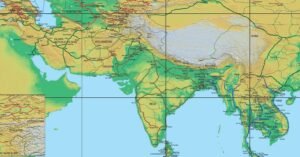
Spearheaded by the United Nations Economic and Social Commission for Asia and the Pacific (UNESCAP), the project has garnered significant attention and participation from numerous countries, including Armenia. And why should Armenia actively push for this project? Let’s delve into the reasons.

With the continued surge of containerized freight through the ports of the Asia-Pacific region, there’s a pressing need for efficient transport networks. The TAR Network offers a solution, providing a seamless connection between major trading hubs. For Armenia, this means easier access to both European and Asian markets, potentially boosting exports and strengthening its position in global trade. By participating in the TAR Network, Armenia can foster stronger ties with neighboring countries. This not only promotes economic cooperation but also strengthens diplomatic relations, ensuring a more stable and prosperous region.

The TAR project offers countries an opportunity to upgrade existing railway infrastructure or construct new ones. For Armenia, this could translate to improved domestic transport systems, fostering internal trade and connectivity. The project emphasizes the importance of finding synergies between national infrastructure projects and international corridors. By being a part of this initiative, Armenia can collaborate with other nations, sharing knowledge, technology and best practices. This cooperative approach can accelerate infrastructure development and ensure that the railway systems are of international standards.

The Intergovernmental Agreement on the Trans-Asian Railway Network provides a framework for countries to discuss and plan the future expansion, upgrading and operation of the TAR Network. Participation in such a significant international project elevates Armenia’s status on the global stage. It showcases the country’s commitment to global development, cooperation and its vision for a connected future.

The Trans-Asian Railway Network is more than just a transport project. It’s a vision for a connected, integrated and prosperous Asia and Europe. For Armenia, it presents a golden opportunity to boost trade, improve infrastructure, foster regional ties and elevate its status on the global stage. It’s an opportunity that Armenia should actively pursue and champion. The Trans-Asian Railway, passing through Armenia, promises to bring significant foreign investment, a boost to the domestic economy as well as international trade. For neighboring countries, this means faster, more efficient trade routes, reducing costs and time.
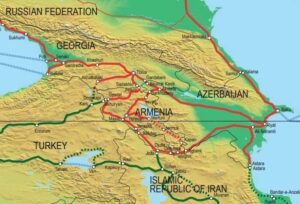
Armenia’s participation can foster enhanced diplomatic relations with neighboring nations. This is especially crucial given the historical tensions in the region. Infrastructure projects of this magnitude have the potential to bring stability to regions. By promoting economic interdependence, the Trans-Asian Railway can play a role in ensuring the security of its member countries. For Armenia, this means a step towards a more stable, secure future.

For India, the Armenian corridor of the Trans-Asian Railway provides a direct, fastest and the most efficient route to Europe. This not only reduces transit times but also offers a cost-effective solution, making trade more lucrative for Indian businesses. Georgia, with its aspirations to be a significant player in Eurasian trade, stands to benefit immensely. The Armenian corridor offers Georgia a streamlined route to both Asia and Europe, bolstering its position as a key transit nation. For Iran, the corridor through Armenia can serve as a bridge to European markets. Given the sanctions and trade restrictions Iran has faced, this railway offers a fresh avenue for trade, fostering economic growth and stability. China’s expansive Belt and Road Initiative seeks to dominate trade routes across Asia, Africa and Europe. The Trans-Asian Railway, especially the Armenian corridor, can complement this vision, providing China with a shorter and more efficient route to key markets.

The Armenian corridor’s strategic importance goes beyond just trade. It’s a symbol of regional cooperation, diplomatic ties and a shared vision for a prosperous future. By facilitating trade, it can usher in an era of economic interdependence, fostering peace and stability in a historically volatile region.

The Trans-Asian network is not just a testament to international cooperation, it is a civilizational corridor that binds the tapestry of human history. The network connects nations that are heirs to some of the world’s most ancient and influential civilizations. The project serves as a reminder that while civilizations have their distinct identities, they have always been interconnected, influencing and learning from each other. The project, by connecting these ancient civilizations, not only promotes economic growth and cooperation but also fosters a deeper understanding and appreciation of our shared human heritage.

With this perspective, the emphasis on the Armenian corridor becomes even more significant. Armenia, with its rich history, served as a bridge between the East and West, making it a pivotal link in this civilizational journey.

The G20-backed corridor is a monumental step towards redefining global trade routes. By connecting powerhouses like India with Europe and the Middle East, it aims to expedite trade and foster economic cooperation. However, the Trans-Asian Railway, with Armenia at its heart, offers a complementary and strategic route that can further enhance this vision.

While the G20’s Partnership for Global Infrastructure Investment is undoubtedly a game-changer, the Trans-Asian Railway’s Armenian corridor is the key to unlocking the true potential of Eurasian trade. For nations like India, Georgia, Iran and China, this corridor offers unparalleled opportunities. As the world stands at the cusp of a new trade era, it’s time to recognize and champion the immense potential that Armenia’s corridor brings to the table.

(Author- Hayk Chobanyan, is the former Minister of High-Tech Industry of Armenia. Mr. Chobanyan supports several initiatives of the Network State.)

Related Intelligence

UNTRADITIONAL SECURITYOCTOBER 13, 2026
01

Why Calls to Revive SAARC Are About More Than Regional Cooperation

Why Calls to Revive SAARC Are About More Than Regional Cooperation Geopolitical positioning, institutional paralysis and the case for practical South Asian cooperation Rationale Founded in Dhaka in December 1985, SAARC brings together Afghanistan, Bangladesh, Bhutan, India, Maldives, Nepal, Pakistan and Sri Lanka. Its charter seeks to improve living standards, accelerate economic and social development, and strengthen collective self-reliance. Yet the organisation’s last summit was held in Kathmandu in November 2014. The 2016 Islamabad summit did not take place amid deteriorating India–Pakistan relations and the withdrawal of several participating states from the process. The result has been a prolonged institutional freeze, even as cross-border problems have become harder to manage in isolation. [1][2] The article notes call from Bangladesh and Maldives for SAARC to return to the negotiating table, alongside support for renewed regional engagement from Nepal and Bhutan. Bangladesh has also argued that SAARC and the Bay of Bengal Initiative for Multi-Sectoral Technical and Economic Cooperation (BIMSTEC) should work alongside one another rather than be treated as alternatives. Such statements matter, but a call for revival is not the same as an agreed roadmap, and neither necessarily indicates a willingness to resolve the political disputes that have paralysed the organisation. 1. The central obstacle is political, not merely administrative SAARC’s institutional design makes political goodwill indispensable. Article X of its charter requires decisions at every level to be unanimous and excludes bilateral and contentious issues from deliberations. The exclusion was intended to protect regional cooperation from being overwhelmed by disputes between neighbours. In practice, however, the combination of unanimity and deep bilateral mistrust has made it difficult to move forward when even one member is unwilling to participate. [1] This is the organisation’s central paradox: SAARC is designed to keep contentious disputes outside the room, but those disputes can determine whether the room is convened at all. India–Pakistan tensions have repeatedly obstructed summit-level engagement, while the deterioration of Pakistan–Afghanistan relations adds another layer of friction. The consequences are not confined to diplomacy. When leaders cannot meet, it becomes harder to secure political direction, approve ambitious initiatives and reassure officials that cross-border projects will survive the next crisis. Still, it would be too simple to attribute SAARC’s paralysis exclusively to one bilateral relationship. The consensus rule gives every member a veto, and weak implementation, limited institutional resources, uneven political commitment and low levels of regional economic interdependence have also constrained the organisation. A serious revival therefore requires more than a summit announcement. It requires a minimum political understanding that technical cooperation should continue even when high-level relations are strained. 2. Regionalism is also a tool of geopolitical balancing Smaller South Asian states do not make foreign-policy choices in a vacuum. They seek investment, infrastructure, security partnerships, market access and diplomatic support from multiple partners. China’s economic presence, the continuing importance of the United States, ties with Gulf countries and links with Southeast Asia all shape the choices available to governments across the region. Building such relationships is not, by itself, evidence of disloyalty to South Asian cooperation. It is a normal form of strategic diversification. The geopolitical question is how governments use these relationships. A renewed appeal to SAARC can help a state demonstrate that it wants a voice in regional affairs, avoid being seen as dependent on a single partner, or signal dissatisfaction with the limits of existing bilateral arrangements. It may also be a way of reminding India, the region’s largest economy and most geographically central state, that neighbouring countries value multilateral forums in which they can participate on a more formally equal footing. Bangladesh’s and Maldives’ efforts to deepen relationships beyond India illustrate the wider strategic setting described in the original draft. Chinese-backed infrastructure, potential security partnerships and engagement with Gulf states can expand policy options for these governments. But the inference must be handled carefully: external partnerships do not prove that calls for SAARC are insincere. A more defensible conclusion is that regional cooperation and geopolitical hedging can occur simultaneously. The real test is whether governments are prepared to translate their rhetoric into funded programmes, negotiated rules and sustained participation. For India, this creates a strategic dilemma. It may be reluctant to invest political capital in a forum where progress can be blocked and bilateral disputes may dominate the agenda. At the same time, prolonged disengagement can leave neighbouring states with fewer region-wide channels and make alternative groupings or external partners more attractive. A regional institution that is unable to deliver results can weaken India’s influence; an institution that works predictably could instead reinforce India’s role as a provider of regional public goods. 3. The economic case for cooperation remains compelling The weakness of SAARC is particularly striking when measured against the economic opportunities available to South Asia. The World Bank reports that intra-regional trade accounts for only about 5 per cent of South Asia’s total trade, compared with roughly 25 per cent in ASEAN. It estimates current trade among South Asian economies at around US$23 billion, well below an estimated potential of at least US$67 billion. High tariffs, non-tariff barriers, restrictions on investment, poor transport links and a persistent trust deficit all contribute to this gap. [3] These figures suggest that the region’s problem is not a lack of economic logic. It is the failure to convert geographical proximity into lower costs and dependable connections. Businesses can face more expensive and complicated trade with nearby countries than with distant markets. For landlocked Nepal and Bhutan, access to ports and efficient transit routes is especially important. For Bangladesh, improved links with India, Nepal and Bhutan can widen markets and make ports and transport corridors more productive. For India’s border states, regional commerce can support local firms, jobs and supply chains. The South Asian Free Trade Area (SAFTA), which came into force in 2006, has not delivered the depth of integration originally anticipated. A tariff agreement alone cannot overcome closed or inefficient border crossings, inconsistent standards, weak logistics, payment constraints and political restrictions. Nor can regional

A
AdminAnalyst
arrow_outward
UNTRADITIONAL SECURITYAUGUST 14, 2026
02

Myanmar at a Crossroad: Mapping Political Evolution & Future Pathways

Myanmar at a Crossroad: Mapping Political Evolution & Future Pathways Red Lantern Analytica presents a new research report, “Myanmar at a Crossroad: Mapping Political Evolution & Future Pathways,” authored by Lt Col Ujjwal Abhishek Jha, Retd. The report traces Myanmar’s political evolution from independence in 1948, examining the country’s transition from an early parliamentary democracy to prolonged military rule and the recurring cycles of political upheaval and resistance. It explores the historical foundations of Myanmar’s political fragility, the legacy of colonial rule, the country’s post-independence trajectory, and the major turning points that have shaped its contemporary political landscape. The analysis seeks to map Myanmar’s present political crossroads and examine the possible pathways shaping its future, offering a structured perspective on the forces influencing the country’s political evolution. To Download PDF of this report click here

A
AdminAnalyst
arrow_outward
UNTRADITIONAL SECURITYAUGUST 12, 2026
03

Europe Without Russian Energy

How far has Europe actually moved away from Russian energy? In this report, Aadvik Chauhan examines the EU’s transition from political commitments to legally binding restrictions on Russian gas imports, while assessing the continuing role of Russian energy in Europe’s supply structure. The analysis explores energy security, divergent positions among EU member states, infrastructure constraints, renewable energy growth, and the strategic implications of Europe’s attempt to reduce dependence on Russia. The report also examines the paradox of rising Russian gas imports during the early stages of the 2026 phase-out and considers why 2027 could prove decisive for assessing the depth of Europe’s energy transition. To Download PDF of this report click here

A
AdminAnalyst
arrow_outward