INTELLIGENCE ARCHIVE

Media Coverage

83 published analyses, newest first.

MEDIA COVERAGEJANUARY 14, 2023
49

Request to Hon’ble Prime Minister of India to Ban China State-owned propaganda News outlets operating in India

Date: 14th January, 2023 To, Shri Narendra Modi Ji, Honourable Prime Minister, Government of India New Delhi Subject: Request to Ban People’s Republic of China State-owned propaganda News outlets operating freely in India Dear Shri Narendra Modi Ji, We write to you today as members of Red Lantern Analytica, an international observers group, and, most importantly, as Indian citizens, to express our grave concern over People’s Republic of China (PRC) State-owned propaganda outlets operating freely in India via smartphone applications listed in the Google playstore and Apple app store. These smartphone applications that routinely disseminate biased and degrading views on India disguised as news, pose a significant threat to India’s national security. Due to its free availability, an estimated 60 crore Indians are directly exposed to propaganda funded by the PRC. This is a very large number that represents almost half of India’s population. As you know, India is engaged in combat with an aggressive PRC along the Indo-Tibetan border in the Himalayas, and 20 of Indian Army personnel were martyred while defending India’s frontiers against the PLA in Galwan valley in 2020. Prior to this, you have emphasised that no one can seize an inch of India’s land. Referring to the recent India-PRC standoff in the Tawang district of Arunachal Pradesh in December 2022, the Union Home Minister Shri Amit Shah ji stated that the government is committed to ensuring that not a single inch of India’s soil is compromised. Our request to ban PRC funded apps should be viewed as an extension to your government’s vision to protect India from external threats. Since we have been closely observing the actions of the Chinese government for quite some time, we would like to emphasise that there is an urgent need to ban such Chinese propaganda programmes that threaten the morale of India and the security of Indian user data. The PRC uses these propaganda channels to wage “Psychological Warfare” against the Indian populace. In addition to propagandistic aims, these applications mines and transmits sensitive user data which can be further misused by PRC backed hackers. PRC ties on “Data Espionage” have been evident in numerous cases, such as the latest Ransomware cyber-attack on the AIIMS, Delhi servers in November 2022 and the attack on seven power grid hubs in North India in April 2022. We have compiled a brief list of such Applications, but the full list could be extensive, and we will be happy to work with the ministry pro bono to identify additional PRC-owned apps functioning in India. In February and August 2022, the government banned Chinese applications from smartphone appstores that constituted a threat to India’s privacy and security. However, Media propaganda applications controlled by the PRC were omitted from the list. Therefore, we propose that the Ministry of Electronics and Information Technology (Meity) use its authority under Section 69a of the Information Technology Act of 2000 to immediately ban the following applications: S. No. Name of the Application Link of the Application Type of the Application 1 Global Times https://play.google.com/store/apps/details?id=com.forhy.clobaltimes Google Playstore 2 People’s Daily https://play.google.com/store/apps/details?id=com.peopleapp.en Google Playstore 3 CHINA DAILY – 中国日报 https://play.google.com/store/apps/details?id=com.theotino.chinadaily Google Playstore 4 CGTN – China Global TV Network https://play.google.com/store/apps/details?id=com.imib.cctv Google Playstore 5 Xinhua News https://play.google.com/store/apps/details?id=com.xinhuamm.xinhuanews Google Playstore 6 Global Times https://apps.apple.com/in/app/global-times/id1433242294 Apple App Store 7 Global Times HD https://apps.apple.com/in/app/global-times-hd/id1592273516 Apple App Store 8 People’s Daily-News from China https://apps.apple.com/in/app/peoples-daily-news-from-china/id1294031865 Apple App Store 9 Xinhua News https://apps.apple.com/in/app/xinhua-news/id1291745928 Apple App Store 10 CHINA DAILY – 中国日报 https://apps.apple.com/in/app/china-daily-%E4%B8%AD%E5%9B%BD%E6%97%A5%E6%8A%A5/id330543698 Apple App Store 11 CGTN – China Global TV Network https://apps.apple.com/in/app/cgtn-china-global-tv-network/id922456579 Apple App Store 12 ChinaNews – All about China https://apps.apple.com/in/app/chinanews-all-about-china/id957292028 Apple App Store 13 China Watch: China & World News https://apps.apple.com/in/app/china-watch-china-world-news/id1460754626 Apple App Store 14 China Daily Asia https://apps.apple.com/in/app/china-daily-asia/id6444435083 Apple App Store Additionally, we would like to emphasise that instances or clones of the aforementioned applications, which may be available on Amazon Fire Stick Appstore and other Smart TV appstores, must also be investigated and banned. We await your response and urge you to take the necessary and prompt actions on these matters of national importance. Yours Sincerely, Abhishek Ranjan Founder and Director Red lantern Analytica Copy to: Shri Ashwini Vaishnaw Ji, Minister for Electronics & Information Technology, GOI Shri Rajeev Chandrasekhar Ji, Minister of State, Ministry of Electronics & Information Technology, GOI


TR
Team Red Lantern AnalyticaAnalyst
arrow_outward
Statement on US House Speaker’s Plan to address the ‘Rise of Chinese Communist Party’
MEDIA COVERAGEJANUARY 12, 2023
50

Statement on US House Speaker’s Plan to address the ‘Rise of Chinese Communist Party’

The former US House of Representatives Speaker, Nancy Pelosi’s visit to Taiwan in August 2022 ignited the most severe Taiwan Strait Crisis ever with the Chinese President Xi Jinping being left insecure about his dreams of a national reunification with the island nation. What followed was a series of Chinese air strikes in Taiwan’s Air Defence Identification Zone (AIDZ) to instil fear among the Taiwanese government and people. The world, however rose in support of the democratically elected nation and the Chinese Communist Party (CCP) is once again huffing and puffing to pursue its hegemonic desires. The newly elected Speaker of the House of Representatives, Kevin McCarthy, swooned the Americans with his inaugural speech where he pledged that the house will address the ‘rise of the Chinese Communist party’ and further went on to say that he wanted the US to win the economic competition which China as well. The trade war between the US and China had been the talk of the town for the recent few years. To tackle this, he proposed to create a bipartisan Select Committee on US-China Strategic Competition to investigate thoroughly on how the hundreds of thousands of jobs that went to China needed to be brought back. The world will agree to the fact that while the global leaders followed policies to help China grow for decades, the CCP has returned only betrayal, oppression and put out aggressive desires to alter the global order, both economically and ideologically. The newly elected speaker made it absolutely clear that “the era of trusting communist China is over” as most of its military and economy grew at the expense of democracy, freedom and human rights. Mr. McCarthy emphasized that the bipartisan task force will not only focus on economic arenas but will also look into crucial matters like China stealing the intellectual property rights, American farmlands being bought by the CCP, Chinese propaganda in schools and lobbying efforts in the US, and how China controlled so much of the pharmaceutical sector that it created a total havoc during Covid-19 pandemic etc. So this committee will offer comprehensive recommendations for policy matters encompassing economic investment, technological progress and national security. The speaker further mentioned that he wanted to prevent trillions of the American dollars from financing communist genocide and military modernisation. While the speech acknowledges that CCP is a common hurdle for all and the promises made look really enticing, it is now time for the world to mirror this enthusiasm and initiate a collective action to put an end to the CCP authoritarianism.

TR
Team Red Lantern AnalyticaAnalyst
arrow_outward
RLA Statement on Japan’s Security Draft Declaring Taiwan’s Peace, Stability Vital for Global Community
MEDIA COVERAGEDECEMBER 12, 2022
51

RLA Statement on Japan’s Security Draft Declaring Taiwan’s Peace, Stability Vital for Global Community

The highlight of 2022’s international relations would definitely be the Russia – Ukraine conflict and its mirror effect on China – Taiwan relations, giving effect to the Fourth Taiwan Straight Crisis. Although the immediate cause for it is attributed to be the US House of Representatives Speaker Nancy Pelosi’s visit to the island nation in August 2022 but the underlying causes emanate from China – Taiwan’s deep rooted history. ‘Reunification of Taiwan’ has become Chinese President Xi Jinping’s topmost national priority in the recently concluded 20th National Congress of the Chinese Communist Party (CCP). However what he didn’t expect was for the world to support Taiwan and condemn CCP’s act of forcefully invading Taiwan. On similar lines, Japan has recently included the importance of military peace and stability across the Taiwan Strait as a key feature of its draft National Security Strategy, to be approved this month. The fear of a Chinese invasion instils insecurity in the Japanese people as the environment surrounding Japan has been the “harshest and the most complicated in the post-war years.” This National Security Strategy, which is the basic plan of action for Japan’s foreign and security policies, states that Taiwan is an “extremely important partner and friend with whom our country shares fundamental values” and that Japan will “continue its efforts to deal with them based on the position that the related issues should be resolved peacefully.” Japan – Taiwan ties have been stronger than ever and the latest example of it is Taiwanese President Tsai-Ing Wen pledging to deepen security cooperation with Japan to ensure freedom in the Indo Pacific, during a meeting with a senior member of Japan’s ruling Liberal Democratic Party (LDP) on December 10, 2022. A belligerent China, in August 2022, not just hit strikes at Taiwan’s Air Defense Identification Zone, but also fired missiles into Japan’s territorial waters which clearly reflects the CCP’s intent of enlarging the area of domination of the Indo Pacific region and not just Taiwan. But the world is slowly rising up against CCP’S ambitions of global pre-eminence, authoritarian influence and coercion. Democracies of the world should follow Japan’s example and update their security provisions so as to accommodate safety of Taiwan’s sovereignty and integrity. The US Taiwan Policy Act, 2022 is a step in the right direction.

TR
Team Red Lantern AnalyticaAnalyst
arrow_outward
Press Release – Webinar on Indo-Greek-Armenian Strategic Cooperation to Tackle Caliphate Designs
MEDIA COVERAGEDECEMBER 12, 2022
52

Press Release – Webinar on Indo-Greek-Armenian Strategic Cooperation to Tackle Caliphate Designs

On December 10, 2022, Red Lantern Analytica along The Research Institute for European and American Studies (RIEAS), Network State, and Pericles Institute conducted a webinar titled “Indo-Greek-Armenian Strategic Cooperation to Tackle Caliphate Designs”. The webinar’s expert speakers were – Leonidas Chrysanthopoulos, Ambassador Ad Honarem & First Greek Ambassador to Armenia; Prof. John M Nomikos – Director, Research Institute For European & American Studies; Vahram Ayvazyan – Founder & Board Chairman of Network State, Dr. Swasti Rao – Associate Fellow Europe & Eurasia Center of MP-IDSA, Abhijit Iyer Mitra – Senior Fellow at the Institute of Peace & Conflict Studies, Michael Nersisyan – British Armenian Journalist Based in the UK and Ms. Uzay Bulut – Journalist & Political Analyst. Dr. J. Jeganaathan, Assistant Professor, Department of National Security Studies, Central University of Jammu, began the session. He said, “The Caliphate design is coming in a new form which we call Digital Caliphate, to perpetuate their idea of establishing a caliphate. In India, a large number of Youth in Southern states are attracted to the new design of the Caliphate.” He reminded the extradition treaty with Armenia, an extension of the global fight against terrorism. Paul Antonopoulos, Editor of Greek City Times, moderated the rest of the session. He elaborated on the title and observed, “We enter a dangerous period where the global system is changing with the emergence of several great powers rather than the previous uni-polar & bi-polar world. The new arrangement emboldened countries like Turkey, Azerbaijan, and Pakistan to challenge the current system and promote their interest and agenda, which reflects the new Caliphate.” It is essential to understand the problem in order to address it. Leonidas Chrysanthopoulos explained the Caliphate, what it means, and its goals. He said, “Caliphate also means that many countries desire to recreate the power & glory of Islam and to expand Islam and Sharia law worldwide.” In order to better counter Caliphate designs, he suggested how Greek had taken the initiative to create a common forum for ancient civilizations. Similarly, Armenia, Greece, and India have one thing in common, i.e. each one of them being ancient civilizations and were in contact with each other. In order to tackle caliphate designs and anti-ancient civilization politics and policies, we need to institutionalize networking between the three of us, said Vahram Ayvazyan. He added, “To tackle the Turkey, Pakistan and Azerbaijan axis and bad marriage against ancient civilizations like India, Greece, and Armenia, we need to institutionalize networking between the three countries and people on three levels – Government, Public Diplomacy and Diaspora cooperation. Information sharing & active dialogue will help us be proactive instead of reactive. Abhijit Iyer Mitra started his intervention on what unites Pakistan, Turkey, and Azerbaijan. He observed that Pakistan, Turkey, and Azerbaijan use religion as a binder for all their internal issues. He also elaborated on how Pakistan keeps changing its ethnicity according to convenience. The country is a classic case of fluid identity, with one terrorist group for every denomination. Abhijit said that Turkey had adopted a sub-state model of terrorism using terrorism to interfere in Syria and many other places. Shias in Azerbaijan are adopting much Sunni terrorism. Sunni terrorists have flown from Turkey and Syria to the region to fight against Armenians. Prof. John M Nomikos proposed that India become an observer of the East Mediterranean Forum. He said, “India is a country that can offer much security to Mediterranean countries. India, Cyprus & Greece’s Navy should be more active. The collaboration between these three countries is a necessity. He also suggested utilizing the power of the Armenian and Greek diaspora more constructively and efficiently”. Michael Nersisyan began highlighting the Russia-Ukraine war and emphasized that new ones are emerging, for example, the Azerbaijan and Israel alliance aimed at Iran. On the other hand, Israel has complex relations with Turkey. Azerbaijan has channelized all its energy and resources against Armenia. He strongly advised that Greece, Armenia, and India must take each other’s conflicts & problems seriously as they matter in the grand scheme. There is a lack of information asymmetry at all levels among India, Armenia, and Greece, which creates difficulty in strengthening the alliance, observed Dr. Swasti Rao at the onset of her lecture. Moving ahead, she highlighted how India is supporting Armenia by selling Made in India weapons. She also elaborated on the commonalities between India and Greece’s military industry in light of the close relations of both the nations between Israel and France for their defense equipment. The last speaker, Ms. Uzay Bulut, elaborated on the ‘Ethnic Cleansing and Violent Islamisation – The Case of Cyprus.’ In 1974, Turkey invaded the republic of Cyprus twice; what followed was the ethnic cleansing of Christianity through forcible displacement. Turkey displaced ethnic Greeks from the invaded region through rape, murders, forced disappearances, and other atrocities. Turkey has occupied 36% of the sovereign territory of Cyprus and 57% of the coastline of Cyprus since 1974. Cyprus is facing an existential threat from Turkey. Azerbaijan committed the same atrocities against Armenians. They desire to revive the so-called Turkish rule from the Far East to China and pursue their Jihadist goal. She concluded by saying that Cyprus should be part of the alliance between India, Armenia and Greece, and all the countries facing threats from the Jihadist countries. A decision to form a board of civilizations was taken during the webinar, which will concentrate on forging closer ties of India, Greece and Armenia by finding and publicising about the historical ties between these ancient civilizations. Following the guest speaker’s address, there was an in-depth Q&A session. Mr. Siddhartha, a Senior Researcher at Red Lantern Analytica, delivered the vote of thanks, after which the session was brought to a close.

TR
Team Red Lantern AnalyticaAnalyst
arrow_outward
Expressing Support to the Tibetan Nation and Cause by Red Lantern Analytica
MEDIA COVERAGENOVEMBER 8, 2022
53

Expressing Support to the Tibetan Nation and Cause by Red Lantern Analytica

Date: 08/11/2022 The Team of Red Lantern Analytica (RLA) had a meeting with Deputy Speaker Ms. Dolma Tsering Teykhang of the Tibetan Parliament-in-Exile in Delhi. She has served as the President of the 9th and 10th Utsang Central Executive Committee and is currently an advisor to the committee. Ms. Teykhang was previously elected to the 13th, 14th, 15th, and 16th Tibetan Parliament-in-Exile from Utsang province and has been a member of the Standing Committee and many other parliamentary committees numerous times. RLA team members Abhishek Ranjan, Shubham Singh and Urmila Shakh met with Ms. Teykhang and expressed RLA’s support and solidarity to the Tibetan cause. Red Lantern Analytica discussed with Ms. Dolma, about functionality of Tibetan Parliament in Exile, to strengthen the support for Tibet and 8th World Parliamentarians’ Convention on Tibet. RLA wholeheartedly expressed its support to His Holiness the Dalai Lama, the spiritual leader of Tibet, and the Central Tibetan Administration (CTA), which works tirelessly to resolve the Tibet question, and to maintain Tibetan culture and its distinctive Buddhist traditions. RLA recognises the Tibetan cause, to be a righteous one, and demands the resettlement of the exiled Tibetan refugee community in a Free Tibet. RLA also condemns the illegal occupation of Tibet by Chinese Communist Party forces enabled by the PLA. Frequently, Tibetans are imprisoned following dubious trials, and so called Chinese authorities do not disclose why or where they have been detained. Frequently, family members are unaware that their loved ones have been incarcerated, and those who discover this information are not authorised to visit the jail. Tibetans are subjected to torture and abuse as the degrading of Tibetan political detainees continues in Chinese-occupied Tibet. Isolated from the rest of the world, time and again it has been proven that Tibetan people regularly face torture and execution by the PLA. We urge the CCP government of China to fully respect and execute the obligations of the United Nations Convention against Torture. The CCP’s obstruction of Tibet’s monastic system, which has historically acted as an educational institution for Buddhist teachings in Tibetan culture and language, is condemnable. Previously, various Tibetan monasteries had a role in organising schools for common Tibetans to learn the Tibetan script. The current CCP crackdown on monasteries and limitations on the mobility of Tibet’s religious practitioners have made it difficult for the general Tibetan to learn the Tibetan language and culture. RLA urges the free world to remain vocal for the Tibetan cause and look forward to working in solidarity with organisations such as the Central Tibetan Administration (CTA), in any possible capacity to extend the possibility of a free and sovereign Tibet in the future.

TR
Team Red Lantern AnalyticaAnalyst
arrow_outward
Statement on China’s “20th Party Congress” of The Chinese Communist Party (CCP)
MEDIA COVERAGEOCTOBER 15, 2022
54

Statement on China’s “20th Party Congress” of The Chinese Communist Party (CCP)

The 20th Congress of the Chinese Communist Party (CCP) will begin tomorrow, i.e., October 16, 2022, and there is not even an iota of doubt that Chinese President Mr Xi Jinping will go on to win another term as China’s top leader. The graph of the centralization of power has only been shooting up over the years in China, and Xi has been appropriately described as the “Chairman of Everything.” It is evident that the consistent and overriding objective of the CCP has always been the regime’s survival and consolidation of power—be it domestically or internationally. To drive hard towards this goal, China has taken a number of questionable actions, including committing serious human rights violations against Uyghurs and other Muslim minorities in Xinjiang (as per the latest UN report); violating international treaties with regard to Hong Kong (by introducing the archaic National Security Law); claiming Tibet as part of China and exploiting its citizens; threatening Taiwan with an impending invasion (even going so far as to enforcing a naval blockade over the free nation in the name of military security). Even though Xi’s almost certain third term will lead to a level of centralization not seen since Mao’s time, Xi Jinping still has to deal with a lot of problems at home. These include China’s slowing economy, declining working-age population, strict lockdowns, the effects of an unscientific Zero COVID policy, a failing real estate market, environmental problems, and conflicts within the CCP party. The most paramount of these is political reform and the future of the CCP—as Xi becomes stronger than ever, there is no certain future leader named yet. Amongst such uncertainties, one thing that certainly catches global attention is how China is disrupting international law and order with its dynamic geopolitical presence. From being an avid supporter of Russia’s bloody invasion of Ukraine to issuing threats of a forced “reunification” with Taiwan, from starting a trade and tech war with the US, to being a pioneer of unethical surveillance globally, from preventing sanctions on Pakistani terrorists at the UNSC, to making biological weapons, China’s name appears in controversies for all wrong reasons. Thus, it is clear that the CCP has been notoriously stubborn in aligning any of its actions with the intention of displaying and eventually solidifying its hegemonic ambitions. This should function as a wakeup call for the democratic nations around the globe to unitedly call out the CCP’s authoritarianism and work out a resolution to safeguard human rights, international law and order and protect the lives of those being suppressed under Xi Jinping’s devilish dictatorship, which will only get stronger in the future.

TR
Team Red Lantern AnalyticaAnalyst
arrow_outward
India Becomes The Fifth Largest Economy Of The World
MEDIA COVERAGESEPTEMBER 11, 2022
55

India Becomes The Fifth Largest Economy Of The World

According to a recent report released by Bloomberg based on the International Monetary Fund (IMF) database, on September 3, 2022, India surpassed the United Kingdom (UK) to become the fifth largest economy in the world and is now just behind US, China, Japan and Germany in terms of size of dollars. The Indian economy is the fastest growing economy of the world and is further forecasted to grow more than 7% this year as well. The milestone was birthed due to the collective efforts of various factors like strong macroeconomic indicators, rapid digitisation, strong domestic market, ease of doing business and privatisation of crucial sectors like defence (as per the Economic Survey 2021-22) ¹. The achievement comes at a noteworthy time of India completing 75 years of independence. This growth trajectory holds paramount significance for India in the arenas of geopolitics and geo-economics as – • India is well poised to get better trade deals from ongoing Comprehensive Economic Partnership Agreements (CEPA) with various countries like the UAE, Australia, Bangladesh, etc. This is because we have a large domestic market, a well-trained workforce and a vibrant diaspora around the globe. India’s democratic credentials will also fetch most of the FDI from the western world. • The importance of Indo Pacific region can’t be undermined and India sits at one of the most important trade routes where 46% of world trade flows. This allows India to effectively work on its goal of becoming the ‘Blue Water Force’, envisioned by the Government of India to become a part of the world’s most powerful navies — those that can operate in deep, faraway oceans. As India’s trade will thrive on the shores, it will also balance China’s increasing assertiveness in the South China Sea. • India has major defence deals with various countries – Rafale from France, BrahMos with Russia, talks of setting up production units of our indigenous Light Combat Aircraft (LCA) Tejas with Egypt, etc. A series of such high-level engagements are also set to take place with many other countries like Malaysia, the Phillipines, etc. • India is being approached to participate in close groupings like the QUAD and I2U2 which are aligned with the vision of minilateralism. The relevance of bigger organisations like the United Nations (UN) and G20 is lessening proactively due to their rigidity. • India’s strategic autonomy will assure that Russia does not become a junior partner to China and lead the world into block confrontation once again, says the Veteran ex-army from Carnegie, Moscow.² • India has called for fair and equal representation of Least Developed Countries (LDC) in multilateral organizations like the UN, thus earning goodwill among those counties. Being the largest democracy and fifth largest economy brings India closer to the world and reinstates India’s position as a visionary global leader who believes in collective growth and development. The whole world is celebrating India’s achievement but China. Chinese journalists have constantly been trying to mock India by using ill-willed words to describe India’s growth on social media handles like Twitter³. China’s jealousy goes hand in hand with India’s development. India’s vision, however, is much greater than this and the world shall soon find India on the top contenders in the list of the world’s largest economies. References: 1-https://pib.gov.in/PressReleasePage.aspx?PRID=1793829 2- https://youtu.be/PuqD8rERSs8 (37:00 – 39:00) 3- https://twitter.com/HuXijin_GT/status/1566248728633044992?t=uD6e935ZD1sNWGr8j9zBQg&s=19 At such development rate, all kinds of Western containment that China has encountered during its development will also be encountered by India in the not-too-distant future. India is welcome to rush into the top three as soon as possible to reduce China's pressure😁 pic.twitter.com/WcD9VPbpCM — Hu Xijin 胡锡进 (@HuXijin_GT) September 6, 2022

TR
Team Red Lantern AnalyticaAnalyst
arrow_outward
“75 Years of India’s Foreign Policy”
MEDIA COVERAGEAUGUST 15, 2022
56

“75 Years of India’s Foreign Policy”

The foreign policy of a country regulates its relations with other nations in the world with the aim of promoting its national interests. Various factors influence foreign policy like geography, history, leadership, social structure, military strength, public opinion, etc. India’s foreign policy has been a work of evolution, evident via three phases. The first phase – “Nehruvian Idealism” : Following the footsteps of Gandhian principles of peace and non violence, from 1947 till 1959, India diligently followed idealism, i.e. we believed in international laws and ethics, we saw good in every country and we didn’t support war or violence. It was with this idealistic notion that Nehru took the issue of Kashmir to UN; similarly we signed the Panchsheel Agreement with China in 1954 (with the enthusiasm of ‘Hindi-Chini Bhai-Bhai’); and at the onset of cold war, India maintained a ‘Non-aligned’ stance. Given the infancy of our independence, India’s stand was anti-racist, anti-imperialist and slightly anti-western during this phase. The second phase – “Strategic Realism” : It was about time India understood the real deal of diplomacy which is that in international relations, there are no permanent friends or foes, there’s only permanent interests. So in 1959 we gave refuge to Dalai Lama; we liberated Goa by the use of force in 1961; and during the 1962 Indo-China war, we propagated the ‘Push Forward’ Policy to intimidate the enemy. We also took a hard stance against the US for the Vietnam war. In 1971, to prevent a two front war, we facilitated the liberation of East Pakistan. In the coming years India also became assertive with respect to China; and although it majorly backfired, India also had Indian Peacekeeping Forces stationed in Sri Lanka during the civil war. The phase lasted till 1991. The third phase – “Economic Pragmatism” : It can be categorised as a subset of the second phase as it was indispensable to open up our economy to the world now. Herein we took the ‘Liberalisation, Privatisation and Globalisation’ (LPG) reforms. On one hand we had troubles with countries like China and Pakistan but the trade and business was kept separate from the turbulence. Another major area of concern during this decade was to focus on our neighbouring countries and for that, the “Gujral Doctrine” was formulated. The doctrine was a five point roadmap to build trust between India and it’s neighbours and find solutions to bilateral issues amicably. It would be right to say that the third phase is still continuing, albeit with augmented efforts to engage with the world. In 2012 India launched the “Connect Central Asia” Policy aimed at strengthening India’s relations with the Central Asian countries. In 2014, the ‘Look East’ policy was reformulated as ‘Act East’ policy. This policy focusses on the extended neighbourhood in the Asia-Pacific region. On these lines, India has been actively engaged in various regional fora such as ASEAN, BIMSTEC, Mekong Ganga Co-operation (MGC), Indian Ocean Rim Association (IORA), Asia Cooperative Dialogue (ACD), East Asia Summit, etc. Thus, it is clear that in the past few years the bandwidth of India’s international engagement has been the widest ever. India’s foreign interactions and decisions have always adhered to and bolstered certain principles which form the essence of our foreign policy – Promotion of world peace, Non-alignment, Panchsheel, support to the UN, disarmament, anti-colonialism stand and a special bias towards Afro-Asian nations (India also earned the name of ‘Big Brother’ from many neighbours). India has proactively been participating in various international summits and meetings, forming strategic partnerships with countries like USA, Japan, France, Australia, UK, etc and meanwhile enthusiastically cultivating the Indian diaspora as well. India also strictly follows a ‘Neighbourhood First’ Policy and a great example of that was the help we extended during the Covid-19 pandemic and recently to Sri Lanka during its economic crisis. Our foreign policy over the decades has successfully placed India at a platform from where the world looks at it as a responsible power with great strategic influence, unmatched talent and capabilities, and traditional values to learn from.

TR
Team Red Lantern AnalyticaAnalyst
arrow_outward
Press Release – Red Lantern Analytica webinar on “India’s Need to bolster Cyber Security Against China”
MEDIA COVERAGEAUGUST 6, 2022
57

Press Release – Red Lantern Analytica webinar on “India’s Need to bolster Cyber Security Against China”

On August 6 2022, Red Lantern Analytica hosted a webinar titled “India’s Need to bolster Cyber Security Against China”. The expert speaker for the session was Dr. J. Jeganaathan, Assistant Professor, Department of National Security Studies, Central University of Jammu. Dr. Jeganaathan opened his address by emphasising the gravity of China’s increasing cyber-attacks against India and the rest of the world. He elaborated on how China is a serious threat and engages in cyber-attacks for data collection and to aid the Chinese People’s Liberation Army (PLA) Military efforts. He claimed that the Chinese had engaged in cyber espionage for a number of years, with India being in its crosshairs for a long time. The Chinese espionage activities against India were expedited after the Galwan Valley event. He also said that during the height of the COVID-19 pandemic in India, China was busily spying on Indian political leaders and other notable figures, including national and regional political figures in India, going all the way down to the Zila Parishad level. He listed a number of Chinese corporations involved in cyber espionage, including a major one called Shenzen Zhenhua Data Information Technology Co., Ltd., which was founded in 2018. Cyberwarfare, according to Dr. Jeganaathan, is a means by which the Chinese intervene more in a robust democratic nation like India that has effective institutions in place. He elaborated on the rationale behind doing so. He stated that China’s PLA is not battle-hardened since numerous video footage shows Chinese soldiers crying in fear when deployed to forward positions. The PLA is aware of its vulnerability and employs cyber warfare tactics to avoid direct conflict. According to Dr. Jeganaathan, the Chinese are vary of mounting a direct military strike against India which has a strong political leader at the helm of affairs. The current level of nationalism in India is unprecedented in the last seventy-five years. Indians are extremely patriotic and willing to make sacrifices for their country. China is also aware that India is now powerful, particularly in terms of decision-making, and that its populace might be easily mobilised in the event of a direct military clash. This is contrary to China’s position, where youth are completely detached from the current leadership due to an authoritarian administration coupled with rampant corruption in the CCP. He noted that the Chinese PLA has enhanced its cyber warfare capabilities over the past decade by implementing modifications to its Command, Control, and Communication divisions. He urged India’s administration to develop adequate cyber intelligence collection capabilities that can aid Indian forces in defending against the Chinese menace. China’s cyberwarfare of cyber-attacks and possible espionage is unleashed on anyone showing anti-CCP sentiments. A recent example could be Chinese hackers attacking Red Lantern Analytica’s website for exposing China’s nefarious global activities. Such attacks render the website unavailable for some time. Similar attacks were also noticed in Taiwan recently after Nancy Pelosi’s visit. He also emphasised that China ranks second in the cyber power index and makes substantial investments in cyberinfrastructure. Dr. Jeganaathan advised that India should become self-sufficient in the production and manufacture of CCTV cameras and semiconductor chips. According to a US report, China’s growing cyber espionage poses a global threat. India and the United States can collaborate to address the issue. He stated that China has always considered India a threat due to India’s vast landmass, developing economy, stable government and democratic process, and tremendous economic potential. China’s expansionist ambitions can only be countered by India. Dr. Jeganaathan also emphasised the need for new tools, technologies, and plans in dealing with the cyber espionage threat from China. After the guest speaker’s speech, there was a short Q&A session. The event was moderated by Ms. Shalini, Research Associate at Red Lantern Analytica, while Ms. Kotha L. Kusuma, Intern at Red Lantern Analytica, gave the vote of thanks, which brought the session to an end.

TR
Team Red Lantern AnalyticaAnalyst
arrow_outward
Red Lantern Analytica’s Statement on Nancy Pelosi’s visit to Taiwan
MEDIA COVERAGEAUGUST 4, 2022
58

Red Lantern Analytica’s Statement on Nancy Pelosi’s visit to Taiwan

Amid several warnings issued by China against visiting Taiwan, the speaker of U.S. House of Representatives, Nancy Pelosi, reached Taiwan on August 02,2022. She became the highest ranking US official to visit Taiwan in 25 years. As expected China reacted strongly by calling it an “extremely dangerous” move and warned US of dire consequences. The Chinese military said it was on ‘high alert’ and would launch a series of targeted military actions in response to the visit, warning US that Washington “shall pay the price” for it. After the end of second world war, a bloody civil war between the Kuomintang (KMT) and the Chinese Communist Party (CCP) led to the KMT nationalists fleeing to the island of Formosa, which we today know as ‘Taiwan’. Although USA accepts the “One China Policy”, it has maintained that if China invades the island, US would support Taiwan’s defence. As US-China relations have been strained in last few years due to tarrif war and covid-19, the issue of Taiwan’s sovereignty has once again become the bone of contention between both the countries. China has been teasing the island by sending its airplanes into Taiwan’s air defence zone time and again. The visit by US speaker has invited severe criticism from China, which warned US earlier as well to not “play with fire.” Nancy Pelosi is a vocal critic of China majorly due to the human rights violations in various regions of Hong Kong, Xinjiang and Tibet. During her visit to Taiwan, Nancy once again affirmed America’s ‘determination to preserve democracy’ and its support for Taiwan. She held a series of high profile meetings with the Taiwanese officials, in one of which the Taiwanese president, Tsai Ing-Wen called Pelosi “Taiwan’s most devoted friend.” Soon after Pelosi left the island on August 03, 27 Chinese warplanes entered Taiwan’s air defence zone. China also decided to block imports of citrus fruits, fish and other foods from Taiwan in retaliation of the visit. There is not even an iota of doubt in the fact that Nancy’s visit to Taiwan had left the Chinese Communist Party (CCP) simmering with anger. Chinese Ministry of Foreign Affairs even condemned the visit as an attack on China’s ‘sovereignty.’ China dreams of a ‘national unification’ but it keeps forgetting that the world is ready to accept Taiwan as an independent entity and the US speaker’s visit is an affirmation of its ironclad stand and unconditional support to uphold Taiwan’s sovereignty and security in case of a Chinese invasion. China can continue with its futile military drills, but the US has made it unequivocally clear that it would “not abandon” Taiwan and this is the fact that’s upsetting China’s stomach.

TR
Team Red Lantern AnalyticaAnalyst
arrow_outward
Press Release – Red Lantern Analytica webinar on “Advent of I2U2 and the Era of Minilateralism”
MEDIA COVERAGEJULY 31, 2022
59

Press Release – Red Lantern Analytica webinar on “Advent of I2U2 and the Era of Minilateralism”

Red Lantern Analytica hosted a webinar titled “Advent of I2U2 and the Era of Minilateralism” on July 31, 2022. The expert speaker for the session was Dr. Aparaajita Pandey, Senior Research Associate at Showtime Consulting. Dr. Aparaajita Pandey began her presentation by discussing the significance of regional organisations. She used the European Union as an example. According to her, the EU has traditionally been seen as a regional organisation par excellence for everyone and was founded after the destruction of two world wars, and its purpose was to combat aggressive nationalism and xenophobia. She elaborated on the significance of regional groups at length, stating that such organisations are significant because they provide member nations with mini-global platforms while sharing common goals. She stated that I2U2 differs from other regional organisations in that it is a fairly tiny organisation with a highly targeted strategy. Enhanced trade, battling climate change, energy cooperation, food security, and coordination on other key common interests, including transportation and healthcare, are the primary areas of collaboration for the newly created organisation. “I2U2 is a very pointed approach. That is where the concept of minilateralism comes from” she noted. In light of the Russia-Ukraine situation, improved cooperation on energy security and food security are the two most essential areas of cooperation and collaboration for the new grouping. Dr. Aparaajita Pandey emphasised that I2U2 enabled countries such as Israel and the UAE to collaborate on a single platform for the greater good. Such an alliance would have been unthinkable a few years ago, but it is now possible because both countries hope to benefit from mutual relations under the auspices of I2U2. She elaborated on what India stands to gain by joining I2U2 by stating, “India will have a stronger geopolitical presence. India will have more room to conduct business, negotiate, and ensure its partnerships are robust and vibrant without actually provoking other nations’ ire. She continued, “For India, I2U2 is a geopolitically advantageous move as it gives the nation great access to West Asia and enough access to all the routes and ports of oil dispensation.” According to her, India is also an excellent destination for medical tourism, with healthcare in India becoming a priority for the other I2U2 member countries. During the discussion, Dr. Aparaajita Pandey also discussed why a nation’s foreign policy should always be guided by its short-term and long-term national interests. As the saying goes, she stated, “All politics is domestic.” Realistically speaking, when applied to foreign policy, one must state that foreign policy should always be founded on national interest. This is illustrated by the Abraham Accords and I2U2. Following the guest speaker’s remarks, there was a brief Q&A session. The webinar was moderated by Red Lantern Analytica’s intern, Ms. Kotha L. Kusuma. The vote of thanks was delivered by Mr. Siddarth, following which the session was closed.

TR
Team Red Lantern AnalyticaAnalyst
arrow_outward
Press Release – Red Lantern Analytica webinar on ‘Economic repercussions for Europe amid the ongoing Russia-Ukraine War’
MEDIA COVERAGEJULY 29, 2022
60

Press Release – Red Lantern Analytica webinar on ‘Economic repercussions for Europe amid the ongoing Russia-Ukraine War’

On July 29 2022, Red Lantern Analytica conducted a webinar titled “Economic repercussions for Europe amid the ongoing Russia-Ukraine War”. Dr. Tanjot Singh, Assistant Professor in the Department of Economics at Gargi College, University of Delhi, was the webinar’s expert speaker. Dr. Tanjot began her address by stressing that the ongoing military confrontation between Russia and Ukraine will have significant ramifications for the European Union. These include the oil crisis, inflation, food shortages, unemployment, a decrease in the manufacturing sector, and the possibility of a recession in the future. Short-term effects may include a collapse of bilateral trade between the EU and Russia and a reduction in capital for EU enterprises. In the following years, the enormous number of refugees and reconstruction costs could result in significant budgetary costs for the EU, while defense-related expenditures could witness a sharp increase. She went on to say that despite the fact that the EU has placed various types of sanctions on Russia, their impact has been significantly diminished due to Russia’s preparations to locate alternative export markets in advance. India is an example where Russians have expedited and improved bilateral trade; while Saudi Arabia and African nations are other notable mentions. The European Union’s future, she believes, is bleak, with research indicating a 55% chance of a European recession as a direct result of the Russia-Ukraine conflict. She gave the example that the pre-sanctions price of a barrel of oil was $80, whereas it is currently $129. Such an enormous increase in energy prices has pushed EU inflation to an all-time high. This can also be attributed to the fact that in the EU, 40 percent of natural gas is used for residential purposes, 35 percent for industrial purposes, and 15 percent for energy production. She concluded her address by stating that the EU has requested its member states to restrict their energy usage and reduce their natural gas consumption by 15 percent. This rationing will have a cascading effect on the output of all European Union manufacturing centres. It is also anticipated that high energy prices will kill its industries by lowering corporate competitiveness and consumer confidence. The ramifications of this will be seen as a result of the trade restrictions, which will force the EU to seek alternative energy sources, which will undoubtedly exacerbate the economy’s precarious state. Following the address of the guest speaker, there was an in-depth Q&A session. Ms. Shalini, a research associate at Red Lantern Analytica, moderated the session. The vote of thanks was delivered by Ms. Sakshi Sinha, an intern at RLA. The session closed after the vote of thanks was given.

TR
Team Red Lantern AnalyticaAnalyst
arrow_outward
Statement Issued by Red Lantern Analytica paying Homage to Brave Indian Armed Forces on 23rd Anniversary of Vijay Diwas in Kargil (then in Jammu and Kashmir, now Ladakh)
MEDIA COVERAGEJULY 26, 2022
61

Statement Issued by Red Lantern Analytica paying Homage to Brave Indian Armed Forces on 23rd Anniversary of Vijay Diwas in Kargil (then in Jammu and Kashmir, now Ladakh)

Date: 26th July, 2022 At the onset, RLA pays homage to all the brave soldiers of the Indian Armed Forces who sacrificed their lives in Kargil in 1999 to protect our nation. We remember their bravery, the sacrifices they made, and the unwavering courage that helped India win a decisive victory over Pakistan. It has been 23 years since the war that took place between May and July of 1999 in the Kargil district. The war happened in the months after India and Pakistan signed the Lahore Declaration, a bilateral treaty, in February 1999 for peace and stability between both countries. The Pakistan X Corps Commander, Lieutenant General Mahmud Ahmad, Major Generals Javed Hasan, and Ashraf Rashid, and then Pak Army General Pervez Musharraf, conspired the Kargil conflict in a nefarious plan (Operation Koh–e–Paima) with the aim of severing the link between Kashmir and Ladakh and forcing the Indian forces to withdraw from Siachen Glacier. The Pakistan Army started the war in the winter of 1999 by covertly sending their soldiers in the guise of mujahideen. Pakistan-sponsored infiltrators positioned themselves in key locations that gave them a strategic edge during the onset of the war. The Indian Army started “Operation Vijay,” sending about 200,000 troops to that area to fight against the enemy and take back the Indian land that Pakistanis had taken in the Kargil-Drass sector. Pakistani forces were ultimately defeated on July 26, 1999. By securing a decisive victory against Pakistan, the Indian Armed Forces foiled Pakistan’s plan to gain the upper hand in Kashmir and to further internationalise the Kashmir issue. The event showed that Pakistan cannot be trusted and it has no will to work towards peaceful India-Pakistan relations. Even till today, Pakistan hasn’t learned a lesson and continues to use terrorism and conspires with proxies against India as well as other nations. Today, Red Lantern Analytica remembers and honours not only the valiant troops who fought to liberate Kargil from the Pakistani armed forces 23 years ago, but also every valiant Indian army personnel who has served or continues to serve in guarding our borders. We remain grateful to them for their service and dedication to our motherland. Jai Hind !

TR
Team Red Lantern AnalyticaAnalyst
arrow_outward
Statement issued by Red Lantern Analytica welcoming Indian Government’s Decision To Organise G20 Meet in Union Territory of Jammu & Kashmir and Ladakh
MEDIA COVERAGEJULY 19, 2022
62

Statement issued by Red Lantern Analytica welcoming Indian Government’s Decision To Organise G20 Meet in Union Territory of Jammu & Kashmir and Ladakh

India will take over the G20 presidency from Indonesia on 1st December 2022 and will host the G20 Leaders’ Summit for the first time in 2023. The G20 consists of the world’s leading and developing economies, representing 85 percent of global GDP, 75 percent of international commerce, and two-thirds of the global population, making it the main venue for international economic cooperation. Each yearly G20 Presidency also functions as the G20 Secretariat. New Delhi will determine the agenda for the G20, host the Leaders’ Summit, and convene ministerial, government, and civil society gatherings. The G20 presidency engages in a variety of activities to assist members in discussing and coordinating policies on areas of shared concern. However, countries like China and Pakistan have raised objections to India hosting the G20 in the union territory of Jammu and Kashmir and Ladakh. Zhao Lijian, the Chinese Foreign Ministry spokesperson, said that the G-20’s meetings next year should not be held in Jammu and Kashmir. He urged to “avoid politicizing” the issue of the proposed G20 event in Jammu and Kashmir to be organised by India. China has always wanted to be the hegemon of the globe, despite its disregard for human rights, democracy, the rule of law, and other elements of a peaceful world. China’s diversionary tactics will not distract anyone from the larger agenda for the world, especially in light of the unfortunate Sri Lanka crisis due to China’s debt trap diplomacy. China’s iron-fisted rule over its occupied areas provides a clear indication of its motivations. The predicament of religious minorities in occupied East Turkistan and Tibet is well-documented and widely known. This is a time of immense pride for India as it symbolises the country’s rise to prominence and entry onto the global scene, as well as the power of the biggest democracy in the world and the voice of 1.4 billion Indians. The totalitarian Chinese Communist Party, in its lust for power, wants to establish Beijing as the sole leader or decision-maker in the Indo-Pacific region and world. India must confront China’s aggressiveness with determination and play a decisive role in South Asia, the Indo-Pacific, and the global community. The G20 Presidency will assist India in advancing critical issues of debate with the aim of preserving the democratic and free world, which is under threat from autocratic forces like China. Since August 2019, this is the first significant multilateral summit to take place in Jammu and Kashmir, and India selected it for a number of reasons. Firstly, India wants to host the powerful countries in Jammu and Kashmir to highlight the reforms undertaken by the government in the last few years. The security situation has improved leaps and bounds, and tourism in the area is at its peak. Jammu and Kashmir also offers an apt resort like location where G20 meetings are usually held. It will also bring a lot of investment for the region. Secondly, Jammu and Kashmir is the central point of contention between India and Pakistan. Pakistan occupies a portion of the region with its oppressive armed forces and is also responsible for spreading terrorism in the region, as well as constantly peddling lies and spreading false propaganda about Jammu and Kashmir. Hosting G20 meet in J&K will provide India with an opportunity to bust Pakistani propaganda and also present the real picture of vibrant Jammu and Kashmir to the world. Soon after China and Pakistan started opposing India’s decision to hold G20 meetings in J&K, India also chose Ladakh as the venue so that China’s illegal intrusions and infrastructure in the region could be exposed to the world. Choosing Jammu and Kashmir and Ladakh as the venues for G20 meetings is a great diplomatic move by India for two strategic gains: first, to show the world that Kashmir is ready and open for everything – from sports to business to even diplomacy. Second, to depict how India is dealing with both its aggressive neighbors, China and Pakistan. To demonstrate to the international community the progress and development accomplished in the region’s economy, similar events must be held in J&K and Ladakh in the future. It will further remove international scepticism and reveal the degree of misinformation being spread by China and Pakistan. Red Lantern Analytica applauds the decision by the Indian government while requesting China and Pakistan to respect India’s sovereignty and abstain from issuing juvenile statements with mala fide intent.

TR
Team Red Lantern AnalyticaAnalyst
arrow_outward
Press Release – Red Lantern Analytica webinar on ‘Chinese Hands behind Sri Lanka’s Economic Crisis’
MEDIA COVERAGEJULY 15, 2022
63

Press Release – Red Lantern Analytica webinar on ‘Chinese Hands behind Sri Lanka’s Economic Crisis’

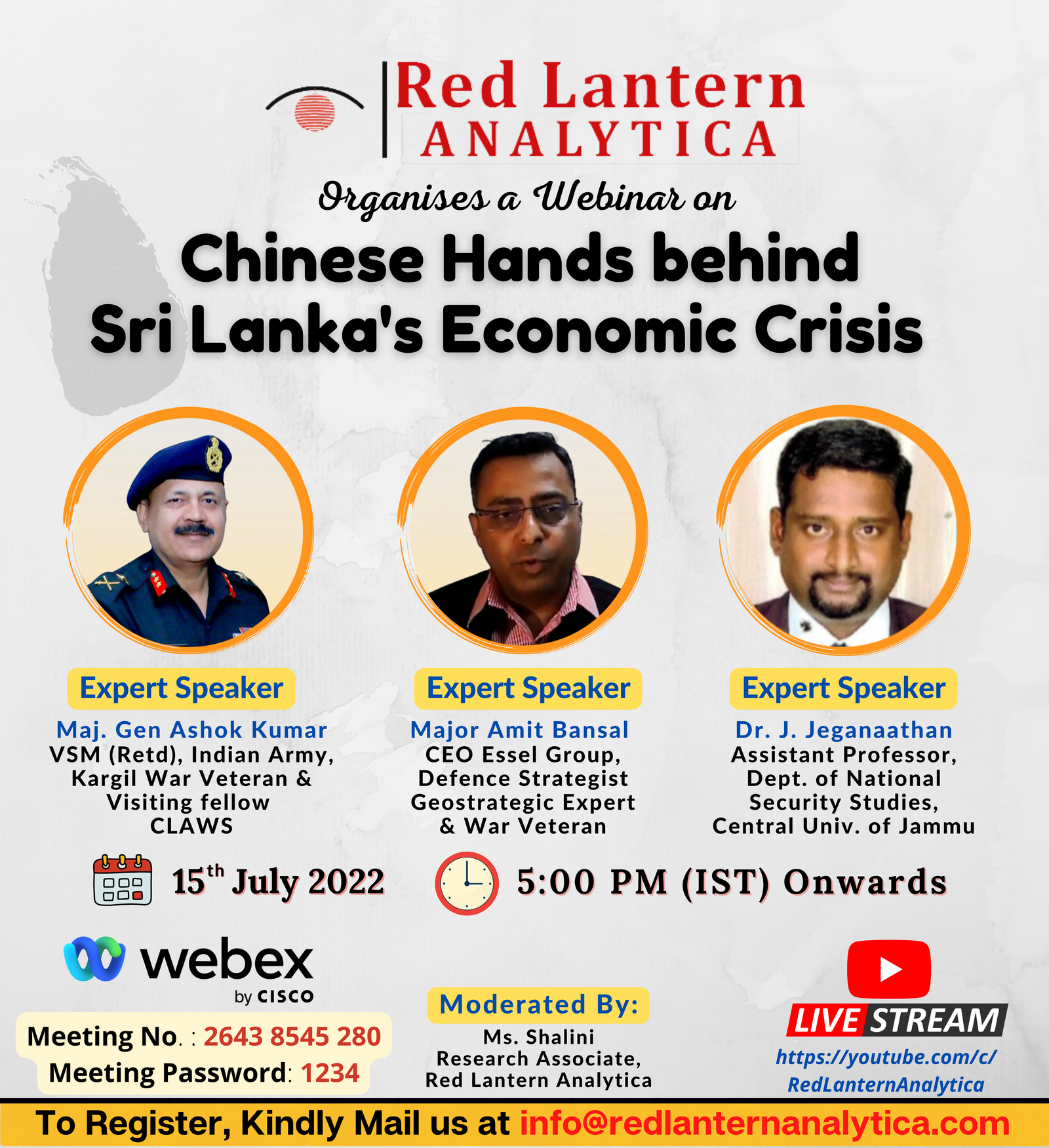
Red Lantern Analytica hosted a webinar titled “Chinese Hands behind Sri Lanka’s Economic Crisis” on 15th July 2022. The Webinar’s expert speakers were Maj. Gen Ashok Kumar, VSM (Retd.) Indian Army, Major Amit Bansal (Retd) Indian Army and Dr. J Jeganaathan, Assistant Professor, Central University of Jammu. Maj Gen Ashok Kumar, VSM (Retd.) opened his speech by underlining that the Sri Lankan economic crisis is a culmination of three prominent factors. These can be summed up in three words: politicians, the public, and the People’s Republic of China (PRC). Politicians because they borrowed much more than their country could afford. People because they supported Populist measures of the government and PRC because it is behind the Debt Trap of Sri Lanka. He lambasted China for abandoning Sri Lanka during the current economic crisis. The Chinese Foreign Ministry is also absolutely silent. He accused China of having a habit of offering loans to countries pretending to be help, which might bring “development,” but the Chinese keep the terms and conditions of the loan in a way so as to facilitate the borrowing country into a trap. China currently accounts for more than 10% of Lankan foreign borrowings, along with a 43% stake in the Colombo Port City Project, lying strategically just 500 kilometers from the coast of India. Major Amit Bansal (Retd), the second speaker of the session, emphasized that China always harbors an intention of trapping the borrowing countries in debt. When Lanka approached the IMF & European countries for assistance; the Chinese Ambassador to Colombo openly criticized the Lankan administration. He called out to Sri Lanka to borrow more from China. He further gave an example of the Chinese mala fided intentions in the fact that when Ranil Wickremesinghe became Prime Minister of Sri Lanka, he requested China to roll over the debt. The Chinese authorities then blatantly denied giving an excuse, saying that if agreed, they might have to do the same for other borrowing countries. He further gave out China’s blueprint for the “Debt Trap”. The borrowing country must be strategically located, it must be economically weak, should be poor and must also have corrupt politicians in prominent administrative positions. Once all these conditions are met; China offers generous loans under the garb of bringing “infrastructural development” and then gradually takes away its sovereignty. He also gave an example of Pakistan, which had to offer China 2 of its islands along with Gwadar port and parts of occupied Gilgit Baltistan. Dr. J Jeganaathan, the final speaker, elaborated on the Chinese pattern of offering loans to the countries under the Belt and Road Initiative (BRI). According to him, the Chinese have always chosen authoritarian regimes lacking accountability and public transparency. He called the current political situation in Sri Lanka “grim; while also predicting that the Lankan Army might help till the politicians find solid ground again. According to him, the only way out for Sri Lanka to maneuver away from the economic crisis is to avoid Chinese loans and look for help from possible friendly countries in the West and India in particular. Following the guest speakers’ remarks, a brief Q & A session was held. Following this, the session moderator, Ms. Shalini, Research Associate at Red Lantern Analytica, invited Mr. Abhishek Ranjan, Consultant at RLA, to deliver the vote of thanks to the esteemed expert panel. The session concluded after the delivery of the vote of thanks.

TR
Team Red Lantern AnalyticaAnalyst
arrow_outward
Sri Lanka riots: how the tiny Indian Ocean island nation got into such a mess
MEDIA COVERAGEJULY 14, 2022
64

Sri Lanka riots: how the tiny Indian Ocean island nation got into such a mess

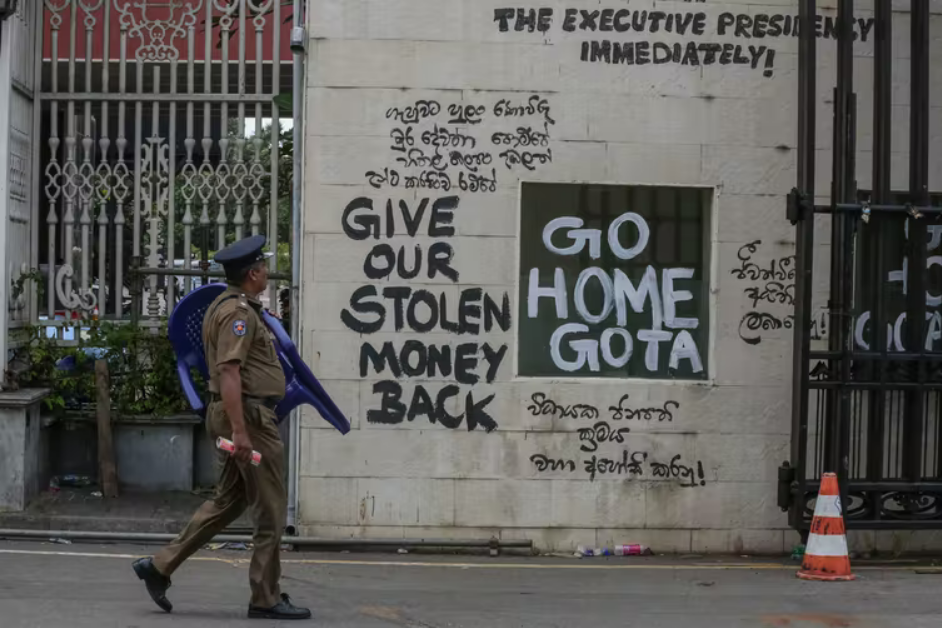
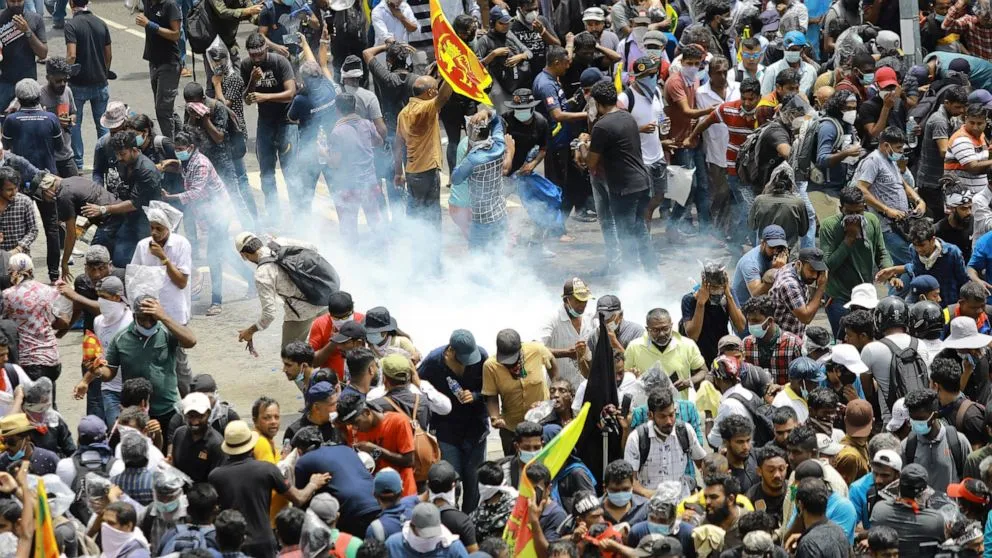
Published: July 13, 2022 3.44pm BST The chaos in Sri Lanka has deepened after the country’s president, Gotabaya Rajapaksa, fled to the Maldives. The president and his family left Colombo on a military jet just hours before he was due to resign in the face of massive popular protests which culminated on July 9 with crowds of demonstrators storming the presidential palace. Rajapaksa is believed to be headed for the United Arab Emirates where it is thought he will resign his office. Ranil Wickremesinghe, the country’s prime minister, has taken over as acting president and has declared a state of emergency. It is thought likely he will also resign under pressure from the Sri Lankan people who are blaming the country’s deep economic crisis on mismanagement and corruption among Sri Lanka’s political elites. Over the past three months, the tiny Indian Ocean nation has sunk deep into economic malaise. Inflation is running at more than 50% and is expected to continue to rise. There are shortages of food and fuel and the country defaulted on its foreign debt in May. There is also political turmoil. In this situation, the role of the army will come into sharp focus. There have been reports that troops fired on protesters as they stormed the presidential palace, but army chiefs insisted they had only fired in the air in an effort to maintain order. But many are asking whether the army will step in to run the government, at least until order can be restored and a new government formed. Will the army take over? But while military intervention might restore order to the streets, it’s unlikely army chiefs will want to take a direct hand in government. There are two reasons for this. The first is cultural. There have been occasions when the country could have buckled to the rule by the military. These were the ethnic civil war years between 1983 and 2009. Many hold the view that it was the army which kept the nation from breaking up during this period before winning a decisive albeit controversial victory against the separatists. Yet, despite the oversized role played by the country’s military establishment, years of hardship, war and human rights abuses, Sri Lankans have steadfastly held on to their democratic civilian government. There were coup attempts in 1962 and 1966 and again in 1991, but these were all thwarted by the civilian government. The other reason is economic. The main problems facing Sri Lanka are a result of economic mismanagement and corruption. A new administration will need to quickly secure international loans or some other form of support to stabilise the economy and resume the importation of food and fuel. This can only be possible with a civilian leader at the helm of such negotiations. It’s far more likely a fresh civilian government would be able to pull the country out of economic and political turmoil. EPA-EFE/Chamila Karunarathne The problem a military government would face is that the army is still discredited in the eyes of the international community as a result of mass human rights abuses committed during the civil war against the country’s Tamil separatists. If an army general were to take power now, Sri Lanka will become a pariah – and would find it almost impossible to raise the foreign investment it so desperately needs. The importance of choosing someone who is able to negotiate loans from international institutions such as the IMF, the World Bank and the ADB was underlined when Rajapaksa appointed Wickremesinghe, the prime minister, to the finance portfolio. Wickremesinghe had already announced a package of reforms designed to stabilise the economy and planned to present a debt restructuring plan to the IMF by August. In hock to Beijing Sri Lanka’s economic woe can largely be blamed on corruption among the country’s political elites as well as government mismanagement: unaffordable tax cuts and grandiose infrastructure projects have emptied the treasury, while an enormous trade imbalance has drained the country’s foreign reserves. The problem has been made worse by the decision to repay debts rather than restructuring. China has been one of Sri Lanka’s biggest creditors and has baulked at any concessions, because it fears that cutting Sri Lanka’s debt – racked up mainly as a result of Belt and Road projects – would prompt other debtor nations to do the same and put the Belt and Road programme into jeopardy. There is widespread popular anger at what is widely thought to be political corruption and mismanagement what have wrecked Sri Lanka’s economy. EPA-EFE/Chamila Karunarathne In 2017, when Sri Lanka failed on its loan repayment for the US$1.1 billion (£920 million) Hambantota port development on Sri Lanka’s southern coast, it was forced to sign the port – and thousands of acres of land around it – over on a 99-year lease. China already owns 43% of the massive Colombo Port City development on another 99-year-lease. Delhi-based think-tank, Red Lantern Analytica, said on July 9 that China had “employed its devious ‘Debt Trap Diplomacy’ to gain a strategic edge over the nation and hold its economy hostage”. This should be a wake-up call to any other non-western countries who have borrowed heavily from China. Beijing should also take some responsibility for Sri Lanka’s dire financial straits. But there is little sign, so far, that it will.

TR
Team Red Lantern AnalyticaAnalyst
arrow_outward
Red Lantern Analytica’s website was hacked by Chinese hackers acting on directives from the Chinese Communist Party (CCP)
MEDIA COVERAGEJULY 14, 2022
65

Red Lantern Analytica’s website was hacked by Chinese hackers acting on directives from the Chinese Communist Party (CCP)

ναρτήθηκε από Directus 11 Ιουλίου, 2022 Independent foreign policy think tank Red Lantern Analytica (RLA) on Monday blamed the Chinese Communist Party (CCP) for hacking its website. “Red Lantern Analytica’s website was hacked today, and as per the evidence left by the attackers, we are certain that Chinese hackers acting on directives from the Chinese Communist Party (CCP) were responsible for it,” read RLA’s statement. The think tank also condemned the “50 Cent Army” group, which is backed by the Chinese Communist Party. “All of these destructive acts can be attributed to what we call the ’50 Cent Army’ group, which is backed by the Chinese Communist Party. The attacks were launched from China with the intent of stealing intellectual property and conducting espionage,” added RLA’s statement. Due to the cyberattack, many articles in Chinese were showing up on Red Lantern Analytica’s home page. The think tank further said that they had been constantly under threat from China. “Our Twitter handle has also been blocked by Lilian Chao (Official Spokesperson & Deputy director of the Chinese Ministry of Foreign Affairs Information Department),” added the statement. RLA lambasted CCP for “reckless and dangerous behaviour that jeopardised the safety of millions” as the think tank’s penetration and exploitation of its website’s server compromised the security and integrity of tens of thousands of computers and networks around the world, affecting those belonging to the website’s visitors and frequent readers. Meanwhile, RLA has identified malicious cyber activity with considerable effects aimed at its Facebook, Instagram, email accounts, and other social media handles. “We vehemently condemn these hostile cyber actions, which violate the rules of responsible state behaviour accepted by all United Nations member states. We continue to urge the Chinese government to adhere to these rules, prohibit the use of its territory for malicious cyber activities and take all appropriate, available, and practicable measures to detect, investigate, and ensure that nothing of this sort happens in the future,” said RLA’s statement. The think tank also reiterated that irrespective of Chinese cyberattacks, it “will continue to pursue our objective of speaking out against China’s human rights violations, maritime and military muscle-flexing, debt-trap diplomacy, and heavy-handed approach to criticism and dissent that frequently spans China’s geographical borders.” RLA further reaffirmed its resolve to continue combating malicious Chinese operations. “We will continue to improve our cooperation, including with international partners and other public and private stakeholders, by sharing more information and staying involved, strengthening cyber resilience and handling incidents together, and working together to make our website and social media handles more secure overall,” added the statement.

TR
Team Red Lantern AnalyticaAnalyst
arrow_outward
Sri Lankan president, prime minister to resign after protesters stormed their houses and offices
MEDIA COVERAGEJULY 14, 2022
66

Sri Lankan president, prime minister to resign after protesters stormed their houses and offices

By GT staff reporters Published: Jul 10, 2022 09:43 PM Updated: Jul 11, 2022 12:17 AM Sri Lanka’s economic crisis has become a political one as both the country’s president and prime minister agreed to resign Saturday after protesters stormed the official residences of the two leaders, setting fire to the prime minister’s residence. Experts believe the country’s crisis is a result of both internal and external troubles, including galloping inflation, its economic system, and the onslaught of COVID-19. As the capital Colombo descended into chaos, many foreign media, especially Indian media, increased their efforts to throw mud at China by hyping “Chinese debt trap diplomacy” in Sri Lanka. The most jaw-dropping rhetoric is the accusation that it caused the current economic crisis in the South Asian country. Experts believe these tricks have long been used by green-eyed Indian politicians who want to remove China’s influence from the region, and experts warned such hype will do nothing to help the country in crisis, but only add fuel to the fire. Sri Lankan President Gotabaya Rajapaksa on Saturday informed the country’s parliament speaker Mahinda Yapa Abeywardena that he will resign from office on July 13, the Xinhua News Agency reported on Sunday. The speaker’s office told Xinhua that the president made the decision following a request by political party leaders. Prime Minister Ranil Wickremesinghe also agreed to resign earlier in the day after party leaders in the parliament urged both him and the president to step down, according to Xinhua. On Saturday, protesters stormed the president’s residence and office, and the prime minister’s residence was set on fire, Xinhua reported. Sri Lanka’s opposition political parties were meeting Sunday to agree on a new government, Associated Press reported. Approaching the president’s official residence at Sunday noon, a Global Times reporter based in Colombo saw large groups of protesters and civilians had swarmed into the residence. Protesters posted photos of them lying on beds, working out in the gym and swimming in the swimming pool. Some protesters mimicked politicians having meetings in meeting rooms. There were a large number of military personnel and police outside the residence, and one of the police officers told the Global Times that people are coming and going as they please. The in-house facilities in the residence were damaged to a certain extent, said the officer, although he said that the situation is relatively safe. The protest is fueled by economic turmoil which has plunged the Indian Ocean island nation of 22 million into a crisis, leaving many struggling to buy food, medicine and fuel, according to some analysts. The Chinese Embassy in Sri Lanka on Saturday reminded Chinese nationals not to participate in or watch any protests. It urged Chinese nationals in Sri Lanka to pay close attention to the local security situation and abide by local laws and regulations, after the protests had caused multiple injuries. Yang Shiyuan, chief media officer at the Chinese Chamber of Commerce in Sri Lanka, told the Global Times over the weekend that both Chinese personnel and Chinese-funded projects are so far unaffected. A person with a large state-owned energy infrastructure company told the Global Times on Sunday that with warnings from the Chinese Embassy, their staff are all well behaved and disciplined. “There are no problems with the safety of personnel and projects here,” the person said in Sri Lanka. “Enterprises here are basically at a standstill due to the lack of electricity and oil, but we’re safe now despite the protests,” Zhang Xudong, president of Sri Lanka Overseas Chinese Association, told the Global Times on Sunday. “We are operating a brick factory using local coal ash waste, which was affected by the pandemic before and only started to resume operations in March and April. But given the current situation, we intend to close it due to the high daily expenses,” he noted. Wang Huahua, a Chinese national who is in Colombo, told the Global Times on Sunday that Chinese people are relatively safe in the city, as the protest is mainly targeted at the government. She said many shops were closed and it was difficult to hail a taxi. According to Wang, who is a gemstone businesswoman, the country’s dire situation began in March, when power outages lasted even 10 or 13 hours a day. Cars and motorcycles would line up for miles for days in front of a gas station but fail to get fuel, according to Wang. Beset with inside, outside troubles Chinese observers believe Sri Lanka’s woes stem from internal and external problems. Sri Lankans for the past months have endured shortages of fuel, food and other essentials and daily power outages. Most of those items are paid for in hard currency, but Sri Lanka is on the brink of bankruptcy, with dwindling foreign reserves and saddled with $25 billion in foreign debt. Nearly $7 billion is due this year, the Associated Press reported in April. According to Qian Feng, director of the research department at the National Strategy Institute at Tsinghua University, the most direct blow is the galloping global inflation, which gave rise to food and energy prices, and is making it more difficult for the country to pay its foreign debts. The US raising its benchmark interest rate has devaluated the Sri Lankan rupee, and “global inflation has increased the prices of bulk commodities, which have piled on the woes for the country’s foreign reserve shortages,” Qian told the Global Times on Sunday. Qian believes it is a “vicious cycle” as Sri Lanka has to pay debt interest in foreign currency, but the shortage made it default on debt, which caused international organizations to downgrade its rating and further impact its ability to borrow. Sri Lanka’s currency has collapsed by 80 percent, making imports more expensive and worsening the inflation that is already out of control, with food costs rising 57 percent, the Associated Press cited official data as reporting on Sunday. Liu Zongyi, secretary-general of the Research Center for China-South Asia

TR
Team Red Lantern AnalyticaAnalyst
arrow_outward
रेड लैंटर्न एनालिटिका की वेबसाइट हैक, चीनी कम्युनिस्ट पार्टी को ठहराया जिम्मेदार
MEDIA COVERAGEJULY 14, 2022
67

रेड लैंटर्न एनालिटिका की वेबसाइट हैक, चीनी कम्युनिस्ट पार्टी को ठहराया जिम्मेदार

टाइम्स नाउ डिजिटल: 11 July 2022 इंडिपेंडेंट फॉरन पॉलिसी थिंक टैंक रेड लैंटर्न एनालिटिका ने सोमवार को चीनी कम्युनिस्ट पार्टी पर अपनी वेबसाइट हैक करने का आरोप लगाया है। रेड लैंटर्न एनालिटिका ने बयान में कहा कि रेड लैंटर्न एनालिटिका की वेबसाइट आज हैक कर ली गई थी और हैकर्स की ओर से छोड़े गए सबूतों के अनुसार हम निश्चित हैं कि चीनी कम्युनिस्ट पार्टी के निर्देशों पर काम कर रहे चीनी हैकर्स इसके लिए जिम्मेदार हैं। रेड लैंटर्न एनालिटिका ने वेबसाइट हैक के लिए सीसीपी को ठहराया जिम्मेदार साथ ही थिंक टैंक ने “50 सेंट आर्मी” ग्रुप की भी निंदा की, जिसे चीनी कम्युनिस्ट पार्टी का समर्थन प्राप्त है। आरएलए ने आगे कहा कि साइबर अटैक को चीन से बौद्धिक संपदा की चोरी करने और जासूसी करने के इरादे से शुरू किया गया था। साइबर अटैक के कारण रेड लैंटर्न एनालिटिका के होम पेज पर चीनी भाषा में कई आर्टिकल्स दिखाई दे रहे थे। चीन से हमें लगातार खतरा- रेड लैंटर्न एनालिटिका थिंक टैंक ने आगे कहा कि उन्हें चीन से लगातार खतरा है। बयान में कहा गया कि हमारे ट्विटर हैंडल को लिलियन चाओ (चीनी विदेश मंत्रालय के सूचना विभाग के आधिकारिक प्रवक्ता और उप निदेशक) ने भी ब्लॉक कर दिया है। आरएलए ने लापरवाह और खतरनाक व्यवहार को लेकर सीसीपी को फटकार लगाई और कहा कि इससे लाखों लोगों की सुरक्षा खतरे में पड़ गई थी। इस बीच आरएलए ने अपने फेसबुक, इंस्टाग्राम, ईमेल अकाउंट और अन्य सोशल मीडिया हैंडल के उद्देश्य से दुर्भावनापूर्ण साइबर गतिविधि की पहचान की है। आरएलए के बयान में कहा गया है कि हम इन शत्रुतापूर्ण साइबर कार्रवाइयों की कड़ी निंदा करते हैं, जो संयुक्त राष्ट्र के सभी सदस्य देशों द्वारा स्वीकार किए गए जिम्मेदार राज्य व्यवहार के नियमों का उल्लंघन करते हैं। हम चीनी सरकार से इन नियमों का पालन करने, दुर्भावनापूर्ण साइबर गतिविधियों के लिए अपने क्षेत्र के उपयोग को प्रतिबंधित करने और भविष्य में इस तरह का कुछ भी नहीं होने का पता लगाने, जांच करने और सुनिश्चित करने के लिए सभी उपयुक्त, उपलब्ध और व्यावहारिक उपाय करने को कहते हैं। थिंक टैंक ने ये भी दोहराया कि चीनी साइबर अटैक के बावजूद वो चीन में मानवाधिकारों के उल्लंघन, समुद्री और सैन्य मांसपेशियों के लचीलेपन, ऋण-जाल कूटनीति और आलोचना और असंतोष के लिए भारी-भरकम दृष्टिकोण जो अक्सर चीन की भौगोलिक सीमाओं तक फैला होता है। आरएलए ने दुर्भावनापूर्ण चीनी अभियानों का मुकाबला जारी रखने के अपने संकल्प की फिर से पुष्टि की।

TR
Team Red Lantern AnalyticaAnalyst
arrow_outward
“Revoluție” în Sri Lanka. Este țara o victimă a “diplomației datoriilor”, practicate de China?
MEDIA COVERAGEJULY 14, 2022
68

“Revoluție” în Sri Lanka. Este țara o victimă a “diplomației datoriilor”, practicate de China?

11 Iulie 2022 “În Sri Lanka, după fuga președintelui, se instalează teama de haos”, titrează Le Monde. “În capitala Colombo, mulțimi de protestatari au luat cu asalt reședința și secretariatul președintelui, Gotabaya Rajapaksa, forțându-l să fugă. Sub presiunea străzii, acesta din urmă, ca și premierul său, Ranil Wickremesinghe, au promis să demisioneze”. După cum transmite BBC, evenimentele extraordinare de sâmbătă au părut a fi punctul culminant a lunilor de proteste în principal pașnice în Sri Lanka: “Contrastul dintre luxul palatului și lunile de greutăți îndurate de cele 22 de milioane de locuitori ai țării nu a fost trecut cu vederea de protestatari”. Potrivit CNN, Sri Lanka suferă cea mai gravă criză financiară din istoria recentă, cu milioane de oameni luptându-se să cumpere alimente, medicamente și combustibil. Bloomberg scrie că s-au putut vedea scene dramatice, cu oameni care se plimbau prin camere, înotau în piscină și se aprovizionau cu mâncare și băutură — o amintire a luptei oamenilor de rând pentru a găsi bunuri de bază, în timp ce inflația va atinge 70%. China, un creditor semnificativ Și Financial Times transmite că Sri Lanka se confruntă cu unul dintre cele mai grave dezastre economice din istoria sa, după ce a rămas fără rezerve valutare, ceea ce a dus la o penurie paralizantă de combustibil, alimente și medicamente și la o scădere dramatică a nivelului de trai. Insula de 22 de milioane de locuitori a intrat în incapacitate de plată a datoriilor externe în mai, devenind prima țară din regiunea Asia-Pacific care a ajuns în această situație în ultimele două decenii. Sri Lanka negociază un pachet de salvare de mai multe miliarde de dolari cu FMI și începe negocieri de restructurare a datoriilor cu creditorii săi, care includ deținători privați de obligațiuni și țări precum China, Japonia și India. Sri Lanka are datorii externe de peste 50 de miliarde de dolari. Și, după cum comentează National Public Radio din SUA, analiştii spun că este îndoielnic că vreun nou lider ar putea face mai mult decât precedenții. Eforturile guvernului s-au arătat promițătoare, îngrășământul atât de necesar fiind distribuit fermierilor pentru pregătirea sezonului agricol următor și un prim lot de comenzi de gaz îmbuteliat a sosit duminică în țară. „Acest tip de neliniște ar putea crea confuzie în rândul organizațiilor internaționale precum FMI și Banca Mondială”, spun analiștii, adăugând că o nouă administrație ar trebui să convină asupra unui program comun de redresare economică. Și este puțin probabil ca un guvern format din toate partidele să fie de acord asupra reformelor economice cerute de FMI, fără ca unele partide să-și piardă sprijinul politic. “China și-a folosit diplomația capcanei datoriilor pentru a câștiga un avantaj strategic față de Sri Lanka”, scrie publicația Busines Standard, citând raportul unui grup de studii independent de politică externă. Orașele-port Hambantota și Colombo au fost închiriate Chinei pe 100 de ani. China este acum al doilea cel mai mare creditor al Sri Lanka, deținând peste 10% din datoria externă restantă a țării în 2019″, se arată în raportul organizației Red Lantern Analytica, citat de Business Standard.

TR
Team Red Lantern AnalyticaAnalyst
arrow_outward
Red Lantern Analytica blames Chinese Communist Party for hacking website
MEDIA COVERAGEJULY 14, 2022
69

Red Lantern Analytica blames Chinese Communist Party for hacking website

New Delhi [India], 11 July, 2022 06:15 pm IST (ANI): Independent foreign policy think tank Red Lantern Analytica (RLA) on Monday blamed the Chinese Communist Party (CCP) for hacking its website. “Red Lantern Analytica’s website was hacked today, and as per the evidence left by the attackers, we are certain that Chinese hackers acting on directives from the Chinese Communist Party (CCP) were responsible for it,” read RLA’s statement. The think tank also condemned the “50 Cent Army” group, which is backed by the Chinese Communist Party. “All of these destructive acts can be attributed to what we call the ’50 Cent Army’ group, which is backed by the Chinese Communist Party. The attacks were launched from China with the intent of stealing intellectual property and conducting espionage,” added RLA’s statement. Due to the cyberattack, many articles in Chinese were showing up on Red Lantern Analytica’s home page. The think tank further said that they had been constantly under threat from China. “Our Twitter handle has also been blocked by Lilian Chao (Official Spokesperson & Deputy director of the Chinese Ministry of Foreign Affairs Information Department),” added the statement. RLA lambasted CCP for “reckless and dangerous behaviour that jeopardised the safety of millions” as the think tank’s penetration and exploitation of its website’s server compromised the security and integrity of tens of thousands of computers and networks around the world, affecting those belonging to the website’s visitors and frequent readers. Meanwhile, RLA has identified malicious cyber activity with considerable effects aimed at its Facebook, Instagram, email accounts, and other social media handles. “We vehemently condemn these hostile cyber actions, which violate the rules of responsible state behaviour accepted by all United Nations member states. We continue to urge the Chinese government to adhere to these rules, prohibit the use of its territory for malicious cyber activities and take all appropriate, available, and practicable measures to detect, investigate, and ensure that nothing of this sort happens in the future,” said RLA’s statement. The think tank also reiterated that irrespective of Chinese cyberattacks, it “will continue to pursue our objective of speaking out against China’s human rights violations, maritime and military muscle-flexing, debt-trap diplomacy, and heavy-handed approach to criticism and dissent that frequently spans China’s geographical borders.” RLA further reaffirmed its resolve to continue combating malicious Chinese operations. “We will continue to improve our cooperation, including with international partners and other public and private stakeholders, by sharing more information and staying involved, strengthening cyber resilience and handling incidents together, and working together to make our website and social media handles more secure overall,” added the statement. (ANI)

TR
Team Red Lantern AnalyticaAnalyst
arrow_outward
China Used ‘debt Trap Diplomacy’ To Gain Control Over Sri Lanka: Think Tank
MEDIA COVERAGEJULY 14, 2022
70

China Used ‘debt Trap Diplomacy’ To Gain Control Over Sri Lanka: Think Tank

Greek City Times: 12 July 2022 China employed its devious ‘Debt Trap Diplomacy’ to gain a strategic edge over Sri Lanka, an independent foreign policy think tank said on Saturday after Lankan Prime Minister Ranil Wickremesinghe resigned making way for an all-party cabinet to assume control of the country. “In response to Sri Lanka’s financial crisis, China employed its devious ‘Debt Trap Diplomacy’ to gain a strategic edge over the nation and hold its economy hostage,” Red Lantern Analytica said in a statement. “The port cities of Hambantota and Colombo have been leased to China for 100 years. China is now the second largest lender to Sri Lanka, holding more than 10 per cent of Sri Lanka’s outstanding foreign debt in 2019,” the think tank said. It added that Sri Lanka has fallen apart as a country because of the economic disaster caused by the poor governance, lack of transparency, the Chinese debt trap, and corruption. Sri Lanka’s GDP-to-Debt ratio has been continuously increasing since 2010, when the island nation’s financial downward spiral began, the statement said, adding that an increase in the current account deficit and a steep decline in exports precipitated a full-blown economic crisis in 2019. However, when China took advantage of the situation to increase Sri Lanka’s debt burden, India gave a helping hand by offering financial packages consisting of a $500 million credit facility for gasoline imports and a $1 billion credit facility for imports of critical products from India, the think tank asserted. Additionally, India has sent $2.4 billion through currency swaps, loan deferrals, and other credit lines. However, it was unable to save Sri Lanka, which was entirely enslaved by Chinese debt and ultimately succumbed to it, added the statement. The think tank also said that China’s economic help to Sri Lanka was mostly a plan to get political and security leverage against India, and move forward with its expansionist goals along the Indian Ocean Rim. “The nations of the world must learn from the fall of Colombo and avoid falling into China’s debt trap. In addition, other major powers must devise development plans and infrastructure projects for underdeveloped nations to halt the expansion of China’s BRI,” the statement noted.

TR
Team Red Lantern AnalyticaAnalyst
arrow_outward
Red Lantern Analytica blames Chinese Communist Party for hacking website
MEDIA COVERAGEJULY 14, 2022
71

Red Lantern Analytica blames Chinese Communist Party for hacking website

Jul 11, 2022 17:31 IST New Delhi [India], July 11 (ANI): Independent foreign policy think tank Red Lantern Analytica (RLA) on Monday blamed the Chinese Communist Party (CCP) for hacking its website. “Red Lantern Analytica’s website was hacked today, and as per the evidence left by the attackers, we are certain that Chinese hackers acting on directives from the Chinese Communist Party (CCP) were responsible for it,” read RLA’s statement. The think tank also condemned the “50 Cent Army” group, which is backed by the Chinese Communist Party. “All of these destructive acts can be attributed to what we call the ’50 Cent Army’ group, which is backed by the Chinese Communist Party. The attacks were launched from China with the intent of stealing intellectual property and conducting espionage,” added RLA’s statement. Due to the cyberattack, many articles in Chinese were showing up on Red Lantern Analytica’s home page. The think tank further said that they had been constantly under threat from China. “Our Twitter handle has also been blocked by Lilian Chao (Official Spokesperson & Deputy director of the Chinese Ministry of Foreign Affairs Information Department),” added the statement. RLA lambasted CCP for “reckless and dangerous behaviour that jeopardised the safety of millions” as the think tank’s penetration and exploitation of its website’s server compromised the security and integrity of tens of thousands of computers and networks around the world, affecting those belonging to the website’s visitors and frequent readers. Meanwhile, RLA has identified malicious cyber activity with considerable effects aimed at its Facebook, Instagram, email accounts, and other social media handles. “We vehemently condemn these hostile cyber actions, which violate the rules of responsible state behaviour accepted by all United Nations member states. We continue to urge the Chinese government to adhere to these rules, prohibit the use of its territory for malicious cyber activities and take all appropriate, available, and practicable measures to detect, investigate, and ensure that nothing of this sort happens in the future,” said RLA’s statement. The think tank also reiterated that irrespective of Chinese cyberattacks, it “will continue to pursue our objective of speaking out against China’s human rights violations, maritime and military muscle-flexing, debt-trap diplomacy, and heavy-handed approach to criticism and dissent that frequently spans China’s geographical borders.” RLA further reaffirmed its resolve to continue combating malicious Chinese operations. “We will continue to improve our cooperation, including with international partners and other public and private stakeholders, by sharing more information and staying involved, strengthening cyber resilience and handling incidents together, and working together to make our website and social media handles more secure overall,” added the statement. (ANI) Source url: https://aninews.in/news/world/asia/red-lantern-analytica-blames-chinese-communist-party-for-hacking-website20220711173155

TR
Team Red Lantern AnalyticaAnalyst
arrow_outward
MEDIA COVERAGEJANUARY 28, 2022
72

CCP Will Utilize Beijing Olympics to Whitewash Genocide, Say Rights Activists

New Delhi [India], January 28: A few days ahead of the Beijing Olympics, several Uyghur activists and human rights experts at a webinar argued that the Winter Games will implicitly approve of the rights violation of the Muslim minority community in China. Since the early 2000s the Chinese Communist Party (CCP) has conveniently labelled Uyghurs as “terrorists” due to their Muslim identity, said Ilshat Hassan Kokbore, Vice-Chairman of the World Uyghur Congress Executive Committee. Kokbore made these remarks during a webinar titled “CCP’s Uyghur Genocide and Diplomatic Boycott of the Beijing Olympics” on January 27. This webinar was conducted by the independent foreign policy think tank Red Lantern Analytica. The Red Lantern Analytica convened a panel discussion with experts on Uyghur rights, Chinese domestic security, and civil rights activists. During the discussion, Ilshat Hassan Kokbore, Vice-Chairman of the World Uyghur Congress Executive Committee said since the Chinese conquered Xinjiang, the Uyghurs have been subjected to Chinese-sponsored Genocide. “Since the early 2000s, following 9/11 incident, the Chinese Communist Party has conveniently labelled Uyghurs as ‘terrorists’ due to their Muslim identity. Chinese authorities have imprisoned Uyghur academics and suppressed any criticism,” he said. Since the occupation, not only residents in China’s illegally occupied regions have been subjected to Chinese threats and ill-treatment, but also residents of neighbouring countries such as South-Asian countries, according to Kokbore. Additionally, he stated that the International Olympic Committee has legitimized Chinese atrocities, just as they did with the Nazis at the 1936 Olympics. He also noted that the Chinese Communist Party will utilize the Olympics to whitewash the Genocide of Uyghurs, Tibetans, and other persecuted populations. Dr. Erkin Sidick, Senior Advisor to the World Uyghur Congress and Founder of the Uyghur Projects Foundation (UPF), disclosed that around 1.8 million Uyghurs were transferred to Concentration Camps and another 2.1 million were subjected to organ harvesting. “Up to 4 million Uyghurs are detained in camps and forced labour facilities. Around 14,000 forced labour factories are estimated to exist in occupied XinJiang alone.” He also stated that the number of Uyghurs slain and disappeared in the Chinese-sponsored Uyghur Genocide is more than that of the Holocaust. Julie Millsap, the third speaker is an advocate for Uyghur human rights, emphasized how China has failed to learn from its past mistakes, continuing to murder people and hold them captive in concentration camps. Additionally, she charged China with mass genocide against its Uyghur ethnic group. The government in China, according to her, has failed to live up to its commitments to its citizens. She then asserted that the Foreign Olympic Committee is corrupt and that she hopes for foreign organizations to impose pressure on the Chinese government and intervene to alleviate humanitarian conditions. Jevlan Shirmemmet, an Uyghur activist in Turkey whose family is jailed in Chinese concentration camps, claimed that no Uyghur from the Uyghur Diaspora has been permitted to leave China since 2016-17. He noted that the Chinese government have frequently denied the existence of Concentration camps, referring to them as “Re-education” camps that provide vocational training to Uyghurs. He stated that while everyone can communicate with anyone in current times, the CCP’s nefarious schemes prevent people from communicating with their own relatives for many continuous years. According to him, anyone who watches the Chinese winter Olympics in 2022 will implicitly approve of the Uyghur genocide and the persecution of countless others over the last several years. (ANI)

TR
Team Red Lantern AnalyticaAnalyst
arrow_outward