ALL PUBLICATIONS

Articles

603 published analyses, newest first.

China and its Obsession with Claiming Territories
ASIAJUNE 5, 2022
193

China and its Obsession with Claiming Territories

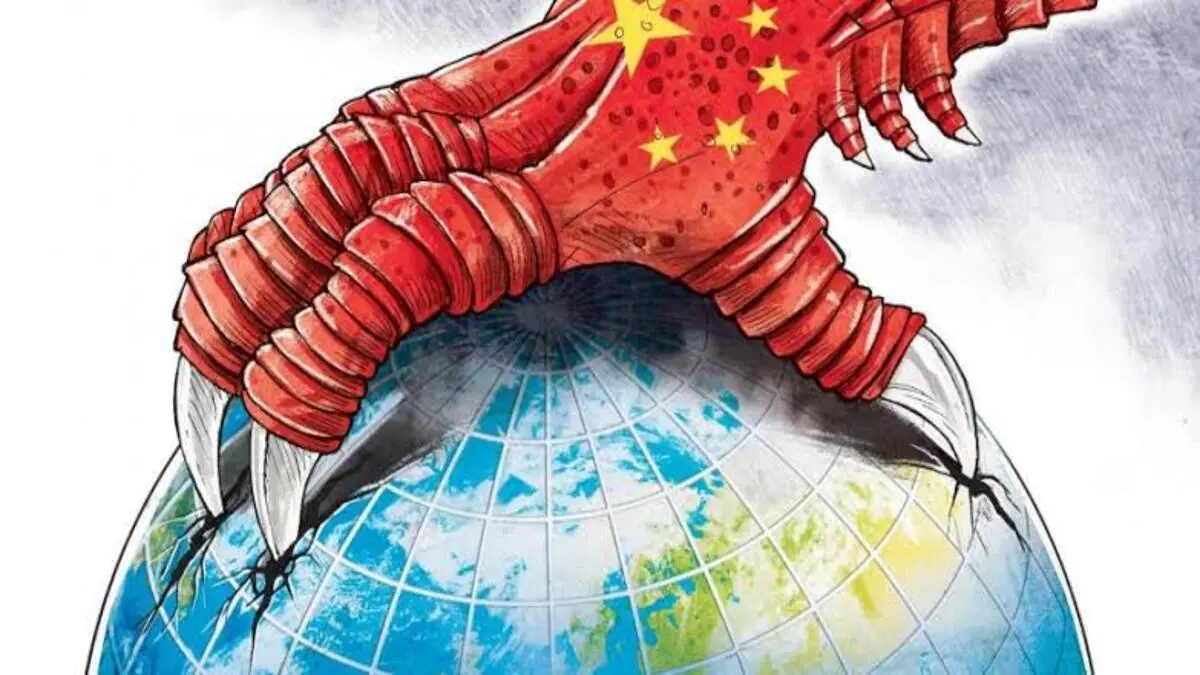
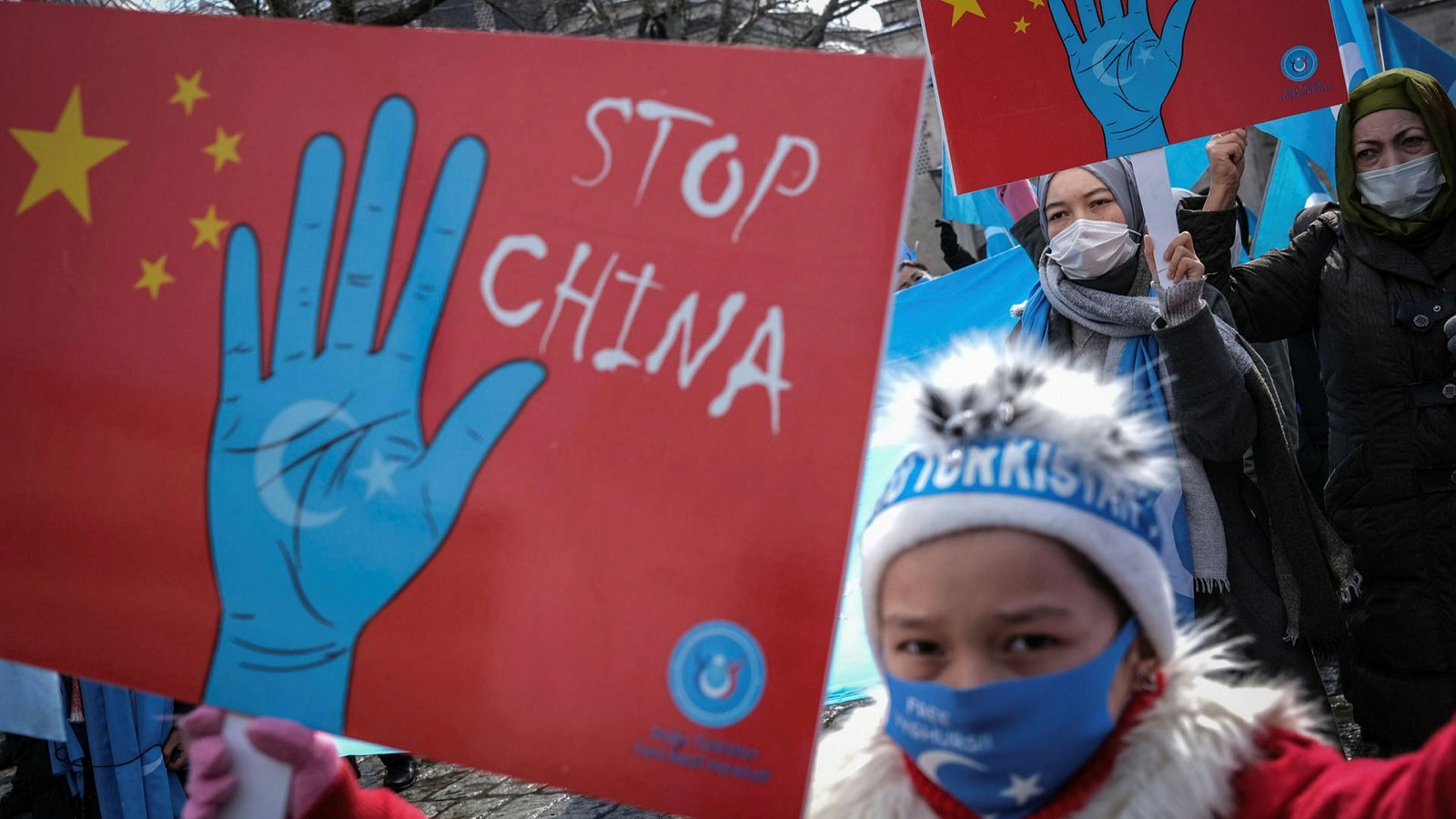
Many things come to play when a country goes beyond its border to make claims and acts on it. They invoke international law, invite new states to become adversaries, and build new alliances against them. However, if done correctly, it has the potential to benefit itself in ways unmatchable to staying silent. This article does not discuss ethics or the ‘right’ thing to do but assesses why this is happening and how it could benefit China. China, a rising superpower, has come a long way from fighting a civil war just after World War 2, pursuing economic policies that failed severely, to being amongst the top countries in terms of military, economic growth, and more. China’s rise has been peaceful compared to other superpowers of their time. However, China is breaking the silence that it has successfully maintained for decades now, finding it perfect for moving ahead with a rigorous foreign policy as it now has the potential and power to do so. It has permeated itself into the world economy so much that if factories in China close, it can disrupt the world’s supply chain, as seen during the outbreak of covid-19. Countries have realised this and started looking for alternatives to save themselves from being dictated by China’s terms. The trend shows that when a country rises and has tremendous economic growth and military backup, it can dictate terms and conditions. China has been successful in doing so, which will be discussed in brief later in this article. So, why is China now making claims on foreign territories (which, it claims, are part of its mainland)? Firstly, territorial claims are not just limited to a few of its (land) neighbouring countries (like India, Myanmar, Nepal, Bhutan, Tibet, Mongolia) but also Vietnam, Taiwan, The Philippines, and Laos. The list goes on. While territorial disputes with countries like India, Nepal, and Bhutan flare up occasionally, the conflicts in the South China Sea and Taiwan are constant; it has made the involvement of other countries necessary in the region to contain China’s recklessness. China even made its own Maritime Traffic Safety Law (MTSL) which makes it mandatory for states to have permission from China to navigate freely in its jurisdictional waters (which extends further from EEZ); if not done, China can resort to force for infringing on Chinese sovereignty. The MTSL surpasses UNCLOS, which gives other states the freedom to navigate freely. This unilateral decision also includes the contested islands in the South China Sea, giving China the sole authority and de facto control, making these islands legally consolidated with China. ‘By defining baselines far beyond those allowed by UNCLOS terms, China inflated its resulting territorial sea and Exclusive Economic Zone (EEZ), infringing upon the rights of other nations to use those waters as allowed by international law’ (Trung & Ngan, 2021). The claimant’s Exclusive Economic Zone (EEZ) and China’s EEZ clash here because both lay claims, while China claims all of the South China Sea as its territory- using its nine-dash line as a reference point. Again, laying historical claim and ignoring the UN Maritime Law of EEZ 200 nm, by which many of the islands belong to the claimants’ states. Just making laws would not do, and China knows it well. Hence, it resorts to power projection- making artificial islands, setting massive militaries, and being the most considerable naval power in South China to intimidate other states. It even dismissed the Permanent Court of Arbitration (PCA) ruling, which favoured the Philippines’ right to rule over its territories. Even though China had signed the UNCLOS, it still did not follow it. China wants to run its trade smooth for that undisrupted access to the South China Sea. Unsurprisingly, the world’s 40% of liquified natural gas passes through here- from the Gulf through the Indian ocean also, $3trillion of the worth of trade sails through here- 1/3rd of the world’s total. Hence, it becomes crucial for China to exert its control over all the choke points in the Indian Ocean or the South China Sea to make sure no other countries can ever play on its vulnerability while it can. Similarly, in the Indo-pacific, it follows a ‘pearl neck policy’ to gain a strategic position against India in times of conflict, i.e., by encircling India by establishing naval bases in surrounding countries. China’s actions raise suspicion and concerns because it does not conform to international norms and law. Whenever a country tries to ignore this, especially to expand its reach and control, it is bound to invite some reactions. China was already a superpower ruling world economy and trade at the days, but this changed when colonisation and the industrial revolution happened. After World War 2, when countries gave in to capitalism to revive their economy and eradicate poverty, China isolated itself, reaching rock bottom; and it was when Deng Xiaoping took charge to change this, that China got back to being a superpower again. Losing so much already, China wants back the territories which were once part of the kingdom and even those which were not. It wants its supremacy back. For this, it is going after sinking economies, offering glamourous deals like the BRI, which looks like benefiting to all (maybe in the short term) but ultimately, it is China that will dominate and will have control. It is not about the economy as much as it is about control, and to have that control, it would not mind making huge investments as even if the countries cannot pay the debt, China would get the property on lease, which it can then use to build naval bases. The countries see it as focused on them, but it is just a tiny portion of China’s colossal infrastructure plan to build this silk road which had existed centuries ago. In other words, ‘To recapture the diminishing appeal of the Communist Party of China (CPC), Xi Jinping has tried to sell the CPC as the inheritor and successor to a 5,000-year-old
TR
Team Red Lantern AnalyticaAnalyst
arrow_outward
UNTRADITIONAL SECURITYJUNE 4, 2022
194

Asia: as different as it sounds from Europe

There’s a debate on whether the future of Asia is Europe’s past, its own past, or different altogether. While Friedberg argues that Asia’s future would be Europe’s bloody past, David Kang emphasises Asia’s history to understand its anomalies. Amitav acharya says that history might not necessarily repeat itself (as Kang asserts) now that we live in a different era. This debate makes one think if there’s a need for Asian international theory or international relations theory that exists today works universally fine. One argument can be that bringing in each region’s international theory only fragments the existing one and doesn’t make sense cause then each region would employ its international relations theory which again will not be sufficient to explain any phenomenon outside its region. Another argument could be that having own IR theory makes it possible to understand the complexities of a particular region that the current IR theories might not be able to explain, like the one in Asia and the rise of China. As David Kang puts it, there’s no balancing done against the emerging power, which does away with the balance of power argument of the realists. However, as Walt has put it, states don’t balance against power but a threat, so does that mean south Asian states don’t see China as a threat? It’s hard to put this situation into one or the other IR theory, as these terms seem to have different meanings for different scholars. What does balancing or bandwagoning here means, rightly asks Amitav Acharya. Does economically cooperating with China for smoother trade and growing one’s economy mean bandwagoning with the rising power? Moreover, states have started increasing their militaries and defence (internal balancing), having ties with the USA, and making regional organisations (external balancing). David Kang also leaves out countries like India when he talks of the absence of balance of power in South Asia, where he only seems to speak about south-eastern countries (mainly because India doesn’t influence the politics of south-eastern Asia). Talking of history and hierarchy, Acharya disagrees with Kang on Asia replicating its past and being under China ruled hierarchical order in future. Even if, in history, China was hierarchically superior to other states neighbouring it (southeast Asia), it doesn’t necessarily mean that states today will accept China’s hegemony and surrender before it. States now have multiple means to tackle China which might not fit the realist theory, like strategically binding it through economic interdependence rather than balancing or bandwagoning. All states look at their self-interest first. If it means working with China, they will do so, and if China threatens their sovereignty, they will act by allying with other countries (external balancing) or increasing their defence (internal). States today, especially south-eastern states, are cautious in taking any steps directly against China since these countries gained independence from the West and some from China, too, like Vietnam and South Korea. Maintaining their sovereignty has been the priority, which was pretty evident in the 1947 Asian Relations Conference, where Asian countries didn’t form any regional organisation that India or China would then dominate or the formation of ASEAN to keep any external power influence away. Both China and the USA must be kept at a safe distance for them not to become overly dependent on the latter and not let the former dominate. They very well know the USA won’t come to their help as it has done in the case of Ukraine because not all of them are democracies or have such ties with the USA, so taking the risk of openly siding with the USA is very costly. South Asian states are particularly cautious of being entangled in this cold war bloc creation from which they want to stay away. Neither USA nor China is acting to benefit them, but their self-interest only. South-eastern states, hence, don’t want to become another country’s pawn in this power game. When theories are applied on the ground, the results might differ from what is expected. Hence, we must go through a part region’s culture and other forms to know how a particular theory acts there. Balance of power may work in the area, but differently from how it operates in Europe; this doesn’t mean it doesn’t exist but only in a different way. Today explaining China’s rise and the subsequent response of the neighbouring states has become a critical topic in IR theory. The present theories that are more suitable or explicitly made to explain Europe/western crisis fail to explain this Asian phenomenon. David Kang rightly says that Walt’s approach, which was created to explain the Cold War era and the balance of power it led to, can’t explain an Asian phenomenon where there’s no such balancing happening. Hence, we need “more theorising about Asian security that is more faithful to Asian experience” (Acharya). Both Kang and Acharya agree on this. In Acharya’s words, “The development of non-exceptionalism Asian perspective is important to the meaningful interaction and integration between IR theory and the analysis of the Asian security order.” Lastly, one might think, what is the larger aim of having an international relations theory, to explain international relations at large or to explain international relations at regional levels too? Looking at the current situation of IR theory, it seems that both are mutually exclusive as the Western IR theory focuses on Great Powers only, which subtracts the small powers whose sphere of influence is not as large, hence unable to explain the regional phenomenon. It has been correctly said that no one IR theory can explain all that is happening in international politics. Therefore, we must first look at the field of study and then employ a theory which is best suitable for it.

TR
Team Red Lantern AnalyticaAnalyst
arrow_outward
Tracker, 31 May 2022
NUCLEAR ISSUESMAY 31, 2022
195

Tracker, 31 May 2022

/wp-content/uploads/2022/06/DAILY-TRACKER-31-May-2022.pdf

TR
Team Red Lantern AnalyticaAnalyst
arrow_outward
Tracker, 30 May 2022
NUCLEAR ISSUESMAY 30, 2022
196

Tracker, 30 May 2022

/wp-content/uploads/2022/06/DAILY-TRACKER-30-May-2022.pdf

TR
Team Red Lantern AnalyticaAnalyst
arrow_outward
Tracker, 29 May 2022
NUCLEAR ISSUESMAY 29, 2022
197

Tracker, 29 May 2022

/wp-content/uploads/2022/06/DAILY-TRACKER-29-May-2022.pdf

TR
Team Red Lantern AnalyticaAnalyst
arrow_outward
Tracker, 28 May 2022
NUCLEAR ISSUESMAY 28, 2022
198

Tracker, 28 May 2022

/wp-content/uploads/2022/05/DAILY-TRACKER-28-May-2022.pdf

TR
Team Red Lantern AnalyticaAnalyst
arrow_outward
Sri Lanka Crisis: Time to Revisit China’s Debt-Trap Diplomacy
COMMENTARIESMAY 28, 2022
199

Sri Lanka Crisis: Time to Revisit China’s Debt-Trap Diplomacy

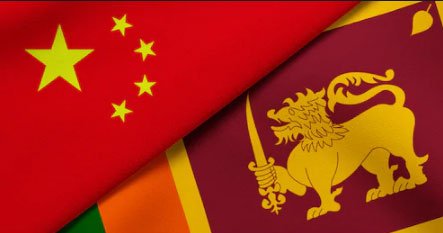
Earlier this month, Mahinda Rajapaksa was forced to resign as the Prime Minister of Sri Lanka amidst violent protests over his government’s handling of an unprecedented crisis that has brought the economy of the debt-laden island nation to its knees. He was replaced by 73-year-old veteran politician Ranil Wickremesinghe, brought in for his sixth term as the PM. Last week, Sri Lanka became the first country in the Asia-Pacific to default on its debt for the first time in the 21st century, according to credit rating agency Moody’s.¹ The economic crisis has rendered the country incapable of paying for its essential imports, leading to fuel shortages, debilitating power cuts and soaring food prices, forcing infuriated civilians to come out on the streets in hoards to protest. Even though the root cause of this crisis lies in the government’s mismanagement and faulty policies, including deep tax cuts implemented before the Covid-19 pandemic, a growing chorus of voices has attributed it to China-backed projects and investments. China’s investment and aid in Sri Lanka China is one of the biggest lenders to Sri Lanka, alongside Japan and the Asian Development Bank. It accounts for at least 10% of its total $51 billion external debt; however, the number is pegged to be much higher if the loans to state-owned firms and the central bank are also included. Most of these loans are to finance ambitious infrastructural projects, of which the major ones are in the Rajapaksa family’s native regions. The Hambantota port, for instance, has come to be the hallmark of unsustainable infrastructural projects that successive governments kept on bank-rolling. Located in the southern district, the deep seaport was built on $1.4 billion in loans but soon ran into troubled waters as it failed to make money as soon as it became operational. It lost $300 million in six years and was handed over to a Chinese state firm on a lease for 99 years. The then Sri Lankan government faced brickbats for giving China a strategic foothold in the Indian Ocean, making its neighbourhood giant India raise its head in concern for the first time. Other projects that have served the Rajapaksa clan, which has been accused of bias toward China, include a conference centre that cost over $15 million but has been lying largely unused and the Rajapaksa Airport, which cost $200 million but has barely been able to ring up its electricity bill.² Adding to this list of ill-thought-out projects is Colomba Port City, an artificial island of 665 acres that is projected to become a financial hub along the lines of Dubai and Singapore. The Rajapaksa government took a loan of $1.4 billion from a Chinese investor who has a 43% stake in this project on a 99-year lease. There are already sounding alarms that this project will also run into trouble and put the country further into debt. To understand the depth of China’s financial engagement in Sri Lanka today, it is essential to trace it back to the early 2010s when the island nation was still reeling from the aftermath of the end of the three-decade-long civil war. The then Rajapaksa government was in its second term when China loaned over $5 billion in infrastructural projects. It put in another $1.4 billion as part of Xi Jinping’s flagship Belt and Road Initiative (BRI) projects. With funding spread across over one-third of over 300 loan-funded projects in the bankrupt South Asian nation, China slowly edged out Japan and India as its leading lender. What sets apart Chinese loans from others is the much higher interest rate. According to a report by Colombo-based think tank Verite Research, the average rate on Chinese loans was 3.3% compared to the 0.7% for Japanese loans. Further, the maturity period for Chinese debt was an average of 18 years as compared to 34 years for Japanese debt and 24 years for Indian debt. China’s deep pockets were also subsequently sought by pro-Western governments, and the impact of the pandemic caused by coronavirus tipped the scale further in favour of Beijing. In early 2020, the island nation accepted a $1 billion bailout from Beijing. Countries who opt for Chinese investment do so for different reasons, including but not limited to easy accessibility, fewer demands and interferences in their domestic affairs, and the inability of other lenders to come forward. Debt-Trap Argument However, China hawkers in India and the West have often accused China of using its investment and aid to secure strategic assets of the borrower country in what is called ‘debt-trap diplomacy’. The term has come to imply that China traps economically vulnerable countries by offering attractive yet unsustainable loans. In cases where the countries are unable to repay their debts, it takes hold of their strategic assets. It has been accused of specifically targeting economically vulnerable countries with a bad credit rating or no rating at all and lading them with unsustainable and expensive infrastructure projects. The Hambantota port project discussed above is a prime example of this. When Sri Lanka failed to make its debt payment in 2017, China converted the loans to equity and acquired 70% ownership in the port on a 99-year lease. Sri Lanka, Myanmar and Pakistan are the debt-laden nations in South Asia that have responded favourably to Chinese investment, while Bangladesh which recently recorded impressive economic growth, continues to remain vary. While this argument holds strength, it is equally important to highlight that the crisis in countries like Sri Lanka and Pakistan is mainly owing to their economic mismanagement and ill-thought-out policies. A recent study for Carnegie by Katharine Adeney and Filippo Boni on the China-Pakistan Economic Corridor (CPEC) revealed the many instances where domestic considerations of the borrower country were a factor in the planning and strategizing of the infrastructure projects.³ While China was aiming at economically viable locations, the ruling party in Pakistan decided on sites keeping in mind its electoral strongholds and targets. Further, the projects are often politicized (as has also been

TR
Team Red Lantern AnalyticaAnalyst
arrow_outward
Tracker, 27 May 2022
NUCLEAR ISSUESMAY 27, 2022
200

Tracker, 27 May 2022

/wp-content/uploads/2022/05/DAILY-TRACKER-27-May-2022.pdf

TR
Team Red Lantern AnalyticaAnalyst
arrow_outward
Tracker, 26 May 2022
NUCLEAR ISSUESMAY 26, 2022
201

Tracker, 26 May 2022

/wp-content/uploads/2022/05/DAILY-TRACKER-26-May-2022.pdf

TR
Team Red Lantern AnalyticaAnalyst
arrow_outward
Tracker, 25 May 2022
NUCLEAR ISSUESMAY 25, 2022
202

Tracker, 25 May 2022

/wp-content/uploads/2022/05/DAILY-TRACKER-25-May-2022.pdf

TR
Team Red Lantern AnalyticaAnalyst
arrow_outward
Tracker, 24 May 2022
NUCLEAR ISSUESMAY 24, 2022
203

Tracker, 24 May 2022

/wp-content/uploads/2022/05/DAILY-TRACKER-24-May-2022.pdf

TR
Team Red Lantern AnalyticaAnalyst
arrow_outward
Tracker, 23 May 2022
NUCLEAR ISSUESMAY 23, 2022
204

Tracker, 23 May 2022

/wp-content/uploads/2022/05/DAILY-TRACKER-23-May-2022.pdf

TR
Team Red Lantern AnalyticaAnalyst
arrow_outward
Tracker 22, May 2022
NUCLEAR ISSUESMAY 22, 2022
205

Tracker 22, May 2022

/wp-content/uploads/2022/05/DAILY-TRACKER-22-May-2022.pdf

TR
Team Red Lantern AnalyticaAnalyst
arrow_outward
Tracker 21, May 2022
NUCLEAR ISSUESMAY 21, 2022
206

Tracker 21, May 2022

/wp-content/uploads/2022/05/DAILY-TRACKER-21-May-2022.pdf

TR
Team Red Lantern AnalyticaAnalyst
arrow_outward
Tracker, 20 May 2022
NUCLEAR ISSUESMAY 20, 2022
207

Tracker, 20 May 2022

/wp-content/uploads/2022/05/DAILY-TRACKER-20-May-2022.pdf

TR
Team Red Lantern AnalyticaAnalyst
arrow_outward
Tracker, 19 May 2022
NUCLEAR ISSUESMAY 19, 2022
208

Tracker, 19 May 2022

/wp-content/uploads/2022/05/DAILY-TRACKER-19-May-2022.pdf

TR
Team Red Lantern AnalyticaAnalyst
arrow_outward
Tracker, 18 May 2022
NUCLEAR ISSUESMAY 18, 2022
209

Tracker, 18 May 2022

/wp-content/uploads/2022/05/DAILY-TRACKER-18-May-2022.pdf

TR
Team Red Lantern AnalyticaAnalyst
arrow_outward
Tracker, 17 May 2022
NUCLEAR ISSUESMAY 17, 2022
210

Tracker, 17 May 2022

/wp-content/uploads/2022/05/DAILY-TRACKER-17-May-2022.pdf

TR
Team Red Lantern AnalyticaAnalyst
arrow_outward
Tracker, 16 May 2022
NUCLEAR ISSUESMAY 16, 2022
211

Tracker, 16 May 2022

/wp-content/uploads/2022/05/DAILY-TRACKER-16-May-2022.pdf

TR
Team Red Lantern AnalyticaAnalyst
arrow_outward
Tracker, 15 May 2022
NUCLEAR ISSUESMAY 15, 2022
212

Tracker, 15 May 2022

/wp-content/uploads/2022/05/DAILY-TRACKER-15-May-2022.pdf

TR
Team Red Lantern AnalyticaAnalyst
arrow_outward
Tracker, 14 May 2022
NUCLEAR ISSUESMAY 14, 2022
213

Tracker, 14 May 2022

/wp-content/uploads/2022/05/DAILY-TRACKER-14-May-2022.pdf

TR
Team Red Lantern AnalyticaAnalyst
arrow_outward
Tracker, 13 May 2022
NUCLEAR ISSUESMAY 13, 2022
214

Tracker, 13 May 2022

/wp-content/uploads/2022/05/DAILY-TRACKER-13-May-2022.pdf

TR
Team Red Lantern AnalyticaAnalyst
arrow_outward
Tracker, 12 May 2022
NUCLEAR ISSUESMAY 12, 2022
215

Tracker, 12 May 2022

/wp-content/uploads/2022/05/DAILY-TRACKER-12-May-2022.pdf

TR
Team Red Lantern AnalyticaAnalyst
arrow_outward
Tracker, 11 May 2022
NUCLEAR ISSUESMAY 11, 2022
216

Tracker, 11 May 2022

/wp-content/uploads/2022/05/DAILY-TRACKER-11-May-2022.pdf

TR
Team Red Lantern AnalyticaAnalyst
arrow_outward