
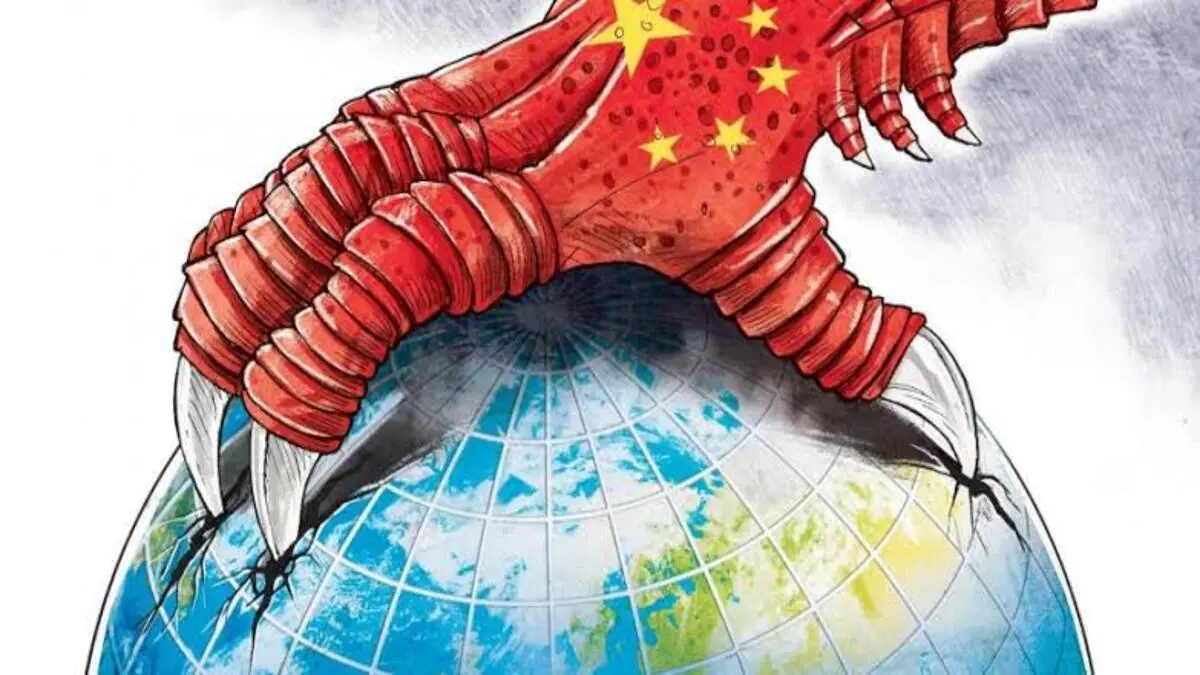
China and its Obsession with Claiming Territories
Asia

China and its Obsession with Claiming Territories

TR

Team Red Lantern Analytica

Directorate of Intelligence

Share:

Many things come to play when a country goes beyond its border to make claims and acts on it. They invoke international law, invite new states to become adversaries, and build new alliances against them. However, if done correctly, it has the potential to benefit itself in ways unmatchable to staying silent. This article does not discuss ethics or the ‘right’ thing to do but assesses why this is happening and how it could benefit China.

China, a rising superpower, has come a long way from fighting a civil war just after World War 2, pursuing economic policies that failed severely, to being amongst the top countries in terms of military, economic growth, and more. China’s rise has been peaceful compared to other superpowers of their time. However, China is breaking the silence that it has successfully maintained for decades now, finding it perfect for moving ahead with a rigorous foreign policy as it now has the potential and power to do so. It has permeated itself into the world economy so much that if factories in China close, it can disrupt the world’s supply chain, as seen during the outbreak of covid-19. Countries have realised this and started looking for alternatives to save themselves from being dictated by China’s terms. The trend shows that when a country rises and has tremendous economic growth and military backup, it can dictate terms and conditions. China has been successful in doing so, which will be discussed in brief later in this article. So, why is China now making claims on foreign territories (which, it claims, are part of its mainland)?

Firstly, territorial claims are not just limited to a few of its (land) neighbouring countries (like India, Myanmar, Nepal, Bhutan, Tibet, Mongolia) but also Vietnam, Taiwan, The Philippines, and Laos. The list goes on. While territorial disputes with countries like India, Nepal, and Bhutan flare up occasionally, the conflicts in the South China Sea and Taiwan are constant; it has made the involvement of other countries necessary in the region to contain China’s recklessness. China even made its own Maritime Traffic Safety Law (MTSL) which makes it mandatory for states to have permission from China to navigate freely in its jurisdictional waters (which extends further from EEZ); if not done, China can resort to force for infringing on Chinese sovereignty. The MTSL surpasses UNCLOS, which gives other states the freedom to navigate freely. This unilateral decision also includes the contested islands in the South China Sea, giving China the sole authority and de facto control, making these islands legally consolidated with China. ‘By defining baselines far beyond those allowed by UNCLOS terms, China inflated its resulting territorial sea and Exclusive Economic Zone (EEZ), infringing upon the rights of other nations to use those waters as allowed by international law’ (Trung & Ngan, 2021). The claimant’s Exclusive Economic Zone (EEZ) and China’s EEZ clash here because both lay claims, while China claims all of the South China Sea as its territory- using its nine-dash line as a reference point. Again, laying historical claim and ignoring the UN Maritime Law of EEZ 200 nm, by which many of the islands belong to the claimants’ states.

Just making laws would not do, and China knows it well. Hence, it resorts to power projection- making artificial islands, setting massive militaries, and being the most considerable naval power in South China to intimidate other states. It even dismissed the Permanent Court of Arbitration (PCA) ruling, which favoured the Philippines’ right to rule over its territories. Even though China had signed the UNCLOS, it still did not follow it.

China wants to run its trade smooth for that undisrupted access to the South China Sea. Unsurprisingly, the world’s 40% of liquified natural gas passes through here- from the Gulf through the Indian ocean also, $3trillion of the worth of trade sails through here- 1/3rd of the world’s total. Hence, it becomes crucial for China to exert its control over all the choke points in the Indian Ocean or the South China Sea to make sure no other countries can ever play on its vulnerability while it can. Similarly, in the Indo-pacific, it follows a ‘pearl neck policy’ to gain a strategic position against India in times of conflict, i.e., by encircling India by establishing naval bases in surrounding countries.

China’s actions raise suspicion and concerns because it does not conform to international norms and law. Whenever a country tries to ignore this, especially to expand its reach and control, it is bound to invite some reactions. China was already a superpower ruling world economy and trade at the days, but this changed when colonisation and the industrial revolution happened. After World War 2, when countries gave in to capitalism to revive their economy and eradicate poverty, China isolated itself, reaching rock bottom; and it was when Deng Xiaoping took charge to change this, that China got back to being a superpower again. Losing so much already, China wants back the territories which were once part of the kingdom and even those which were not. It wants its supremacy back. For this, it is going after sinking economies, offering glamourous deals like the BRI, which looks like benefiting to all (maybe in the short term) but ultimately, it is China that will dominate and will have control. It is not about the economy as much as it is about control, and to have that control, it would not mind making huge investments as even if the countries cannot pay the debt, China would get the property on lease, which it can then use to build naval bases. The countries see it as focused on them, but it is just a tiny portion of China’s colossal infrastructure plan to build this silk road which had existed centuries ago. In other words, ‘To recapture the diminishing appeal of the Communist Party of China (CPC), Xi Jinping has tried to sell the CPC as the inheritor and successor to a 5,000-year-old great Chinese empire. In this charade, President Xi Jinping envisions himself as a modern-day Chinese emperor in the mould of rulers of the Ming and Qing dynasties, the two great dynasties of historical China’ (Expansionist China a Dangerous Cocktail of Past and Present, 2020)

References:

  1. Trung, N. T., & Ngan, L. N. K. (2021, September 28). Codifying Waters and Reshaping Orders: China’s Strategy for Dominating the South China Sea. Asia Maritime Transparency Initiative. https://amti.csis.org/codifying-waters-and-reshaping-orders-chinas-strategy-for-dominating-the-south-china-sea/
  2. Gumaste, Vivek. (2020, July 26),  Expansionist China a dangerous cocktail of past and present. . The Sunday Guardian Live. https://www.sundayguardianlive.com/news/expansionist-china-dangerous-cocktail-past-present

Related Intelligence

ASIAOCTOBER 16, 2026
01

How Chinese Activities Ecologically Impact Tibet and Downstream Regions

Executive Summary The Tibetan Plateau is the single most important source of fresh water in Asia. The Indus, Sutlej, Karnali, Gandaki, Koshi, Brahmaputra, Salween, Mekong, Yangtze and Yellow rivers all begin in its glaciers, snowfields, springs and high wetlands, and together they sustain well over a billion people across South, Southeast and East Asia. Since the People’s Republic of China took control of Tibet in 1950, this landscape has been treated less as a shared ecological commons and more as a frontier to be secured, engineered and extracted. Over the past two decades the pace of that transformation has accelerated sharply. Mainstream dams on the Yarlung Tsangpo, a mega hydropower project at the Great Bend in Medog, highways and railways driven through unstable valleys, fortified border settlements, expanding mining, the forced sedentarisation of nomads, and even large-scale attempts to modify the weather over the Plateau have all been pursued by Beijing with little transparency and almost no consultation with downstream countries. This report examines those activities against the background of the catastrophic flood of 26 August 2026, which tore through the Lhende Khola, Bhote Koshi and Trishuli corridors on the Nepal-Tibet border. By the end of September, Nepal Police were reporting 1,452 confirmed dead and 5,132 people listed as missing, while on the Chinese side Xinhua has held Tibet’s toll at 43 dead with 519 missing since 6 September. Hydropower plants, the Rasuwagadhi and Gyirong border crossings, dozens of bridges and long stretches of highway were wiped out, and Nepal’s Finance Minister estimated reconstruction costs at US$4 to 5 billion, close to a tenth of the national economy. The scientific consensus now places the trigger of the 2026 collapse on the Nepali flank of Langtang Lirung, and this report does not claim that any single Chinese project caused it. The disaster matters for a different reason. It came just thirteen months after the July 2025 flood that did originate in Tibet, from a supraglacial lake on the Purepu Glacier in Gyirong County, and it fits a long pattern of transboundary cryosphere disasters descending from the Plateau. More importantly, it exposed how little the downstream states know about what is happening upstream, how badly exposed critical infrastructure has been sited in the flood path, and how Beijing continues to treat hydrological and environmental information as a strategic asset rather than a humanitarian obligation. The central argument of this report is that Chinese policy on the Plateau is steadily raising the ecological risk carried by Tibetans and by the people of Nepal, India, Bangladesh and Bhutan, while denying them the information and voice they need to protect themselves. The report closes with a set of practical recommendations for downstream governments, regional bodies and the wider international community. Introduction: The Water Tower Under Management The Plateau is often called the Third Pole because it holds the largest store of ice outside the polar regions. It is also warming faster than most of the planet. Assessments of the Hindu Kush Himalaya have found that glaciers in the region disappeared 65 percent faster in the 2010s than in the the preceding decade, and that on current emissions pathways as much as 80 percent of present glacier volume could be gone by the end of the century. Even if warming is held below 2°C, a loss of roughly a third to a half of the ice is projected. More recent observations show that ice loss rates across the region have roughly doubled since 2000. Climate change is a global problem, and China alone cannot be blamed for it. But how a state manages a warming mountain system is very much a national choice. A government that recognised the fragility of the Plateau would slow down, map its hazards openly, share its data freely, and involve both local Tibetan communities and downstream neighbours in decisions about large projects. Beijing has done almost the opposite. It has treated the Plateau as an engine for national energy supply, a buffer for territorial security and a laboratory for top-down environmental engineering. Tibetans have had little say in any of this, and countries downstream have had even less. The consequences of this approach are visible at three levels. On the Plateau itself, rivers, wetlands, grasslands and pastoral communities have been reshaped by dams, drainage, mining and resettlement. Along the Himalayan border, construction for trade and military access has pushed roads, ports and settlements into narrow valleys exposed to floods and slope failures. And downstream, in Nepal, India and Bangladesh, people living along glacier-fed rivers face growing hazards with less and less warning. The August 2026 Flood: What Happened At about 8:37 in the morning on 26 August 2026, a very large slab of fractured rock and glacier ice broke away from the north face of Langtang Lirung, a peak of over 7,200 metres close to the border. The mass fell roughly 1,200 metres into the valley of the Lhende Khola, the stream that marks the boundary between Nepal’s Rasuwa district and Gyirong County in Tibet. It shattered into a mixture of pulverised rock, ice and meltwater, picked up loose sediment from a channel that had already been stripped and widened by the previous year’s flood, and became a debris flow of extraordinary speed. The energy released was strong enough to register on seismometers in the United States and Germany as the equivalent of a magnitude 5 earthquake, and early reports did in fact describe it as a quake. The surge smashed into the confluence at Rasuwagadhi and Gyirong Port, then roared down the Bhote Koshi and Trishuli through Timure, Syabrubesi and Betrawati. At Galchhi, about 100 kilometres downstream, the river rose around nine metres within half an hour. Bodies were later recovered as far away as Chitwan and Nawalparasi, which tells its own story about the reach of the flood. Nepal’s disaster authority classified two districts, Rasuwa and Nuwakot, as severely affected and put the number of people impacted at roughly 1.6 million. The damage to infrastructure was immense. Around

A
AdminAnalyst
arrow_outward
ASIAAUGUST 8, 2026
02

Importance of India and East Asia Cooperation in Higher Education, Research and Development, and the Skilling of Labour

Importance of India and East Asia Cooperation in Higher Education, Research and Development, and the Skilling of Labour Prof. Tridivesh Singh Maini Assistant Professor of Diplomatic Practice & Assistant Dean (International Collaborations) Introduction In the past thirty years, India and the countries in East and South East Asia have strengthened their economic ties. Within the current geopolitical and economic context, a number of ASEAN member states, as well as countries in East Asia, have started channeling their investments in a limited number of priority areas, with a particular focus on the semiconductors and related domains. In recent years, India’s semiconductor industry has seen an influx of investment from Japanese, South Korean and Taiwanese companies. As a result, the industrial landscape in a number of Indian states is undergoing transformation, and Indian state governments are proactively engaging in efforts to secure foreign technological investment. However, financial investments alone will not strengthen these bonds. The depth of the partnership will depend on the collaboration across multiple research and development initiatives and the increase of joint ventures and academic partnerships between Indian and East and South East Asian universities. Demographic Changes and the Need for Skilled Labor East Asian countries are experiencing population decline and have an ageing population. One of the outcomes of this trend is the lack of skilled professionals, which is especially evident in the semiconductor and advanced manufacturing industries. As a response to this, universities in Japan, South Korea, Taiwan and other ASEAN countries, including Thailand, have started providing scholarships to foreign students in semiconductor manufacturing related programs. Both Indian students and educational institutions have the potential to take advantage of these offerings. The same demographic pressures have caused some of these governments to loosen their work visa requirements. Of these countries, India, due to its younger workforce and larger technical education system, has the potential to fill the gap the most. Why State Level Partnerships are Important India’s state governments must engage more with Japan, South Korea, Taiwan, and the ASEAN economies, rather than allowing the central government to take the lead. It is at these regional and industrial levels where the most opportunity and benefit is derived. Japan has begun to set these frameworks with Meghalaya and Assam by offering training and skill development programs in preparation for employment in the healthcare sector. This more adaptable and flexible approach can be developed for other states and industries. This is more important and necessary in regions which have primarily sought education and employment in the Anglosphere. A prime example of this is Punjab. Many of Punjab’s students have been denied Post Graduation Work Permit applications by Canada. Many state politicians, including Sukhbir Singh Badal, president of the Shiromani Akali Dal and former Deputy Chief Minister, and senior Bharatiya Janata Party leader Sunil Jakhar, have asked the central government to take this issue to Canada. With increasing restrictions and regulations on student and work visas in the Anglosphere, Punjab should consider looking towards the East and pursuing their training and skill development programs with Japan and South Korea. Andhra Pradesh as a Case Study Andhra Pradesh illustrates a particularly developed model of what this type of engagement can entail. During a recent trip to the state, a Taiwanese delegation had a meeting with Chief Minister Chandrababu Naidu, and expressed their desire to grow their presence in the state. The delegation included Delta Electronics, BenQ, CTBC Bank, DIMERCO, Sheng Huei Tech, Tech Top Engineering, K.S. Terminals, and Sandsun. The Chief Minister stated the priorities of the state in electronics, semiconductors, and IT, and cited the state’s connectivity, logistics, and adaptive policies as options for an investor’s assurance to commit. The delegation also had a separate meeting with the state’s Minister of IT and HR Development, Nara Lokesh, and stressed the importance of equipping the youth of Andhra Pradesh with job prospects in Taiwan. They discussed training programs incorporated with industry, educational collaborations, exchanges of students and faculty, industry certifications, as well as Mandarin training. One month prior, Lokesh made a similar proposition to Seong Dong Lee, Chief Executive Officer of the Korean company APACT, which specializes in equipment for the testing and packaging of semiconductors, during

A
AdminAnalyst
arrow_outward
ASIAJULY 29, 2026
03

Chinese Cyber-Enabled Narrative Operations Around India’s 2026 Student Protests

We’re pleased to share Red Lantern Analytica’s latest analytical report, “Chinese Cyber-Enabled Narrative Operations Around India’s 2026 Student Protests.” Based on open-source evidence, the report examines how sections of the Chinese digital information ecosystem reframed India’s domestic student protests for Chinese audiences through narrative amplification, political framing, and indirect encouragement. The assessment documents how narratives evolved across platforms including WeChat, Weibo, Xiaohongshu, Guancha, Huxiu, China News Network, and Knews, highlighting recurring themes such as governance failure, democratic decline, political instability, and anti-India stereotyping. We welcome constructive feedback and informed discussion from the strategic affairs, cybersecurity, and policy research communities. To Download PDF of this report click here

A
AdminAnalyst
arrow_outward