
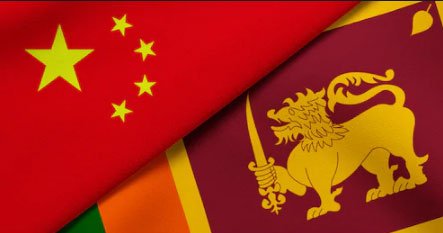
Sri Lanka Crisis: Time to Revisit China’s Debt-Trap Diplomacy
Commentaries

Sri Lanka Crisis: Time to Revisit China’s Debt-Trap Diplomacy

TR

Team Red Lantern Analytica

Directorate of Intelligence

Share:

Earlier this month, Mahinda Rajapaksa was forced to resign as the Prime Minister of Sri Lanka amidst violent protests over his government’s handling of an unprecedented crisis that has brought the economy of the debt-laden island nation to its knees. He was replaced by 73-year-old veteran politician Ranil Wickremesinghe, brought in for his sixth term as the PM. Last week, Sri Lanka became the first country in the Asia-Pacific to default on its debt for the first time in the 21st century, according to credit rating agency Moody’s.¹ The economic crisis has rendered the country incapable of paying for its essential imports, leading to fuel shortages, debilitating power cuts and soaring food prices, forcing infuriated civilians to come out on the streets in hoards to protest. Even though the root cause of this crisis lies in the government’s mismanagement and faulty policies, including deep tax cuts implemented before the Covid-19 pandemic, a growing chorus of voices has attributed it to China-backed projects and investments. 

China’s investment and aid in Sri Lanka

China is one of the biggest lenders to Sri Lanka, alongside Japan and the Asian Development Bank. It accounts for at least 10% of its total $51 billion external debt; however, the number is pegged to be much higher if the loans to state-owned firms and the central bank are also included. Most of these loans are to finance ambitious infrastructural projects, of which the major ones are in the Rajapaksa family’s native regions. The Hambantota port, for instance, has come to be the hallmark of unsustainable infrastructural projects that successive governments kept on bank-rolling. Located in the southern district, the deep seaport was built on $1.4 billion in loans but soon ran into troubled waters as it failed to make money as soon as it became operational. It lost $300 million in six years and was handed over to a Chinese state firm on a lease for 99 years. The then Sri Lankan government faced brickbats for giving China a strategic foothold in the Indian Ocean, making its neighbourhood giant India raise its head in concern for the first time. Other projects that have served the Rajapaksa clan, which has been accused of bias toward China, include a conference centre that cost over $15 million but has been lying largely unused and the Rajapaksa Airport, which cost $200 million but has barely been able to ring up its electricity bill.² Adding to this list of ill-thought-out projects is Colomba Port City, an artificial island of 665 acres that is projected to become a financial hub along the lines of Dubai and Singapore. The Rajapaksa government took a loan of $1.4 billion from a Chinese investor who has a 43% stake in this project on a 99-year lease. There are already sounding alarms that this project will also run into trouble and put the country further into debt.

To understand the depth of China’s financial engagement in Sri Lanka today, it is essential to trace it back to the early 2010s when the island nation was still reeling from the aftermath of the end of the three-decade-long civil war. The then Rajapaksa government was in its second term when China loaned over $5 billion in infrastructural projects. It put in another $1.4 billion as part of Xi Jinping’s flagship Belt and Road Initiative (BRI) projects. With funding spread across over one-third of over 300 loan-funded projects in the bankrupt South Asian nation, China slowly edged out Japan and India as its leading lender. What sets apart Chinese loans from others is the much higher interest rate. According to a report by Colombo-based think tank Verite Research, the average rate on Chinese loans was 3.3% compared to the 0.7% for Japanese loans. 

Further, the maturity period for Chinese debt was an average of 18 years as compared to 34 years for Japanese debt and 24 years for Indian debt. China’s deep pockets were also subsequently sought by pro-Western governments, and the impact of the pandemic caused by coronavirus tipped the scale further in favour of Beijing. In early 2020, the island nation accepted a $1 billion bailout from Beijing. Countries who opt for Chinese investment do so for different reasons, including but not limited to easy accessibility, fewer demands and interferences in their domestic affairs, and the inability of other lenders to come forward.

Debt-Trap Argument

However, China hawkers in India and the West have often accused China of using its investment and aid to secure strategic assets of the borrower country in what is called ‘debt-trap diplomacy’. The term has come to imply that China traps economically vulnerable countries by offering attractive yet unsustainable loans. In cases where the countries are unable to repay their debts, it takes hold of their strategic assets. It has been accused of specifically targeting economically vulnerable countries with a bad credit rating or no rating at all and lading them with unsustainable and expensive infrastructure projects. The Hambantota port project discussed above is a prime example of this. When Sri Lanka failed to make its debt payment in 2017, China converted the loans to equity and acquired 70% ownership in the port on a 99-year lease. Sri Lanka, Myanmar and Pakistan are the debt-laden nations in South Asia that have responded favourably to Chinese investment, while Bangladesh which recently recorded impressive economic growth, continues to remain vary. 

While this argument holds strength, it is equally important to highlight that the crisis in countries like Sri Lanka and Pakistan is mainly owing to their economic mismanagement and ill-thought-out policies. A recent study for Carnegie by Katharine Adeney and Filippo Boni on the China-Pakistan Economic Corridor (CPEC) revealed the many instances where domestic considerations of the borrower country were a factor in the planning and strategizing of the infrastructure projects.³ While China was aiming at economically viable locations, the ruling party in Pakistan decided on sites keeping in mind its electoral strongholds and targets. Further, the projects are often politicized (as has also been seen in the cases of Sri Lanka and the Maldives) and subject to cumbersome bureaucratic red-tape. Therefore, to say that the infrastructural investments made by China are intended to run into losses to trap strategic assets of the borrower country is a stretch. The considerations of the borrower country are also a huge factor that plays into the sustainability and economic viability of such projects. 

Sri Lanka’s economic crisis comes at a ripe time for Chinese hawkers to gage Beijing’s true intentions and priorities with its investments and aid. How China acts hereon with Colombo in its crisis will help better understand the arguments on debt-trap diplomacy and, indeed, caution those nations in South Asia who have been waiting with bated breath on Chinese financing.

References

  1. Financial Times, May 20,2022, ‘Sri Lanka defaults on debt for first time as economic crisis deepens.’ 
  2. The Hindu, May 11, 2022, ‘China infra projects in focus as crisis worsens in Sri Lanka.’
  3. Katherine Adeney and Filippo Boni, May 24, 2021 ‘How China and Pakistan Negotiate.’

Related Intelligence

COMMENTARIESAUGUST 20, 2026
01

Evergrande’s Fall Exposes the Deeper Fault Lines in China’s Property-Led Growth Model

The sentencing of Hui Ka Yan, Xu Jiayin, founder of the China Evergrande Group, to life in prison marks the conclusion of more than just the fall of one of China’s biggest businessmen. Hui was found guilty of eight offenses, including fraud, misappropriation of funds, securities violations, and bribery. Evergrande, formerly the largest real estate developer in China by contracted sales, turned to almost all of its $300 billion plus liabilities. Hui’s trial may mark the end of a significant legal case, but the Evergrande case does not end the massive economic case Evergrande came to represent. China’s real estate bubble was not a tale of just increasing house prices. It involved a tightly connected system of households, developers, banks, and local governments. Property became the main wealth purchasing and saving vehicle for Chinese households. In a survey by the People’s Bank of China, 59.1% of urban households’ assets were held in the form of housing, and the home ownership rate was 96%. Increasing house prices had an effect beyond an increase in construction. House prices had a positive effect on household wealth perceptions, confidence, and consumption. For developers, the system was designed to incentivize expansion. Land was bought and presold apartments, loans made it possible for developers to start new projects, and growing property evaluations enabled more borrowing. Evergrande was one of the developers who pushed the system the farthest. It can be described as the “three highs” consisting of high turnover, high costs, and high leverage. Evergrande’s model was to raise capital, buy land on a massive scale, and begin development while also borrowing against their land and starting the cycle over. So long as lenders continued to lend and buyers continued to buy, investors and developers alike continued to benefit from the cycle and the land and housing prices continued to grow. Local government interests were aligned with the developers. After the 1994 tax-sharing reform, the central government gained more revenue, leaving local governments shouldering a greater financial burden. To offset some of the burden, local governments sold land to developers and used land as collateral for loans. By 2019, it is calculated that local governments’ reliance on land finance was at 38.6 percent, with over 50 percent in many large cities. Property prices and local government finance and debt fuelled a cycle of increasing infrastructure spending. This outlines how vital property investment became for China. The IMF put the contribution of property to the economy at up to 20 percent. However, this number does not even come close to capturing the extent of property’s reach. Building property creates the need for the transport of raw materials. That includes steel, cement, and glass, as well as the machines to build the property, appliances, and furniture. Glass and machinery need to be transported using logistics and financial services. Property building employs contractors. Developers take out mortgages and corporate loans. Local governments earn money from the sale of land. So, property not only includes one of many sectors of the economy, but becomes a complete economic system. It becomes very clear how this system would collapse if the opposite of what is expected were to occur. This is the nature of a bubble. Every apartment does not become worthless. It means that the cost of the property, along with construction and the loans used to finance the purchase, became more dependent on whether people thought the price and demand for property would continue to rise. If people begin to think the cost of property will fall, then the same thing happens in the opposite order. Buyers will delay purchases, developers will not earn presale income, government revenue will fall, and banks will be more cautious of extending loans. Beijing recognized the risks so they began to tighten financial regulations starting in 2016. In 2020, The “Three Red Lines” Framework was established. Beijing’s goal was to limit debt for highly leveraged developers. From a macroeconomic standpoint it was necessary to limit debt. The problem was that leverage had become endemic throughout the system. It was really wishful thinking that it would discipline poorly managed developers because it made the business models of other driven companies more dependent on constantly selling new property and taking out new loans to continuously refinance debt. Evergrande exemplified the most famous case of China’s real estate collapse. Their failure impacted far more than themselves. Suppliers weren’t getting paid, construction companies went bankrupt and halted their projects, buyers had to wait to get their newly financed homes, and the creditors began to doubt the feasibility of their investments. Media states that Evergrande’s liquidation is slow and only $255 million of assets were sold by August of 2025 with claims against those assets totalling $45 billion. The possibility of China suffering a sudden replication of America’s 2008 “Lehman moment” is low. China’s financial system is more state-controlled, and the major banks are capable of being directed to provide support. Further, the capacity of Beijing to avoid excessive failure is far higher than the capacity of America at that same part in its history. The more likely threat is a prolonged balance-sheet adjustment where weakness in the property market will slow economic activity for many years. This trend continues through 2026. In July, Chinese new-home prices fell by 3.2% compared to the previous year. Of the 70 cities monitored, only 17 showed an increase in prices from the previous month. The first 7 months of the year also showed declining trends in property sales, investment, and new construction. During this period, the revenue of the Chinese government from land sales declined by 31.5% and was recorded at 977.8 billion yuan. These figures show a weakening trend in property and reflect declining private investment and local government finances. This trend is most problematic for households. When the primary investment of a household falls in value, households become more conservative. Household wealth falls and household members that own houses feel poorer, even if they have no intention of selling.

TR
Team Red Lantern AnalyticaAnalyst
arrow_outward
COMMENTARIESJULY 25, 2026
02

𝐀 𝐃𝐢𝐯𝐢𝐝𝐞𝐝 𝐇𝐨𝐮𝐬𝐞 – 𝐋𝐞𝐠𝐚𝐜𝐲 𝐯𝐬 𝐑𝐞𝐚𝐥𝐢𝐭𝐲: 𝐅𝐫𝐚𝐜𝐭𝐮𝐫𝐞 𝐢𝐧 𝐍𝐒𝐂𝐍 (𝐈𝐌) & 𝐑𝐢𝐬𝐞 𝐨𝐟 𝐭𝐡𝐞 𝐑𝐢𝐯𝐚𝐥 𝐏𝐫𝐨𝐯𝐢𝐬𝐢𝐨𝐧𝐚𝐥 𝐆𝐨𝐯𝐞𝐫𝐧𝐦𝐞𝐧𝐭 𝐢𝐧 𝐌𝐲𝐚𝐧𝐦𝐚𝐫

N𝐞𝐰 𝐏𝐮𝐛𝐥𝐢𝐜𝐚𝐭𝐢𝐨𝐧 | 𝐑𝐞𝐝 𝐋𝐚𝐧𝐭𝐞𝐫𝐧 𝐀𝐧𝐚𝐥𝐲𝐭𝐢𝐜𝐚 Red Lantern Analytica presents a new strategic analysis: “𝐀 𝐃𝐢𝐯𝐢𝐝𝐞𝐝 𝐇𝐨𝐮𝐬𝐞 – 𝐋𝐞𝐠𝐚𝐜𝐲 𝐯𝐬 𝐑𝐞𝐚𝐥𝐢𝐭𝐲: 𝐅𝐫𝐚𝐜𝐭𝐮𝐫𝐞 𝐢𝐧 𝐍𝐒𝐂𝐍 (𝐈𝐌) & 𝐑𝐢𝐬𝐞 𝐨𝐟 𝐭𝐡𝐞 𝐑𝐢𝐯𝐚𝐥 𝐏𝐫𝐨𝐯𝐢𝐬𝐢𝐨𝐧𝐚𝐥 𝐆𝐨𝐯𝐞𝐫𝐧𝐦𝐞𝐧𝐭 𝐢𝐧 𝐌𝐲𝐚𝐧𝐦𝐚𝐫.” Authored by Lt. Col. Ujjual Abhishek Jha, DCPP (Retd.), this examines the recent organisational split within NSCN (IM), the emergence of the Eastern Flank-led Provisional Government, and its implications for the Naga peace process, cross-border insurgency, and India’s security landscape in the Northeast. Download Link: A Divided House Legacy vs Reality Fracture in NSCM-IM and Rise of the Rival Provisional Government in Myanmar

TR
Team Red Lantern AnalyticaAnalyst
arrow_outward
COMMENTARIESAUGUST 21, 2025
03

Reimagining Oman as an Indian Ocean Green Hub: Looking at a Post-Carbon Future

The few stereotypes that persist regarding the Gulf are of its importance as a hydrocarbon centre over the past eight decades, since Bahrain and Saudi Arabia struck Oil in the 1930s. Oman, in comparison, struck Oil in Fahud in 1962, and shipped its first container from Mina Al Fahal in 1967. The oil revenues formed the bedrock of rebuilding the country during the 1970s, during which the Dhofar rebellion was still on. Oman is a Shell country, like Brunei, where Shell has been strategic in the country’s hydrocarbon exploration through a major stake in Petroleum Development Oman, or PDO, as commonly known. Many PDO employees have worked for Shell Brunei and Shell Sarawak as a part of their career circulations in the global MNC network. Oman was never a massive producer of petroleum as its wealthier neighbours in the GCC, even though its natural gas imprint is significant. Natural Gas is a key transition fuel, and Quriyat LNG in Sur has many long-term contracts with Korea, China, and Japan. However, Oil and Gas still form a major chunk of the GDP in Oman. Diversification has been on the agenda since the late 1980s, as localisation has always been a priority. Years of peak oil prices have led to the creation of avant-garde infrastructure and the education of a couple of generations overseas on scholarships, which was a byproduct of oil income. Now, the scenario has evolved as Oman’s population has increased, and the youth seeking work is often the refrain, as gauged from the comments section in the social media feeds. The cause of the Arab Spring protests in Sohar was corruption and lack of jobs, which led to a few heads turning. The post Sultan Qaboos era, under the able leadership of His Majesty Sultan Haitham Bin Tarik has moved towards diversification in a major way, seeking relationships far and wide. His Majesty has had meetings with the Dutch Leadership, President Putin in Moscow, Prime Minister Modi in Delhi, and the UK Minister Starmer within the past few months. The rich legacy of Oman being the Switzerland of the Middle East helps in its vital role in mediating the Yemeni crisis and as a trusted participant in the Iran paradigm, helps. Oman also controls half of the crucial Straits of Hormuz. Ibadhi Oman’s history as a littoral maritime empire has its long shadow in the present. Muscat is a diverse place, full of Zanzibaris, Baluchis, Ajmi’s, Lawati’s, and Hindu Bania’s, and other communities who were a part of the Omani imperial grid. The strategic culture of the Omani elite is transnational, with many Omani having ties across East Africa to Africa. Pankaj Khimji, an advisor to the Omani government, is a key Bania interlocuter between Muscat and Delhi via Mandvi. India and Oman have finalised the FTA negotiations recently. Aden was governed by the Bombay Presidency until 1937. These close ties entail prospects of power being exported to India/ Pakistan/East Africa via a subsea cable in the future. The engineering and program management excellence achieved by the national building efforts of PDO, especially in terms of talent development for the renewable sector, over the past decades. The first solar project was helmed by PDO as seen in the Amin Solar project. This is similar to the Aramco State, where the best expertise in Saudi Arabia lies with the engineers in the oil major. A glimpse of it was illustrated in Ellen R Wald’s book[1], which showed the role National Oil Companies have played in nation-building. Oman’s location as an Indian Ocean actor was confirmed with it hosting the Indian Ocean Conference this year in Muscat, where Member of Parliament Naveen Jindal ji spoke. Jindal operates one of the largest steel mills in the Middle East in Sohar. The ACME Group is coming up with a green hydrogen facility in the special economic zone in Duqm on the Arabian Sea coast. Duqm is also home to a naval base, which plays host to many navies, as it is close to the Horn of Africa piracy corridor. The green hydrogen corridor in Al Wusta and Dhofar is underway as ACWA Power from Saudi Arabia is investing in a green hydrogen facility in the southern Dhofar region. Another ACWA Power project in the form of Ibri 2 IPP is a project I know rather intimately. I was the lead social specialist for an impact assessment report for a multi-million-dollar 500MW solar park on the Saudi border. Long-term migrant workers from South Asia were identified as camel farmers in the desert on project land., However, during a recce visit and after speaking to long-term migrant workers looking after camels, we discovered that they were extremely precarious, relying on a solar-powered battery charger for mobile phones and to light a bulb. These workers, who were heavily reliant on precarious work, were being moved away from their off-grid homes to build a Chinese-funded solar park in relatively prosperous Oman. The irony was not lost on me. Globally accepted ESG governance norms kicked in, the move triggered an independent Resettlement Action Plan for these workers. Climate and Local developmental politics intersect in the middle of nowhere. The Beijing-based Asian Infrastructure Investment Bank or AIIB is the backer for the Ibri 2 Project, and Chinese contractors were the hands on Ibri 2. Belt and Road is right on our doorstep. Indian Engineers and Consultants work on these Chinese-funded projects as the technical hands behind the scenes. There are numerous other solar projects in the pipeline in the Wilayat of Manah. These areas are close to the Saudi Border and could be a part of an integrated GCC power grid. Oman’s great strength in terms of land needed for renewable projects is a plus, along with its positioning between the Gulf, South Asia, and East Africa, which makes it an Indian Ocean Green Hub[2] in the making. [1] https://www.amazon.in/Saudi-Inc-Arabian-Kingdom%60s-Pursuit/dp/168177660X [2] https://mem.gov.om/en-us/Our-Business/Renewable-Energy-and-Hydrogen/Renewable-Energy-and-Hydrogen-Projects Authored By: Manishankar Prasad PhD Scholar, University of Malaya

TR
Team Red Lantern AnalyticaAnalyst
arrow_outward