INTELLIGENCE ARCHIVE

Commentaries

29 published analyses, newest first.

Statement on US House Speaker’s Plan to Address the ‘Rise of Chinese Communist Party’
ASIAJANUARY 12, 2023
25

Statement on US House Speaker’s Plan to Address the ‘Rise of Chinese Communist Party’

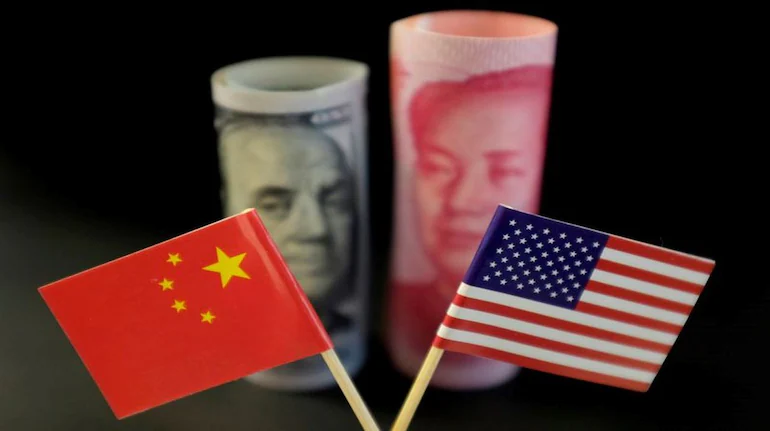
The former US House of Representatives Speaker, Nancy Pelosi’s visit to Taiwan in August 2022 ignited the most severe Taiwan Strait Crisis ever with the Chinese President Xi Jinping being left insecure about his dreams of a national reunification with the island nation. What followed was a series of Chinese air strikes in Taiwan’s Air Defence Identification Zone (AIDZ) to instil fear among the Taiwanese government and people. The world, however rose in support of the democratically elected nation and the Chinese Communist Party (CCP) is once again huffing and puffing to pursue its hegemonic desires. The newly elected Speaker of the House of Representatives, Kevin McCarthy, swooned the Americans with his inaugural speech where he pledged that the house will address the ‘rise of the Chinese Communist party’ and further went on to say that he wanted the US to win the economic competition which China as well. The trade war between the US and China had been the talk of the town for the recent few years. To tackle this, he proposed to create a bipartisan Select Committee on US-China Strategic Competition to investigate thoroughly on how the hundreds of thousands of jobs that went to China needed to be brought back. The world will agree to the fact that while the global leaders followed policies to help China grow for decades, the CCP has returned only betrayal, oppression and put out aggressive desires to alter the global order, both economically and ideologically. The newly elected speaker made it absolutely clear that “the era of trusting communist China is over” as most of its military and economy grew at the expense of democracy, freedom and human rights. Mr. McCarthy emphasized that the bipartisan task force will not only focus on economic arenas but will also look into crucial matters like China stealing the intellectual property rights, American farmlands being bought by the CCP, Chinese propaganda in schools and lobbying efforts in the US, and how China controlled so much of the pharmaceutical sector that it created a total havoc during Covid-19 pandemic,etc. So this committee will offer comprehensive recommendations for policy matters encompassing economic investment, technological progress and national security. The speaker further mentioned that he wanted to prevent trillions of the American dollars from financing communist genocide and military modernisation. While the speech acknowledges that CCP is a common hurdle for all and the promises made look really enticing, it is now time for the world to mirror this enthusiasm and initiate a collective action to put an end to the CCP authoritarianism.
TR
Team Red Lantern AnalyticaAnalyst
arrow_outward
A Taliban takeover which benefitted no one
AFGHANISTANJANUARY 8, 2023
26

A Taliban takeover which benefitted no one

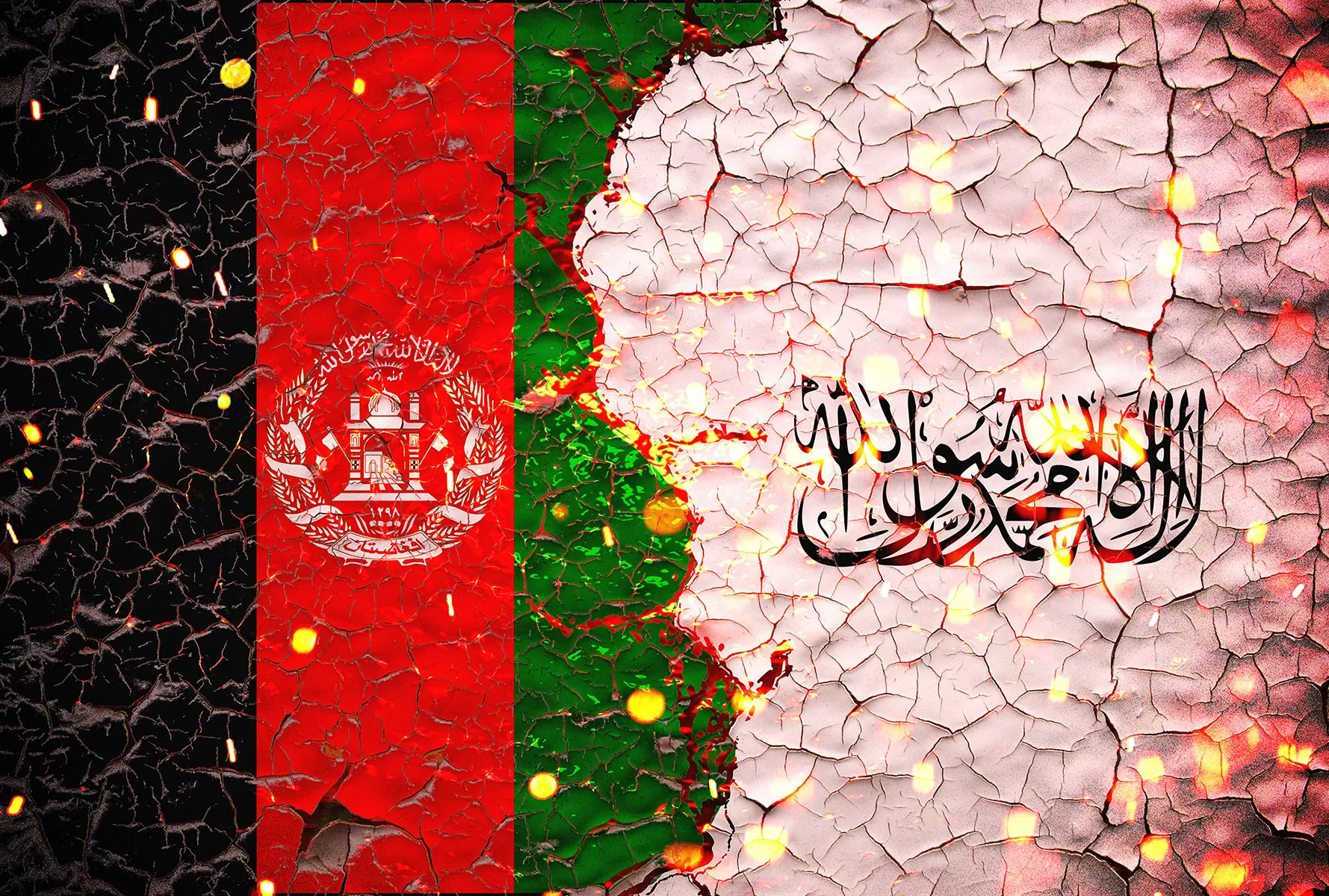
The US troops had not even left Afghanistan when the Taliban took control of Kabul. On 16th August, a day after Kabul fell to the Taliban forces, the then Prime Minister of Pakistan Imran Khan claimed that Pakistan had broken the shackles of slavery. A year since that, the jubilation has subdued, as Pakistan is gripped with insurgencies in Khyber Pakhtunkhwa and Balochistan. In its pursuit of strategic depth and the infatuation with having the Taliban govern Afghanistan, Pakistan has pushed the security structure in the Afgan-Pak region to the brink of collapse, threatening not just the continued existence of the state of Afghanistan and Pakistan but also the billions of dollars that China has invested in Pakistan and its ambitions in Afghanistan. At the time of writing, Pakistan is facing dual insurgencies in KP and Balochistan. Tehreek-e-Taliban Pakistan (TTP) has been emboldened by the Taliban’s capture of Kabul and has been a recipient of the Taliban’s hospitality, something which Pakistan expected for itself. In the last year, TTP has conducted more than 350 attacks across Pakistan. In Balochistan, BLA has received renewed support from the TTP, and Pakistan now finds itself fighting a two-front war. Balochistan, regrettably for Pakistan is also a host to China’s biggest investment in the form of CPEC. A mild level insurgency has been going on in the region for over decades. China’s interference via investments has also become a point of conflict between Pakistani authorities and Baloch insurgents. Pakistan had hoped with the Taliban ruling Afghanistan, it’d finally be able to fence the border across the Durand Line. However, that has not been the case. Cross-border firings across the Durand Line have increased incessantly. Moreover, since coming to power Taliban has released maps which show the Greater Pashtunistan region as part of the Afghan territory. China, which had hosted the Taliban leadership after the fall of Kabul, and refused to close down its embassy along with Russia in the Afghan capital, had high hopes of getting its hands on the $1.3 trillion worth of Afghan minerals and securing a route for its ambitious BRI has failed to achieve any of its objectives. In addition, it is growing incessantly aggrieved about the current security situation in Balochistan, KP and Gilgit Baltistan through which the CPEC passes. Incidentally, China has also refused to furnish further loans to Pakistan until the security situation improves in the region. Currently, Chinese loans amount to a quarter of Pakistan’s external debt. Without fresh funds coming to the nation, Pakistan’s economy is in free fall. Its exports have dried up and food imports to the nation have dried up the country’s Forex reserve which is below $5 billion. Pakistan faces an unprecedented climb out of the economic and security situation. Parallels of its economic situation can be drawn with Sri Lanka. The Sri Lankan economic crisis was the worst economic crisis since its independence. China’s share in Sri Lanka’s external debt was around 20% which shows the seriousness of Pakistan’s economic situation which could be on the brink of collapse. There is no doubt that the current economic and security situation in the Afgan-Pak region has been exacerbated by the Taliban’s capture of Kabul. If Pakistan is unable to secure its borders and weed out the insurgencies there is a greater risk of Pakistan breaking up which would be detrimental to the security of South Asia as a whole. Pakistan is a nuclear state and has a population of 220 million. Its neighbours, especially India and China (Xinjiang) face unprecedented mass immigration and the threat of nuclear terrorism. Therefore, Pakistan requires greater attention from the international community. While the Taliban’s resurgence in Afghanistan was welcomed by Pakistan and China alike, they now face unprecedented risk to their future and investments respectively.

TR
Team Red Lantern AnalyticaAnalyst
arrow_outward
South Asia: not one but many
AFGHANISTANJANUARY 6, 2023
27

South Asia: not one but many

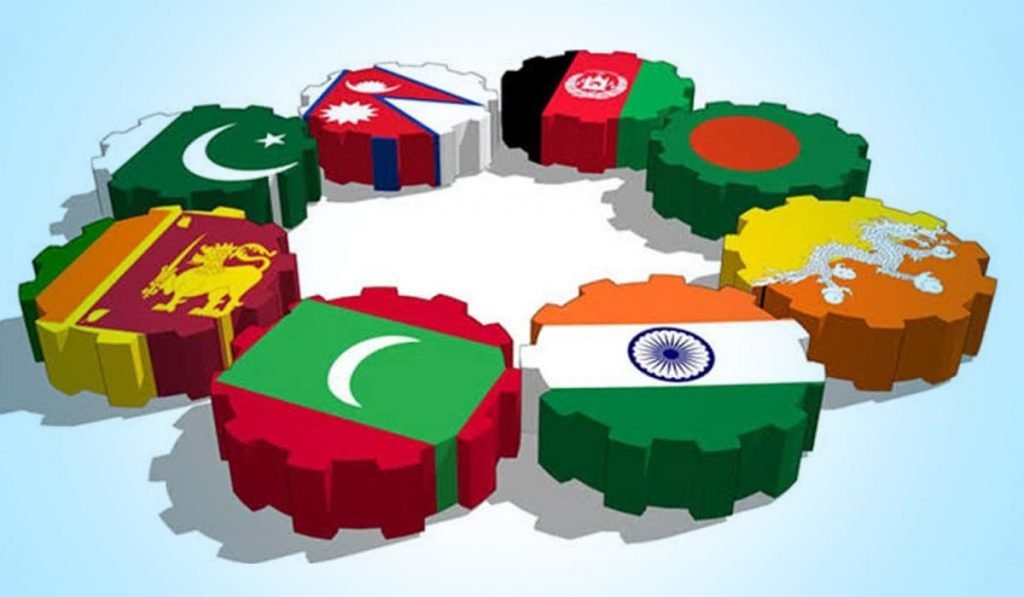
South Asia has a long-shared history of ancestry, culture, and colonisation (most of it, not all) and a history of partition, struggle for independence and forming different forms of governments, making them all very different from each other. However, looking at the linkages and earlier being part of one subcontinent, one would expect them to have carried forward that integration, but that has not happened. It remains one of the least integrated regions of the world. Realising this long ago that there was a need to bring the area together for increasing integration and cooperation, the countries formed SAARC (the South Asian Association of Regional Cooperation) in 1985. There was a hope that this organisation might finally bring the long-awaited integration. However, it seemed to be failing with time, mainly because of unresolved territorial disputes between the member states, particularly India and Pakistan. There were no SAARC summits held after the 2014 SAARC Summit in Kathmandu. The upcoming Summit, which was supposed to happen in 2016 in Islamabad, got cancelled due to tensions between India and Pakistan. There is no scope for future SAARC summits until the dispute gets resolved, which has as much chance as the China-Taiwan dispute getting solved. In a recent news release, it was reported that “it takes 138 hours to move a truck across the border from India to Bangladesh, and there are 22 documents required and 55 signatures. So, in many ways, South Asia is not well integrated” (Basu, 2022). What is sad is that this situation exists despite the two countries being in such geographical proximity. With the political regimes changing in the region, one state after another, stability needs to be there for countries to work upon some mutually agreed deals. Free trade should be everyone’s priority as it benefits all. There are disagreements over political culture existing in different countries and on geopolitics, but should these affect the trade relations? With regional integration, the South Asian economy can become one of the largest in the world. A report also noted, “Despite massive connectivity plans and infrastructure development, South Asia remains the least integrated region in the world — just 5 per cent of its total trade takes place within the region. Greater integration and seamless connectivity could see trade increase by an estimated $44 billion, according to Cecile Fruman, Director, Regional Integration and Engagement in the South Asia Region (SAR), World Bank’ (Basu, 2022). “In 2019, India and Pakistan undertook trade-restrictive measures against each other, perhaps the most severe in several decades. After the Pulwama terror attack in Kashmir in February 2019 and cross-border air strikes, India withdrew Pakistan’s Most Favoured Nation (MFN) status and imposed a customs duty hike of 200% on imports. Later, when India revoked the autonomy of Jammu and Kashmir, Pakistan suspended bilateral trade” (Hindu, 2021). It costs both countries in terms of expenses incurred to find alternatives. Similarly, Pakistan blocking India’s deal with Afghanistan to trade or transport goods only hampers the integration process. The region is complicated as it remains stuck in the past, halting projects in the present and putting in jeopardy their future. The ongoing conflicts between the countries have become the greatest obstacle to achieving cooperation. The unresolved conflicts are stretched for political gains, neglecting the greater regional interest and benefit one can take advantage of. On a positive note, it is a good sign that Nepal and India are coming together to discuss pending projects after the relations between the two soured last year. With regime change in Pakistan, there is a hope that the new government might relax some trade restrictions put on India to revive their economy. As Sri Lanka is in its worst economic crisis since independence, India is now taking the lead and coming forward to help it deal with the situation regarding aid and grants. Restoring stability brings hope that the countries could continue their trade on better terms which were affected due to Sri Lanka’s previous deals with China. However, this only shows that states are now preferring to go bilateral over working together as a group, entailing some positive outcomes. However, if the region unites, its economy could overtake many leading economies today. It is hard to say if the region’s prospect is to integrate, but it needs to act on it. The SAARC member states must realise the more significant gain here and try to work on their fault lines. Political skirmishes are coming in the way of trade, which is never a good sign; even China is India’s greatest trading partner despite their ongoing border disputes, only because one cannot risk their economy. Diplomatic solutions must pave the way, and leaders must meet and address the concerns of their respective countries. No other way can bring the region to grow and prosper than engagement. It is a long way, and it will not be easy. It will be interesting to see how this turns out to be. With the Russian invasion of Ukraine, there is already a food shortage; neighboring states could help each other out. These solutions may sound utopian, but it is better to hope than give up.

TR
Team Red Lantern AnalyticaAnalyst
arrow_outward
China’s aggression across the Taiwan strait in 2022
ASIAJANUARY 3, 2023
28

China’s aggression across the Taiwan strait in 2022

What’s in the menu US speaker Nancy Pelosi’s visit to Taiwan in August 2022 saw a record number of Chinese aircraft incursions near to Taiwan, however, this ‘new normal’ aggression didn’t stop at that. For the umpteenth time, December’22 again surprised the observers of the difficult China-Taiwan relations, but this time with the highest ever number of aircraft incursions by China, including warplanes, some of which crossed over the Taiwan strait center line. China’s flimsy justification often quotes the reasons of such a response as a reaction to interference by external agents (read “US”), and the provocation by Taiwan independence forces. The month of August saw heavy incursions that were a response to US speaker Nancy Pelosi’s visit to Taiwan, which China took negatively, for known reasons (one china policy- Taiwan is only another system under overall ‘People’s Republic of China’). The December incursions are by all means a reply to recent US commitments to increase defense and arms assistance to Taiwan. The relations between China-Taiwan are once again in a limbo. THE RECIPE The Taiwan strait in recent couple of years has emerged has one of the most restive regions of our times when seen via lens of great games. It has become a pawn in the US-China rivalry that won’t abate anytime soon. The pro-democracy forces are in power in Taiwan, and China being an authoritarian regime, doesn’t seem to take well how Taiwan aligns with the democracies of the world. China hasn’t however ruled out the possibility of a ‘bloody reunification’ with Taiwan. Taiwan’s forced unification with china, one that will lead it to share a fate similar to Hong Kong, Tibet, Xinjiang is a nightmare that the world fidgets about. While some strategic analysts foresee a reunification happening soon, with or without any alarms, others say that neither China, nor the US can be lame-ducks enough to fight off each other in an era of economic interdependence and ever weaker supply chain resilience. However, the ongoing Russia-Ukraine war bears testimony to the fact that idiosyncratic factors and waves of populism, in the guise of nationalism can precipitate into worst nightmares of the global community. It’s not unknown that China’s zero covid strategy and its crumbling economy may lead to making of a restive Chinese populace that may stand against the Xi regime. Where can it then take recourse in such a situation? Answer is simple and predictable in the realm of international relations- trigger issues, create enemy states, and invoke nationalism by rabble rousing. A similar move is in play even in The United states. The bait is Taiwan this time. It’s a tough spot for Taiwan that its largest trade partner is also its greatest enemy. But enemy’s enemy is a friend (in line with Kautilyan wisdom), and that drags in US to the scene. Kurt Campbell, US based indo pacific strategist advised that US intensify its trade relations with Taiwan to deepen the strategic relationship. US hence also wants Taiwan to initiate decoupling its economy with China. Such a directive however can trigger a direct clash in the strait with the two important powers in a direct face off. The whole logic of deterrence may take a backseat, however to say if it for sure will, will be an over statement. United states is the most important global power that has the back of Taiwan in case of aggression by china. Its ‘Taiwan policy act’of 2022 is a direct commitment by US in providing weaponry and technical assistance to Taiwan to build a credible defense capability. US has pursued the policy of strategic ambiguity vis-à-vis Taiwan wherein it affirms to one china policy, while refuting any attempts by china to coercively incorporate Taiwan into itself. However, The US has shown more certitude and less ambiguity on the Taiwan issue ever since Biden has assumed power. This means an even hotter pacific (not even counting in climate change here). The US finds itself embroiled in Taiwan for a couple of reasons- A china free Indo-pacific. Critical components like electronic chips’ manufacturing being concentrated in Taiwan. To prevent choking of critical supply lines in an era global interdependence. SALT TO TASTE PLEASE Retired General Lee of Taiwan believes that china is only short of sufficient firepower before it can wage a war for Sinicizing Taiwan. What then are the current developments in Taiwan to handle an improbable yet possible militarily forced unification? Taiwan has changed its conscription policy to make its military voluntary. This has been a positive step as it’ll aid in infusing expertise and competence to its military which otherwise engaged in a “half-hearted, good for nothing and short periods of training. However yet again the Tsai government has decided to extend compulsory military service to one year from four months from 2024 citing insufficient preparedness. Moreover, it has increased its defense budget, while drawing further from technical expertise and arms sale of its most trusted ally- US. However, many scholars point to the possible heavy reliance on US that can make Taiwan to bandwagon after US thus creating a hierarchy of power. There are 3 options that small states usually have -Bandwagoning, balancing and hedging. Taiwan can’t afford to bandwagon entirely after China, or balance against it out rightly, considering its reliance on China economically and a possible blockade that it may be subjected to. Strategic hedging thus seems a better option. Through this Taiwan can pursue the dual poles of balancing and bandwagoning, with inclination towards any one as the context demands. Currently, the inclination is in favor of balancing against China, by forging its ties with the democratic regimes. Whatsoever, the wargames by China in and around the strait have become sharper in its character, with such incursions having become a normal daily news for the Taiwanese. China’s greyzone activities pose conundrum to the analysts who find it difficult to judge if China is crossing or will cross the fine line between its war of attrition on one hand

TR
Team Red Lantern AnalyticaAnalyst
arrow_outward
Sri Lanka Crisis: Time to Revisit China’s Debt-Trap Diplomacy
COMMENTARIESMAY 28, 2022
29

Sri Lanka Crisis: Time to Revisit China’s Debt-Trap Diplomacy

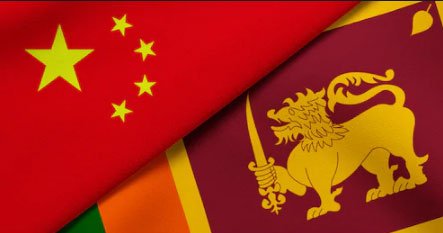
Earlier this month, Mahinda Rajapaksa was forced to resign as the Prime Minister of Sri Lanka amidst violent protests over his government’s handling of an unprecedented crisis that has brought the economy of the debt-laden island nation to its knees. He was replaced by 73-year-old veteran politician Ranil Wickremesinghe, brought in for his sixth term as the PM. Last week, Sri Lanka became the first country in the Asia-Pacific to default on its debt for the first time in the 21st century, according to credit rating agency Moody’s.¹ The economic crisis has rendered the country incapable of paying for its essential imports, leading to fuel shortages, debilitating power cuts and soaring food prices, forcing infuriated civilians to come out on the streets in hoards to protest. Even though the root cause of this crisis lies in the government’s mismanagement and faulty policies, including deep tax cuts implemented before the Covid-19 pandemic, a growing chorus of voices has attributed it to China-backed projects and investments. China’s investment and aid in Sri Lanka China is one of the biggest lenders to Sri Lanka, alongside Japan and the Asian Development Bank. It accounts for at least 10% of its total $51 billion external debt; however, the number is pegged to be much higher if the loans to state-owned firms and the central bank are also included. Most of these loans are to finance ambitious infrastructural projects, of which the major ones are in the Rajapaksa family’s native regions. The Hambantota port, for instance, has come to be the hallmark of unsustainable infrastructural projects that successive governments kept on bank-rolling. Located in the southern district, the deep seaport was built on $1.4 billion in loans but soon ran into troubled waters as it failed to make money as soon as it became operational. It lost $300 million in six years and was handed over to a Chinese state firm on a lease for 99 years. The then Sri Lankan government faced brickbats for giving China a strategic foothold in the Indian Ocean, making its neighbourhood giant India raise its head in concern for the first time. Other projects that have served the Rajapaksa clan, which has been accused of bias toward China, include a conference centre that cost over $15 million but has been lying largely unused and the Rajapaksa Airport, which cost $200 million but has barely been able to ring up its electricity bill.² Adding to this list of ill-thought-out projects is Colomba Port City, an artificial island of 665 acres that is projected to become a financial hub along the lines of Dubai and Singapore. The Rajapaksa government took a loan of $1.4 billion from a Chinese investor who has a 43% stake in this project on a 99-year lease. There are already sounding alarms that this project will also run into trouble and put the country further into debt. To understand the depth of China’s financial engagement in Sri Lanka today, it is essential to trace it back to the early 2010s when the island nation was still reeling from the aftermath of the end of the three-decade-long civil war. The then Rajapaksa government was in its second term when China loaned over $5 billion in infrastructural projects. It put in another $1.4 billion as part of Xi Jinping’s flagship Belt and Road Initiative (BRI) projects. With funding spread across over one-third of over 300 loan-funded projects in the bankrupt South Asian nation, China slowly edged out Japan and India as its leading lender. What sets apart Chinese loans from others is the much higher interest rate. According to a report by Colombo-based think tank Verite Research, the average rate on Chinese loans was 3.3% compared to the 0.7% for Japanese loans. Further, the maturity period for Chinese debt was an average of 18 years as compared to 34 years for Japanese debt and 24 years for Indian debt. China’s deep pockets were also subsequently sought by pro-Western governments, and the impact of the pandemic caused by coronavirus tipped the scale further in favour of Beijing. In early 2020, the island nation accepted a $1 billion bailout from Beijing. Countries who opt for Chinese investment do so for different reasons, including but not limited to easy accessibility, fewer demands and interferences in their domestic affairs, and the inability of other lenders to come forward. Debt-Trap Argument However, China hawkers in India and the West have often accused China of using its investment and aid to secure strategic assets of the borrower country in what is called ‘debt-trap diplomacy’. The term has come to imply that China traps economically vulnerable countries by offering attractive yet unsustainable loans. In cases where the countries are unable to repay their debts, it takes hold of their strategic assets. It has been accused of specifically targeting economically vulnerable countries with a bad credit rating or no rating at all and lading them with unsustainable and expensive infrastructure projects. The Hambantota port project discussed above is a prime example of this. When Sri Lanka failed to make its debt payment in 2017, China converted the loans to equity and acquired 70% ownership in the port on a 99-year lease. Sri Lanka, Myanmar and Pakistan are the debt-laden nations in South Asia that have responded favourably to Chinese investment, while Bangladesh which recently recorded impressive economic growth, continues to remain vary. While this argument holds strength, it is equally important to highlight that the crisis in countries like Sri Lanka and Pakistan is mainly owing to their economic mismanagement and ill-thought-out policies. A recent study for Carnegie by Katharine Adeney and Filippo Boni on the China-Pakistan Economic Corridor (CPEC) revealed the many instances where domestic considerations of the borrower country were a factor in the planning and strategizing of the infrastructure projects.³ While China was aiming at economically viable locations, the ruling party in Pakistan decided on sites keeping in mind its electoral strongholds and targets. Further, the projects are often politicized (as has also been

TR
Team Red Lantern AnalyticaAnalyst
arrow_outward