
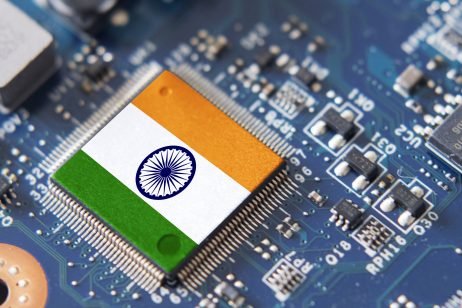
The New Age of Semiconductors
Economics of the Semiconductor Industry in India and the Geopolitical Implications of It
INTRODUCTION
Gone are the days when oil was the key driver of international relations and its attainment as the major area of competition among nations. The focus has now largely shifted towards semiconductors, projected to play a significant role in evolving the social and economic landscape of global politics. This shift has largely occurred for two main reasons. Firstly, the exploration of alternate energy options reduces the dependence on oil. Secondly, semiconductors have quickly emerged as a vital component of several key industries. These semiconductors retain some properties of the energy sector, of being concentrated in certain geographical areas due to material and talent availability. This leads to intense competition among nation-states to attain self-reliance in their production and gain dominance over their adversaries. This competition is only bound to get even more intense.
Semiconductors are the centre of the modern technological landscape, their usage raging from a myriad of industries, from automobiles to aerospace and even the healthcare system. Its innovation has paved the way for a technologically advanced and interconnected world, which further impacts economic growth. Analysts observe India to become a key player in the semiconductor industry, given its talent pool and government support for initiatives aiding its development. The National Electronics Policy (NEP) aims to establish India as a hub for Electronics System Design and Manufacturing (ESDM), including semiconductors. (Akhilesh Tuteja, 2024)
The Indian government has already blown the whistle to progress the country from the status of “chip taker” to that of “chip maker”. Semiconductors are an important aspect of India’s national security and its importance can no longer be overlooked. The chip is essential for every important activity in the country, from the economy to the military domain. Technologies such as artificial intelligence, quantum computing, blockchain and big data analytics are a reality solely due to the existence of advanced semiconductor chips. The UN goal of alleviating the effects of climate change by transitioning to green technology is also made possible through this specialised chip. (Lt Col Akshat Upadhyay, 2022)
The manufacturing process of this chip becomes a gruesome task because of its complexity and the vast investment and infrastructure required. Therefore, only a handful of countries are currently dominating the supply chain, making it extremely vulnerable to vicissitudes and instability. The noteworthy contributions of semiconductors and the competition for its procurement have made many countries resort to export controls and prohibition of sale and transfer. In such a scenario, it becomes important for India to indigenize the production process to carve out a way to achieve “Atmanirbharta” or Self-reliance. (Konark Bhandari, 2020)
SHORTAGE OF SEMICONDUCTORS
The past few years have struggled with a declining production of these semiconductors, leading to their shortage. Given the significance of these chips in critical industries, any shortage would adversely impact not only the technology companies involved in its manufacturing but also the countries that aim to deploy these technologies. The shortage could be ascribed to several reasons. Firstly, the COVID-19 pandemic saw a decline in its supply as manufacturers shifted towards those industries that saw an increase in demand during the period. There has been a significant fall since prior to the pandemic and bringing the supply back to that level would be a pressing challenge. For instance, the momentary disruption of the supply of these chips harmed the automobile industry the most, with their sales taking a nosedive.
Secondly, several natural disasters that have raked the world, have had disastrous consequences in destroying the supply hubs of these semiconductors which further contributed to the shortage. A massive earthquake in Japan in February 2021 led to a substantial constriction in output. A major fire in Japan at one of the biggest factories of Renesas reduced the ability of this prominent chip supplier to fulfil orders to automakers worldwide. Lastly, a drought in Taiwan prompted it to cut water supply to a major chip-making hub, Taichung, as it directed manufacturers to conserve water that is normally used for industrial purposes. (Konark Bhandari, 2020)
The most significant reason, however, was the export control bans introduced by the Trump administration in 2019. These bans aimed to forbid the transfer of certain semiconductor technologies to certain Chinese enterprises. These measures were further tightened in 2020. The Chinese, looking to dominate the industry stockpiled these chips before these provisions could take effect, further worsening the shortage. An instance of this could be Chinese entities such as Huawei stockpiling goods and ordering several months, if not years, worth of semiconductors for products such as Xilinx’s field-programmable gate arrays that Huawei uses for its base station technology.
At such a critical time, when all countries seek to build self-sustenance in the supply chains, there are certain risks associated with this move. The major risk is the formation of inward-looking supply chains or chains that are not interoperable. This would negatively impact the standard setting for these chips and make it another layer of competition among nation-states. Currently, the quest for dominance is being fought among the us, Europe and China.
IMPACT OF US-CHINA TRADE WAR
Following the May 2020 border clash in Galwan Valley, India has taken a number of measures towards China. Chinese firms had already made significant inroads into India’s electronics market. For the first time, India has tied the resolution of its long-standing border issue with China to the development of other elements of their relationship. This has come at the expense of economic relationships. In April 2020, India announced plans to prevent ‘opportunistic acquisitions of Indian companies’ by entities from countries sharing a land border. India seems more open to a partnership that is multilateral and involves several actors. The external minister was quoted saying that the altering dynamics of the US-China relations would provide opportunities that could be exploited to advance India’s national interests. However, he also mentioned that India was interested in growing with others and not separately. This highlighted partnerships with countries possessing similar values and also major players in the semiconductor supply chain. This situation has been explained through a newly coined term “friend shoring”. It stands for the “banding of countries to limit the trade of key inputs to trusted countries to reduce risks to supply chain”. However, this “friend shoring” comes with concerns about protectionist lobbies trying to wave off competition and the emergence of oligopolies.
As for now, the country is aligned towards a US-led bloc that would reflect its position in the global semiconductor supply chain discussion. India’s bold move towards amending its semiconductor policy in October 2022 has showcased its intent to hear out the different stakeholders in the ecosystem and advance not only its manufacturing but also its assembly and packaging. There has come a realization that India needs to be “delivering at home” before it can “deliver abroad”.
The continuous strategic competition between the United States and China has also had an impact on India’s national security calculations. The competition’s most apparent and aggressive incarnation is in the field of technology, namely the United States sanctions and export controls aimed at China’s desire to modernize its economy and military. The most prominent example of these limitations is the need for specialist chips. This holds crucial lessons for India as it rises in prominence and strength within the global community. India’s geographical position and natural riches enable it to project power and build socio-politico-cultural and military links with a multitude of nations. There may come a moment when India’s national interests do not align with those who control access to cutting-edge technologies. It is critical that India begin to consider semiconductors from a national security standpoint, as technical solutions to India’s climate change concerns will necessitate some level of indigenization in order to assure innovation and self-sufficiency. Climate change mitigation is essential to India’s security architecture today. A shift to electric vehicles (EVs) and alternative sources of energy suggests a preference for semiconductors in these cars. Similarly, in terms of economic security, India intends to provide employment opportunities for its massive youth population, access to poverty alleviation programs, and meet the needs of an influential middle class, which will necessitate expanding its digital infrastructure and providing the latest electronics consumer goods.
CRITICALITY OF SEMICONDUCTOR SUPPLY CHAINS TO COUNTRIES TODAY
Several questions arise about attaching the national security of the entire country to a single chip when there are several other products, for example, oil and grain, whose shortage may very well impact the economic and social security of the nation. This question sheds light on the concept of replaceable goods. To explain this concept, we take the example of the Russia-Ukraine war. The blockage of Ukrainian ports that caused a global food shortage was supplemented with India stepping up and exporting grains. Similarly, if there were to be a change in the oil supply from the Middle East, it could be offset by the oil supply from Russia. Hence, oil and grain become replaceable goods. Semiconductors, on the other hand, are irreplaceable. The chip is not the main component of the semiconductors. It is composed of industrial processes, technical know-how and research and development. These aspects are native to the tech company and cannot be transferred or exported like the goods discussed above. In case of a crisis in any of these aspects, it would amount to inefficient processes in different companies. As the competition for semiconductors becomes fierce, the rift between the two techno-political countries, the US and China intensifies. This leaves the world with a major decision of how to cope in the competitive landscape and still achieve self-sufficiency.
INDIA’S NATIONAL SECURITY CHALLENGES FROM A WIDER PERSPECTIVE
In terms of strategic security, how a military sees the future of conflict will influence how the semiconductor sector is incentivized. The present thought process is to be indigenous while, in the medium run, stabilizing the supply chain to the greatest extent possible. However, the long-term demand is innovation, which is undoubtedly one of the reasons that the United States competes with China. If the Indian military decides that a noncontact form of warfighting — emphasizing cyber, EW warfare, and non-contact combat — is the way forward, the demand for such capabilities will most certainly increase. The scope and ambit of the Defence Space Agency (DSA) are projected to expand in the near future, with a concentration on intelligence, surveillance, and reconnaissance (ISR) and communications. In addition to radiation-hardened ICs and monolithic microwave ICs, our indigenous spacecraft will require specialist microcontrollers. For so long, defence needs have been one of the processor and semiconductor industries’ lowest priorities. If the military wishes to make its presence, importance, and purchasing patterns known, it must take a proactive, almost aggressive approach toward the indigenous semiconductor industry, as well as demand for military-specific chips. There also needs to be assertiveness in the demand for Indian manufactured and designed chips in future deals.
Another factor to be considered is that the digital landscape moves much faster, in contrast to the procurement cycle of the varied military organizations. The time taken for the completion of checks and balances, price negotiations and acquisition of the final product by the soldier is immense. By then, the technology would have already progressed by at least a decade or two. This brings our notice to the fact that there is a need to look at the induction of digital technologies from a different lens than conventional weapons. One of the main challenges that the military faces is the mindset of viewing already available technology and conventional solutions to deal with military challenges. (Lt Col Akshat Upadhyay, 2022)
CONCLUSION
Semiconductors play an extremely important function in advancing India’s national security and economic progress. The future of warfare, like India’s future growth trajectory, is dependent on the growing importance of technologies such as 5G-based IoT, quantum computing, unmanned systems, and artificial intelligence. All of these data-intensive technologies rely significantly on the availability of sophisticated semiconductors, which are approaching the end of Moore’s law-mandated exponential efficiency. A race is on for new materials, novel design methodologies, and the development of different algorithms to ensure that the progress associated with these technologies does not stagnate due to a lack of computer capacity. Another prerogative, Climate Change, is linked to the availability of appropriate chips for all types of EVs to operate and function. (Lt Col Akshat Upadhyay, 2022)
References
Akhilesh Tuteja. (2024). Semiconductors: The new drivers of geopolitical balance. KPMG.
Konark Bhandari. (2020, June). The Geopolitics of the Semiconductor industry and India’s place in it. JSTOR, 1-2,6,11,14-16. Retrieved from Carneige India: https://www.jstor.org/stable/resrep51801?seq=1
Lt Col Akshat Upadhyay. (2022). Role Of Semiconductors In India’s National Security. pp. 7-8.
 By Angel Chindalia
RLA Research Intern