
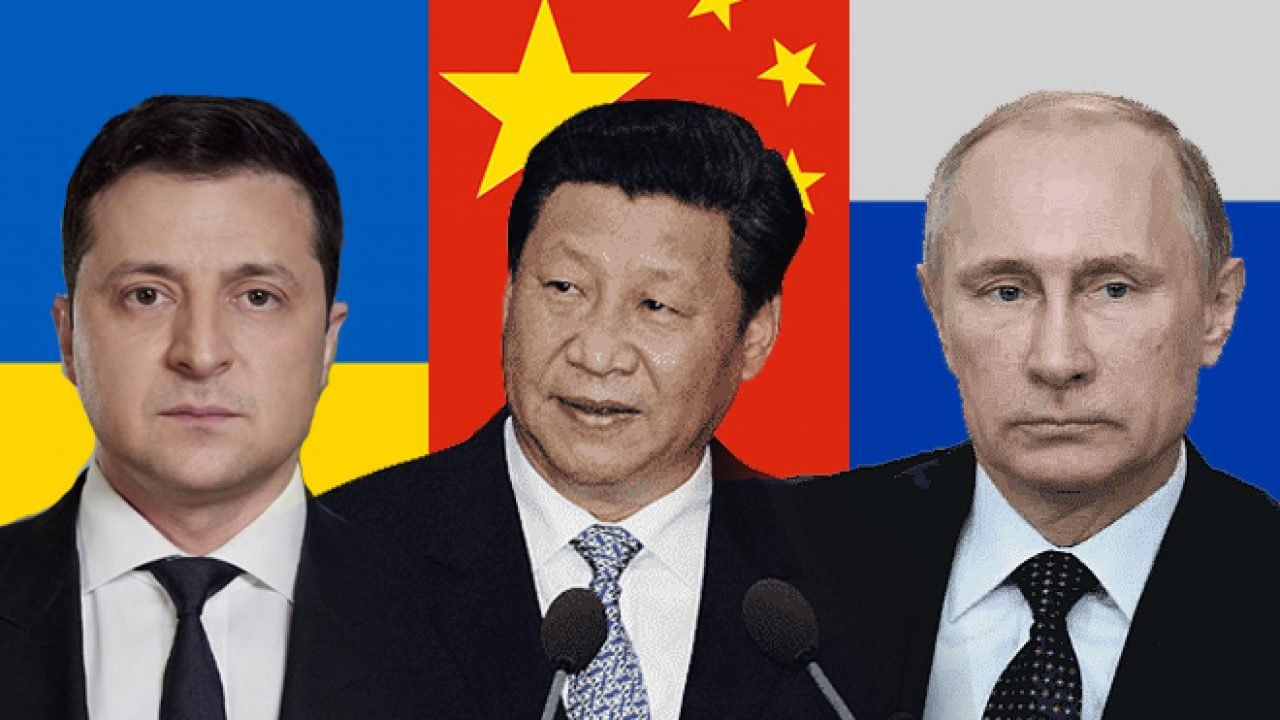
SINO-RUSSIAN RELATIONS POST UKRAINE CRISIS
Both the countries have a long history of disputes nevertheless, China and Russia have expanded their military, economic and diplomatic relations in the twenty first century. Experts also point out that China and Russia are not natural partners or formal allies from the historical point of view, so the strength of their “no-limits’ ‘ partnership is under question. The article aims to understand the role played by the Ukraine war in the Sino-Russian relations while also taking into account the other factors In February 2022, when Russian President Vladamir Putin visited China, both the countries concluded their “No Limits” partnership which is seen as the highest camaraderie between Russia-China partnership and a strong mutual support for the protection of their core interests as both the nations give immense priority to their sovereignty and strategic significance.[1] Post Cold war, the former Russian President dreamt of a triple axis of Russia, China and India, however this is far-fetched given the ‘abnormal’ relations between Russia and China. Russia has been successfully able to balance its relationship with both China and India. The India factor in their relationship has not played a huge role in their relationship at least in the present times.
In the recent State Visit of Putin to Moscow, both the countries showed their solidarity for building an alternative world order as opposed to U.S ‘hegemony’.[2] This is in backdrop of the severe crisis of international world order. Both the countries have ample number of convergences and similar stances on a host of common grounds beyond the Ukraine crisis. Putin has only met two world leaders since the 2020- Xi Jinping and Kim Jong-Un, which reflects the Russia-Iran-China axis challenging their common enemy and threat, the US. Beijing and Moscow’s cooperation is mostly because of their shared goals of curbing American power and challenging U.S Hegemony. Some argue that their strategic partnership is more driven by their common rivalry with the United States than by natural affinity. Their economic relations have mainly risen in the face of the western sanctions against Russia as Moscow is shifting its trade away from Europe. While military exercises have increased, there is a lack of interoperability among them. Both the countries however do not share the same vision of the world order. Putin has also praised the Belt and Road Initiative (BRI) as an attempt for achieving a more “equitable and multipolar world order”. However, Russia is not officially a part of the BRI. [3]In order to challenge the U.S influence, both the countries have been working through various multilateral institutions such as the BRICS, SCO to gather support from the developing nations for their visions. China and Russia’s engagement in these institutions would play a crucial role in the long term sustenance of their relations post the Ukraine war.
There is also a geographical factor that plays in the Sino-Russian relations. The China-Russia border spans over 2,600 miles which includes a long border in the east and a smaller border between Kazakhstan and Mongolia. China and Russia, both permanent members of the UNSC, have tended to back each other at the UNSC.[4] This also shows the strategic as well as geographical reasons why China is a top most priority in Russian foreign affairs. Some argue that Russia is much more productive while China has a more careful, long-term approach in the domain of their competition with the West. Since the 1950s, China’s import of arms has been dominated by Russia. However, this has been a source of dispute in the 2000s.[5] Today, the Russian arms sales to China have declined due to the development of China’s indigenous defence industry as well as Russia’s hesitation to sell sophisticated systems to China with the fear of losing its secrets. Beijing has put export restrictions on certain types of commercial drones for safeguarding ‘national security’. So, the defence ties between the two countries is not as promising as it sounds. [6]
The China-US relations is also an important factor in the Sino-Russian relations. China’s admittance into the WTO in 2001 also shows its attempt to integrate into the U.S led global system as it also balanced maintaining its practical relationship with Russia. The deterioration of China-U.S relations have led to a growing strategic convergence with Russia and hedging against US sanctions. Their relationship has been coming up for almost a decade now and the Ukraine crisis has strengthened their relationship. China views itself as a challenger to what it perceives as ‘Us hegemony’ and for achieving its goals, Russia is a natural partner. Since the Russian annexation of Crimea in 2014 and more so with its war in Ukraine, Russia’s approach in its foreign policy has undergone drastic shifts, as the country was previously engaging with Japan and South Korea in Asia.[7] The Russia-China relationship has also shifted since the 2014 events. Some analysts point out that the Russian economy is a war-based economy. From Ukraine to Gaza, the China-Russia-Iran-North Korea bloc has found more convergences with the common goal of undermining the West. However, one must also not ignore the subtle nuances that have played a crucial and fundamental role in defining their relationships.
THE ROLE OF THE UKRAINE CRISIS IN SINO-RUSSIAN RELATIONS
With the Russia-Ukraine conflict upending the post-Cold War landscape in Europe, China has several competing objectives- calling for an end to hostilities in Ukraine and also maintenance of a close strategic partnership with Russia. China has played a huge role as an economic pipeline for Russia as Russian banks were sanctioned against using the SWIFT system. Russia’s dependence on China has grown considerably in the wake of the Russia-Ukraine conflict. China’s economic influence has increased in the Russian economy due to flooding of the Chinese smartphones and cars in its markets. The ongoing US-China trade war has also been responsible for their deepening economic partnership. Beijings’ calculations in its foreign policy revolve around three dimensions such as implications for the political order, implications for geopolitical power, and implications for economic development. Beijing largely echoes Russia’s anti-US and anti-NATO propaganda. At the narrative level, there are significant disparities in the domestic discourses of Russia and China regarding the crucial aspects of the cooperation, including about Eurasian connectivity, China’s stake in the Arctic Region, the extent of high value added bilateral economic exchanges and contrasting perspectives on the historical significance of Russia’s Far East.
The Ukraine war has led to the beginning of a new chapter in Sino-Russian relations. The West has put huge sanctions on Russia since the beginning of the Russia-Ukraine Conflict. Russia gas exporter Gazprom signed a $400 billion deal with China and the two countries agreed to work on linking the Eurasian Economic Union( EEU) and the Belt and Road Initiative (BRI). Bilateral trade between the two countries had reached an unprecedented high of $147 billion last year. China has been one of the major priorities of Russia’s foreign policy due to geographical considerations (given both the countries share borders) as well as their united front against the US. This has also put China in an awkward manner where Beijing has not provided military assistance in public keeping in mind that it would trigger a backlash from the United States and Europe. China has officially refused to condemn Russia and have blamed the United States and NATO for provocation of Russia. In February 2023, China had released a twelve point peace plan for the resolution of the conflict, however, it was rejected by the United States and Ukraine. Russia’s 2014 annexation of Crimea has accelerated their cooperation, even though Beijing has not recognised the annexation.
Both countries have aimed to reduce their dependence on the Western banking systems and accelerate the process of de-dollarization. China has however not yet joined Russia’s System for Transfer of Financial Messages (SPFS) financial transfer system by replacing the U.S led SWIFT. One of the main reasons is the cooperation and competition relationship between China and the USA. China has come under increased international pressure for curtailing ist support for Russia’s war in Ukraine. China risks further alienation from Europe, a key trading partner, as Beijing also seeks to retain its access to the markets in the West to revitalise its slowing economy. Russia also seeks more support from China to sustain Russia’s (the world’s most heavily sanctioned nation) isolated economy and running its war offensives in Ukraine. Beijing’s tacit support for Russia has also hurt the former’s relationship with the European Union. Xi’s recent Europe Tour also demonstrates its willingness to normalise and maintain steady trade ties with the European Union. China also needs Russia as a counterweight to its strategic rivalry with the United States which plays out over its support for Taiwan and Chinese territorial claims in the South China Sea and putting pressure on Taiwan.
One also needs to understand the factors that have played a crucial role in bringing Russia and China close to each other. This is at a crucial political juncture as Europe sees Russia as its biggest security challenge since World War II and China has also been a principal strategic rival of the United States. This is also due to the close personal relationship between the two leaders, however a change in leadership is not in hindsight, Putin has ruled Russia continuously for almost 25 years and has also suppressed all domestic opposition and President Xi Jingping has served as an unprecedented third term in China. So, there are less chances of any drastic change in their foreign policy priorities in the next few years.
China has criticised Western sanctions and affirmed the same in international organisations like the United Nations General Assembly (UNGA), such as China’s abstention from voting against Russia on two occasions in the United Nations Security Council. In June, 2022, Xi called Putin to reassure that China-Russia bilateral relations maintained a sound development momentum in the face of global turbulence and transformation’. From time-to-time, China has called on all parties to push for a peaceful resolution and proper settlement of the Ukraine crisis in a responsible manner. Both the Presidents met at the Shanghai Cooperation Organisation (SCO) summit in Uzbekistan. China, though reiterated its support for Russia but it also had ‘questions and concerns’ about the Ukraine Issue. China also issued an official statement post the German Chancellor Olaf Scholz visit to China, condemning the usage of nuclear weapons emphasising that nuclear wars must not be fought.
The economic relationship between Russia and China is lopsided as Russia is more dependent on China. The growing trade deficits has generated security concerns in Moscow. [8]Their trade is heavily dominated by energy so there is no diversification that is the basis for sustained relationships in the long term. China’s increased emphasis on their renewable energy would decrease its dependence on Russian natural resources. The construction of a pipeline called the ‘Power of Serbia’ has been consistently delayed and still in its negotiations phase. Russia was previously a huge export market for the Central Asian Republics and a destination for migrant labour. With the start of the Russia-Ukraine conflict, the Central Asian Republics are aiming to reduce their dependence on Russia. Russia has not opposed the interference in China’s regional influence for creating conflict between China and Russia. China has been importing oil supplies at discounted prices from Russia since the war began. Similarly, Russia exported substantial amounts of petroleum and natural gas to China from roughly 900000 tonnes in 2022. [9]The Russia-Ukraine war accounts for 70.02% of the fluctuations in WTI crude oil prices and 73.62% of the fluctuations in Brent crude oil prices has caused fundamental shifts in crude oil prices. China also imported 800000 barrels per day via a pipeline from Russia which is believed to be near full capacity. In March 2024, China imported 1.82 million barrels per day of Russian crude oil through sea routes. In an interview in March, the Chinese Ambassador to the U.S, Qin Gang, said that the ‘limit’ to Russia-China relations was the UN Charter.[10] Chinese giant Sinopec have halted projects in Russia as a caution to the sanctions regime. One can conclude that Chinese foreign policy vis-a-vis Russia in the light of the Ukraine crisis has been pragmatic as it has been trying to walk on a tight balance as it aims to accommodate both the West and Russia.
IS THIS REALLY A ‘NO-LIMITS PARTNERSHIP’?
Some analysts point out that the Russia-Ukraine conflict has strained their bilateral relations. Some analysts have said that Moscow is becoming a systemic junior partner of Beijing. There are several crucial points of divergence in their approaches. The sphere of their economic bilateral relations can be used to analyse their relationship. China is importing from Russia for diversification of its imports and exports as the former’s place in the latter’s economy has increased sustainably. Anushka Saxena, a China researcher at the Takshashila Institution, points out that the reality is much more complex as she describes the relationship as one that is a co-dependent relationship.[11] In this relationship, there is no junior or senior partner, rather it is a co-dependent relationship where both the parties extract economic and military benefits from each other. On one hand, while Russia gets much-needed dual-use technology from China, China also exports discounted oil and gas from Russia and also gets huge access to the Russian market for the Chinese goods. This is reflected from their increasing bilateral economic trade as it surpassed $240 billion by the end of 2024. [12]The looming question stays whether these strategic relationships last in a sustained way over a long period of time beyond the Ukraine crisis. Both the countries have stood in solidarity in challenging the west led economic world order and pinned their hopes on a more multilateral world. The Ukraine war is not going to end any sooner in the near future. There has been the consolidation of their relationship given the West led by the U.S sanctions on both the countries.
China’s foreign policy is not aimed at isolating Europe [13]and the U.S, while on the other hand, Russia has been trying to reduce its dependency on the West and looking for new strategic partners in Asia. China’s engagement with the West has been a factor in determining the strength of the Sino-Russian relationship. This can be understood from Xi’s visit to Europe for normalisation of their trade and economic ties with the European Union and also forward their strategic interests through the BRI.[14] This also comes at a crucial geo-political juncture of the rising technological warfare between US and China. There has been a marked increase in the collaboration between the EU and the US to scrutinise the Chinese in the domain of semiconductor supply chain.[15]
The PRC is walking a fine line of diplomacy amidst the international pressure on its stance in the Russia-Ukraine war.[16] It is also clear that the West is trying to de-risk China, however their mutual economic interdependence will not make friend-shoring or decoupling from China at least in the short term. In particular, first-tier chinese technology companies that are active internationally are aiming to avoid western sanctions in reaction to their Russian business. For example, Huawei has stopped the supply of base stations for Russian mobile operators and closed its Russian mobile operators and closed down its Russian office selling data storage systems and telecommunications equipment. Russian officials are concerned that the dependencies on China could undermine the country’s security. [17] This has also risen from China’s actions in its BRI partners from debt-trap diplomacy to security concerns from Chinese digital goods.
China aims to create a sino-centric world order through its Belt and Road Initiative (BRI). [18]Another school of thought is that the China-Russia relationship is merely a marriage of convenience. Russia has historically looked to Europe rather than Asia and is troubled by Beijing’s ambitions in the Arctic and Central Asia. Another area of divergence of their relationship is the South China Sea. Moscow does not recognise China’s nine-dash line as it would undermine Rosneft’s( Russia’s largest oil company) position in Vietnam and also negatively impact and weaken its own EEZ (Exclusive Economic Zones) claims in the resource-rich Arctic. Since the 1970s Russian energy companies also played a key role in the development of Vietnam’s offshore oil and gas fields, however China has upended the ante by deploying and drilling rigs into the EEZs of the Southeast Asian claimants. Russia has tried to maintain a neutral stance in the South China Sea dispute. At this point of time , given the Ukraine crisis, Russia cannot afford to pick up a major fight over this, however, post the Ukraine crisis, this factor can play a crucial role in their relationship. Another intriguing event was Philippine President Rodrigo Duteret’s visit to Russia and the Russian Rosneft was highly interested in developing the country’s offshore energy resources, and this would be an important stress test for the Sino-Russian partnership. There is a dilemma in Russia’s foreign policy response to Chinese actions in the South China Sea, which would impact their relations in the post-Ukraine crisis.[19] Another aspect of Russia’s state-controlled oil company Zarubezhneft and gas giant Gazprom, working with a subsidiary of PetroVietnam, operate in their gas field in Vietnam’s South China Sea exclusive Economic Zone. The question is will Russia give up on its most steadfast, most long standing friend in Southeast Asia to the West’s embrace in an attempt to keep up to China’s expectations.[20] One also says that Russia is showing its diplomatic restraint in a number of diplomatic issues with China as the former needs the moral support of China in the war. The result of the long and seemingly unending war is still uncertain. However, one must note that these factors would be a stress tester for long term viability of Sino-Russian relations post the Ukraine crisis.
REFERENCES & FOOTNOTES
- Clara Fong, Lindsay Maizland, China and Russia : Exploring Ties between Two Authoritarian Powers, CFR, https://www.cfr.org/backgrounder/china-russia-relationship-xi-putin-taiwan-ukraine
- Patrricia M. Kim, the Limits of the No-Limits Partnership, Foreign Affairs, April 2023 https://www.foreignaffairs.com/china/limits-of-a-no-limits-partnership-china-russia
- Ian Storey, The South China Sea, a Fault Line in China-Russia Relations?, Yusof Ishak Institute, https://www.iseas.edu.sg/media/commentaries/the-south-china-sea-a-fault-line-in-china-russia-relations/
- Una Berzina Cherenkova, Tim Ruhlig, China’s Complex Relations with Russia: Tracing the Limits of a “Limitless Friendship”, Internationale Politik Quarterly, https://timruhlig.eu/p/russia-china-ip
- http://www.en.kremlin.ru/supplement/5770
- https://www.bbc.com/news/live/world-asia-china-67119723?pinned_post_locator=urn:asset:285bd3fa-66c4-4c69-b7da-a6eebc930c64&pinned_post_asset_id=652f52ebfd63b979e1acdfd2&pinned_post_type=share
- https://www.rusi.org/explore-our-research/publications/commentary/why-russia-and-china-wont-go-distance-high-north
- https://www.sipri.org/commentary/topical-backgrounder/2017/china-russia-and-shifting-landscape-arms-sales
- https://www.cfr.org/backgrounder/china-russia-relationship-xi-putin-taiwan-ukraine
- https://www.cfr.org/backgrounder/china-russia-relationship-xi-putin-taiwan-ukraine#:~:text=Although%20trade%20between%20the%20countries%20has%20increased%20over,vice%20versa%2C%20which%20has%20generated%20concerns%20in%20Moscow.
- https://www.scmp.com/news/china/diplomacy/article/3171765/china-says-un-charter-bottom-line-relationship-russia
- https://takshashiladispatch.substack.com/p/the-china-taiwan-saga
- https://www.firstpost.com/world/vladimir-putin-xi-jinping-meeting-visit-china-russia-relationship-13771674.html
- https://thediplomat.com/2023/04/chinas-new-approach-to-europe/
- https://thediplomat.com/2024/05/xi-jinpings-visit-to-europe-tests-transatlantic-eu-cohesion-on-china-policy/
- https://www.whitehouse.gov/briefing-room/statements-releases/2024/04/05/u-s-eu-joint-statement-of-the-trade-and-technology-council-3/
- https://thediplomat.com/2023/11/understanding-chinas-policy-in-the-russia-ukraine-war-and-implications-for-china-us-relations/
- https://ip-quarterly.com/en/chinas-complex-relations-russia-tracing-limits-limitless-friendship#:~:text=In%20particular%20first-tier%20Chinese%20technology%20companies%20that%20are,office%20selling%20data%20storage%20systems%20and%20telecommunications%20equipment.
- https://www.britannica.com/topic/Belt-and-Road-Initiative
- https://www.straitstimes.com/opinion/russia-s-dilemma-in-the-south-china-sea
- https://www.voanews.com/a/vietnam-s-ties-to-russia-tested-by-china-s-moves-in-south-china-sea/7046658.html
 AUTHOR
Sourishree Ghosh
Research Intern at Red Lantern Analytica