
Red Sea Crisis: Turbulence in the Trade Route
Commentaries

Red Sea Crisis: Turbulence in the Trade Route

TR

Team Red Lantern Analytica

Directorate of Intelligence

Share:

In the tapestry of global trade, the Red Sea is one of the few maritime corridors as crucial as the others. The corridor facilitates 2 major trade routes namely Suez Canal and Bab-El-Mandeb Strait. The Bab-El-Mandeb Strait, is a 32 km long channel between Yemen and Africa, a narrow stretch of water which is the busiest route bridging the connection between Europe to Asia and East Africa.

However, the Red Sea has now become the stage for a complex and escalating conflict that threatens geopolitical economic stability as it is bordered by some of the most politically volatile regions in the world, including Yemen, Sudan and Somalia. These geopolitical hotspots contribute to the ongoing instability and tension that define the Red Sea Crisis and hence the crisis is a mixture of geopolitical tensions, piracy, and environmental concerns, making it a focal point of worldwide attention.

Significance of the Red Sea in global trade
The Red Sea has been a significant maritime route for centuries, serving as a critical passage for merchants and explorers. It holds strategic importance in global trade due to its location and role in the transportation of essential resources. The Red Sea serves as a critical maritime choke point, connecting the Mediterranean Sea via the Suez Canal to the Indian Ocean through the Bab el-Mandeb Strait. Approximately 12% of the global trade passes through this corridor from oil and natural gases to food and drinks to electronics. It forms a vital path for the world’s maritime commerce. Also, its strategic position makes it a crucial transit route for ships travelling between Europe, Asia and Africa.

Geopolitical Tensions and Houthi Rebels
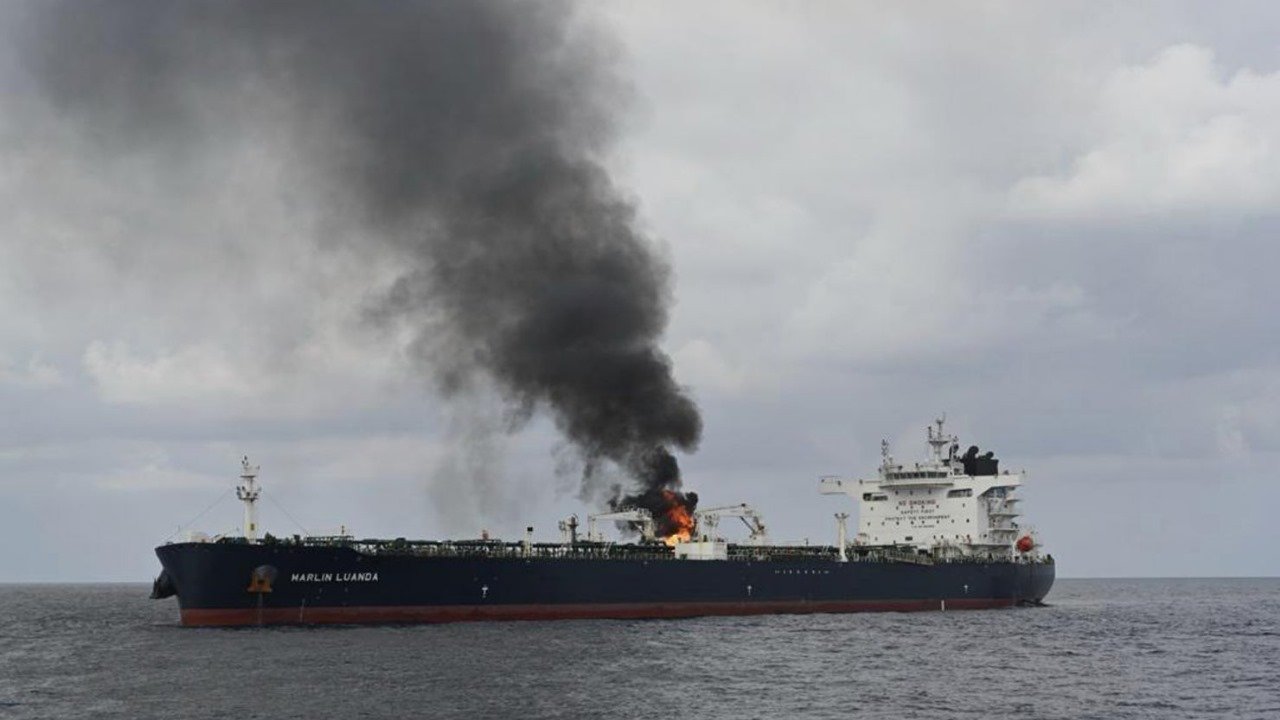
The present situation has its roots in the history of the evolution of the Houthis, who control significant portions of Yemen, their location repeatedly has disrupted maritime traffic through missile attacks and mining operations since November 2023. The leading global freight firms re-route via Africa’s cape to avoid the Suez Canal. There have been dozens of attacks, a British-owned cargo ship called MV Rubymar got struck by a missile on February 18, 2024, reportedly this missile came from the Houthis. Their ideology is not to see Jews survive in Arab, which is why they have been attacking Israel. This ideology prompts the Houthis to keep attacking Israel which they see as a so-called ‘Zionist country’ ‘destroying innocent Palestine’. Houthis grew cooperation with Iran, a Shia-majority country. These tensions grew because of the involvement of external powers.

Since the Israel-Hamas war began in October 2023, a lot of Muslim countries have been against Israel due to the unsettled tensions between the Jews and the Arabs. As Israel and Yemen are geographically distant, it is difficult for the Houthis from Yemen to directly attack Israel, so they focus on the Israeli ships or the ships heading to the Israeli ports to impart damage on Israel. By looking at recent scenarios and evaluating the tactical conditions that Iran’s involvement appears to be a key factor behind prompting the Houthis as well just like it is said to be the behind-the-scenes players for Hamas and Hezbollah, thereby intensifying the conflict and adding another layer of complexity to the crisis.

The presence of conflict in the regions, such as the Israel-Hamas conflict, worsens the tensions and instability. Regional powers and militant groups seek to exploit the Red Sea for their strategic advantages such as for arms smuggling, disrupting trade routes, and gaining geopolitical leverage. The huge interconnection of regional conflicts at the global trade routes highlights the broader implications of the Israel-Hamas conflict on the security of the Red Sea.

Economic Concerns
These attacks are bleeding economies among them one is India. Indian exports are delayed, shipments are being held up and the losses are being borne by the traders. As we see India is majorly reliant on the Red Sea because the route reaches to the four major regions namely North America, North Africa Europe and West Asia. The regions accounted for almost 50% of India’s exports amounting to 18 trillion rupees and about 30% of the imports amounting to 17 trillion rupees in the year ended 2023, according to the CRISIL ratings. Time taken to move goods from one place to another has increased substantially and almost all the ships are redirected to the Southern tip of Africa going around the Cape of Good Hope adding approximately 6500 kms to the journey. And it is believed all of it will have to continue in the foreseeable future because there is no resolution in sight.

Environmental Concerns and Food Security
The Red Sea is a crucial trade route and an ecological region home to distinctive coral and marine biodiversities. The region has witnessed long-term damage to the coral reefs and coastal habitats. Moreover, the increase in maritime traffic raises the risk of further oil spills and other forms of pollution, such as freight water discharge and plastic waste even due to the increased voyage duration leading to consumption of more fuel and emission of harmful greenhouse gases. Climate change adds another layer to the issue as rising temperatures lead to coral bleach, while sea-level rise threatens coastal communities & infrastructure. The combination of environmental degradation and geopolitical instability creates a vicious cycle, endangering the Red Sea’s ecological stability.

The impact of conflict on food security perhaps not limited to West Asia but to the global sphere as well has been slowly emerging, looking at the agricultural trade which has significantly decreased. The disruption has hit India’s rice trade. As we know India is a leading Rice exporter dominating 45% of the global market. Which is now being curbed, inflation has been high and the harvest has decreased to below the expectation. The potential disruption of trade routes through the Red Sea adversely affects global supply chains. The Suez Canal, which connects the Red Sea to the Mediterranean, is a critical point for international shipping. Any blockage or disruption in the Red Sea would directly impact the Suez Canal, causing delays and increased shipping costs. For industries reliant on just-in-time delivery systems, such as manufacturing and retail, delays can result in major operational challenges and financial losses.

Response of the International community to the situation
The conflict has caused one of the world’s worst humanitarian crises, just like any other geo-political conflict. Addressing the Red Sea Crisis requires a coordinated and multifaceted approach. Diplomatic efforts have been underway to address the tensions and foster cooperation among the Red Sea’s aggressive states of the moment. The Red Sea Forum, for instance, brings together countries from the region to discuss security, economic, diplomatic and environmental issues.

International naval coalitions, such as the Combined Maritime Forces (CMF), play a vital role in ensuring maritime security. These coalitions conduct patrols and undertake anti-piracy operations. However, to avoid the attacks and keep the region safe, U.S. Defence Secretary Lloyd Austin said, “We’ve launched Operation Prosperity Guardian under combined maritime forces and under the leadership of Task Force 153.” These countries are not the only solutions that can help bridge and resolve the conflict.

India is doing its bit to mitigate the crisis; our Indian Navy is on the job they have been manning the waters in and around the Red Sea trying to secure vital routes and rescuing sailors under threat. The Indian Navy almost conducted 9 operations saving the commercial ships. Similarly, environmental conservation efforts are essential to preserving the Red Sea and maintaining its sustainability. The war is an entangled chaotic interplay between the aggressive states which needs to be addressed and worked upon.

It cab be observed that the United States and China have significant strategic interests in the Red Sea. The U.S. maintains a military presence in Djibouti, while China has established its first overseas military base there, marking its strategic pivot to the region.

Moreover, the West has responded to the Houthis attack. They have announced “The 10 nations maritime coalition” portrayed as the “Red Sea Saviours”. Spain declared that it would not be joining the U.S.-led coalition giving no reason to it. The Spanish press says that the non-participation decision is driven by domestic politics. But the obvious question remains whether the Red Sea Force has failed. It seems like it is not a prompt resolution to form a coalition maybe as we barely see countries participating the reports say Australia has hardly sent 11 soldiers, the Netherlands sent 2 and Norway has sent 10. As observed there cannot be anyways a concrete settlement to the Red Sea crisis until the Israel – Hamas conflict ends.

What is clear from the entire turbulence in the Red Sea is the fact that prolonged disruption will hurt not only nations but also their economic growth and ecosystem. The entire region is at risk but being a bigger economy India is likely to suffer a more adverse and damaging impact. Maybe by adopting a comprehensive approach and overall cooperation of the countries, Bharat’s Prime Minister has recognized the interdependence and interconnectedness of the world by saying, ‘Vasudhaiva Kutumbakam’ at several global forums. The concept promotes global cooperation, international stability and the collective well-being of the nations. We can navigate to balance security, economic stability and environmental considerations, towards a more peaceful and sustainable solution and future for the Red Sea and beyond.

References

  • Simpson, Jack (2024). As the Red Sea crisis continues, pressure on consumer prices follows in its wake
  • Simhan, Raja Te (2024). Red Sea crisis: 100 days over with trade badly affected
  • Kamali Parisa & Koepke Robin (2024). Red Sea attacks disrupt global trade
  • Saha Dhruvaksh (2024). Red Sea crisis to cause 15-20% industry capacity loss
  • Scott David (2024). China’s Calculated Inaction in the Red Sea Crisis
  • Baraniuk Chris (2024). Red Sea crisis: What it takes to reroute the world’s biggest cargo ships
  • Thirumalai Vaageesh (2024). Red Sea crisis to hit agri commodities, marine foods: Crisil

 

Authored by Manya Sharma

RLA Research Intern

Related Intelligence

COMMENTARIESAUGUST 20, 2026
01

Evergrande’s Fall Exposes the Deeper Fault Lines in China’s Property-Led Growth Model

The sentencing of Hui Ka Yan, Xu Jiayin, founder of the China Evergrande Group, to life in prison marks the conclusion of more than just the fall of one of China’s biggest businessmen. Hui was found guilty of eight offenses, including fraud, misappropriation of funds, securities violations, and bribery. Evergrande, formerly the largest real estate developer in China by contracted sales, turned to almost all of its $300 billion plus liabilities. Hui’s trial may mark the end of a significant legal case, but the Evergrande case does not end the massive economic case Evergrande came to represent. China’s real estate bubble was not a tale of just increasing house prices. It involved a tightly connected system of households, developers, banks, and local governments. Property became the main wealth purchasing and saving vehicle for Chinese households. In a survey by the People’s Bank of China, 59.1% of urban households’ assets were held in the form of housing, and the home ownership rate was 96%. Increasing house prices had an effect beyond an increase in construction. House prices had a positive effect on household wealth perceptions, confidence, and consumption. For developers, the system was designed to incentivize expansion. Land was bought and presold apartments, loans made it possible for developers to start new projects, and growing property evaluations enabled more borrowing. Evergrande was one of the developers who pushed the system the farthest. It can be described as the “three highs” consisting of high turnover, high costs, and high leverage. Evergrande’s model was to raise capital, buy land on a massive scale, and begin development while also borrowing against their land and starting the cycle over. So long as lenders continued to lend and buyers continued to buy, investors and developers alike continued to benefit from the cycle and the land and housing prices continued to grow. Local government interests were aligned with the developers. After the 1994 tax-sharing reform, the central government gained more revenue, leaving local governments shouldering a greater financial burden. To offset some of the burden, local governments sold land to developers and used land as collateral for loans. By 2019, it is calculated that local governments’ reliance on land finance was at 38.6 percent, with over 50 percent in many large cities. Property prices and local government finance and debt fuelled a cycle of increasing infrastructure spending. This outlines how vital property investment became for China. The IMF put the contribution of property to the economy at up to 20 percent. However, this number does not even come close to capturing the extent of property’s reach. Building property creates the need for the transport of raw materials. That includes steel, cement, and glass, as well as the machines to build the property, appliances, and furniture. Glass and machinery need to be transported using logistics and financial services. Property building employs contractors. Developers take out mortgages and corporate loans. Local governments earn money from the sale of land. So, property not only includes one of many sectors of the economy, but becomes a complete economic system. It becomes very clear how this system would collapse if the opposite of what is expected were to occur. This is the nature of a bubble. Every apartment does not become worthless. It means that the cost of the property, along with construction and the loans used to finance the purchase, became more dependent on whether people thought the price and demand for property would continue to rise. If people begin to think the cost of property will fall, then the same thing happens in the opposite order. Buyers will delay purchases, developers will not earn presale income, government revenue will fall, and banks will be more cautious of extending loans. Beijing recognized the risks so they began to tighten financial regulations starting in 2016. In 2020, The “Three Red Lines” Framework was established. Beijing’s goal was to limit debt for highly leveraged developers. From a macroeconomic standpoint it was necessary to limit debt. The problem was that leverage had become endemic throughout the system. It was really wishful thinking that it would discipline poorly managed developers because it made the business models of other driven companies more dependent on constantly selling new property and taking out new loans to continuously refinance debt. Evergrande exemplified the most famous case of China’s real estate collapse. Their failure impacted far more than themselves. Suppliers weren’t getting paid, construction companies went bankrupt and halted their projects, buyers had to wait to get their newly financed homes, and the creditors began to doubt the feasibility of their investments. Media states that Evergrande’s liquidation is slow and only $255 million of assets were sold by August of 2025 with claims against those assets totalling $45 billion. The possibility of China suffering a sudden replication of America’s 2008 “Lehman moment” is low. China’s financial system is more state-controlled, and the major banks are capable of being directed to provide support. Further, the capacity of Beijing to avoid excessive failure is far higher than the capacity of America at that same part in its history. The more likely threat is a prolonged balance-sheet adjustment where weakness in the property market will slow economic activity for many years. This trend continues through 2026. In July, Chinese new-home prices fell by 3.2% compared to the previous year. Of the 70 cities monitored, only 17 showed an increase in prices from the previous month. The first 7 months of the year also showed declining trends in property sales, investment, and new construction. During this period, the revenue of the Chinese government from land sales declined by 31.5% and was recorded at 977.8 billion yuan. These figures show a weakening trend in property and reflect declining private investment and local government finances. This trend is most problematic for households. When the primary investment of a household falls in value, households become more conservative. Household wealth falls and household members that own houses feel poorer, even if they have no intention of selling.

TR
Team Red Lantern AnalyticaAnalyst
arrow_outward
COMMENTARIESJULY 25, 2026
02

𝐀 𝐃𝐢𝐯𝐢𝐝𝐞𝐝 𝐇𝐨𝐮𝐬𝐞 – 𝐋𝐞𝐠𝐚𝐜𝐲 𝐯𝐬 𝐑𝐞𝐚𝐥𝐢𝐭𝐲: 𝐅𝐫𝐚𝐜𝐭𝐮𝐫𝐞 𝐢𝐧 𝐍𝐒𝐂𝐍 (𝐈𝐌) & 𝐑𝐢𝐬𝐞 𝐨𝐟 𝐭𝐡𝐞 𝐑𝐢𝐯𝐚𝐥 𝐏𝐫𝐨𝐯𝐢𝐬𝐢𝐨𝐧𝐚𝐥 𝐆𝐨𝐯𝐞𝐫𝐧𝐦𝐞𝐧𝐭 𝐢𝐧 𝐌𝐲𝐚𝐧𝐦𝐚𝐫

N𝐞𝐰 𝐏𝐮𝐛𝐥𝐢𝐜𝐚𝐭𝐢𝐨𝐧 | 𝐑𝐞𝐝 𝐋𝐚𝐧𝐭𝐞𝐫𝐧 𝐀𝐧𝐚𝐥𝐲𝐭𝐢𝐜𝐚 Red Lantern Analytica presents a new strategic analysis: “𝐀 𝐃𝐢𝐯𝐢𝐝𝐞𝐝 𝐇𝐨𝐮𝐬𝐞 – 𝐋𝐞𝐠𝐚𝐜𝐲 𝐯𝐬 𝐑𝐞𝐚𝐥𝐢𝐭𝐲: 𝐅𝐫𝐚𝐜𝐭𝐮𝐫𝐞 𝐢𝐧 𝐍𝐒𝐂𝐍 (𝐈𝐌) & 𝐑𝐢𝐬𝐞 𝐨𝐟 𝐭𝐡𝐞 𝐑𝐢𝐯𝐚𝐥 𝐏𝐫𝐨𝐯𝐢𝐬𝐢𝐨𝐧𝐚𝐥 𝐆𝐨𝐯𝐞𝐫𝐧𝐦𝐞𝐧𝐭 𝐢𝐧 𝐌𝐲𝐚𝐧𝐦𝐚𝐫.” Authored by Lt. Col. Ujjual Abhishek Jha, DCPP (Retd.), this examines the recent organisational split within NSCN (IM), the emergence of the Eastern Flank-led Provisional Government, and its implications for the Naga peace process, cross-border insurgency, and India’s security landscape in the Northeast. Download Link: A Divided House Legacy vs Reality Fracture in NSCM-IM and Rise of the Rival Provisional Government in Myanmar

TR
Team Red Lantern AnalyticaAnalyst
arrow_outward
COMMENTARIESAUGUST 21, 2025
03

Reimagining Oman as an Indian Ocean Green Hub: Looking at a Post-Carbon Future

The few stereotypes that persist regarding the Gulf are of its importance as a hydrocarbon centre over the past eight decades, since Bahrain and Saudi Arabia struck Oil in the 1930s. Oman, in comparison, struck Oil in Fahud in 1962, and shipped its first container from Mina Al Fahal in 1967. The oil revenues formed the bedrock of rebuilding the country during the 1970s, during which the Dhofar rebellion was still on. Oman is a Shell country, like Brunei, where Shell has been strategic in the country’s hydrocarbon exploration through a major stake in Petroleum Development Oman, or PDO, as commonly known. Many PDO employees have worked for Shell Brunei and Shell Sarawak as a part of their career circulations in the global MNC network. Oman was never a massive producer of petroleum as its wealthier neighbours in the GCC, even though its natural gas imprint is significant. Natural Gas is a key transition fuel, and Quriyat LNG in Sur has many long-term contracts with Korea, China, and Japan. However, Oil and Gas still form a major chunk of the GDP in Oman. Diversification has been on the agenda since the late 1980s, as localisation has always been a priority. Years of peak oil prices have led to the creation of avant-garde infrastructure and the education of a couple of generations overseas on scholarships, which was a byproduct of oil income. Now, the scenario has evolved as Oman’s population has increased, and the youth seeking work is often the refrain, as gauged from the comments section in the social media feeds. The cause of the Arab Spring protests in Sohar was corruption and lack of jobs, which led to a few heads turning. The post Sultan Qaboos era, under the able leadership of His Majesty Sultan Haitham Bin Tarik has moved towards diversification in a major way, seeking relationships far and wide. His Majesty has had meetings with the Dutch Leadership, President Putin in Moscow, Prime Minister Modi in Delhi, and the UK Minister Starmer within the past few months. The rich legacy of Oman being the Switzerland of the Middle East helps in its vital role in mediating the Yemeni crisis and as a trusted participant in the Iran paradigm, helps. Oman also controls half of the crucial Straits of Hormuz. Ibadhi Oman’s history as a littoral maritime empire has its long shadow in the present. Muscat is a diverse place, full of Zanzibaris, Baluchis, Ajmi’s, Lawati’s, and Hindu Bania’s, and other communities who were a part of the Omani imperial grid. The strategic culture of the Omani elite is transnational, with many Omani having ties across East Africa to Africa. Pankaj Khimji, an advisor to the Omani government, is a key Bania interlocuter between Muscat and Delhi via Mandvi. India and Oman have finalised the FTA negotiations recently. Aden was governed by the Bombay Presidency until 1937. These close ties entail prospects of power being exported to India/ Pakistan/East Africa via a subsea cable in the future. The engineering and program management excellence achieved by the national building efforts of PDO, especially in terms of talent development for the renewable sector, over the past decades. The first solar project was helmed by PDO as seen in the Amin Solar project. This is similar to the Aramco State, where the best expertise in Saudi Arabia lies with the engineers in the oil major. A glimpse of it was illustrated in Ellen R Wald’s book[1], which showed the role National Oil Companies have played in nation-building. Oman’s location as an Indian Ocean actor was confirmed with it hosting the Indian Ocean Conference this year in Muscat, where Member of Parliament Naveen Jindal ji spoke. Jindal operates one of the largest steel mills in the Middle East in Sohar. The ACME Group is coming up with a green hydrogen facility in the special economic zone in Duqm on the Arabian Sea coast. Duqm is also home to a naval base, which plays host to many navies, as it is close to the Horn of Africa piracy corridor. The green hydrogen corridor in Al Wusta and Dhofar is underway as ACWA Power from Saudi Arabia is investing in a green hydrogen facility in the southern Dhofar region. Another ACWA Power project in the form of Ibri 2 IPP is a project I know rather intimately. I was the lead social specialist for an impact assessment report for a multi-million-dollar 500MW solar park on the Saudi border. Long-term migrant workers from South Asia were identified as camel farmers in the desert on project land., However, during a recce visit and after speaking to long-term migrant workers looking after camels, we discovered that they were extremely precarious, relying on a solar-powered battery charger for mobile phones and to light a bulb. These workers, who were heavily reliant on precarious work, were being moved away from their off-grid homes to build a Chinese-funded solar park in relatively prosperous Oman. The irony was not lost on me. Globally accepted ESG governance norms kicked in, the move triggered an independent Resettlement Action Plan for these workers. Climate and Local developmental politics intersect in the middle of nowhere. The Beijing-based Asian Infrastructure Investment Bank or AIIB is the backer for the Ibri 2 Project, and Chinese contractors were the hands on Ibri 2. Belt and Road is right on our doorstep. Indian Engineers and Consultants work on these Chinese-funded projects as the technical hands behind the scenes. There are numerous other solar projects in the pipeline in the Wilayat of Manah. These areas are close to the Saudi Border and could be a part of an integrated GCC power grid. Oman’s great strength in terms of land needed for renewable projects is a plus, along with its positioning between the Gulf, South Asia, and East Africa, which makes it an Indian Ocean Green Hub[2] in the making. [1] https://www.amazon.in/Saudi-Inc-Arabian-Kingdom%60s-Pursuit/dp/168177660X [2] https://mem.gov.om/en-us/Our-Business/Renewable-Energy-and-Hydrogen/Renewable-Energy-and-Hydrogen-Projects Authored By: Manishankar Prasad PhD Scholar, University of Malaya

TR
Team Red Lantern AnalyticaAnalyst
arrow_outward