Statement on the Ongoing Sudan Crisis
Media Coverage

Statement on the Ongoing Sudan Crisis

TR

Team Red Lantern Analytica

Directorate of Intelligence

Share:

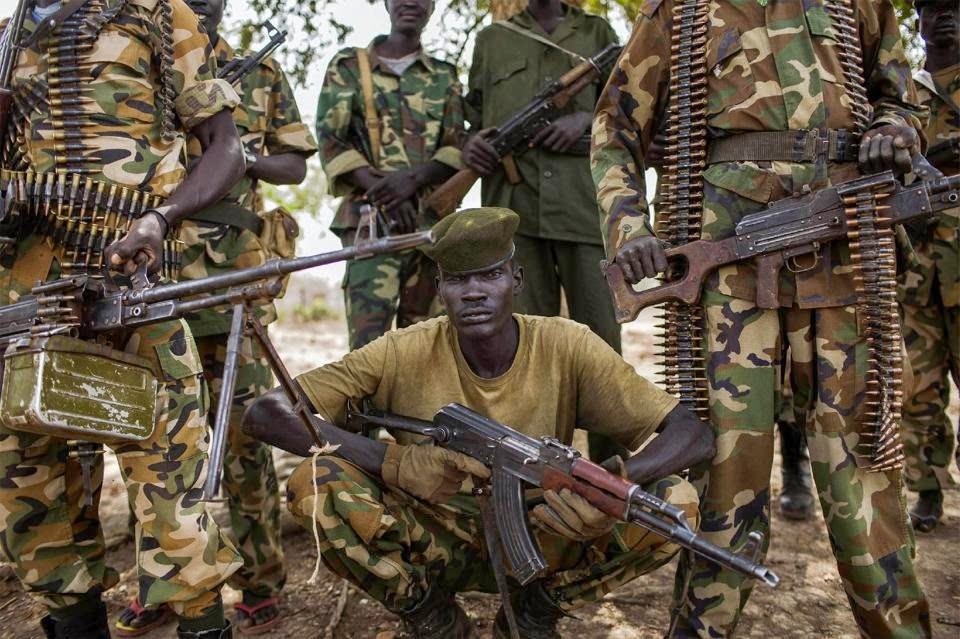
Hundreds of people have been killed and thousands are fleeing or evacuating for safety amid intense clashes taking place between the Sudan’s military, led by General Abdel Fattah-al-Burhan (also the de facto ruler of Sudan), and Sudan’s main paramilitary force, the Rapid Support Forces (RSF).

After gaining independence on 01 January,1956, civil war broke out between the North and South Sudan due to alleged incompetent governance and massive religious conflicts (the Islamic North versus the Christians in South), which led to South Sudan separating as an independent nation. Up until then, Omar Hassan Ahmed-al-Bashir had been the ruler of Sudan and showed dictatorial tendencies. In 2013, RSF was officially formed through the restructuring and reactivation of Janjaweed militias, who were used by the Sudanese government to fight anti-government insurgencies during a rebellion in Dafur.

In 2018, large-scale protests started demanding the removal of al-Bashir from power. In 2019, the RSF led by its leader Hemedti, and the regular military forces under General Burhan cooperated to oust Bashir in a military coup. Then came the question of who would eventually rule Sudan. For a short period, the transition to democracy looked hopeful, but that was also interrupted by a coup in October 2021. The section of Sudan that has been most impacted and devastated by all this power struggle is the civilian population, while the fighting between the RSF and Sudan’s military forces continues.

Sudan’s geography has become its biggest curse. Owing to its strategic location (bordering the Red Sea, the Sahel region, and the Horn of Africa) and agricultural wealth, major geo-political dimensions come into play with various powers battling for their influence in Sudan, as whoever controls this region controls more than 10% of global trade.

It is unfortunate for the innocent Sudanese, who have been fleeing to neighbouring countries on a massive scale, to have been caught between such intense geo-political and geo-economic tangents. India, with its ‘Operation Kaveri’, has evacuated more than 3000 Indians and other countries’ citizens from Sudan. We, at Red Lantern Analytica, regret such an incidence and wish for peace to reach Sudan soon.

Related Intelligence

MEDIA COVERAGEAUGUST 20, 2026
01

India’s Call for Transparency in UNSC Terror Listings Deserves Global Support

20th August 2026 Red Lantern Analytica welcomes and fully endorses India’s plea for increased UN Security Council transparency, objectivity, and accountability while addressing the challenge of listing and delisting terrorism-related persons and entities. India has brought a legitimate concern to the UN that has eroded the international community’s confidence in its counter-terrorism efforts. The member states of the UN cannot decide on terrorism through geopolitical convenience or the interpretation and consideration of terrorism in a selective manner. India also does not appreciate the fact that certain U.N. member states consider certain political individuals and groups as useful. The reality is that a terrorist who is a threat to one country cannot be treated differently from the terrorist who is a threat to another country. India has good reason to question the UN’s ability to respond to the threats it faces given India’s efforts to bring international sanctions against terrorists based in Pakistan and related to attacks on India. The obstructive behaviour of the UN Security Council has, on several occasions, created barriers to India’s efforts to respond to terrorism. China has used technical holds to obstruct proposals targeting Pakistan-based terrorists, including the head of the Jaish-e-Mohammed, Masood Azhar. This demonstrates that the international community cannot demand collective efforts to meet counter-terrorism goals while also ensuring that obstruction and opacity characterize the most important of the international community’s security efforts. The counter-terrorism efforts of the international community are not possible while countries continue to employ political considerations that are incompatible with counter-terrorism to provide indirect protection for terrorists, their financiers, and their supporters. The objections, requests for delisting, and holds must each be substantiated with reasons. The Security Council should never become a political arm of efforts to protect terrorists and those who support them financially. Red Lantern Analytica additionally advocates for comprehensive reform of the Security Council pertaining to the demands of the Indian government. The security structures and systems created post-World War II will not last forever. The UN has continued to grow, and there are now more emerging markets and centres. The Global South is also more important than ever before. This all further demonstrates the need for multi-faceted reform. India’s position for all categories, permanent and non-permanent, of expansion, as well as representation for developing nations and progress through negotiations, is legitimate and should be recognized internationally. The Security Council must focus on the present day and thus respond to the needs of the time and offer accountability and representation, as legitimate structures of the modern world order. India continues to support UN peacekeeping and international counter-terrorism efforts. It is therefore important for India that the Security Council responds to the challenges of the 21st century, and not just meet India’s request for representation. It is about the integrity of the UN as a whole. There can be no double standards on terrorism. Political expediency must never provide a shield for terrorists or their support networks. A strengthened UN should defeat terrorism and protect the people of the world.

TR
Team Red Lantern AnalyticaAnalyst
arrow_outward
MEDIA COVERAGEAUGUST 3, 2026
02

Red Lantern Analytica Releases Report on Chinese Cyber-Enabled Narrative Operations

New Delhi, August 2, 2026: Red Lantern Analytica organised a discussion and report-release event titled “Chinese Cyber-Enabled Narrative Operations”, bringing together experts in China studies, cybersecurity, information warfare and strategic affairs to examine the growing use of digital platforms for influencing public opinion and weakening confidence in democratic institutions. The event also marked the release of Red Lantern Analytica’s report, “Chinese Cyber-Enabled Narrative Operations Around India’s 2026 Student Protest.” The study examines how domestic protests and public grievances in India were reframed across Chinese-language and international digital platforms as evidence of governance failure, institutional decline and political instability. The discussion featured Professor Sriparna Pathak, Professor of China Studies and Founding Director of the Centre for Northeast Asian Studies at O.P. Jindal Global University; Dr Madhukar Shyam, Assistant Professor in the Department of International Studies, Political Science and History at CHRIST (Deemed to be University), Delhi NCR; and Mohit Vashish, Founder and Executive Director of Intelligence at the Centre for New Age Warfare Studies. Opening the discussion, Professor Sriparna Pathak said Chinese narrative operations extend beyond attempts to influence elections or promote favourable perceptions of China. Their wider objective, she observed, is to polarise societies, amplify existing grievances and gradually undermine public trust in democratic institutions. She explained that such campaigns frequently rely on inauthentic social-media accounts, artificial intelligence-generated content, state-media proxies and fabricated digital personas. Open democratic information systems are particularly vulnerable because foreign narratives can circulate with relatively few restrictions, while China maintains a highly controlled domestic information environment. Professor Pathak noted that India has emerged as both a strategic target and a testing ground for these operations, particularly since the June 2020 Galwan Valley clash. Narratives linked to Chinese digital ecosystems have sought to question India’s military preparedness, intensify ethnic and regional tensions and portray democratic disagreements as evidence of political instability. Referring to campaigns concerning Northeast India, she highlighted attempts to exploit developments in Manipur, Nagaland and Arunachal Pradesh. Chinese-origin content, sometimes translated or adapted using artificial intelligence tools, has been circulated to amplify separatist claims, distort local grievances and complicate India’s border-management challenges. She also referred to bot-like accounts that sought to undermine confidence in the 2024 Lok Sabha elections by raising doubts about national security, governance and defence capabilities. Professor Pathak called for faster official responses, greater platform transparency, improved public-reporting mechanisms and media-literacy programmes in Indian languages. Dr Madhukar Shyam distinguished conventional cyberattacks from cyber-enabled narrative operations. While technical cyberattacks are designed to penetrate, disrupt or damage computer systems, narrative operations use the digital environment to shape emotions, attitudes and political perceptions. He referred to earlier cyber-espionage campaigns, including the 2009 GhostNet operation, which compromised computer systems across several countries and reportedly targeted institutions connected with the Tibetan community. He also discussed the Shadow in the Cloud investigation and cyberattacks against Tibetan institutions, illustrating the relationship between technical espionage and long-term information warfare. Dr Shyam further examined how Chinese messaging sought to exploit India’s 2024 National Eligibility-cum-Entrance Test controversy. Comparisons between China’s Gaokao examination and India’s NEET system were used to present protests and administrative disputes as evidence of systemic democratic failure. Such narratives, he said, deliberately misinterpret public protests, which are a normal feature of democratic accountability, as signs of political collapse and institutional instability. He also drew attention to attempts to manipulate cultural and civilisational narratives, including efforts to weaken India’s historical association with Buddhism and create differences between India and neighbouring countries. Mohit Vashish explained the operational structure of contemporary Chinese information warfare, describing it as a systems-based approach in which intelligence gathering, psychological profiling, content creation, social-media amplification and influencer engagement operate in coordination. According to Vashish, intelligence agencies and associated organisations first identify societal “fault lines”—issues capable of dividing communities—and then use psychological techniques to intensify those divisions. Anonymous posts may initially be amplified through bot networks and subsequently repeated by influencers, media platforms or political commentators, giving manufactured narratives an appearance of credibility and organic public support. He also warned that foreign-linked entities may approach students, researchers and young professionals through professional networking platforms such as LinkedIn. Individuals studying defence, international relations, security and political science may be offered unusually high payments for reports or research assignments. Vashish advised students and researchers to verify email addresses, carefully examine domain-name spellings, check the organisation’s official website and remain cautious about unsolicited financial offers. He also recommended reviewing suspicious accounts’ biographies, posting histories and interaction patterns, tracing the earliest appearance of particular phrases and conducting reverse-image searches before sharing sensational content. Presenting the findings of the report, Daney Antonio Martin of Red Lantern Analytica said the research examined content circulated through Chinese and international platforms, including WeChat, Weibo, Guancha and X. The report found no evidence that China initiated India’s 2026 student protests. It nevertheless identified strong evidence that Chinese digital ecosystems exploited and amplified the protests to advance broader geopolitical narratives about India. The study distinguishes between direct instigation and narrative exploitation. It assesses the evidence for coordinated amplification as substantially stronger than any claim of centrally directed technical interference in the protests. The speakers agreed that foreign narrative operations cannot be addressed solely through government regulation or technical cybersecurity measures. They called for a whole-of-society approach involving government agencies, digital platforms, researchers, educational institutions, journalists, civil-society organisations and citizens. The discussion underlined the need for rapid public communication, transparent platform practices, stronger verification systems and greater digital awareness among users. Participants also emphasised that democratic openness should not become a vulnerability that foreign actors can repeatedly exploit. The session concluded with a vote of thanks to the speakers, moderator, participants and organising team for contributing to the discussion on safeguarding India’s information environment. About Red Lantern Analytica Red Lantern Analytica is a New Delhi-based international observers and research organisation working on China, Tibet, the Indo-Pacific, cybersecurity, disinformation, strategic affairs and emerging geopolitical challenges. Through research reports, expert dialogues and public engagement, it seeks to promote informed debate and policy-oriented analysis.

TR
Team Red Lantern AnalyticaAnalyst
arrow_outward
MEDIA COVERAGEMARCH 14, 2026
03

Press Release: Strategic Dialogue Examining Shifting Power Dynamics

Strategic Dialogue Examining Shifting Power Dynamics in the Indo-Pacific Red Lantern Analytica, in collaboration with Hegemoniq, convened a strategic dialogue on “Strategic Shifts in the Indo-Pacific: Connectivity, Coalitions and Great Power Competition” on 14th March 2026 (Saturday). The discussion brought together distinguished experts to examine the evolving geopolitical architecture of the Indo-Pacific and the implications of growing strategic competition, emerging partnerships, and regional security dynamics. The panel featured Col. Nalin Herath RSP (Retd.) , Amb. Tom Armbruster (Retd.) , Dr. Dattesh Parulekar, and Dr. Rahul Mishra, each offering perspectives on how regional states and major powers are navigating the rapidly changing strategic environment. Speaking from a Sri Lankan perspective, Col. Nalin Herath RSP (Retd.), Amry Veteran & Former Military Spokesperson, Sri Lanka, highlighted the growing importance of the Indian Ocean within the broader Indo-Pacific framework. He emphasized Sri Lanka’s strategic location along critical maritime trade routes connecting East Asia, the Middle East, Africa, and Europe. This positioning provides both opportunities and challenges for smaller states. While infrastructure development and connectivity initiatives—particularly port development and maritime logistics—offer avenues for economic growth, they also place Sri Lanka at the intersection of competing geopolitical interests. Col. Herath stressed the importance of balanced diplomacy and Sri Lanka’s traditional policy of non-alignment in navigating great power competition. Maintaining neutrality while engaging multiple partners, he noted, remains essential for ensuring stability and safeguarding national interests. Amb. Tom Armbruster (Retd.), Former US Ambassador to Marshall Islands focused on the role of Pacific Island states within the Indo-Pacific strategic landscape. He challenged the conventional perception of these countries as “small island states,” noting that they instead consider themselves “large ocean countries” due to their vast maritime territories. Despite relatively small populations, these nations wield significant diplomatic influence, particularly in global forums such as the United Nations. Amb. Armbruster highlighted that the primary concerns of Pacific Island states are not great power rivalry but rather climate change, sea-level rise, disaster preparedness, and sustainable development. He also pointed to the growing competition between the United States and China in the Pacific region, while emphasizing that meaningful engagement with island states must prioritize development partnerships, environmental resilience, and long-term economic cooperation. Dr. Dattesh Parulekar, Assistant Professor, School of International & Area Studies, Goa University examined China’s evolving maritime strategy and its impact on Southeast Asia, particularly in the South China Sea. He traced the evolution of China’s maritime ambitions from its 2012 declaration to become a maritime power to its current efforts to assert comprehensive national power in its near seas. Dr. Parulekar argued that China is attempting to redefine maritime norms by combining military capabilities with industrial, technological, and economic instruments. Through infrastructure projects, maritime development initiatives, and blue economy frameworks, Beijing is reshaping regional connectivity and strategic influence. At the same time, Southeast Asian states are adopting different strategies to manage China’s rise. Countries such as Vietnam pursue proactive balancing, Indonesia follows a calibrated approach combining economic engagement with strategic caution, while the Philippines has taken a more assertive stance in defending its maritime claims. These diverse responses illustrate the complex regional dynamics shaping the South China Sea. Providing a broader geopolitical assessment, Dr. Rahul Mishra, Associate Professor, Centre for Indo-Pacific Studies, SIS, JNU, discussed the structural shifts taking place within the Indo-Pacific order. He noted that the Indo-Pacific has firmly emerged as a central theater of global geopolitics, reflecting the growing strategic convergence between the Indian and Pacific Oceans. China’s rise as a revisionist power, he argued, has compelled many countries to reconsider their strategic alignments. This has contributed to the rise of flexible partnerships and minilateral groupings such as the Quad, which seek to address regional challenges ranging from maritime security to supply chain resilience.Dr. Mishra also emphasized that recent global crises—including conflicts in Europe and West Asia—demonstrate that the Indo-Pacific cannot be viewed as an isolated strategic space. Developments in other regions continue to influence the balance of power and security dynamics within the Indo-Pacific. In this context, he highlighted India’s approach of strategic autonomy and multi-alignment as a pragmatic framework for navigating complex geopolitical realities while maintaining constructive partnerships across multiple regions. The dialogue underscored that the Indo-Pacific is undergoing a profound transformation driven by shifting power balances, new connectivity initiatives, and evolving security partnerships. As the region becomes increasingly central to global politics, experts emphasized the need for sustained dialogue, cooperative frameworks, and balanced strategies to ensure stability, economic development, and a rules-based regional order.

A
AdminAnalyst
arrow_outward